



The important question is what happens after you arrive. Reaching La Fortuna does not settle how you will get to a countryside lodge or your next morning’s activity. Equally, a car may spend several paid days parked while you stay somewhere reached by boat. Build your transport around the actual stops on your trip.
Choose Transport Around Your Stops and Hotel
When choosing where to stay in Costa Rica, check the accommodation’s exact map location and the places you want to visit from it. Compare a room in town with a remote property using the room price plus daily transport.
These are the main options worth comparing:
| Transport | Best use | How to compare the cost | Main limitation |
|---|---|---|---|
| Public bus | Town-to-town travel on a budget | Tickets plus transfers to terminals and accommodation | Connections and separate terminals can add time |
| Shared shuttle | Travel between accommodation stops without driving | Fare for every passenger, plus any extras | Scheduled departures and designated pickup locations |
| Private transfer | Groups, families or a departure time chosen around your plans | Total vehicle quote for your party and luggage | Usually costly when paid by person |
| Rental car | Several daily stops or accommodation away from town | Rental, insurance, fuel, parking and other charges | Driving conditions and responsibility for the vehicle |
| Ferry or boat | Routes across water, including parts of Nicoya and Tortuguero | Passenger tickets, vehicle space where relevant, and transport | Departure times and connections shape the travel day |
| Domestic flight | A journey where flying saves worthwhile time | Airfare, baggage and both airport transfers | Smaller-aircraft baggage restrictions |
Compare the whole day’s journey. Two bus tickets and a taxi may still be cheaper than a shuttle, but the saving needs to justify the extra transfers. Include those local journeys when budgeting for a Costa Rica trip, especially if you change hotels frequently.
Leaving SJO or LIR: Plan Your First Transfer
San José’s Juan Santamaría Airport, SJO, is in Alajuela. Guanacaste Airport, LIR, serves the Liberia area. Work out which gateway suits your first and last destinations before buying flights; the SJO versus LIR comparison covers that choice in more detail.
Both airports list authorized ground transport. An arranged transfer is a practical choice when you have substantial luggage, arrive late or are continuing directly to accommodation outside the airport area. Save the operator’s name, meeting point and contact details before departure.
Using a public bus requires another decision: where will you get off, and how will you reach your hotel or bus? Do not assume that a bus into San José delivers you to the correct terminal for the next leg. Give your transfer driver the specific terminal name if you are connecting to an intercity service.
Allow time after landing for immigration, baggage collection and customs before a fixed shuttle departure. Ask the transfer company how it handles a delayed flight before paying.
If you plan on buying a SIM at SJO or LIR, leave time before your scheduled pickup and save the driver’s contact details offline.
Public Buses: Terminals, Tickets and Payment
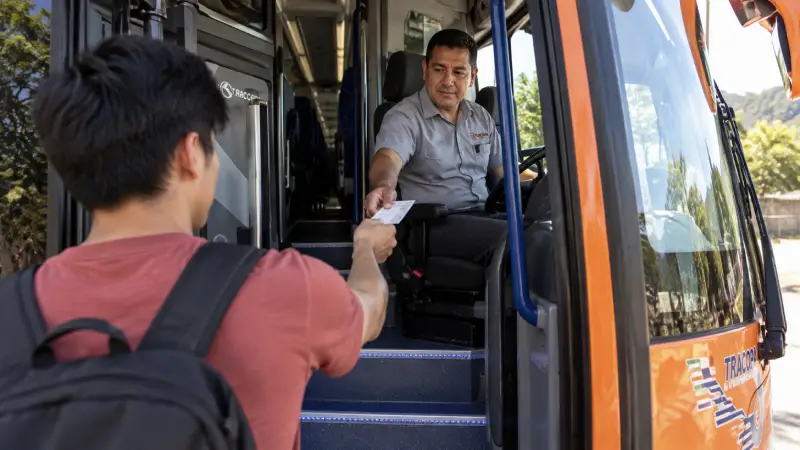
Costa Rica’s buses are useful for keeping transport costs down, but you book and navigate individual operators rather than national passenger system. San José has several departure terminals. The operator and destination matter more than asking for “the bus station.”
MEPE serves the southern Caribbean corridor, including Cahuita, Puerto Viejo and Sixaola. TRACOPA is an operator to check for Quepos, Manuel Antonio and destinations in the southern Pacific region. Save the departure terminal’s name and location alongside your ticket or journey notes.
Before committing to a connection, establish whether your bus goes to the destination itself or leaves you at a junction or nearby town. Also distinguish a direct service from with more intermediate stops. The same destination name can appear on journeys with different routes and travel times.
Ticket sales and reservations vary by operator. Use the operator’s current sales channel or ticket office, and identify whether you are buying a particular departure or paying when boarding. Keep the ticket and any luggage receipt until you have collected your bags.
Can you pay for buses by card?
Contactless payment is available on services equipped with SINPE-TP. The system supports qualifying contactless Visa and Mastercard debit, credit and prepaid cards issued in Costa Rica or abroad, including supported devices linked to those cards. The Central Bank’s SINPE-TP payment information also links to participating operators and routes.
Bus rollout is gradual, so carry small colón notes and coins for services without a working reader. Buying an advance ticket is also different from tapping a card on board. Prepare both options using our guide to cash and card payments in Costa Rica.
Shared Shuttles or Private Transfers?
Shared shuttles suit a trip built around booked accommodation and departures you can plan ahead. Interbus, for example, requires reservations and operates hotel-to-hotel services. Your particular hotel or rental property must be covered by the booking; a destination listed as “Monteverde” does not establish pickup from every address in the area.
Expect a shared service to follow its route and collection schedule. It may collect other passengers, stop for a break or involve a vehicle change. Keep arrival-day sightseeing flexible rather than attaching a prepaid activity to the estimated arrival time.
Paying for seat can make shared transport attractive for solo travel in Costa Rica. With several people, compare the combined seat fares against a private vehicle quote. Include the final hotel drop-off and luggage charges in both totals.
Private transfers are worth considering when departure time, luggage space or a particular pickup address matters. Specify any planned stops: booking a transfer between two hotels does not automatically include sightseeing along the way.
Before payment, get these details together:
-
The total for your party, including applicable taxes and extras.
-
Exact pickup and drop-off locations.
-
Suitcase and sports-equipment allowance.
-
Child seats or assistance arrangements you need.
-
Cancellation and missed-departure terms.
Accessibility needs deserve a direct conversation with the operator. Space for a folded wheelchair does not establish that you can remain in it during travel or board without transferring to a vehicle seat.
Taxis, Uber and Short Local Journeys
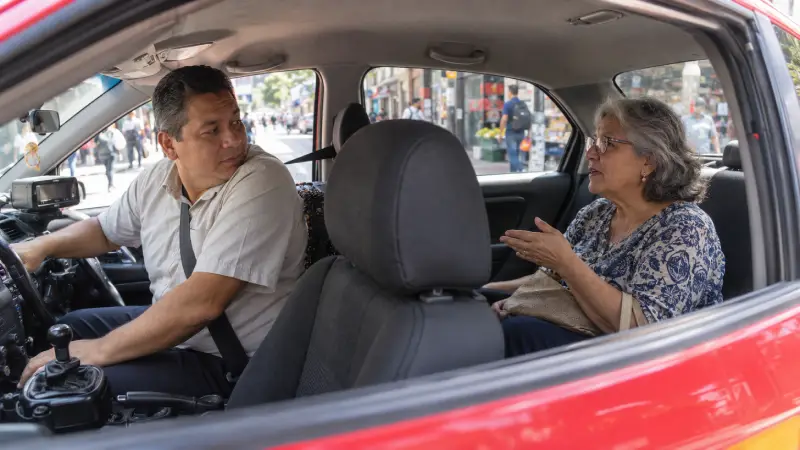
Taxis are useful for reaching a bus terminal, making a short hotel transfer or returning after dinner. Use an identifiable authorized service. For an ordinary metered taxi journey, make sure the meter is used; for a prearranged transfer, obtain the total and inclusions before departure. These are different ways of pricing a trip.
Uber offers rides in San José. Its availability in the app should not be treated as confirmation that a vehicle has authorization to collect passengers from an airport. Use the airport’s authorized transport arrangements for a straightforward arrival, and avoid building a rural return journey around the assumption that an app driver will be available.
Keep the driver, vehicle and booking details consistent with what you arranged. Our guide to taxi and rental scams in Costa Rica explains the situations that warrant closer attention.
Plan the trip back as carefully as the outward ride, particularly after dark. Arrange collection from a clear meeting point instead of relying on a walk along an isolated or unlit road. The broader Costa Rica travel safety guide covers precautions beyond transport.
When Renting a Car Makes Sense
Renting becomes more useful when several parts of your day require separate transport: a hotel outside town, an early activity, lunch elsewhere and another stop before returning. It also gives you control over departure times and the places you stop between destinations.
Before choosing a vehicle, ask your accommodation about the actual access road. Ground clearance and traction requirements depend on where you are going and the conditions. Neither “every visitor needs a 4×4” nor “all tourist roads suit a small car” is a useful countrywide rule.
Compare the complete rental price, insurance terms and deposit hold separately. Carry the required licence and identification, and establish any additional documentation with the rental company before booking. Our driving and navigation guide for Costa Rica covers the driving side in more depth.
Heavy rain can cause landslides, road damage and delays. Consider Costa Rica’s weather by season alongside the specific regions on your route, and allow flexibility on a long transfer day.
Renting for part of the trip can also work. Price the collection and return arrangements before deciding, especially if a boat-based stay would leave the car parked for several days.
Live route updates and messages to your accommodation are useful while travelling. With an unlocked, compatible phone, a Costa Rica eSIM provides mobile data for those tasks. Download maps as well, so essential route information remains accessible without reception.
Ferries, Boats and Domestic Flights
Water crossings can determine the order of a Costa Rica itinerary. Naviera Tambor operates the Puntarenas–Paquera ferry for passengers and vehicles. If you are travelling toward the southern Nicoya Peninsula, compare that crossing with the road alternative from your actual starting point.
Check the Puntarenas–Paquera ferry schedule and booking information before fixing the rest of the day. Match the booking to whether you are travelling on foot or with a vehicle, and include the journey from the arrival terminal to your accommodation. The ferry crossing is part of the transfer.
Tortuguero requires a different approach. The overland journey via La Pavona continues by boat to Tortuguero, so a rental car cannot take you through to the village. Coordinate the boat departure with your arrival at the dock, and ask your lodge whether its transfer takes you directly to the property or to a separate meeting point.
Keep electronics and documents protected from water and easy to carry between vehicles and boats. If you rent a car, factor in parking and the days it will remain unused.
Domestic flights can be worth comparing when they remove a substantial road journey. Calculate the time from hotel to hotel, including airport transfers and check-in, rather than comparing flight duration with driving time alone.
SANSA’s checked baggage allowance depends on the fare purchased. Excess baggage is subject to space, weight and operational limits and may travel on a later flight. Read the SANSA baggage conditions before choosing a fare, especially with large suitcases or sports equipment. Keep medication, documents and essentials in your permitted personal item.
Maps, Luggage and Connections: Before You Travel
Save the exact location of each hotel, bus terminal, dock and pickup point. Download confirmations and screenshots while connected, then use live information for changes during the journey. Our guide to useful Costa Rica travel apps helps you choose the tools for those tasks.
Arrange a way of getting in Costa Rica before relying on last-minute booking messages. Reception varies by location; use the Costa Rica mobile coverage guide when planning rural stays, and keep offline copies of essential information.
Keep your passport, phone, money and medication in a small bag you control during transfers. Store larger luggage as directed and collect it before leaving the arrival point. Never leave valuables unattended in a parked car while stopping to explore.
Protect the journey home too. If a long road trip, boat connection or ferry stands between you and an international flight, consider spending the previous night nearer the departure airport.