Download the App and manage your eSIMs easily
Create your order quickly
See your eSIM details
Track your remaining data
Download the App and manage your eSIMs easily
Create your order quickly
See your eSIM details
Track your remaining data
Manuel Antonio parking pitches, misleading airport transfers and fake holiday rentals call for different checks. Someone selling a service may claim to represent the national park, insist your bus has stopped running or request a deposit for accommodation they have no right to rent.

Ethan Brooks
Updated Sep 7, 2026
9 min read
Save 15% on your Roafly eSIM
Stay connected on your next trip. Use the code below at checkout.
View All DestinationsJump to section
👇Save 15% on your Roafly eSIM
Stay connected on your next trip. Use the code below at checkout.
View All Destinations
Manage your eSIM in the app
Install, top up and track data.
The useful question is what you can verify before handing over money, card details or control of your plans. Confirm the provider, the total price and any claimed requirement through a source independent of the person asking you to pay.
Broader questions about crime, places to visit and everyday precautions are covered in our Costa Rica tourist safety guide.
Costa Rica has documented cases of websites impersonating SINAC, the authority responsible for national parks. In March 2026, a reported MINAE-SINAC warning identified a fraudulent website and social-media page offering tickets for Manuel Antonio, Poás and Chirripó. The authorities said those platforms had been blocked.
That incident illustrates why a park name, official-looking logo or polished checkout cannot establish who operates a website. Open the SINAC booking system independently when purchasing your own admission. Check the park, date, visitor details and confirmation before arranging the rest of your day.
Legitimate travel agencies can also arrange park admission through SINAC. If you book a package, ask whether the quoted price includes admission, guiding and transport, and request the relevant booking confirmation. Paying an intermediary is not itself evidence of fraud; pretending to be SINAC or selling admission that does not exist is the issue.
Manuel Antonio’s roadside parking offers require a separate check. Private parking businesses are separate from the park administration, and paying for a parking space does not purchase admission.
The deceptive pitch is that you must use a particular lot, guide or seller to enter, or that the person directing you has authority over your ticket. Local reporting has described misleading parking and access claims around Manuel Antonio.
Some visitors describe being waved down before reaching the entrance and pressured to stop or buy a service. These individual accounts do not establish how frequently it happens, but they highlight a useful preparation step: know where you are going before reaching the busy approach.
Check your destination and any prearranged meeting point in advance. Confirm a parking lot’s location, total charge and collection time before entering. Direct questions about ticket validity or entry conditions to the park’s admission staff.
Independent guides can provide a legitimate service. Ask who they work for and what you are buying; clothing or a badge alone does not establish park authority. If someone blocks your vehicle or becomes threatening, keep your distance and seek assistance. Do not try to force your way through.
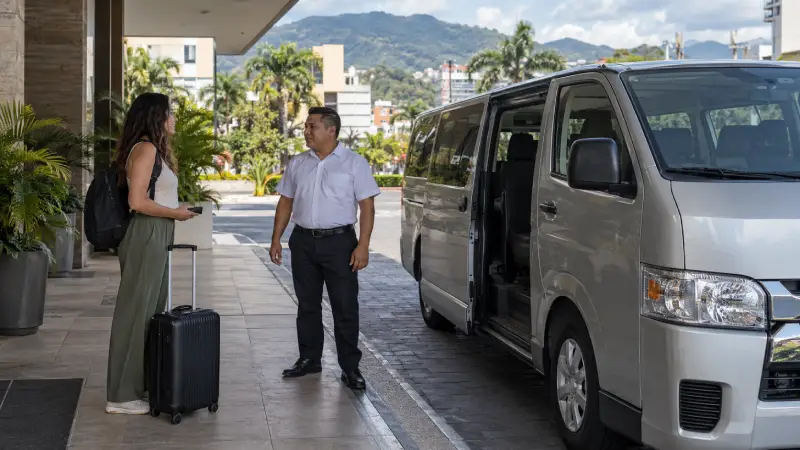
During a taxi journey, the warning sign may be a driver declining to use the meter, claiming it is broken or changing the price after departure.
Confirm that a metered taxi will use its meter before the journey begins. UK guidance for Costa Rica recommends official taxis, a visible driver ID and use of the meter. If the arrangement is unclear, select another vehicle before loading your bags.
Prebooked private transfers are a different transaction. Get the total price, currency, passenger count, destination and any extra charges in writing. Keep the confirmation accessible so a disagreement can be checked against the actual booking.
Another reported pitch around San José involves telling visitors that buses are on strike, unavailable or already gone, then offering a costly replacement ride. Local travel reporting describes this diversion tactic, including around the airport and bus-terminal journeys.
The key warning is that the person announcing the problem immediately benefits from your buying another service. Confirm the situation with the bus operator or terminal staff before abandoning your original plan. Genuine cancellations happen, so the objective is independent confirmation.
Save your transport provider’s contact details and booking messages before arrival. Mobile data through a Costa Rica eSIM can help you open those messages and check routes while away from Wi-Fi; keep essential confirmations downloaded as well.
The flat-tire setup uses a mechanical problem to draw attention away from the vehicle. UK travel advice describes incidents in which criminals punctured tires, then offered help while an accomplice stole belongings.
If a tire fails, prioritize a safe stop. Do not keep driving on an unsafe wheel merely to reach a preferred location. Secure your belongings and contact the rental company using the number from your agreement.
The Costa Rica Tourism Board’s roadside advice warns against accepting unsolicited assistance after a breakdown or puncture. Let your rental company arrange help, and avoid opening the luggage compartment simply because a stranger asks you to.
After a collision, you may feel obliged to step out immediately and engage with the other driver. UK travel advice documents deliberate collisions used to stop vehicles for robbery.
If you suspect an intentional setup and feel threatened, contact police. Where the vehicle can be moved safely, the guidance advises reaching a safe location, such as a police station or garage, and explaining your actions to traffic police. This does not remove your responsibility to report the collision or follow their instructions.
Preparation also includes understanding the roads you will use. Our guide to driving and navigation in Costa Rica covers route planning beyond these specific encounters.

Holiday-rental fraud can involve a property that exists but is being advertised by someone without permission to rent it. Attractive photographs and a real map location therefore cannot verify the seller.
In an April 2026 interview about rental fraud, an OIJ investigator described victims paying deposits and arriving to find nonexistent properties, occupied homes or owners who knew nothing about the arrangement.
Before sending a deposit:
Find the accommodation through an independent search and compare its address and contact details.
Contact the property through a separately verified channel to confirm who is authorized to take the booking.
Request written dates, inclusions, cancellation terms and the payment schedule.
If you began on a booking platform, check its payment rules before following a request to move elsewhere.
Pause if the seller keeps changing payment details or pressures you to transfer money before answering basic questions.
WhatsApp communication and advance deposits can be legitimate. The concern is an unverified seller whose claimed property or booking cannot be independently confirmed.
Apply the same checks to tour deposits: identify the actual operator and get the promised activity, meeting point and inclusions in writing. If a booking proves false, contact your payment provider promptly and preserve the original listing and conversation.
Costa Rica car-rental searches can produce a low headline price followed by a much larger total. The important distinction is whether required costs were clearly disclosed before you committed.
Insurance terminology and rental conditions vary. Do not assume that every extra policy is compulsory, that credit-card coverage replaces every requirement or that a separately listed insurance charge proves deception. Budget’s published Costa Rica conditions distinguish included liability protection from optional coverages and explain how coverage choices affect deposits.
Ask the rental company for one written breakdown showing:
The total rental charge, including taxes and required fees.
Coverage already included and anything else required under that agreement.
Optional protections and the conditions for declining them.
The security deposit, accepted payment method and release process.
Fuel, toll, return-location and other charges relevant to your booking.
Compare that breakdown with the agreement at collection. If a new charge appears, ask what it covers and where it was disclosed before signing.
Damage disputes need their own record. Photograph the vehicle during collection, have existing marks recorded and retain the inspection paperwork. At return, request written confirmation of the vehicle’s condition and any proposed charge. Clear records help you challenge a damage claim that does not match the handover without assuming that every dispute involves fraud.
Canada’s Costa Rica travel advice warns about credit-card and ATM fraud. Keep your card in view during payment, cover the keypad when entering your PIN and avoid a reader that looks unusually altered.
Use an ATM inside a bank or established business where possible. If something seems wrong, cancel the transaction and contact the bank through its own published channel. Do not give your card or PIN to someone offering to fix the problem.
Monitor your account during the trip. Unrecognized transactions warrant prompt contact with your card issuer, even if the physical card is still in your wallet.
Review a restaurant bill against what you ordered before paying. At a fuel stop, check that the pump starts at zero and compare the displayed total with the amount presented for payment. Keep the receipt if the terminal result or final charge is unclear.
Check whether the amount is in colones or US dollars. Ask about the exchange rate before approving a payment in a different currency from the quoted price.
Disclosed exchange costs and service charges should be assessed against what was agreed. Ask for an explanation or correction before assuming that an incorrect bill was deliberate. The practical concern is a charge you did not agree to, an unexplained duplicate or items that were never supplied.
Get away from immediate danger first. If someone threatens you or prevents you from leaving, seek a safe public place and call 911 for emergency services in Costa Rica. Avoid a confrontation over money.
Preserve the details while they are available: receipts, booking confirmations, messages, screenshots, payment references and the time and location. Record what happened without putting yourself at risk to photograph someone.
Contact your bank or payment provider through its official app or published number. Explain whether the problem is an unauthorized payment, a duplicate charge or a service that was not delivered, and follow its instructions.
Report suspected criminal fraud to the OIJ. Costa Rica’s government publishes OIJ complaint contacts and evidence guidance; the complaint reception office in San José operates around the clock. Ask how to obtain a record of your report and what follow-up is required.
Also notify the booking platform or service provider where relevant. Reporting creates a record, but recovery depends on the circumstances and the payment provider’s process.
