Download the App and manage your eSIMs easily
Create your order quickly
See your eSIM details
Track your remaining data
Download the App and manage your eSIMs easily
Create your order quickly
See your eSIM details
Track your remaining data
Costa Rica is the undisputed crown jewel of Central America. With its lush rainforests, smoking volcanoes, and the famous laid-back "Pura Vida" (pure life) lifestyle, it attracts millions of eco-tourists and surfers every year.
Kölbi (ICE), Liberty
Instant delivery
From 4.90 USD

Ethan Brooks
Updated Aug 2, 2026
10 min read
Jump to section
👇Best for most trips
Kölbi (ICE), Liberty

Costa Rica
10 GB · 30 days
Enough for maps, bookings and everyday travel.
Hotspot supported
$24.90
From 4.90 USD
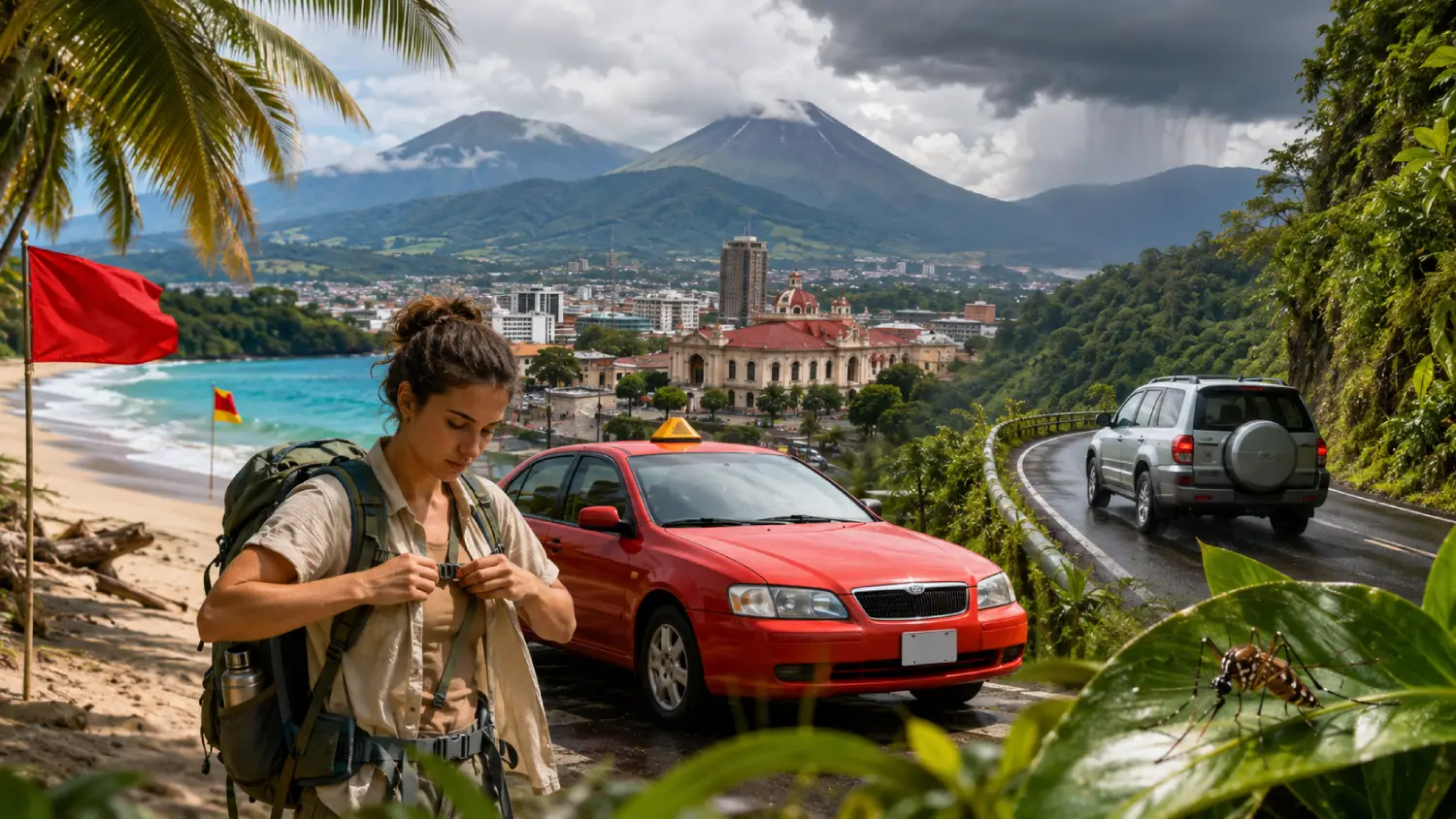
Yes, Costa Rica is generally suitable for tourists in 2026, but it is not a destination where travelers should ignore everyday precautions. Petty theft, rental-car break-ins and occasional violent crime are the main security concerns. Road conditions, rip currents and adventure-tour safety may pose more immediate risks on many itineraries. The United States currently advises increased caution because of crime, while Canada recommends a high degree of caution. A chikungunya outbreak in northwestern Costa Rica also requires enhanced mosquito precautions, particularly for travelers visiting Guanacaste and surrounding affected areas.
| Topic | Current Assessment | What Travelers Should Know |
|---|---|---|
| Overall tourist safety | Generally suitable with precautions | Most tourist itineraries remain possible, but travelers should plan around crime, roads, beaches and weather. |
| Official travel advice | Elevated caution | The U.S. lists Costa Rica at Level 2; Canada advises a high degree of caution because of crime. |
| Theft and scams | Common enough to plan for | Phones, passports, luggage and items left in vehicles are frequent targets. |
| Violent crime | Less common than theft, but possible | Armed robbery, assault and sexual assault can affect tourists, particularly at night or in isolated places. |
| Transport and driving | Moderate practical risk | Rain, potholes, landslides, limited lighting and narrow bridges can complicate journeys. |
| Health and environment | Localized and seasonal risks | Chikungunya, heavy rain, rip currents, earthquakes and volcanic activity require current checks. |
| Emergency number | 911 | The same number connects police, ambulance and fire services. |
Costa Rica is not under a nationwide “do not travel” or “reconsider travel” warning from the governments reviewed. However, the wording is more cautious than a simple endorsement of unrestricted travel.
Current official guidance includes:
The U.S. State Department’s Costa Rica advisory is Level 2: Exercise increased caution due to crime. It was issued on April 2, 2026.
The Government of Canada advises travelers to exercise a high degree of caution due to crime. Its page was last updated on July 29, 2026.
The UK Foreign Office does not currently advise against travel to Costa Rica as a whole, but warns about theft, armed robbery, sexual assault, road conditions, rip currents and natural hazards.
These warnings do not mean that every beach town or urban neighborhood is dangerous. They mean travelers should avoid treating Costa Rica’s tourism popularity as proof that normal security precautions are unnecessary.
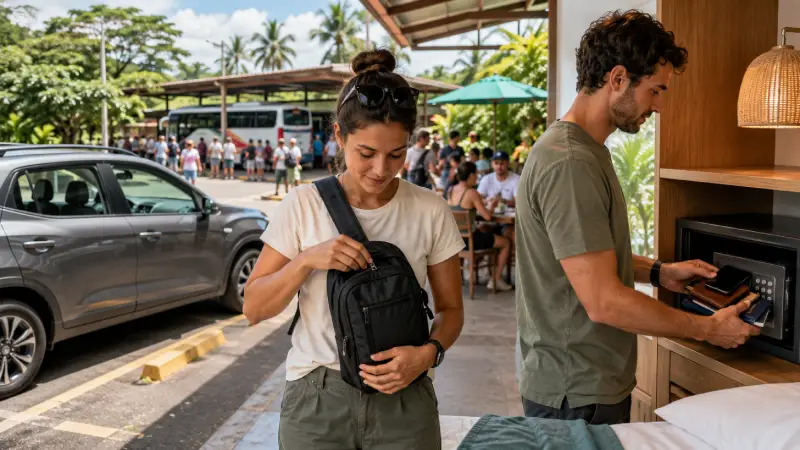
For most visitors, opportunistic theft is a more realistic concern than serious violence.
Canadian guidance says theft commonly occurs in places such as:
Bus stations, buses and airport terminals
Hotel lobbies and restaurant patios
Beaches, viewpoints and busy attractions
Markets and public parks
National-park and supermarket parking areas
Keep bags physically attached to you rather than hanging them over a chair. Do not place a phone or wallet on an outdoor table, and keep bus luggage within sight whenever possible.
Vehicle break-ins are a significant concern across the country. Items may be stolen from vehicles parked at beaches, hotels, restaurants, supermarkets and national parks.
Practical precautions include:
Remove all belongings, including items hidden in the trunk.
Manually check that every door has locked.
Use staffed or controlled parking when available.
Do not display rental documents, camera bags or charging cables.
Be cautious if a stranger points out a flat tire or offers unsolicited assistance.
Thieves have reportedly punctured tires and then distracted drivers while an accomplice steals from the vehicle.
The U.S. advisory states that armed robbery, homicide and sexual assault can affect tourists. UK guidance also notes that gang-related shootings have become more frequent in some urban locations, including places visited by travelers.
Reduce your exposure by avoiding poorly lit streets, empty beaches and isolated walking routes after dark. Do not resist an armed robbery. Choose accommodation with reliable locks and controlled access rather than relying only on a destination’s reputation. Where to Stay in Costa Rica: Best Areas & Towns Guide can help when comparing practical bases.
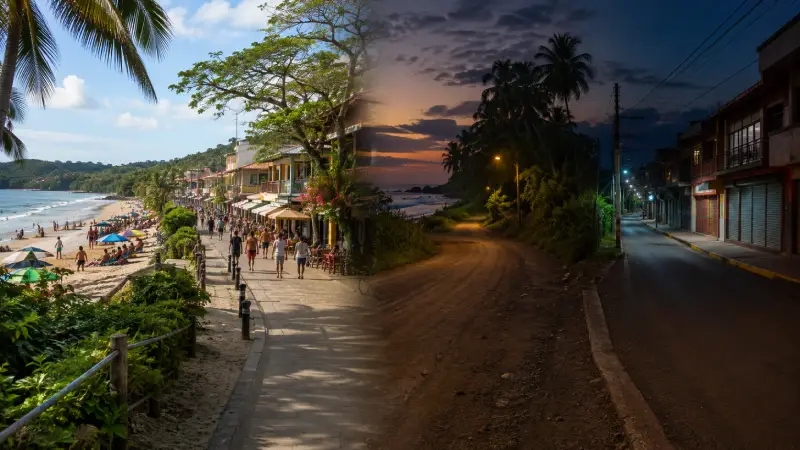
There is no current government-defined nationwide list of tourist “no-go zones.” Official advice instead identifies places and situations where theft requires additional attention.
Canada highlights:
Central San José, including the Coca-Cola bus terminal area, Mercado Central and public parks
Jacó, Manuel Antonio, Quepos and Dominical
Santa Teresa, Montezuma, Mal País and Puntarenas
Cahuita, Puerto Limón and Puerto Viejo
These places remain active tourism destinations. Their inclusion in official guidance does not mean visitors must automatically cancel plans; it means phones, bags, passports, vehicles and nighttime transport require closer management.
The most useful distinction is often not between “safe towns” and “dangerous towns,” but between higher- and lower-risk situations:
A busy beach during the day is different from the same beach after dark.
A secured hotel transfer is different from an unmarked vehicle.
A staffed car park is different from an isolated roadside pullout.
A marked national-park trail is different from an unofficial route.
Road and water hazards can affect tourists who never encounter crime.
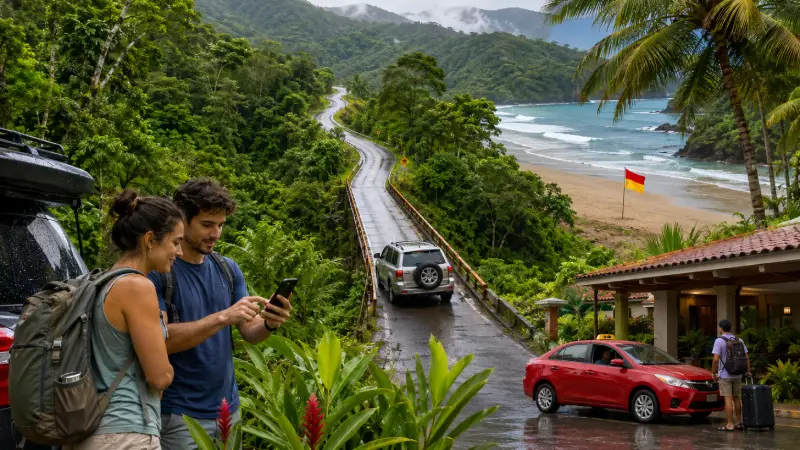
Main roads are generally more manageable than remote or secondary routes, but conditions can change quickly. Heavy rain may create potholes, flooding, landslides and closures. Bridges sometimes narrow to one lane, while rural roads may have poor lighting, animals or pedestrians near the carriageway.
When driving:
Avoid long, unfamiliar journeys after dark.
Download or save the route before departure.
Do not blindly follow a navigation app onto an unsuitable road.
Allow extra time during the June-to-November rainy season.
Ask the rental company about current road conditions.
Driving in Costa Rica: Waze vs. GPS & Navigation Guide provides more detailed navigation advice.
After an accident involving injury or disputed responsibility, do not move the vehicle unless remaining there creates an immediate danger. Stay at the scene and call 911.
Official taxis are red, while authorized airport taxis are orange. UK guidance recommends radio-dispatched taxis and advises checking that the driver’s identification is visible and the meter is operating. Avoid unmarked “taxi pirata” vehicles.
Rip currents occur on both coasts, and many beaches do not have permanent lifeguards. Calm-looking water should not be treated as proof that swimming conditions are safe.
Before entering the ocean:
Check warning flags and ask about local conditions.
Choose an area near a lifeguard where available.
Do not swim alone or after drinking alcohol.
Avoid river mouths and areas with crocodile warnings.
If caught in a rip current, remain calm and swim parallel to shore rather than directly against it.
Costa Rica’s official tourism guidance identifies rip currents as one of the most important coastal hazards for visitors.
Costa Rica can work well for independent travel, but solo travelers should plan nighttime movement rather than assuming that busy tourist towns remain equally comfortable after dark.
Official guidance reports harassment, sexual assault and incidents involving taxis and beach resorts. Drink spiking has also been reported.
Useful precautions include:
Arrange transport back to your accommodation before going out.
Avoid walking alone along beaches or unlit roads at night.
Keep drinks in sight and decline opened drinks from strangers.
Meet new acquaintances in public places.
Share your accommodation and transport details with a trusted contact.
Seek urgent help if sudden confusion, unusual drowsiness or severe illness develops after drinking.
These measures apply to all travelers, although women traveling alone may face additional harassment or personal-safety concerns. Solo Travel in Costa Rica: Safety, Social Scenes & Survival Guide and Costa Rica Nightlife Guide: Clubs, Scams & Party Zones provide more focused planning advice.
The CDC’s July 30, 2026 notice places Costa Rica at Level 2: Practice enhanced precautions because of a chikungunya outbreak in the northwest. The outbreak was initially identified in Playa Langosta, Santa Cruz, Guanacaste, where Costa Rica’s Ministry of Health activated epidemiological surveillance and mosquito-control measures.
Travelers visiting affected areas should:
Use effective insect repellent.
Wear long sleeves and trousers when practical.
Select screened or air-conditioned accommodation.
Remove or avoid containers holding standing water.
Seek medical advice for fever, joint pain, rash or joint swelling.
Pregnant travelers, older adults and people with relevant medical conditions should review the CDC notice and discuss destination-specific precautions with a healthcare professional.
Heavy rain can also affect roads, hiking routes and national parks. Check the Costa Rican Meteorological Institute before long drives or outdoor activities, particularly during the rainy season. Volcanic access may change with little notice, so use official park channels and never bypass closures or restricted trails.
Save 911 for police, ambulance or fire emergencies. Costa Rica’s tourism authority says a local mobile line is not required to call it.
Keep your passport, bank cards and spare cash in separate secure locations.
Remove everything from parked vehicles, including the trunk.
Use official taxis, known transfers and established adventure operators.
Check weather, road and park conditions before changing regions.
Carry insect repellent and use it consistently in outbreak and mosquito-prone areas.
Travelers who need mobile data for maps, accommodation contact, transport information and official alerts can review a Costa Rica eSIM. Connectivity options are also explained in Best eSIM for Costa Rica.
Costa Rica is generally safe enough for tourists who prepare for the risks that actually affect travel: opportunistic theft, vehicle break-ins, nighttime isolation, difficult roads, rip currents and mosquito-borne illness.
There is no current nationwide warning to avoid the country. However, the U.S. Level 2 advisory, Canada’s elevated caution and the active chikungunya notice justify sensible planning. Secure valuables, avoid using vehicles as storage, arrange transport after dark and check health, weather and park updates shortly before each stage of the trip.
Costa Rica is generally suitable for families who choose established accommodation and tour operators. Parents should pay particular attention to swimming conditions, balcony or pool safety, mosquito protection and long road journeys.
Tourists visit San José routinely, but theft requires additional caution around downtown streets, markets, parks and bus-terminal areas. Use planned transport after dark and avoid carrying unnecessary valuables.
Risk depends heavily on the setting. Restaurants and organized entertainment areas are different from empty beaches, isolated roads and poorly lit streets. Official advice recommends avoiding remote or poorly lit places at night.
There is no single risk for every itinerary. Theft and vehicle break-ins are important security concerns, while driving conditions and rip currents may be more immediate hazards for travelers moving between beaches, parks and rural destinations.
Safety information checked on August 2, 2026. Conditions and official advisories can change; review the linked official guidance before travel.
Best for most trips
Kölbi (ICE), Liberty
Costa Rica
10 GB · 30 days
Enough for maps, bookings and everyday travel.
Hotspot supported
$24.90
From 4.90 USD
Choose the perfect data plan for your trip

Manage your eSIM in the app
Install, top up and track data.
