Download the App and manage your eSIMs easily
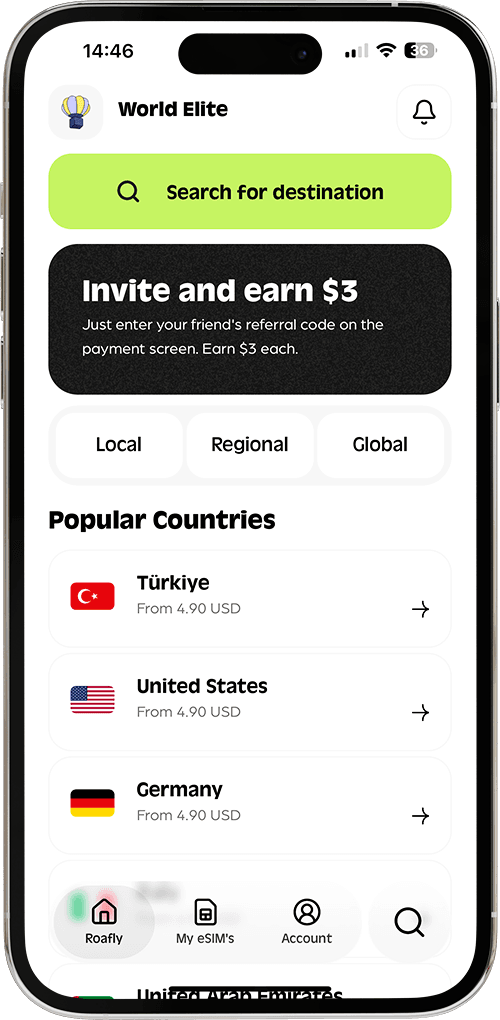
Create your order quickly
See your eSIM details
Track your remaining data
Download the App and manage your eSIMs easily
Create your order quickly
See your eSIM details
Track your remaining data
Plan the driving part of your Morocco trip, from city pickups and rental paperwork to mountain roads, motorway tolls and desert-camp transfers.

Sophie Callahan
Updated Nov 5, 2026
11 min read
Save 15% on your Roafly eSIM
Stay connected on your next trip. Use the code below at checkout.
View All DestinationsJump to section
👇Save 15% on your Roafly eSIM
Stay connected on your next trip. Use the code below at checkout.
View All Destinations
Manage your eSIM in the app
Install, top up and track data.
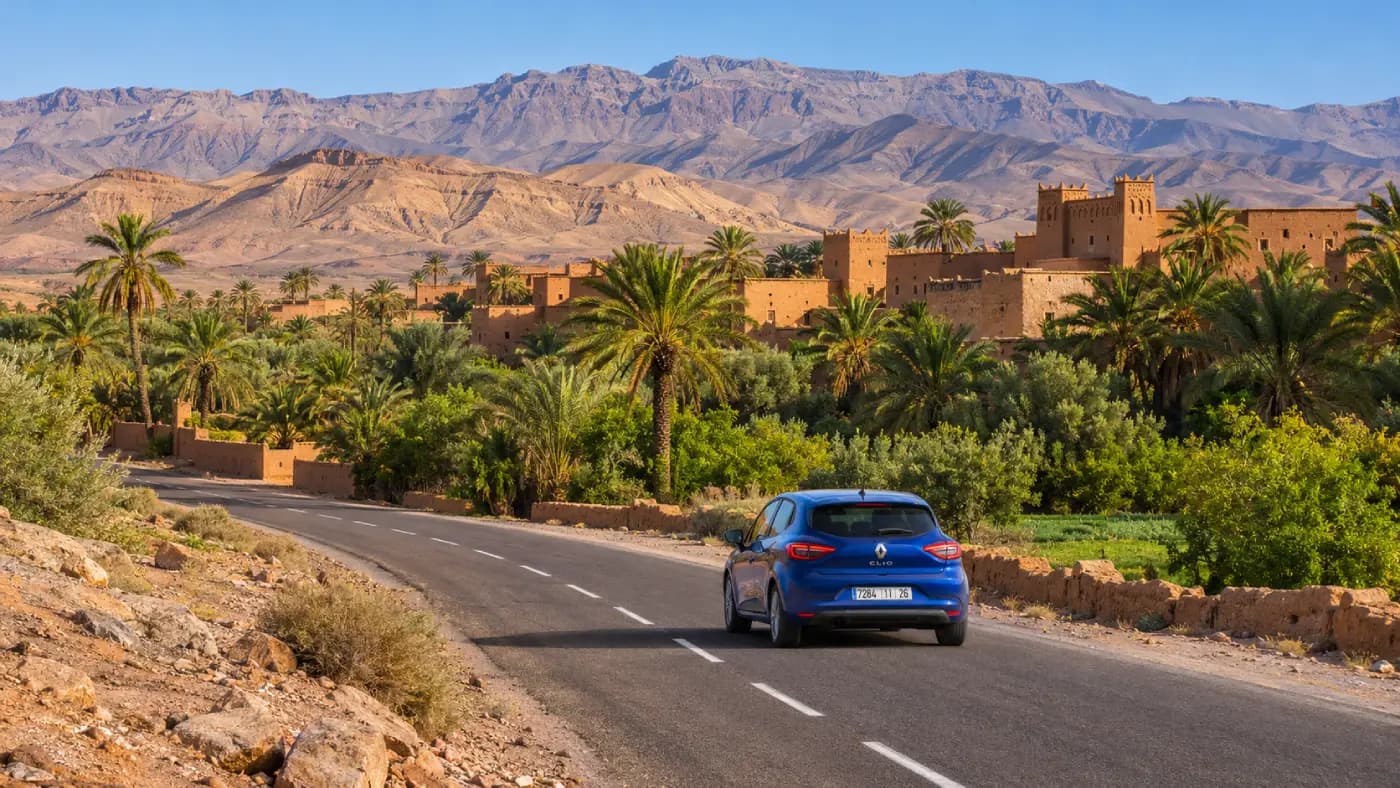
Rent a car in Morocco for the part of your trip that takes you into the Atlas, between kasbahs or along the coast with frequent stops. Spend your Marrakech or Fez city days without one, then collect it when you leave. Trips focused on the rail-connected cities can work well with trains and local transfers.
| Before you book | What matters |
|---|---|
| Driving side | Drive on the right. |
| Roundabouts | Follow the entry signs; circulating traffic does not have priority at every roundabout. |
| Documents | Bring your original licence. IDP, translation and rental requirements depend on the licence and supplier. |
| Vehicle | An ordinary car can handle the main paved routes; arrange sandy camp access separately. |
| Budget | Allow for fuel, tolls, parking and extras, plus available card credit for the deposit. |
| Navigation | Download your driving area and save arrival instructions before setting off. |
Morocco’s train network connects major destinations including Tangier, Rabat, Casablanca, Marrakech and Fez. If those cities form your itinerary, weigh a rental against the train journeys and transfers you would actually use.
The decision changes when your days involve several viewpoints, villages or rural accommodation stops. Driving gives you control over those intermediate stops, where a coach between two towns may leave another journey to arrange.
| Your itinerary | Suggested approach | Why |
|---|---|---|
| Marrakech or Fez city stay | Walk and use local transport or arranged transfers | A parked rental adds little to medina sightseeing. |
| Cities connected by rail | Use trains between cities | You avoid driving and parking at each urban stop. |
| Marrakech plus a stay in Essaouira | Consider a coach or private transfer | A direct transfer may cover the journey without keeping a car throughout your stay. |
| Marrakech followed by Atlas and southern stops | Collect a car after your city stay | You can stop along the route and reach accommodation beyond the main transport hubs. |
| Several beaches or rural stays around Agadir | Rent for that regional section | Your own schedule becomes more useful as the stops spread out. |
Reserve suitable outward and return services for an Essaouira stay, allowing for the journey between the coach stop and your accommodation. Do not build a tight day trip around an assumed late return.
If mountain driving would spoil the holiday, compare a driver or organised excursion for that section. You can still travel independently for the city days.
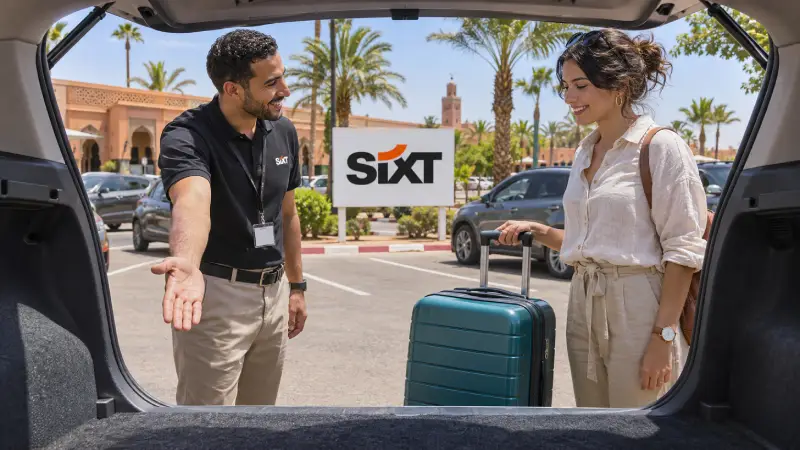
Collect the car where the driving portion begins. Landing in Casablanca does not oblige you to rent there if your first few days are on the rail network and your road trip starts in Marrakech.
Marrakech has both airport and city pickup options. SIXT, for example, has Menara Airport and Marrakech Train Station branches. The station-area option is worth comparing when you are arriving by train or collecting a car after a city stay.
Airport pickup suits a trip that heads straight out of town. Before booking, establish whether collection is at a terminal desk, an outside meeting point or a shuttle-served location. Late arrivals also need an agreed collection procedure.
Compare SIXT and Hertz alongside other suppliers on the same dates, transmission, mileage allowance and protection terms. If you use a booking platform, identify the company that will supply the vehicle and handle the deposit.
Book an automatic explicitly if that is what you want to drive. Match boot space to your luggage, especially if several people are sharing the car.
One-way return can save retracing a long route, but it needs to be included in the booking and may add a fee. International travel is a separate permission: SIXT’s Morocco rentals cannot be taken into neighbouring countries.
Still choosing flights? Compare Marrakech or Casablanca airport alongside your first overnight stop and intended pickup location.
Morocco’s road code allows foreign nationals to drive with a valid foreign licence during a temporary stay for up to one year. The documents required for your particular licence, and the rental company’s acceptance conditions, still matter.
UK licence holders need their original licence and a 1968 International Driving Permit. Morocco no longer accepts the 1949 IDP for this purpose. Obtain the correct document before travelling.
Other licence holders should establish the requirements for their issuing country and chosen supplier before paying. SIXT requires an IDP with licences printed in a non-Latin alphabet; certain issuing countries also trigger an official translation requirement. Carry the original licence with any accompanying permit or translation.
Rental age and experience conditions vary. SIXT generally requires a licence held for at least two years and a minimum age of 21, with higher ages for some vehicles. Hertz has groups available from 21 with one year’s licence history, while other groups require 23 and two years.
Bring your passport, booking confirmation and the payment card accepted for the deposit. At Hertz, the deposit requires a credit card in the renter’s name; specified debit-card types are excluded. Paying online successfully does not establish that the same card qualifies at collection.
Every additional driver needs to meet the supplier’s conditions and appear on the rental agreement. Prepare your passport and any visa required under Morocco entry requirements alongside your driving documents.
Compare the full booking total, including mandatory charges and the options you need. Then add fuel, tolls, parking, any one-way fee and charges for exceeding a mileage allowance. Include these in your Morocco travel budget, rather than multiplying an advertised daily rate by the number of days.
Keep three figures separate:
Rental total: the amount payable for the hire and selected services.
Security deposit: money held or collected as security, affecting your available funds.
Excess or deductible: the amount you may owe for a covered damage or theft claim under the contract.
The deposit is not an extra holiday expense if it is returned in full, and it is not necessarily the maximum you could owe.
Third-party liability covers claims involving other people or property within the policy’s terms. Damage waivers concern your responsibility for the rental vehicle. Read the remaining excess and exclusions alongside the product name.
Hertz’s Morocco conditions, for example, retain exclusions involving tyres, underbody damage and damage off asphalt. Removing a damage excess can still leave a deposit and other liabilities. Vehicle capability and contractual permission must both fit your route.
Broker protection may work through reimbursement. With DiscoverCars’ standard Full Coverage, you normally leave the supplier’s deposit, pay eligible charges first and claim reimbursement afterwards. Treat any separately advertised no-deposit arrangement according to its own booking terms.
At handover:
Record existing damage on the signed condition report and take clear photos.
Photograph the fuel gauge and mileage.
Inspect tyres and locate the safety equipment and vehicle documents.
Save the supplier’s breakdown and accident instructions.
On return, keep the inspection record, fuel evidence and final invoice. If an incident occurs, contact the supplier promptly and follow its reporting procedure.
Drive on the right and follow local signs, traffic lights and police directions. Keep your licence, rental agreement and the vehicle’s insurance and registration documents accessible for checks.
Moroccan roundabouts do not all use the same priority arrangement. At an entrance marked “Cédez le passage,” yield to traffic already circulating. At a roundabout governed by priority from the right, vehicles entering can have priority.
Read the roundabout priority signs as you approach, slow down and signal your exit. Priority from the right also matters at uncontrolled junctions.
Stop at a red light. There is no general permission to turn right after stopping.
If a green directional arrow is illuminated, it can authorise the indicated turn while the main signal remains red. Make that permitted turn slowly, yielding to pedestrians and traffic crossing your path.
Passenger cars commonly encounter the following limits:
| Road setting | Limits to expect |
|---|---|
| Built-up areas | Posted limits of 20, 40 or 60 km/h, depending on the location |
| National roads | Generally 80 km/h, with some sections allowing 100 km/h |
| Motorways | Up to 120 km/h |
Follow the posted limit for your section and vehicle, and reduce speed further when visibility, weather or traffic requires it.
Wear seat belts, set navigation before moving and leave phone interaction to a passenger or a safe stop. Reserve suitable child restraints with the car when travelling with children. Plan to avoid alcohol before driving.
Moroccan motorway tolls can be paid using cash, bank cards or Jawaz, the electronic toll system. Follow the lane signs for your payment method.
If the rental car has a Jawaz device, ask whether it is ready to use and how passages and any service fees will be charged. Otherwise, keep a payment method available for the staffed or card-payment lanes.
Carry some dirhams for smaller expenses along the route. The guide to paying by card and carrying cash in Morocco helps you plan withdrawals and payment options before leaving the city.
At the fuel station, use the fuel specified for your vehicle and return it at the level required by your contract. Keep the final fuel receipt.
Medina accommodation needs a more precise arrival plan than a pin on the riad’s front door. Ask the property for an accessible parking location or meeting point and instructions for the final walk with your bags.
Arrange any porter or guide through your accommodation, or agree the service and price before accepting help. Unsolicited guiding is one of the situations covered in our guide to tourist scams in Morocco.
The High Atlas deserves more time than a navigation estimate alone suggests. Winding roads, stops and changing weather all affect the journey. Schedule mountain driving in daylight and leave space in the itinerary for delays.
Winter conditions can affect high routes such as Tizi n’Tichka, including snow and temporary closures. Before crossing, obtain the latest road information and weather warnings, and follow instructions at closures. Warm conditions in Marrakech are not a reliable guide to a high mountain pass.
Use the best time to visit Morocco guide to compare seasons across the mountains, coast and south before fixing the route.
The main paved approaches to Merzouga can be driven in an ordinary car in suitable conditions. Reaching the village does not require renting a 4x4 simply because the destination is beside the desert.
The camp’s final approach is the deciding detail. Where it crosses sand, arrange the camp’s transfer and leave your rental at the agreed parking or meeting point. Establish whether that transfer is included in the accommodation price.
Keep a normal rental off the dunes. Even a hired SUV needs appropriate capability, contractual permission and an experienced driver for an off-road route.
Marrakech to Merzouga is a substantial journey. If you want to visit Aït Ben Haddou, Ouarzazate or the valleys along the way, spread the journey across overnight stops so sightseeing does not push the final driving hours into darkness.
Download the full driving area in Google Maps before leaving a reliable connection. Offline driving directions can work within the downloaded area, but traffic information and alternative routes are unavailable offline.
Waze relies on an internet connection for its routing and live information. Use it as a connected navigation tool, with a downloaded map available as backup.
ADM Trafic provides information about the motorway network, including incidents and works. Mountain and secondary-road conditions need separate local information; an app-generated route should never override a closure or road sign.
Save the car-return entrance, parking location and accommodation contact details before departure. Keep a charger within reach and test that your downloaded map covers the next section of the journey. Beyond driving, these useful apps for Morocco cover train bookings, translation and arrival coordination.
Mobile data helps with updated searches and messages to your accommodation or rental company. Compare providers and allowances in our best eSIM for Morocco guide when choosing your data plan.
You can prepare Roafly’s Morocco eSIM on an unlocked, eSIM-compatible phone before the trip. Keep the offline map ready too, particularly before leaving the main towns.
