Download the App and manage your eSIMs easily
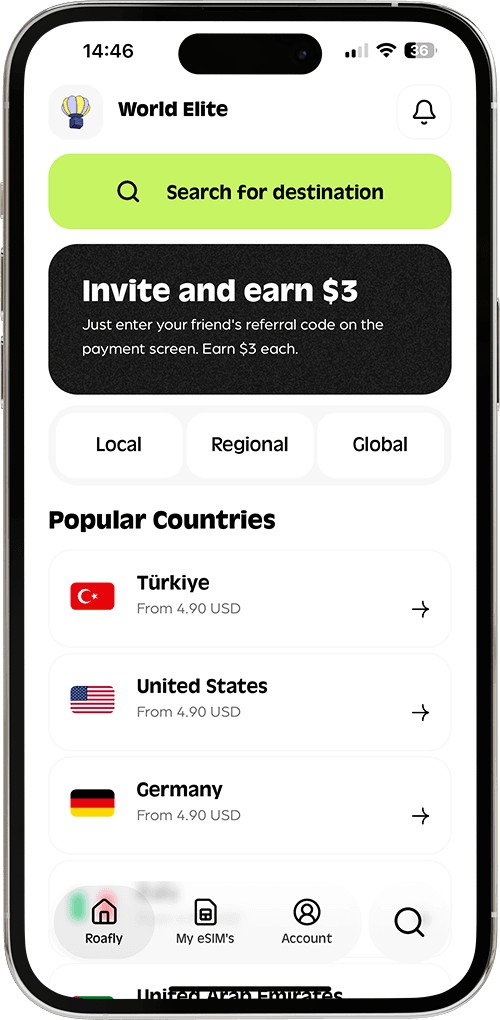
Create your order quickly
See your eSIM details
Track your remaining data
Download the App and manage your eSIMs easily
Create your order quickly
See your eSIM details
Track your remaining data
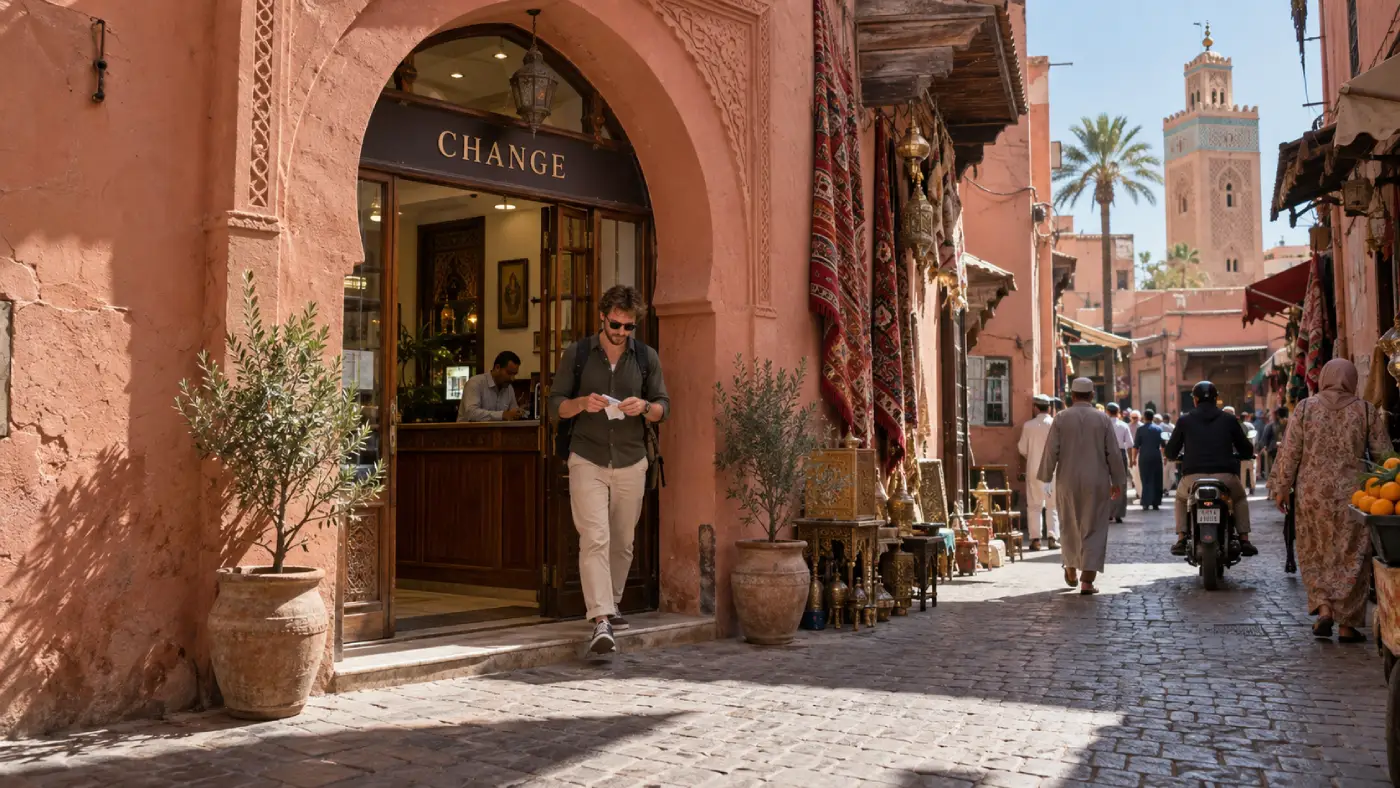
Paying for a Morocco trip involves more than finding an ATM. Know where dirhams are useful, which conversion choices affect your costs and why exchange receipts matter before you fly home.

Lena Hartley
Updated Oct 6, 2026
9 min read
Save 15% on your Roafly eSIM
Stay connected on your next trip. Use the code below at checkout.
View All DestinationsJump to section
👇Save 15% on your Roafly eSIM
Stay connected on your next trip. Use the code below at checkout.
View All Destinations
Manage your eSIM in the app
Install, top up and track data.
Carry Moroccan dirhams for souks, small cafés, taxis and tips, and use a bank card where it is accepted. Major hotels, larger restaurants and modern shops are more likely to take cards, but a day exploring a medina can involve several cash payments even when your accommodation was paid online.
The most useful preparation is to separate your prepaid expenses from what you will settle locally. Then arrange cash for those local payments, keep a backup card separately and avoid withdrawing a large surplus near the end of your trip.
Morocco is easier to navigate with both cash and a physical card. Payment options vary between businesses, including properties that look similar on booking websites.
| Situation | Payment approach | What to arrange |
|---|---|---|
| Major hotels and larger restaurants | Cards are commonly accepted | Use a supported card and have your PIN available |
| Riads and smaller guesthouses | Payment terms vary by property | Establish whether your booking is prepaid and how any remaining balance is due |
| Souks, small cafés and market stalls | Carry dirhams | Keep smaller notes for purchases and change |
| Local taxis and tips | Prepare cash | Agree the fare or meter arrangement before the journey |
| Villages and rural stops | Carry enough dirhams for planned spending | Get cash before leaving a town with banking services |
| Online bookings | Follow the seller’s available payment methods | Keep access to your bank’s payment authentication |
Before paying for a taxi ride, a market purchase or an informal service, establish the total and the currency. Keep that agreement clear even if the conversation switches between euros and dirhams. Our guide to payment-related scams in Morocco covers the situations that deserve closer attention.
Base your cash needs on what remains unpaid: accommodation balances, local transport, meals, small purchases and excursions that require cash. Someone with prepaid hotels and transfers needs a different amount from someone paying each guesthouse on arrival.
Keep enough for the next part of your route and a modest contingency. Separate the money you will use that day from your reserve, and replenish it before rural travel.
Morocco’s currency is the Moroccan dirham, written as MAD or DH. Banknotes come in 20, 50, 100 and 200 dirhams. Smaller notes and coins are useful for short taxi rides, drinks and tips.
Use dirhams for everyday cash purchases. Bring foreign cash for exchange through a bank or authorized exchange operator, and compare the amount of MAD you will receive.
If a riad or excursion is quoted in euros, ask for the amount and currency payable before arrival. Also establish whether the reservation has already been charged or simply secured with your card details. That distinction can change how much cash you need immediately.
You do not need to exchange all your foreign cash at once. Nonresident visitors can retain it and convert it as needed. Avoid buying another foreign currency solely for the trip without comparing the combined cost of both conversions.
ATMs are readily available in Moroccan cities and larger towns. Look for a machine displaying your card’s network, ideally at a bank branch where you can seek assistance during opening hours.
Use a debit card for withdrawals if its terms suit overseas use. Credit-card withdrawals can attract cash-advance fees and interest, so review those terms separately from the cost of ordinary purchases.
Withdrawals can involve several charges:
ATM operator fee: charged by the bank or company running the machine.
Your card issuer’s fees: potentially including an overseas withdrawal fee and foreign-currency charges.
Currency conversion: handled through your card arrangements, or offered by the ATM through dynamic currency conversion.
Read the machine’s fee notice before accepting. An ATM advertising a particular fee cannot tell you everything your own bank will charge.
At the currency-choice screen, select MAD and decline the ATM’s conversion into your home currency if you want your card’s normal conversion process. The separate withdrawal charges can still apply.
Your bank’s daily cash limit and the ATM’s limit for a single transaction are separate. The machine may offer less than your card would otherwise allow.
Check your issuer’s limit before departure. If a withdrawal is declined, review the amount, available balance and any security alert before trying again. Repeated attempts without identifying the problem can leave you unsure which transactions were authorized.
Balance transaction fees against the inconvenience of carrying too much cash. The right withdrawal amount depends on your upcoming expenses, access to another ATM and your card’s terms.
Use banks or authorized currency-exchange operators. Compare the final number of dirhams offered for the same amount of foreign cash, including any stated charges. Posted buying and selling rates refer to different directions of exchange.
At the airport, getting enough dirhams for your immediate arrival expenses can be practical. Once those expenses are covered, you can compare other quotes before exchanging more. An airport location alone does not establish whether a particular offer is good or poor.
Count the cash before leaving the counter and request the exchange receipt, known as a bordereau de change. Keep the original, particularly if you may convert unused dirhams back into foreign currency.
The receipt has a practical role beyond checking the rate: departure buyback rules can require a document in your name. A photograph is useful as a backup, while the original should remain with your travel papers.
Check the amount and currency on the terminal before approving a payment. Where card payment is available, ask to be charged in MAD.
Some terminals offer to convert the purchase into euros, pounds, dollars or another home currency. This is dynamic currency conversion, or DCC. The displayed home-currency amount includes the provider’s exchange rate and any associated markup.
Declining DCC leaves conversion to your card arrangements. Your issuer may still apply its own foreign-transaction charges, so compare cards using their complete overseas-payment terms.
Keep the receipt and review the transaction in your banking app. If you selected MAD but the merchant charged another currency, retain the evidence and raise the issue with your card issuer.
Online purchases may also require bank authentication. Mobile data from a Morocco eSIM can help you access banking apps and booking confirmations. Roafly’s plan is data-only; keep access to your usual phone line if your bank sends verification codes by SMS.
Apple Pay and Google Wallet can be useful at merchants with compatible contactless terminals. You need a supported card already set up in your wallet, and the merchant must accept its payment network.
Carry the physical card as well. A working phone wallet adds convenience at suitable terminals, while cash remains useful at businesses without card facilities.
Before travelling, complete any card verification your wallet requires and test it with your issuer-supported setup. Downloading a wallet after arrival does not make every card compatible.
Most short visits are simpler with dirhams and your existing cards. Orange Money is a separate local payment account with its own registration and funding requirements.
Users must be at least 18 and have a mobile line from an operator established in Morocco. Its published account options include a basic account capped at 1,000 MAD and an account capped at 20,000 MAD opened at an Orange Money outlet with valid identification; a passport is among the accepted documents for foreign applicants.
Funding is a separate consideration. Card top-ups require a Moroccan-issued bank card, while cash deposits are available through authorized outlets. Merchant payments are limited to participating businesses.
That extra setup is worth considering only if you have a specific reason to use the service. If that requires a Moroccan phone number, our guide to buying a local SIM in Morocco explains the local SIM options.
Reduce your remaining cash gradually as departure approaches. Leave enough for unpaid transport and other final expenses, then arrange to exchange any substantial surplus while you still have time to obtain the necessary documents.
Nonresident visitors can exchange leftover cash under the following dirham buyback rules:
| Documents available | Relevant buyback provision |
|---|---|
| Original exchange receipt in your name, less than six months old, without an entry currency declaration | Up to 20,000 MAD can be exchanged back |
| Passport and boarding card or ticket for departure abroad, at a port or airport exchange operator | Simplified departure paperwork allows up to 2,000 MAD per passport |
| Original entry currency declaration and original exchange receipts in your name, less than six months old | Documented unused dirhams can be exchanged, with the declaration annotated by the operator |
These provisions concern buying foreign currency with leftover dirhams. Separately, travellers may bring in or take out up to 2,000 MAD in Moroccan banknotes. That border allowance does not set your ATM withdrawal limit.
Keep larger balances and their paperwork in mind before reaching the departure gate. If most of your cash came from ATMs, ask the exchange operator which withdrawal records it accepts before relying on them for a substantial buyback.
Our guide to Morocco’s cash declaration rules covers the broader requirements for money carried across the border.
Before leaving home, save your card issuer’s contact details, test access to its app and keep a second payment method separately. If you are arranging mobile data for banking-app access and online bookings, compare eSIM options for Morocco before choosing a provider and allowance.
Handle a payment problem according to what actually happened:
Card declined: review the balance, overseas-payment settings and any bank security notification. Use your backup method while resolving the cause.
Website error after payment: check the booking status and payment record before paying again. Ask the merchant whether an order was created.
Unexpected or apparently duplicate charge: retain receipts and transaction details, then contact the merchant and your issuer.
Card lost or stolen: freeze or block it promptly through your issuer and follow its replacement procedure.
Keeping some dirhams and a separate backup card gives you a way to pay while the main card issue is being resolved.
