Download the App and manage your eSIMs easily
Create your order quickly
See your eSIM details
Track your remaining data
Download the App and manage your eSIMs easily
Create your order quickly
See your eSIM details
Track your remaining data
Morocco permits ordinary personal belongings and limited duty-free purchases, but drones need special attention before you pack.

Lena Hartley
Updated Sep 28, 2026
7 min read
Save 15% on your Roafly eSIM
Stay connected on your next trip. Use the code below at checkout.
View All DestinationsJump to section
👇Save 15% on your Roafly eSIM
Stay connected on your next trip. Use the code below at checkout.
View All Destinations
Manage your eSIM in the app
Install, top up and track data.
Foreign currency worth 100,000 Moroccan dirhams or more must be declared, while Moroccan banknotes have a separate 2,000-dirham limit. Prepare any medicine documents and import permissions before departure, and approach Customs before leaving the inspection area if something in your luggage needs declaring.
These rules concern your belongings. Check Morocco’s visa and passport requirements separately when preparing your travel documents.
| Item | Current rule | Best action |
|---|---|---|
| Drones | Import controls; no ordinary tourist temporary admission | Leave at home without advance authorization |
| Foreign cash and covered payment instruments | Declare from MAD 100,000 equivalent | Declare on arrival and retain proof |
| Moroccan banknotes | Up to MAD 2,000 | Count separately from foreign currency |
| Alcohol | One 1L wine bottle plus one 1L spirits bottle | Check bottle sizes before buying |
| Tobacco | 200g of manufactured tobacco | Use the weight-based allowance |
| Non-commercial gifts | Combined value up to MAD 2,000 | Keep purchase receipts |
| Personal medicines | Supporting documents; additional rules for controlled drugs | Prepare paperwork before departure |
The gift allowance applies separately from used personal belongings. Your own phone or laptop brought for the trip should not be treated as a new gift simply because it costs more than MAD 2,000.
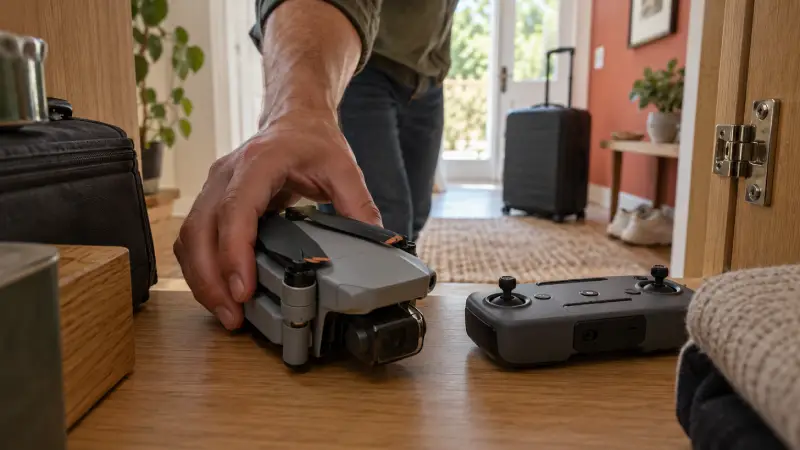
Leave your drone at home unless you have obtained explicit authorization covering its import into Morocco. Bringing it for a holiday and promising to take it home does not make it eligible for ordinary temporary admission.
Morocco’s import controls cover remotely controlled, motor-powered aircraft, including drones and model planes. Do not assume that a small camera drone qualifies for an exemption because another country treats lightweight models differently.
An import licence and permission to fly address separate decisions. Getting a device across the border does not settle where or how it may be operated. Our guide to local laws in Morocco covers restrictions that apply during your stay.
If a drone is already in your luggage, tell Customs before attempting to leave the inspection area. Do not rely on being able to arrange airport storage or retrieve it automatically on departure.
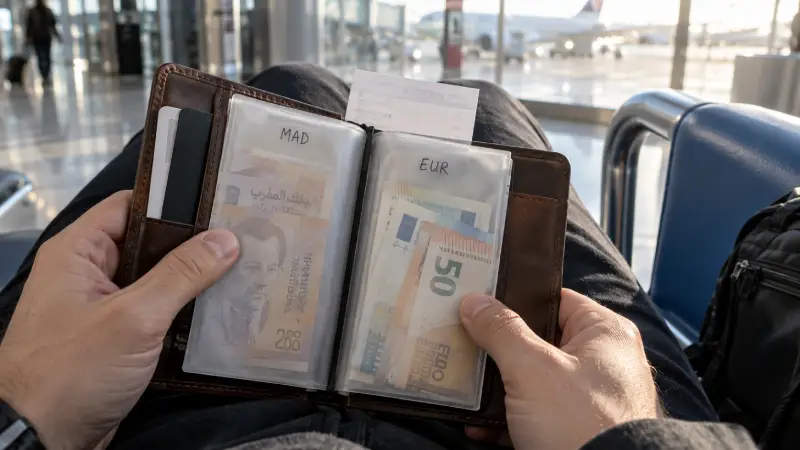
Foreign currency can be brought into Morocco without a general amount ceiling. However, you must declare covered cash and payment instruments when their combined value reaches MAD 100,000 equivalent. Exactly MAD 100,000 meets the threshold.
The requirement also covers instruments such as traveller’s cheques and certain bearer-negotiable instruments. Carrying the money in different currencies does not turn it into separate allowances.
Keep the entry declaration. Under the Office des Changes’ currency rules, non-resident visitors taking previously imported foreign currency back out must declare it and justify it with their import declaration. Declaring voluntarily on arrival can therefore be useful even below the compulsory entry threshold.
Retain exchange receipts alongside that declaration, especially if you exchange part of your cash and expect to leave with the remainder. The entry declaration is valid for up to six months for non-residents.
Travellers may bring in or take out up to MAD 2,000 in Moroccan banknotes. Describing the dirham as a closed currency does not erase this traveller exception.
Keep this separate from the identically numbered gift allowance: MAD 2,000 in banknotes and MAD 2,000 worth of eligible gifts are different customs rules.
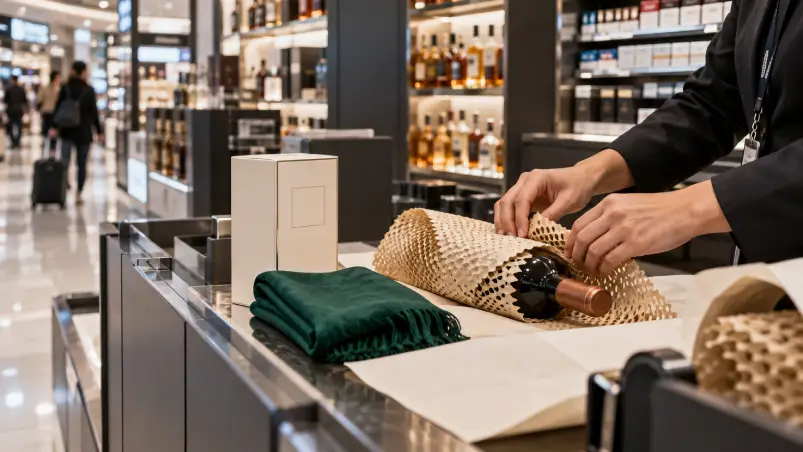
The Moroccan Customs traveller guide sets out these personal allowances:
Alcohol: one bottle of wine of one litre, plus one bottle of spirits or other alcoholic liquor of the same capacity.
Tobacco: 200 grams of manufactured tobacco for personal consumption.
Fragrance: one 150ml bottle of perfume and one 250ml bottle of eau de toilette.
Gifts: limited quantities of non-commercial goods with a combined value of up to MAD 2,000.
Treat the alcohol allowance as the specified categories, rather than an interchangeable two-litre allowance. Buying something in a departure airport’s duty-free shop does not give it an additional Moroccan allowance.
Moroccan Customs expresses its traveller allowance as 200g of manufactured tobacco. Older summaries quote different cigarette, cigar and loose-tobacco alternatives; those figures should not be combined with the weight-based allowance.
If your packaging shows only a cigarette or cigar count, ask Customs how your intended quantity is assessed before purchasing it. The allowance is for personal consumption, not stock for resale.
Goods above an allowance should be declared. Their treatment depends on the item: paying duty does not replace a required permit.
Personal medicines can qualify for duty-free entry with medical supporting documents, such as a prescription or medical certificate. Customs also provides an undertaking confirming that the medicine is for your own use and that any unused remainder will leave with you.
Keep the documents with the treatment rather than buried elsewhere in your luggage. Retaining labelled packaging is a sensible way to show the medicine’s name and strength; loose, unidentified tablets make that harder.
Medicines containing controlled narcotic or psychotropic ingredients have separate requirements. Do not assume that a prescription alone completes the paperwork.
Morocco’s controlled-medicine requirements identify medical certification and authorization documents, including additional procedures for medicines not marketed in Morocco.
Before travelling, give the Moroccan health authority the active ingredient, strength, daily dose, quantity and travel dates. Ask which documents and approvals apply to that exact treatment. There is no verified universal “30-day supply” exemption to apply across all medicines.
Processed foods for personal consumption receive different treatment from fresh animal products and plant material. Fresh animal products remain subject to controls, while plants can require phytosanitary documentation.
Do not treat sealed packaging as proof that every food item is admissible. Meat, dairy, seeds and fresh produce deserve a product-specific check with ONSSA, Morocco’s food and plant-health authority. Buying these after arrival is the simpler option when you have not established the applicable requirements.
A clear official traveller allowance covering personal vapes, disposable devices and e-liquids could not be verified. That uncertainty should not be presented as either a blanket ban or unrestricted permission.
Ask Moroccan Customs about the exact product and quantity before packing it. Identify whether you mean a vaping device, nicotine liquid, heated-tobacco sticks or nicotine pouches; the cigarette allowance should not be assumed to cover every category.
Airline battery and cabin-baggage requirements are a separate check from permission to import the product.
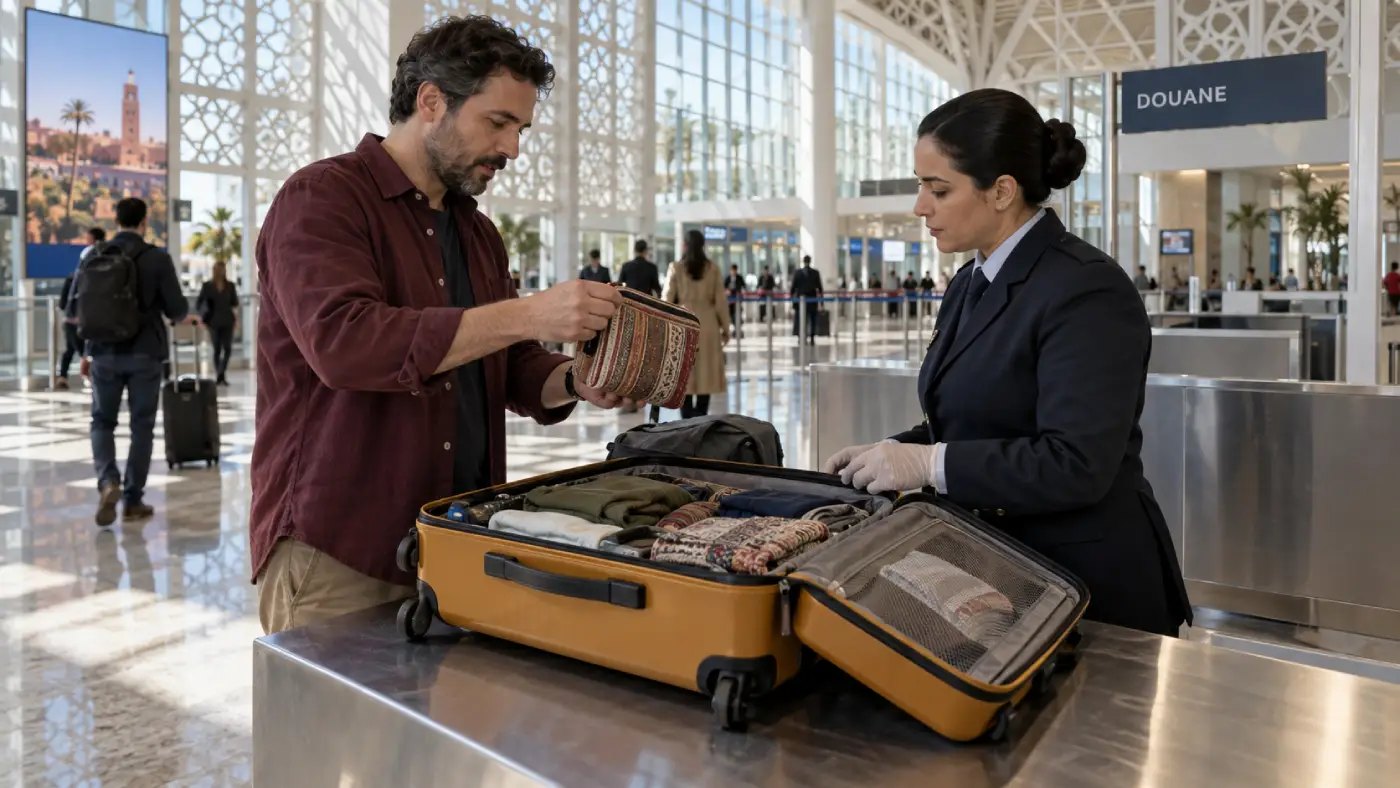
Use the green channel when you have nothing to declare and the red channel when you have declarable goods. If you are unsure, approach a customs officer before exiting. Choosing green does not prevent a baggage inspection.
Keep receipts, prescriptions, import permissions and currency documents readily accessible. If duty is assessed, retain the official payment receipt.
Once customs is complete, have your accommodation address and transfer instructions ready. Save an offline copy before departure so you can reach them without a connection. Mobile data from a Morocco eSIM can support maps and messages to your host on a compatible, unlocked phone.
If you are still choosing how to connect, our internet options in Morocco guide explains local SIM cards, travel eSIMs, roaming and Wi-Fi.
Check the contents of every bag, including equipment left from an earlier trip.
Keep purchase receipts and medical documents together.
Obtain any necessary import authorization before packing a controlled item.
Prepare your currency declaration and retain the paperwork for departure.
Save your hotel address and arrival arrangements offline.
If you have chosen an eSIM, best eSIM for Morocco before selecting a provider and data allowance.
These allowances apply when entering Morocco. Your home country’s rules govern what you may bring back at the end of the trip.
