

'/%3e%3cpath d='m450 224.315-44.467 136.87 116.401-84.559h-143.87l116.403 84.559z' style='fill:none;stroke:%23006233;stroke-width:14.62993431;stroke-miterlimit:4;stroke-dasharray:none'/%3e%3c/svg%3e)
Quick Answer / The Practical Takeaway:
-
Best Overall Months for First-Timers: April, May, September, and October. The weather is comfortably warm, the skies are clear, and the entire country is accessible.
-
Best Months for Budget Travelers: January and February. You will find deeply discounted riads and cheaper flights, though mountain regions will be frigid.
-
Best Months to Avoid Crowds: Late November, early December, and the heat of July. If you can handle the extremes, you will have iconic sites largely to yourself.
-
Important 2026 Note: Ramadan falls roughly between February 17 and March 18, 2026. This fundamentally changes the pace of travel, affecting cafe hours and public transport schedules.
Morocco by Season: What You Really Get
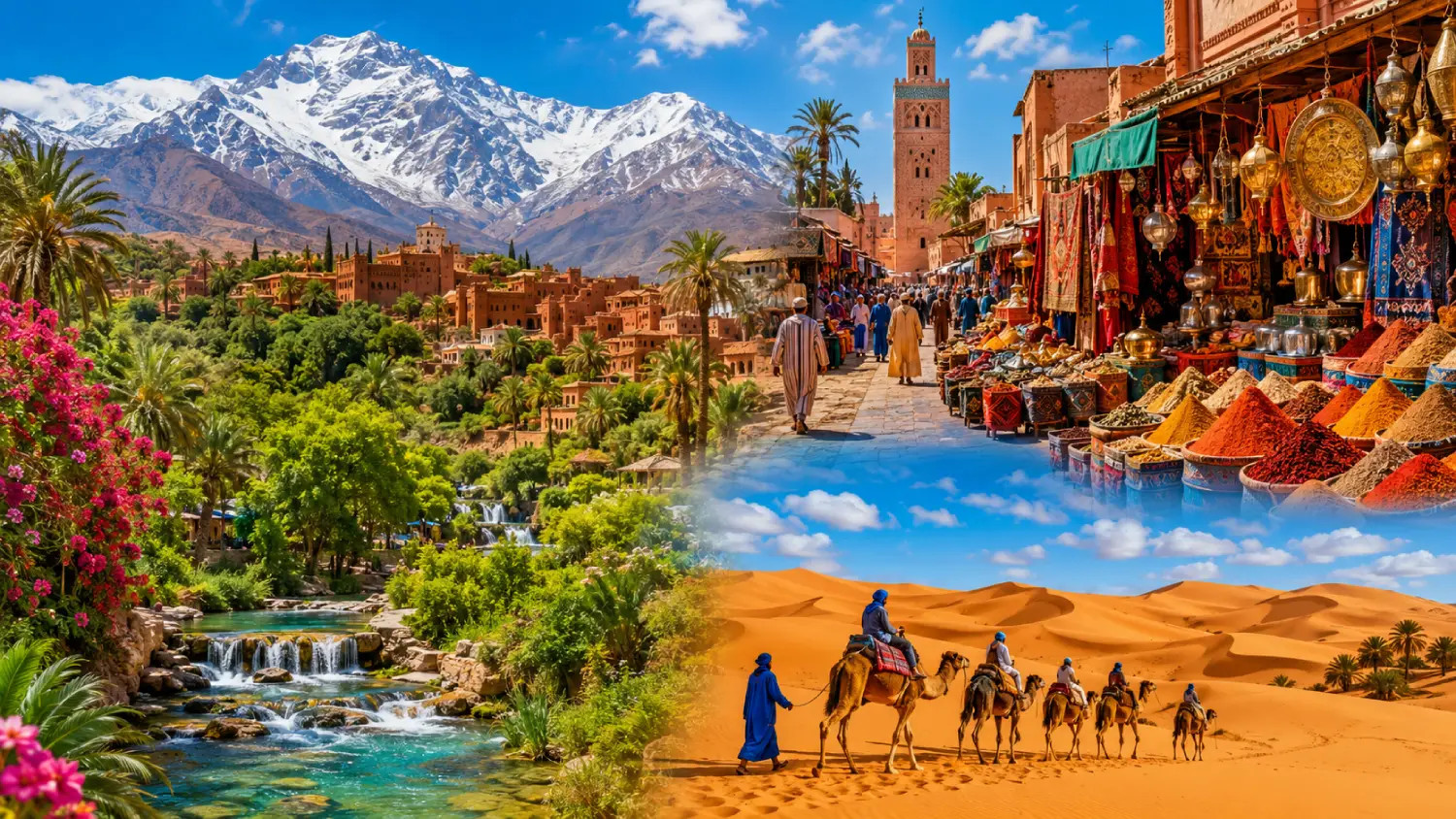
Morocco is a land of extremes, where you can literally ski in the morning and sweat in the desert by sunset. Understanding the overarching seasons is your first step to planning a flawless itinerary. Below is a breakdown of what to expect across the country throughout 2026.
| Season (Months) | Typical Conditions | Crowds | Costs | Best For |
| Spring (Mar - May) | Warm days, cool nights, blooming landscapes | High | High | Sahara treks, Imperial Cities, hiking |
| Summer (Jun - Aug) | Searing heat inland, pleasant on the coast | Medium/High | Variable | Coastal towns, surfing, high-altitude hiking |
| Autumn (Sep - Nov) | Cooling temperatures, crisp air, occasional rain | High | High | Desert tours, city exploration, photography |
| Winter (Dec - Feb) | Cold, snow in mountains, mild on the coast | Low | Low | Budget trips, city breaks, winter sports |
Regional Differences (Microclimates & Geography)
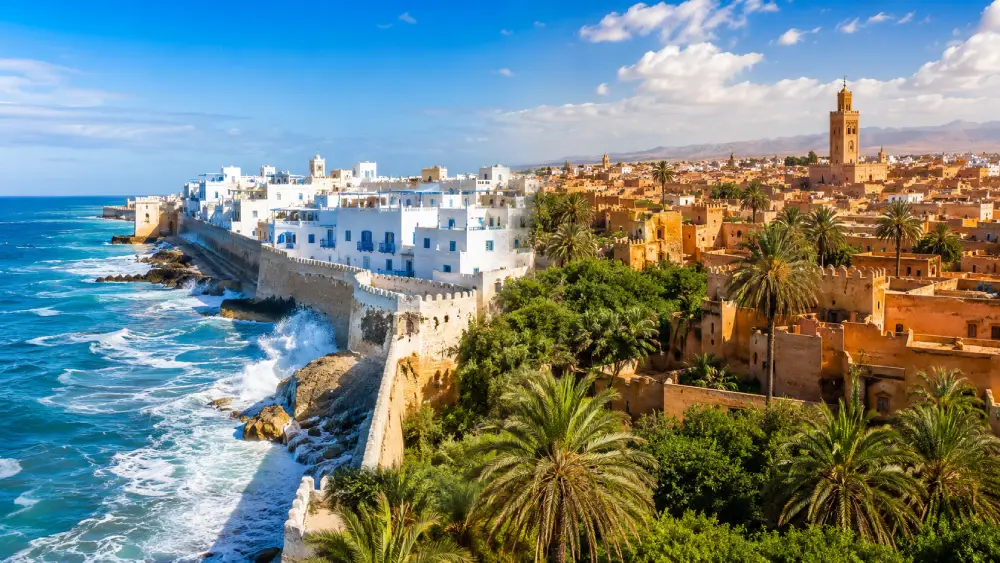
Morocco's geography is incredibly diverse. The best time to visit drastically shifts depending on whether you are heading to the coast, the mountains, the desert, or the inland cities. If you are comparing regional travel logistics, you might also be wondering about Egypt vs. Morocco to see how microclimates differ across borders.
The Atlantic Coast (Essaouira, Agadir, Casablanca)
The coastal region enjoys a Mediterranean climate that stays relatively mild year-round. Summer temperatures hover around a pleasant 25C to 30C, making it the perfect escape from the boiling interior. Winter brings cooler breezes and higher chances of rain, but it remains a fantastic time for surfing.
The Inland Imperial Cities (Marrakech, Fes, Meknes)
These ancient cities sit inland and experience a more continental climate. Summers are brutally hot, frequently pushing past 40C in July and August, which makes midday sightseeing exhausting. Spring and autumn are the absolute sweet spots here, offering comfortable days perfect for getting lost in the medinas. Before wandering the alleys, make sure you know the local etiquette by reading up on Is Morocco Safe to Travel?.
The Atlas Mountains
Altitude changes everything. In the High Atlas, winters are freezing, bringing heavy snowfalls that close certain passes and make trekking dangerous for novices. However, this opens up opportunities for skiing in Oukaïmeden. Summer is actually the best time to hike Mount Toubkal, as the high-altitude air remains cool and refreshing.
The Sahara Desert (Merzouga, Zagora)
The desert is a landscape of extremes. From June to August, the Sahara is dangerously hot, and many reputable operators simply stop running tours. Winter nights plunge to near freezing, though the daytime is sunny and crisp. The golden windows for the Sahara are spring (March to May) and autumn (September to November).
Month-by-Month Cheat Sheet
-
January: Cold, quiet, and cheap. Pack a warm coat for freezing desert nights and snow in the Atlas Mountains, but enjoy uncrowded medinas.
-
February: Still chilly, but the almond trees begin to blossom in the south. In 2026, Ramadan begins mid-month, slowing down the daily pace.
-
March: Spring begins to wake the country up. The landscape turns green, but remember that the first half of the month falls during Ramadan, culminating in Eid al-Fitr around March 18.
-
April: Peak season perfection. The weather is glorious everywhere, making it ideal for the Sahara, the mountains, and the cities alike.
-
May: Temperatures rise, but it remains comfortable. The famous Rose Festival takes place in the Dades Valley, filling the air with floral scents.
-
June: Summer heat sets in quickly inland. It is a fantastic month for music lovers, with massive festivals happening in Fes, Essaouira, and Rabat.
-
July: Searing, intense heat dominates the interior and the desert. Escape to the coastal towns like Essaouira or Taghazout to catch ocean breezes.
-
August: The hottest month of the year. Inland cities are best explored at dawn or late at night. The northern beaches are packed with domestic tourists.
-
September: The heat finally breaks, and the second peak season begins. It is an excellent time for trekking and returning to the Sahara.
-
October: Arguably the most well-rounded month. The air is crisp, the light is beautiful for photography, and the harvest season brings fresh produce.
-
November: Crowds thin out and temperatures drop significantly. A great time for city-hopping and scoring deals on luxury riads.
-
December: Crisp, sunny days and cold nights. It is a popular time for European snowbirds looking for winter sun, especially around Christmas.
Best Time to Visit by Traveler Type
For Beaches, Surfing, and Coastal Escapes
If your goal is to catch waves or lounge by the sea, target the summer months from June to August. Towns like Essaouira, Taghazout, and Asilah offer a breezy refuge from the mainland heat. For surfers, the biggest swells actually arrive in the winter (December to March), making it a paradise for advanced wave riders.
For Sightseeing and Culture Lovers
To comfortably explore the ancient ruins of Volubilis, the tanneries of Fes, and the bustling souks of Marrakech, aim for April, May, September, or October. You will avoid the exhaustion of the summer sun and the chill of winter winds. Be sure you know what to pack and what to leave behind by checking Morocco Tourist Bans & Laws.
For Budget and Value Travelers
January, February, and late November offer the steepest discounts on accommodation. You can often book luxury stays in restored palaces for a fraction of their spring prices. Just ensure your riad has good heating, as traditional Moroccan architecture is designed to stay cool, not trap heat.
For Desert Treks and Wildlife
The Sahara is unforgiving in the summer and freezing in the winter. The absolute best time for a camel trek and a night under the desert stars is October or April. You will experience mild, sunny days and manageable nighttime temperatures.
Festivals & Special Dates to Plan Around
Ramadan and Eid al-Fitr (Mid-February to Mid-March 2026)
In 2026, the holy month of Ramadan spans from roughly February 17 to March 18. While it is a beautiful, spiritual time to visit, it requires flexibility. Many cafes and shops close during daylight hours, and the pace of life slows down dramatically. The month culminates in Eid al-Fitr (around March 18-20), a massive three-day celebration where transport will be fully booked and businesses may close.
The Gnaoua and World Music Festival (June 25 - 27, 2026)
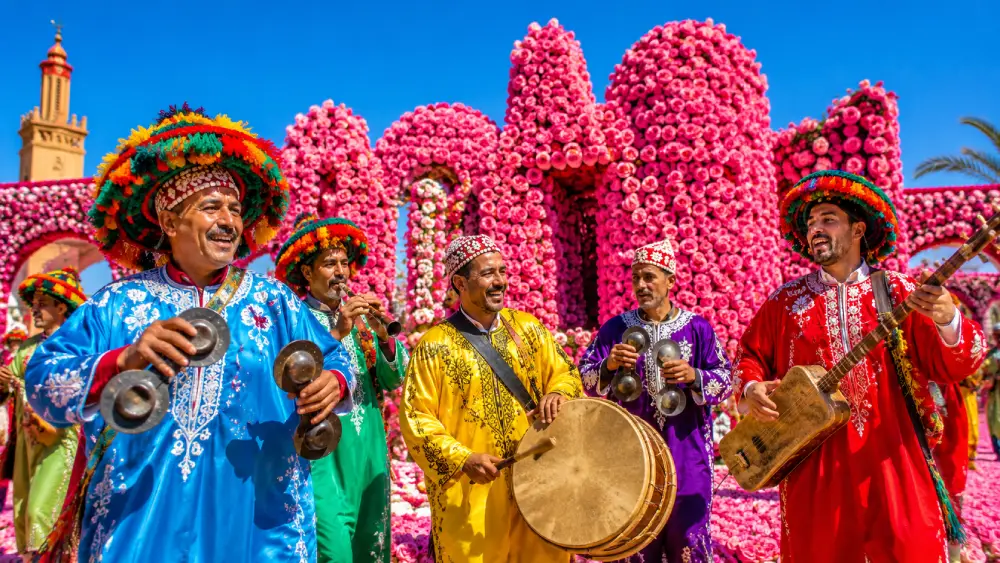
Held in the coastal town of Essaouira, this is of Africa's most vibrant music festivals. It draws hundreds of thousands of visitors to watch traditional Gnaoua musicians jam with international artists. Book accommodation months in advance if you plan to attend.
The Valley of Roses Festival (May 2026)
Every May, the town of Kelaat M'Gouna erupts in pink. Celebrating the local rose harvest, this festival features parades, traditional Berber music, and markets overflowing with rosewater and local crafts. It is a highly photogenic and uniquely Moroccan experience.
A Quick Note on Staying Connected
Navigating the labyrinth-like medinas, translating French or Arabic menus, and checking live train schedules requires reliable internet the moment you land. Relying on public Wi-Fi in Morocco is risky and often frustratingly slow. Knowing the Morocco Airport Customs Rules will speed up your physical arrival, but you also need to sort your digital arrival.
Need data in Morocco? Get an eSIM!
Choose the perfect data plan for your trip

Manage your eSIM in the app
Install, top up and track data.
The easiest, scam-free way to get is to download an eSIM before you even board your flight. This lets you skip the chaotic SIM card kiosks at the airport and instantly order a taxi or map your route to your riad. For a deep dive into your options, read up on How to Get the Best eSIM for Morocco Travel and our definitive Best eSIM for Morocco.
For instant, hassle-free connectivity across the country, grab a Morocco eSIM.
FAQ: Best Time to Visit Morocco
What is the cheapest month to go to Morocco?
January is generally the cheapest month. After the holiday rush subsides, flights and accommodation prices drop significantly, making it the best time for budget hunters.
When is the rainy season in Morocco?
Morocco does not have a monsoon season, but the bulk of its rainfall happens between November and March. The northern regions and coastal areas see the most precipitation during these winter months.
Is it worth visiting Morocco during Ramadan in 2026?
Yes, but you must adjust your expectations. Between mid-February and mid-March 2026, daytime dining options will be limited, and the energy peaks at night after Iftar. It offers a deeply authentic cultural experience if you are patient and respectful.
Can I visit the Sahara Desert in July or August?
It is highly discouraged. Daytime temperatures in the Sahara frequently exceed 45C (113F) in the peak of summer, making tours extremely uncomfortable and potentially dangerous.
When is the best time to hike the Atlas Mountains?
For most hikers, late spring (April and May) and early autumn (September and October) offer the safest, most comfortable conditions. Summer is also viable for high-altitude peaks like Mount Toubkal to escape the lowland heat.
Do I need air conditioning if I visit in the spring?
By late April and May, daytime temperatures in cities like Marrakech can easily reach 30C (86F). Ensuring your riad or hotel has functional air conditioning is highly recommended for a comfortable night's sleep.
Are the medinas overly crowded in October?
October is a peak travel month. While the weather is perfect, iconic spots like the Majorelle Garden or the souks of Fes will be very busy. To beat the crowds, start your sightseeing as early as possible in the morning.