Download the App and manage your eSIMs easily
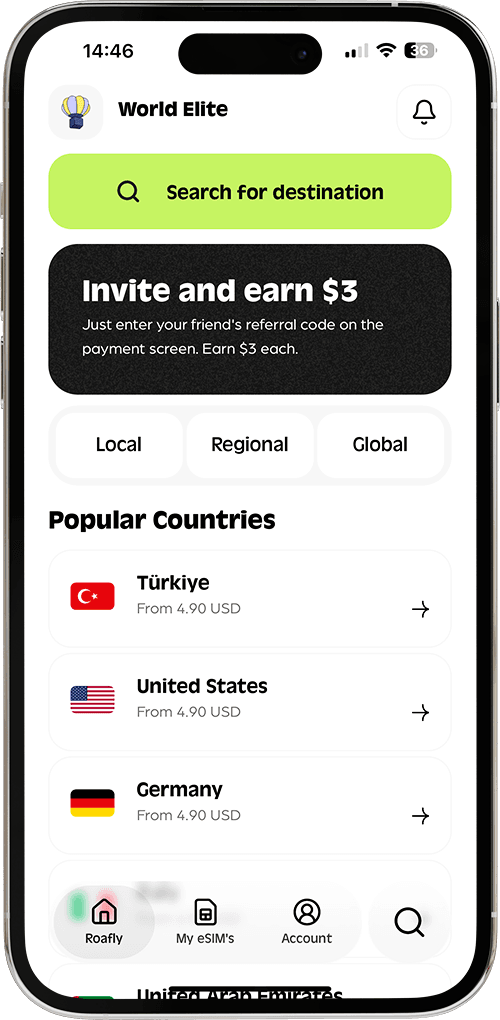
Create your order quickly
See your eSIM details
Track your remaining data
Download the App and manage your eSIMs easily
Create your order quickly
See your eSIM details
Track your remaining data
It is the ultimate North African dilemma. You want exotic vibes, desert landscapes, and rich history, and you have about 10 days. Do you choose Egypt, the land of Pharaohs and monumental history, or Morocco, the land of colorful souks, sensory overload, and stunning design?
Orange, Etisalat, Vodafone
Instant delivery
From 4.90 USD

Sophie Callahan
Updated Jan 11, 2026
9 min read
Jump to section
👇Best for most trips
Orange, Etisalat, Vodafone
Egypt
10 GB · 30 days
Enough for maps, bookings and everyday travel.
Hotspot supported
$19.90
From 4.90 USD
Both are incredible, but they are wildly different experiences.
If you pick the wrong one for your personality type, you might end up stressed rather than inspired. Egypt is intense, grand, and unapologetic. Morocco is atmospheric, spicy, and seductive.
In this guide, we compare the vibe, safety, costs, food, and the critical connectivity traps (yes, roaming is huge here) to help you decide.
What are you actually looking for?
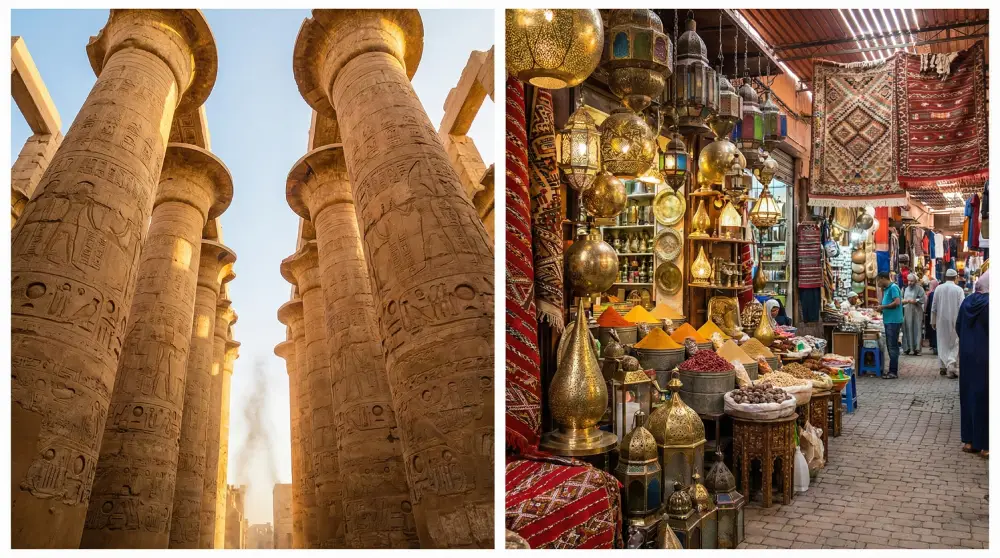
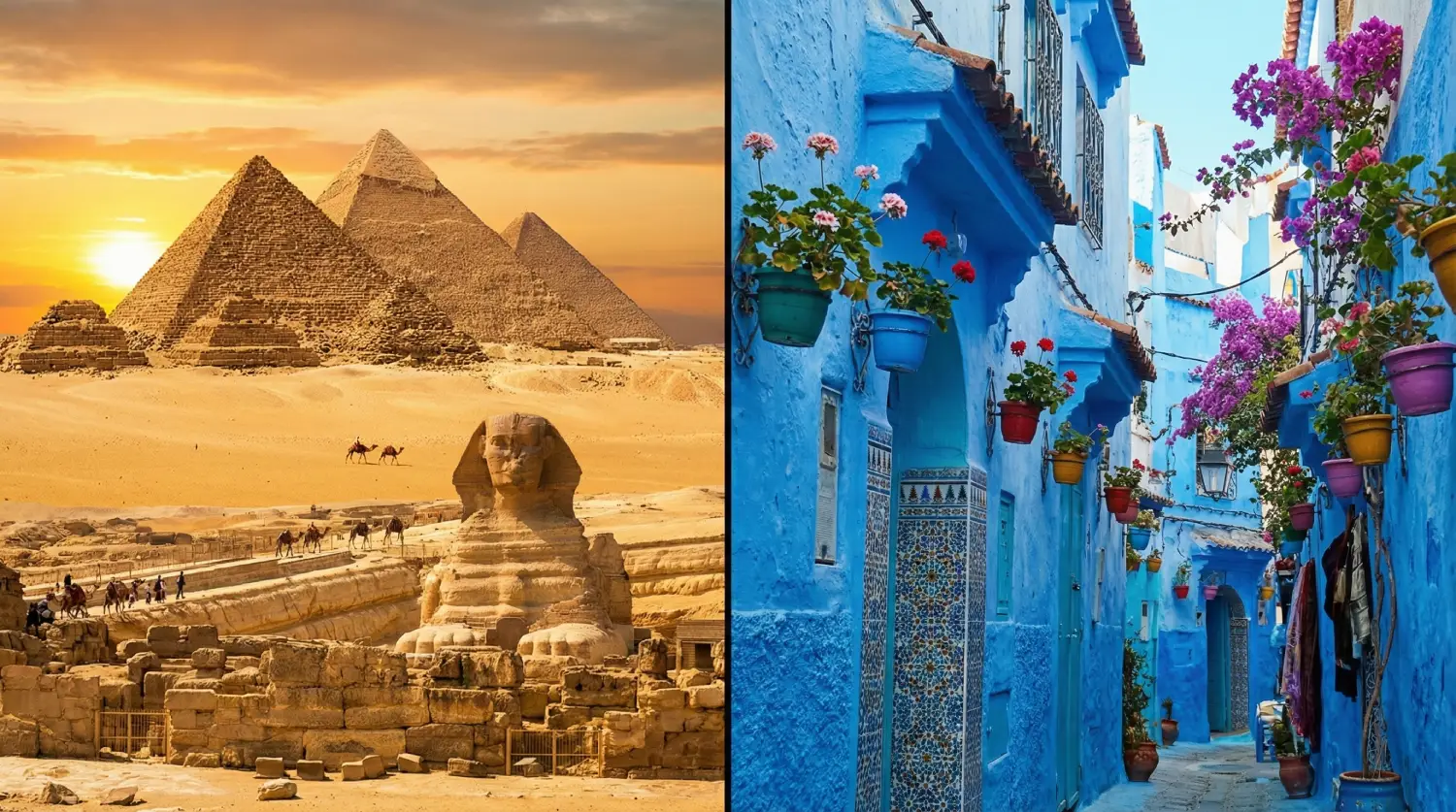
Egypt is about scale. Everything here is massive, ancient, and mind-blowing.
The Highlights: The Pyramids of Giza, the temples of Luxor and Karnak, and the Valley of the Kings. These aren't just old buildings; they are the cradle of civilization.
The Nature: The Nile River is the lifeline (perfect for cruises), and the Red Sea offers arguably the best scuba diving and snorkeling in the world.
The Feeling: It feels like walking through a history book. It is epic, dusty, and awe-inspiring.
Morocco is about atmosphere. It’s a place to get lost (literally) and feel the culture.
The Highlights: Getting lost in the medina of Marrakech, staying in a traditional Riad (courtyard house), exploring the blue streets of Chefchaouen, and camping under the stars in the Sahara Desert.
The Nature: From the snowy Atlas Mountains to the Atlantic surf coast (Essaouira), the landscape is incredibly diverse.
The Feeling: It feels like a movie set. The smell of spices, the call to prayer, the intricate tile work (Zellige)—it’s a feast for the senses.
Let’s be honest. Both countries have a reputation for aggressive touts (sellers). But there is a clear difference.
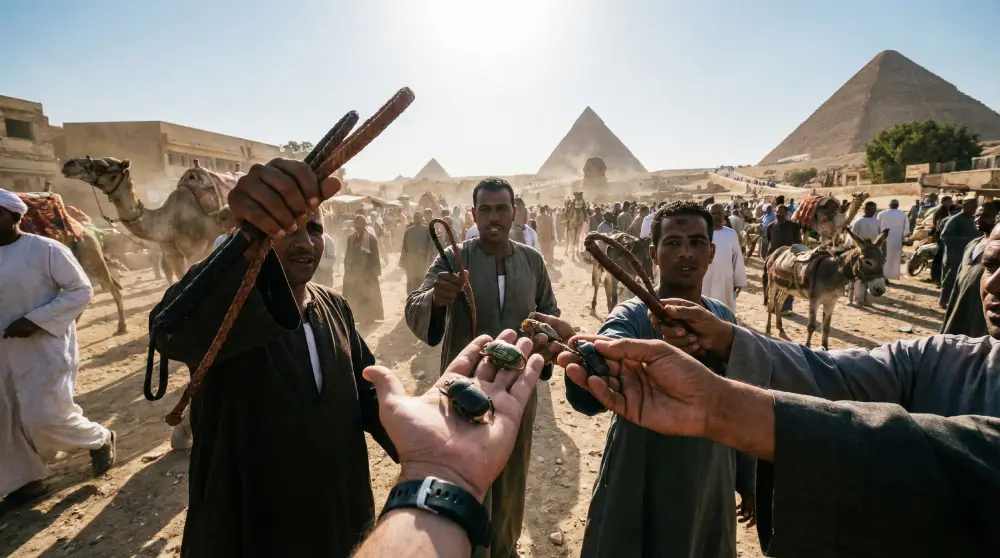
Egypt is not for the faint-hearted. In tourist hotspots (Pyramids, Luxor), the hassle is relentless.
The Reality: You will be approached constantly for taxi rides, camel rides, "free" gifts, and photos. "No" is often interpreted as "Maybe later."
The Insider Tip: Ignore them completely (don't make eye contact) or learn the magic word "La Shukran" (No thank you) and say it firmly. Wear sunglasses to avoid eye contact.
Morocco has hassle, especially in the Marrakech souks, but it feels more like a game.
The Reality: Shopkeepers will invite you in, but they are generally friendlier and more respectful of a firm "No."
The Difference: In Morocco, you can often find quiet pockets or relax in your Riad. In Egypt, the energy is high everywhere you go.
This is the section that saves you money. Many European travelers assume their data plan will work here "for a small fee" because it's so close to Europe. Huge mistake.
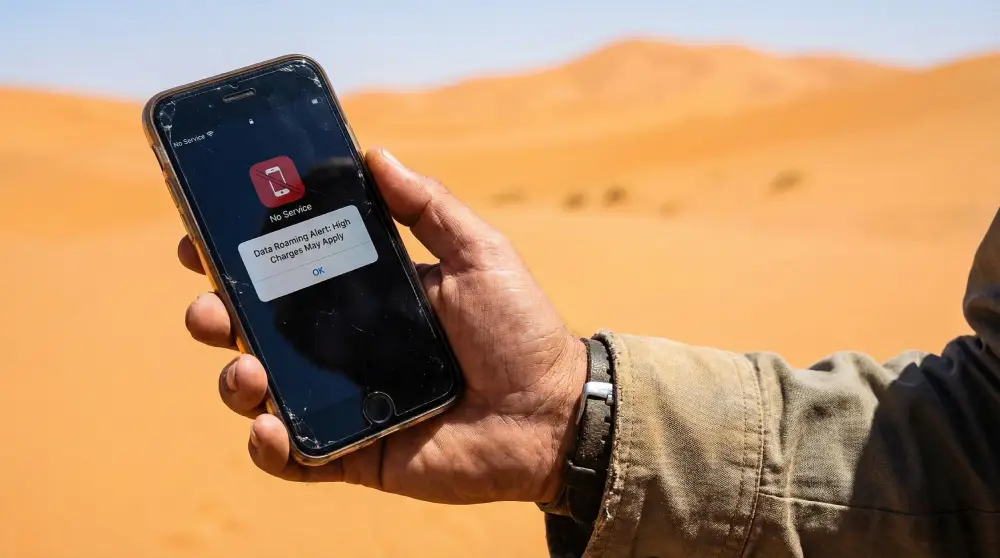
Egypt: UK and EU providers charge astronomical rates. For example, some UK networks charge up to £7.20 per MB (yes, per Megabyte!) in Egypt. Checking one email could cost you £50.
Morocco: It is NOT in the EU roaming zone. Rates are similarly high. If you forget to turn off "Data Roaming," your bill can hit the cap in minutes.
Do not rely on your home carrier. And do not waste time queuing at chaotic airports like Cairo International or Casablanca Mohammed V.
For Egypt: You need a reliable data connection not just for maps, but for Uber (essential to avoid taxi scams). Check out our guide on the Best eSIM for Egypt: Prices, Coverage and Speed to find the best package.
For Morocco: You’ll want to share those Riad photos instantly. Also, WhatsApp calls can sometimes be throttled on local networks, so a good data line is key. Read our comparison on Best eSIM for Morocco: Coverage, Speed & Price.
Pro Tip: If you are visiting both (or combining with other African countries), consider a regional package. But for single-country trips, a dedicated local eSIM is always faster.
If you travel to eat, the difference here is night and day. One is about sustenance and energy; the other is about ritual and complexity.
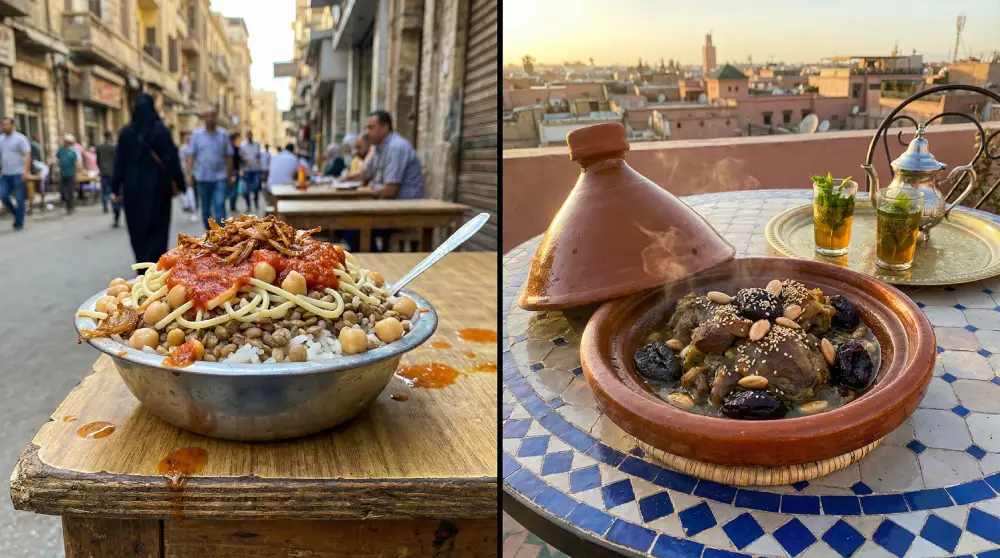
Egyptian food is designed to keep you full for cheap. It is hearty, carb-heavy, and unapologetically greasy.
The National Obsession: You cannot leave without trying Koshari. It sounds strange—a mix of pasta, rice, lentils, and chickpeas topped with fried onions and a spicy tomato vinegar sauce—but it is addictive. It costs less than $1 USD.
Breakfast of Champions: Forget croissants; here you eat Ful Medames (slow-cooked fava beans) and Ta’ameya. Note: Egyptian falafel is made with fava beans, not chickpeas, making it greener, fluffier, and (arguably) tastier than the Levantine version.
The Sweet Tooth: Drink fresh Sugarcane Juice (Asab) from a street stall for an instant sugar rush. For dessert, Om Ali (a bread pudding with nuts and milk) is divine.
Dining Vibe: It’s fast, loud, and often chaotic. Or, you are dining on a Nile cruise boat with an open buffet.
Moroccan cuisine is one of the great cuisines of the world. It is about slow cooking, intricate spice blends (Ras el Hanout), and aesthetics.
The Tagine Ritual: It’s not just a dish; it’s a cooking method. The conical clay pot traps steam, making the lamb or chicken fall-off-the-bone tender. Try the Lamb with Prunes and Almonds for a perfect sweet-savory mix.
The Complexity: Try Pastilla (Bastilla). It’s a pie filled with pigeon or chicken, dusted with powdered sugar and cinnamon. It sounds like a dessert, but it’s a savory main course. It is mind-blowing.
Tea Culture: "Moroccan Whiskey" (Mint Tea) is not just a drink; it is hospitality. It is poured from high above to create foam. Refusing a cup is considered rude.
Dining Vibe: The Rooftop Culture in Marrakech is unmatched. Watching the sun set over the Koutoubia Mosque while eating Couscous is a core memory.
Both countries are safe regarding violent crime (you are unlikely to be mugged), but "annoyance" and "harassment" are real safety factors that affect your mental peace.
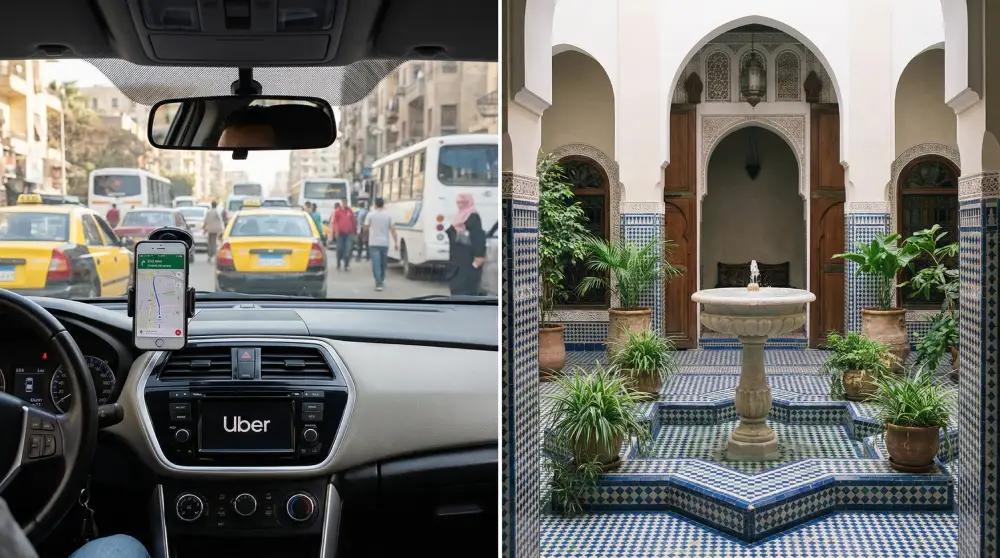
Egypt is intense. For solo female travelers, it can be exhausting due to staring and catcalling.
The "Uber" Rule: Do not hail white taxis on the street. The meters are often "broken," and arguments ensue. Uber is your safety bubble. It tracks your ride, fixes the price, and avoids language barriers. You need data for this.
Dress Code: Modesty is crucial here. Covering shoulders and knees isn't just respectful; it significantly reduces unwanted attention.
Group Travel: We strongly recommend solo travelers join a group tour or hire a reputable guide. Having a local with you acts as a "shield" against street harassment.
Morocco is generally considered easier for first-timers and women than Egypt, but it has its own tricks.
The Maze: The medinas (old cities) in Fez and Marrakech are labyrinths. GPS signals bounce off the narrow walls. Getting lost is guaranteed. This is where "Faux Guides" (fake guides) appear, offering to "help" you find your way, only to demand money aggressively.
The Sanctuary: The best part of Morocco is the Riad culture. These are traditional courtyard hotels with heavy doors. Once you step inside, the chaos of the street vanishes instantly. It feels incredibly safe and private.
Connectivity is Safety: In the maze of the Medina, a working map is your best defense against scammers. Also, knowing Is WhatsApp Blocked in Morocco? is vital, as VoIP calls are sometimes restricted, meaning you need a reliable data plan to keep in touch with family or your Riad host.
On paper, Egypt looks cheaper. But let's look at the real cost of the trip.
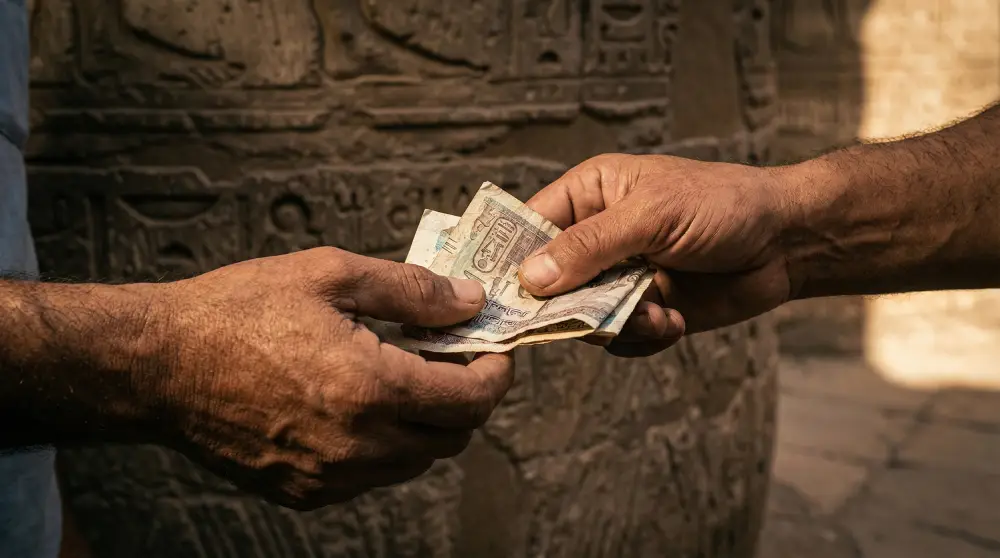
The Egyptian Pound (EGP) has devalued significantly, making hotels and food incredibly cheap for dollar/euro earners.
The Prices: You can find 5-star hotels on the Nile for $100-$150. Uber rides across Cairo are $2-$3. Entry to the Pyramids is around $11 USD (subject to change).
The Hidden Cost: Tipping (Baksheesh) is expected for everything. The guy who opens the door, the one who hands you toilet paper, the one who points at a statue. You need to carry small cash constantly. It adds up mentally and financially.
Morocco is slightly more expensive, but the pricing is more transparent.
Accommodation: You can find a dormitory for $10 or a luxury palace for $1,000. But the sweet spot is the Mid-Range Riad ($60-$120/night). For this price, you get boutique luxury, incredible breakfast, and personalized service that you wouldn't get in Europe for double the price.
Haggling: In the souks, the price is never the price. You are expected to bargain hard (aim for 50% of the initial offer). If you hate bargaining, this can feel like a "cost."
Alcohol: Alcohol is heavily taxed and harder to find outside hotels/licensed bars, making a "drink with dinner" more expensive than in Europe.
The Verdict on Value: Egypt is cheaper for "survival" (food/transport), but Morocco offers better "lifestyle" value (beautiful stays/design) for a slightly higher budget.
Choose Egypt if: You are a history nerd, you have a "bucket list" mentality, you want to dive in the Red Sea, and you don't mind a bit of chaos and grit. It’s an adventure.
Don't forget: Arrive prepared. Read our Egypt Airport SIM Card & eSIM Guide to hit the ground running.
Choose Morocco if: You want a romantic, aesthetic, and sensory holiday. You love design, food, and want a mix of city, mountain, and desert without the extreme intensity of Egypt.
Planning a trip? Make sure you know the tech landscape. Check out Is WhatsApp Blocked in Morocco? and decide Which SIM Card Is Best for Tourists in Morocco.
Final Thought for 2026: Whichever you choose, North Africa is magical. Just don't let a $300 roaming bill ruin your post-trip glow. Grab a Roafly eSIM, turn off your home SIM, and enjoy the adventure worry-free! 🌍✈️
Best for most trips
Orange, Etisalat, Vodafone
Egypt
10 GB · 30 days
Enough for maps, bookings and everyday travel.
Hotspot supported
$19.90
From 4.90 USD
Choose the perfect data plan for your trip

Manage your eSIM in the app
Install, top up and track data.
Choose the perfect data plan for your trip
Manage your eSIM in the app
Install, top up and track data.