

'/%3e%3cpath d='m450 224.315-44.467 136.87 116.401-84.559h-143.87l116.403 84.559z' style='fill:none;stroke:%23006233;stroke-width:14.62993431;stroke-miterlimit:4;stroke-dasharray:none'/%3e%3c/svg%3e)
"Is it actually safe?"
You have probably heard the stories: Aggressive shopkeepers, relentless catcalling, or tourists getting lost in the labyrinth of Fes.
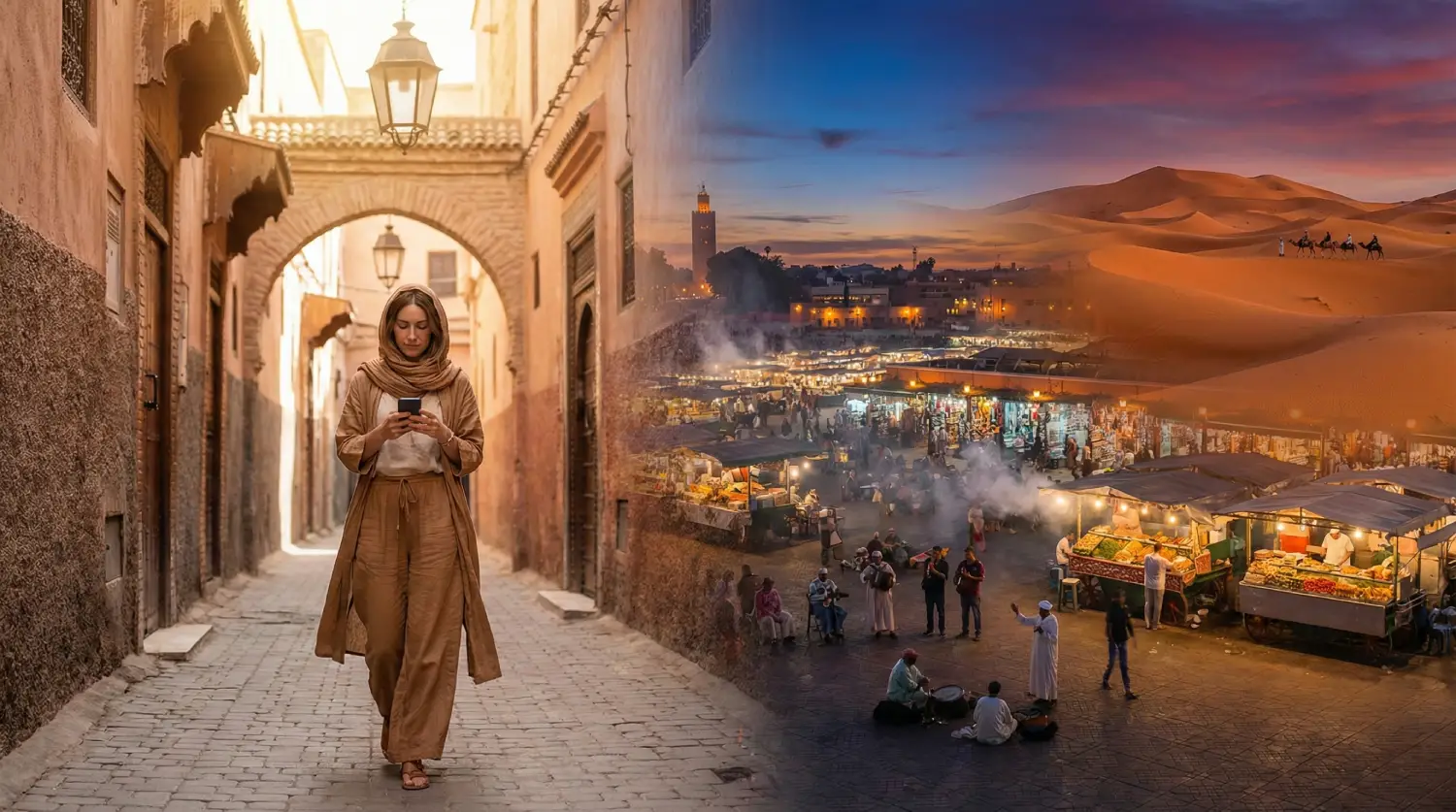
Here is the honest verdict for 2026: Morocco is politically stable and violent crime against tourists is extremely rare. You are safer walking in Marrakech at night than in many European capitals.
However, "Safe" does not mean "Stress-Free." The danger in Morocco isn't physical violence; it’s exhaustion. It is the mental game of navigating scams, haggling for every taxi ride, and dealing with the infamous "hassle."
This guide is your survival manual. We will break down the safety reality for solo female travelers, expose the most common scams running in 2026, and compare it to its North African rival, Egypt.
1. The Reality Check: Crime vs. Harassment
To understand Morocco, you must distinguish between Safety (will I get hurt?) and Harassment (will I be annoyed?).
-
Violent Crime: Very low. The Moroccan government relies heavily on tourism. They have established the Brigade Touristique (Tourist Police), who are omnipresent in major cities. Muggings are rare.
-
Petty Crime: Pickpocketing exists in crowded souks (like Jemaa el-Fnaa), but it’s no worse than Barcelona or Rome.
-
The "Hassle": This is high. In the Medina, you are a walking wallet to some. You will be approached by fake guides, shop promoters, and beggars.
💡 The Golden Rule: A firm, polite, and non-negotiable "La, Shukran" (No, thank you) is your best weapon. Do not stop walking. Do not make eye contact. Just keep moving.
2. Female Travel Safety: The "Shorts" Question
This is the most searched question on Google regarding Morocco safety: "Can females wear shorts in Morocco?"
We covered the strict legalities in our Morocco Tourist Bans & Laws 2026 guide, but here is the safety perspective:
Can you? Yes. No will arrest you. Should you? In the cities, No.
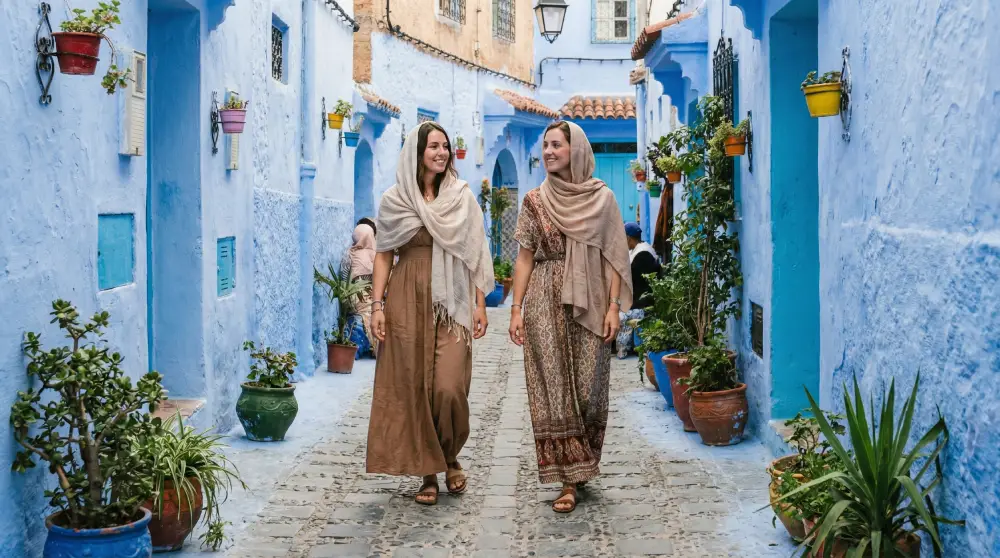
Wearing short shorts, crop tops, or sheer clothing in conservative cities like Marrakech, Fes, or Tangier is not a safety risk in terms of violence, but it is a harassment risk. It acts as a magnet for intense staring, catcalling, and unwanted attention.
Survival Tips for Women:
-
Dress Modestly: Covering shoulders and knees (maxi dresses, linen trousers) commands respect and drastically reduces harassment.
-
The Sunglasses Hack: Wear dark sunglasses. It prevents eye contact. If men can't catch your eye, they are less likely to approach you.
-
"Is that your husband?": If you are traveling with a male friend, locals will assume you are married. If you are solo, wearing a fake wedding ring can shut down unwanted advances.
3. The "Big 3" Scams in Marrakech & Fes
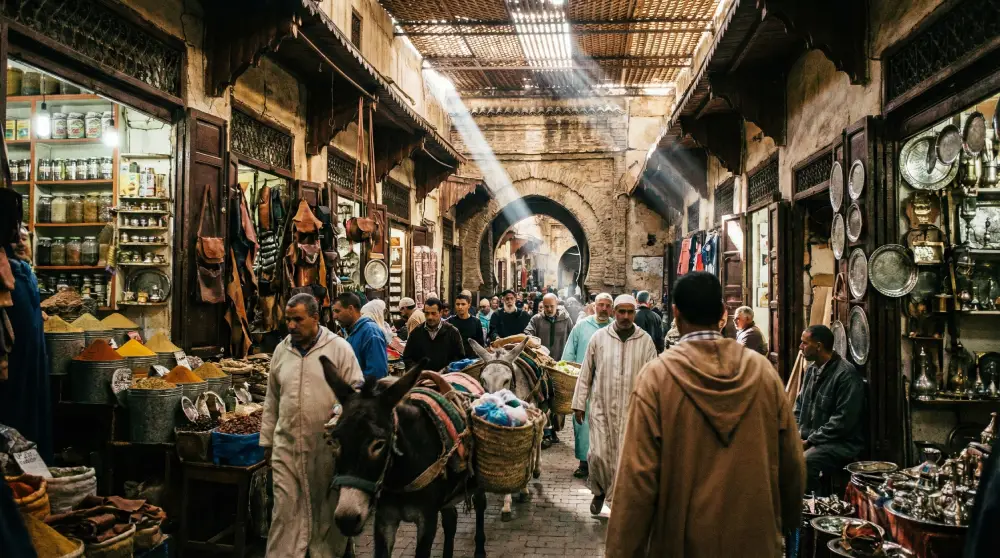
Scammers in Morocco are creative, charming, and persistent. Knowing their scripts before you arrive is 90% of the battle.
Scam #1: "The Road is Closed"
You are walking down an alley. A young man blocks your path: "Stop! Road closed! Prayer time / Construction / Dead end."
-
The Trap: He will "helpfully" guide you to a different route, which inevitably leads to his uncle’s carpet shop or a Tanneries tour where you will be pressured to pay.
-
The Solution: The road is almost never closed. Check your GPS and walk past him with confidence.
Scam #2: The "Free" Henna
In Jemaa el-Fnaa square, a woman might grab your hand and start piping henna it before you even agree.
-
The Trap: the ink is on your skin, she will demand 200-500 Dirhams ($20-$50) and cause a scene if you don't pay.
-
The Solution: Walk with your hands in your pockets or folded. If they grab you, pull away firmly.
Scam #3: The "Broken Meter" Taxi
-
The Trap: You get in a Petit Taxi, and the driver says the meter is broken or tries to agree on a fixed price (usually 3x the real rate).
-
The Solution: Never get in without the meter ("Compteur" in French) turned on. If they refuse, get out.
4. Connectivity: Your Ultimate Safety Tool
In a city like Fes, where the Medina has 9,000 alleyways and GPS signals bounce off stone walls, getting lost is the start of most safety problems.
Need data in Morocco? Get an eSIM!
Choose the perfect data plan for your trip

Manage your eSIM in the app
Install, top up and track data.
When you look lost, you become a target for fake guides. When you can't translate a menu, you get overcharged. When you can't call an Uber/Careem, you are at the mercy of taxi sharks.
Don't rely on luck.
-
Digital Safety: Having active data allows you to track your location in real-time and contact your Riad (hotel) if you get stuck.
-
Recommendation: Avoid buying sketchy SIM cards from street vendors. Secure a reliable connection before you land. Read our comparison of the Best eSIM for Morocco to find the fastest networks for the Atlas Mountains and the Desert.
-
Local Options: If you prefer a physical card, check our guide on Which SIM Card Is Best for Tourists in Morocco?
Note on Apps: Need to call home? Make sure you know which apps work. Read our update: Is WhatsApp Blocked in Morocco?
5. Morocco vs. Egypt: Which is Safer?
Travelers often debate between these two North African giants. While both offer history and chaos, the safety vibe is different.
-
Harassment: Egypt is widely considered to have more aggressive street harassment and touts than Morocco.
-
Solo Travel: Morocco is generally easier and safer for first-time solo travelers than Egypt.
-
The Verdict: If you want the "Exotic North Africa" experience but want slightly less intensity, start with Morocco.
-
Deep Dive: For a full breakdown of costs, vibe, and safety, read our detailed comparison: Egypt vs. Morocco: Which North African Giant is for You?
6. Health & Hygiene: Avoiding "Morocco Belly"
Your safety isn't just about crime; it's about what you eat and drink.
-
Water: Do NOT drink tap water in Morocco. It contains bacteria your body isn't used to. Stick to bottled water (check the seal) and use it even for brushing your teeth if you have a sensitive stomach.
-
Food: Street food is delicious (Tagine, Couscous), but ensure it is piping hot. Avoid raw salads or peeled fruits sold on the street.
-
Pharmacies: Moroccan pharmacies are excellent and widely available. You can buy many medications over the counter without a prescription.
7. Natural Disasters: The Earthquake Context
Since the tragic earthquake in September 2023, travelers understandably ask about seismic safety.
-
Current Status (2026): Tourism infrastructure in Marrakech and the coast is fully operational. The Atlas Mountain regions have largely recovered, and visiting them is the best way to support the local economy.
-
Safety Standards: Modern hotels and Riads are built to stricter codes. Morocco remains open and safe.
8. When to Go: Safety in Seasons
Weather can be a safety factor. Visiting the Sahara in August (50°C/122°F) is dangerous due to heatstroke. Also, consider the religious calendar. Traveling during Ramadan changes the flow of the city. While it is safe, finding food during the day can be tricky, and tempers can be shorter due to fasting.
-
Planning a Spring Trip? Read our Visiting Morocco During Ramadan 2026 survival guide.
9. Final Verdict: Is It Worth It?
Is Morocco safe? Yes. Is it for everyone? No.
If you need a vacation where everything runs on time and nobody talks to you, go to Switzerland. But if you are willing to dress modestly, learn to say "No" firmly, and embrace a little chaos, Morocco is of the most rewarding travel experiences on the planet.
The Pre-Flight Checklist:
-
Check the Bans: Don't bring a drone. Seriously. Read Morocco Airport Customs Rules 2026
-
Get Connected: Don't land without data. Grab a Morocco eSIM
-
Book Your First Transfer: Don't haggle with a taxi at the airport after a long flight. Ask your Riad to send a driver.