Download the App and manage your eSIMs easily
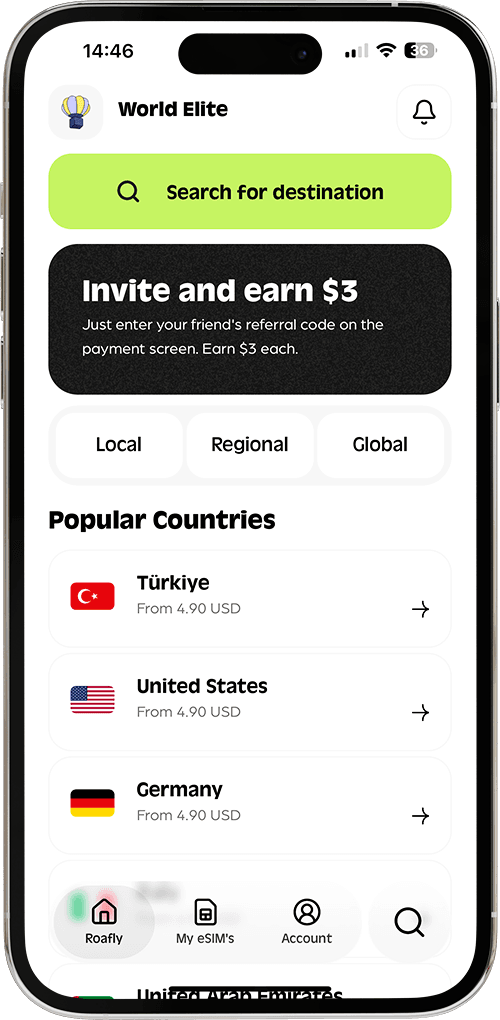
Create your order quickly
See your eSIM details
Track your remaining data
Download the App and manage your eSIMs easily
Create your order quickly
See your eSIM details
Track your remaining data
Budget around $2,600–$4,100 for two people spending one week in New York, or $5,900–$8,800 for a two-week California and Southwest road trip, excluding international flights. These worked budgets include a shared private room, everyday spending, selected activities and roughly 10% breathing room.
Verizon, AT&T
Instant delivery
From 3.90 USD

Ethan Brooks
Updated Oct 12, 2026
9 min read

Jump to section
👇Best for most trips
Verizon, AT&T

United States
10 GB · 30 days
Enough for maps, bookings and everyday travel.
Hotspot supported
$16.90
From 3.90 USD
Your route makes the biggest difference. New York concentrates spending in accommodation while letting you travel without a car. Western road trips can offer cheaper rooms on some nights, but add rental charges, fuel, parking and national park costs.
Both examples assume two adults sharing one room, eating a mixture of casual restaurant meals and simpler breakfasts, and traveling outside major holiday or event peaks.
The New York example covers seven days and six nights. The road trip covers 14 days and 13 nights, following a Los Angeles–Las Vegas–Zion–Grand Canyon South Rim–Los Angeles loop.
| Expense, total for two adults | One week in New York | Two-week western road trip |
|---|---|---|
| Accommodation | $1,320–$1,980 | $2,080–$2,990 |
| Food, including budgeted tax and tips | $700–$1,050 | $1,400–$2,100 |
| Public transport and airport transfers | $140–$220 | Included through the rental-car model |
| Rental-car allowance | — | $1,040–$1,690 |
| Fuel | — | $250–$325 |
| Parking and tolls allowance | — | $150–$300 |
| National park annual pass | — | $250 |
| Other paid attractions | $200–$400 | $150–$300 |
| Mobile data allowance | $20–$40 | $20–$40 |
| Planned spending before contingency | $2,380–$3,690 | $5,340–$7,995 |
| Rounded target with roughly 10% extra | $2,600–$4,100 | $5,900–$8,800 |
| Per person, sharing these costs | $1,300–$2,050 | $2,950–$4,400 |
Planning model prepared using prices reviewed on October 12, 2026, including October–November hotel listings, restaurant menus and rental-market examples. These are adjustable spending allowances, not a bookable package or a measured national average.
International flights, domestic flights, visas or travel authorizations, personal travel insurance and shopping sit outside these totals. Theme parks, major shows and premium tours also need their own allowance. Refundable hotel and rental deposits affect your available balance but are not treated as spending.

The New York model allows $220–$330 per room per night, including taxes and mandatory fees. The western itinerary uses $160–$230 averaged across the route, allowing cheaper nights to balance more expensive city and park stays.
Recent one-night examples help explain those allocations. For November 8–9, Expedia displayed room totals of approximately $256 at ROW NYC, $262 at Hotel Edison and $275 at Sheraton New York Times Square. In Springdale, near Zion, examples for the same night included $160 at Driftwood Lodge, $189 at Zion Canyon Lodge and $229 at SpringHill Suites.
Those examples include displayed taxes and fees, but room types and cancellation conditions differ. They illustrate the market for one night; they do not establish the price of your whole stay.
Judge a hotel by what staying there adds to the rest of your day. Saving $40 on a room can disappear if its location creates two extra taxi journeys. On a road trip, parking charges and breakfast inclusion can change the comparison between otherwise similar properties.
US hotel price-display rules require mandatory charges, such as unavoidable resort fees, to be included in the displayed total. Government taxes and optional extras can initially appear separately. Compare the final payable amount, and avoid adding a resort fee twice when it is already included.
Dates matter just as much as location. Use the regional guidance in our best time to visit the USA article before assuming that one inexpensive month works equally well for New York, the desert and mountain destinations.

Both models allocate $50–$75 per person per day, including a provision for restaurant taxes and tips. That supports simple breakfasts, casual lunches and ordinary dinners, with some supermarket purchases mixed in.
Restaurant choice changes the total quickly. Menus reviewed in October included grilled chicken at $14.99 and fish and chips at $17.99 at Ellis Island’s Village Pub in Las Vegas. Canter’s Deli in Los Angeles listed spaghetti at $18.95 and roast chicken at $25.50. Drinks and additions increase those menu prices before the final bill.
Three full-service meals every day will put more pressure on the allowance than a bakery breakfast, a takeaway lunch and one restaurant dinner.
Keep these distinctions clear:
Menu price: the listed food or drink charge.
Sales tax: a separate addition where applicable.
Service charge or included gratuity: an amount already on the bill.
Additional tip: your further payment, taking any included charge into account.
The food totals above already allow for tax and planned tipping. Adding another percentage to the entire food budget would count the same expense twice. Our guide to payments and tipping in the USA explains how to read bills and handle cash, cards and ATM withdrawals.

New York is a useful example of how an expensive city can still have manageable transport costs. Staying near a suitable subway line lets you put more of the budget toward accommodation and experiences.
The current NYC subway and local bus fare is $3, with a $35 cap over seven days when you use the same eligible card or device. Each traveler should use their own payment method to build their individual cap.
That makes the capped subway and local-bus portion $70 for two adults. The model allows $140–$220 overall to leave room for airport connections and limited additional transport. Airport rail services and taxis are separate from the subway cap; frequent cab journeys require a larger allowance.
Elsewhere, the balance changes. Compare the practical options for getting around the USA before assuming that either public transport or a rental car should cover your entire trip.

The western model allocates $80–$130 per charged rental day, using 13 consecutive 24-hour periods. It assumes a driver aged 25 or over, an ordinary compact or intermediate vehicle, and collection and return at the same airport at matching times.
Treat that amount as a target for your complete rental quote. Taxes, mandatory charges and any protection you need must fit within it; increase the line if your actual quote is higher. Existing insurance or credit-card benefits should only reduce the allowance when you have confirmed what they cover.
Returning the car later than the booked time may create another chargeable period. One-way returns, additional drivers and larger vehicles can also change the calculation.
The fuel allowance uses explicit assumptions:
1,500 miles ÷ 30 miles per US gallon = 50 gallons
At a budgeting price of $5–$6.50 per gallon, that produces $250–$325 for the vehicle. This is a fuel-price scenario, not a forecast for every stop. Longer detours or a less efficient vehicle increase the total.
Parking and tolls receive another $150–$300 across the trip. That is an allocation to replace with the charges at your chosen hotels and stops, rather than a daily national rate.
Renting for only part of a mixed city-and-countryside trip can reduce both rental days and overnight parking. Compare the saving with the cost of reaching the rental location later.
International visitors need to account for the current nonresident fee structure. At 11 designated national parks, including Grand Canyon, Zion and Yosemite, non-US residents aged 16 and over pay $100 per person in addition to the standard entrance fee, unless covered by an eligible pass.
The $250 America the Beautiful Non-Resident Annual Pass covers entrance and nonresident fees for its holder and passengers in a qualifying private vehicle. The current national park pass conditions explain vehicle and per-person coverage.
For two adults who would otherwise pay the nonresident charge at both Grand Canyon and Zion, those additional fees alone total $400, before ordinary admission. The $250 pass therefore changes the economics of this route substantially.
Our road-trip budget includes one pass for the shared vehicle. Do not add the covered entrance and nonresident fees again. Campsites, tours, reservation charges and attractions outside the pass system need separate consideration.
The examples set aside $20–$40 for two travelers’ mobile data. Your allowance depends on navigation, browsing and hotspot use; sharing one connection may cost less but ties the second person’s access to the first phone.
Roafly’s USA eSIM provides prepaid data on compatible, unlocked devices. Hotspot use comes from the purchased allowance, and top-ups are supported.
Before choosing an allowance, compare USA eSIM plans by data volume, validity and hotspot needs.
On the western route, also consider internet options for a USA road trip. Download maps before remote stretches, and keep accommodation addresses and booking details available offline.
Solo travelers should not simply halve the couple’s total. Food, individual tickets and mobile data can fall, but a private room and rental car may cost much the same.
In the New York model, the room costs $1,320–$1,980 for six nights. Sharing divides that into $660–$990 each; traveling alone leaves one person paying the full amount.
Families need a different room and vehicle calculation. Confirm the permitted room occupancy before multiplying adult costs, then account for any larger vehicle, child seats and attraction tickets. Breakfast inclusion can become more valuable when several people are eating each morning.
Entry-related expenses also depend on the traveler. Add the applicable authorization or visa costs after checking USA entry requirements, and obtain a travel-insurance quote for the people and activities involved.
Start with the decisions that affect several days of spending:
Reduce the average room cost. Saving $50 across 13 nights cuts $650 from the road-trip total, provided the location does not add comparable transport costs.
Mix restaurant meals with simpler food. Reducing food spending by $10 per person per day saves two adults $280 over two weeks.
Keep the route compact. Additional mileage increases fuel use and may introduce another overnight stop or rental day.
Price major experiences separately. Build the trip around the paid activities you most want, then use walks, beaches and other low-cost time between them.
Compare several date combinations. Reprice the complete hotel stay and rental period together before moving flights or committing to a nonrefundable booking.
Once the room and transport choices are fixed, replace those allowances with your actual totals. The remaining daily spending becomes much easier to control.
Best for most trips
Verizon, AT&T
United States
10 GB · 30 days
Enough for maps, bookings and everyday travel.
Hotspot supported
$16.90
From 3.90 USD
Choose the perfect data plan for your trip

Manage your eSIM in the app
Install, top up and track data.
