Download the App and manage your eSIMs easily
Create your order quickly
See your eSIM details
Track your remaining data
Download the App and manage your eSIMs easily
Create your order quickly
See your eSIM details
Track your remaining data
Paying in the USA involves more than choosing cash or card. Know what gets added to the bill, how deposits affect your available money, and which payment methods to keep ready.

Sophie Callahan
Updated Oct 7, 2026
10 min read
Save 15% on your Roafly eSIM
Stay connected on your next trip. Use the code below at checkout.
View All DestinationsJump to section
👇Save 15% on your Roafly eSIM
Stay connected on your next trip. Use the code below at checkout.
View All Destinations
Manage your eSIM in the app
Install, top up and track data.
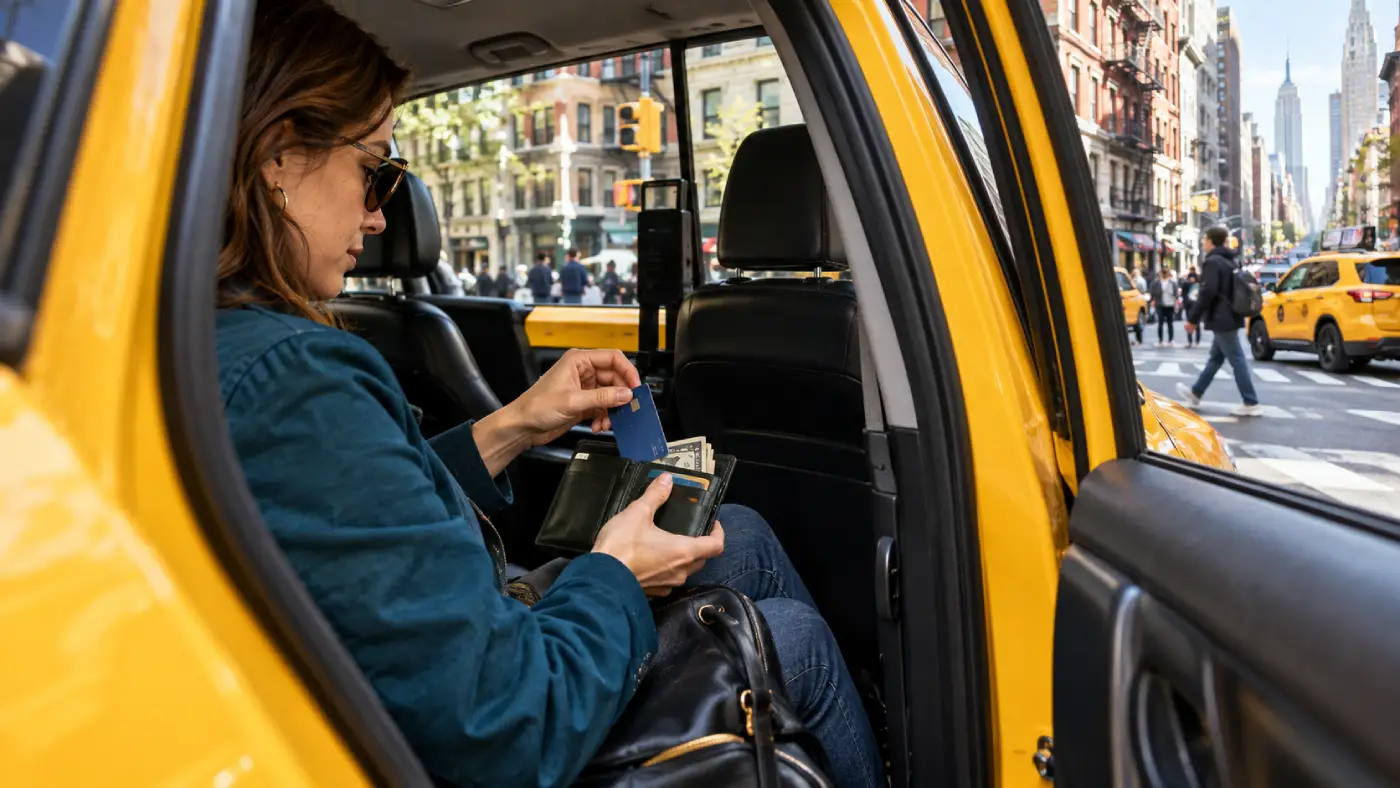
Use a card for most everyday spending in the USA, carry a backup linked to a separate account, and keep some US dollars in small notes. Leave room in your budget for sales tax and tips, plus enough available funds or credit for hotel and rental-car deposits.
The practical challenge is knowing what a payment represents. Your restaurant total may include tax and a tip, while a hotel’s pending authorization can temporarily tie up money beyond the room price. Understanding that difference helps you avoid both failed payments and unnecessary worry.
Cards are a practical starting point for shopping, dining and bookings. Cash remains useful for small tips and businesses that accept only cash, while some attractions and venues require a card or advance payment.
| Situation | Payment method to prepare | What matters |
|---|---|---|
| Shops and restaurants | Physical card; supported mobile wallet where accepted | The displayed price may exclude sales tax, and dining can involve a tip |
| Hotel check-in | A physical card accepted by the property | Allow for an incidental hold, even with a prepaid room |
| Rental-car collection | A card meeting the branch’s requirements | Card type, renter’s name and deposit conditions matter |
| Small tips and cash-only purchases | Small US-dollar notes | Keep useful denominations within reach |
| Public transport | The local system’s accepted card, wallet or transit ticket | Payment methods differ between cities |
| Attractions and events | The method specified by the venue | Cash is not a universal fallback |
Keep your backup card separately from your main wallet. Adding the same card to your phone gives you another way to present it, but does not create a separate source of funds if the issuer blocks that account.

The currency is the US dollar, written as USD or $. Notes of $1, $5, $10 and $20 are convenient for small purchases and tips.
Base your cash reserve on the services you expect to use. Hotel luggage assistance, housekeeping tips and planned cash-only purchases create different needs from a city visit built around prepaid attractions and card payments. There is no useful nationwide rule that every visitor needs a fixed amount of cash per day.
Keep enough accessible for those known expenses and a manageable payment backup, then replenish it as needed. Carrying your entire holiday budget in banknotes adds inconvenience without solving every payment problem.
Grand Canyon’s entrance-fee collection, for example, is cashless. Having plenty of dollars does not replace an accepted payment card or suitable pass there.
Large cash sums also need separate arrival planning. Review the rules for bringing cash into the USA before travelling, including which monetary instruments count toward declaration requirements.
Bring a physical card enabled for international purchases and know its PIN. Your issuer determines overseas-use settings, spending limits and foreign-transaction fees; an otherwise valid card can still be declined by a particular terminal or booking system.
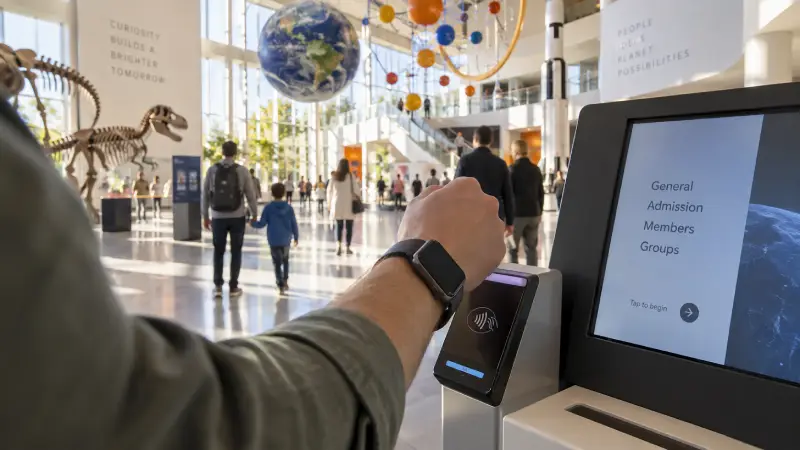
Apple Pay and Google Wallet are useful where the merchant supports contactless payments and accepts the underlying card network. You also need an eligible card from a participating issuer and a compatible, properly configured device. Arriving in the USA does not make an unsupported home-bank card eligible for either wallet.
Set up and test your wallet before leaving, while you can still resolve verification problems with your bank. Keep the physical card available for places where tapping is unavailable or the card must be presented.
Prepare access to your banking app at the same time. If you need mobile data for the trip, compare USA eSIM plans around your itinerary and expected usage before departure.
US shelf and menu prices often exclude sales tax. The applicable rate depends on the state, local jurisdiction and what you buy, so the amount at checkout can exceed the displayed price.
Restaurant spending needs another allowance: the tip. We would budget around 18–20% for good table service as a practical planning figure, while recognising that expectations vary by setting. Suggested percentages on a payment screen are options; a separately imposed service charge is a different part of the bill.
Consider a taxable restaurant meal in New York City, with no automatic gratuity or other service charge. You choose to leave a 20% tip calculated on the $50 food-and-drink subtotal.
| Item | Amount |
|---|---|
| Menu subtotal | $50.00 |
| Sales tax at 8.875% | $4.44 |
| Chosen tip: 20% of the subtotal | $10.00 |
| Total payment | $64.44 |
Illustrative calculation using New York City’s combined sales-tax rate, checked on 6 October 2026. The tip is a chosen example; other locations and bill structures produce different totals.
Read the bill before adding a tip. An “automatic gratuity” or “service charge” may already be included, and a generic service fee does not necessarily tell you how staff are paid. Ask what the charge covers if the wording is unclear.
With a paper card receipt, enter your chosen tip and total clearly, then keep your copy. With a payment terminal, review the actual dollar amount rather than tapping a percentage without looking.
Shopping raises a separate question: whether a visitor can recover the tax. The USA has no general federal tourist sales-tax refund. Any applicable state arrangements have their own conditions, covered in our USA tourist tax-refund guide.
Withdrawing cash can involve several separate costs:
ATM operator fee: the charge for using that machine.
Your bank’s withdrawal fee: any charge under your account’s overseas or out-of-network terms.
Currency conversion: the rate and any markup used to debit your account.
Cash-advance charges: possible additional fees and interest when withdrawing with a credit card.
Read the machine’s disclosed fee before proceeding. Look for a compatible ATM in your bank’s partner network if one is available, but do not assume that a bank-branded machine is free for your card.
If an ATM or payment terminal offers to bill you in your home currency, it is offering dynamic currency conversion, or DCC. The quoted conversion can include a markup.
Our default choice is to pay or withdraw in USD, leaving any required conversion to the card network and issuer under the card’s terms. Declining the machine’s conversion does not itself cancel the withdrawal, and it does not remove your bank’s separate fees.
The key is to distinguish the conversion offer from the withdrawal fee. Visa’s DCC guidance explains the information the merchant or ATM should display, including the rate and additional charges.
With a currency-exchange counter, compare how many US dollars you will actually receive for the same amount of your home currency, after every charge. “No commission” alone tells you little if the exchange rate is less favourable.
Airport exchange counters can be convenient for arrival cash. Compare the quote before converting a large sum, and compare that result with the total cost of withdrawing through your own card.
Prefer a debit-card withdrawal over a credit-card cash advance when your account terms make it cheaper. Credit-card withdrawals can attract fees and interest that ordinary purchases do not.
Paying for a hotel room in advance does not necessarily settle everything required at check-in. The property may also authorize an amount for incidentals such as parking, dining or other charges.
Hilton, for example, allows properties to place an incidental hold when you arrive. The final bill and the release of the authorization are separate steps, and the card provider can affect when the money becomes available again.
With a debit card, the hold reduces money available in your account. With a credit card, it uses part of your available credit. Several stays close together can leave earlier holds outstanding when the next hotel requests another one.
Rental-car payment rules deserve attention before collection. Enterprise’s US airport locations, for example, attach conditions to debit-card use, including a ticketed return itinerary. Requirements at other branches or companies can differ.
Ask the exact property or rental branch three questions before booking:
Which card types are accepted at check-in or collection?
How much must be available beyond the prepaid booking price?
When will the deposit or authorization be released?
With car hire, the cardholder details must meet the renter requirements. Keep enough separate spending capacity for meals, transport and the next booking while deposits remain tied up.
US cities have different ticketing systems. New York’s OMNY accepts supported contactless cards and mobile wallets, as well as its own transit card.
Use the same payment method each time to receive applicable transfers and fare-cap benefits. Tapping your physical card and then switching to the same card in your phone wallet counts as switching payment methods.
If your foreign card is not accepted, OMNY vending machines also allow you to buy or reload an OMNY Card with cash. Broader route choices are covered in our guide to getting around the USA.
Some US fuel pumps request a billing ZIP code. Foreign-issued cards can fail this verification even when the card works for other purchases.
Ask the attendant to handle the payment inside and explain that the card was issued abroad. Agree the pump number and payment arrangement before filling.
Do not substitute your PIN or assume a random US ZIP code will work. Postal-code workarounds promoted for specific Canadian cards are not a universal solution for cards issued elsewhere.
Treat these services as options for people who already meet their account requirements, rather than apps every visitor can install on arrival.
Venmo requires you to be in the United States and have a US bank account. Its account requirements also include a US-based mobile number capable of sending and receiving short-code text messages. Additional identity checks can apply.
Zelle requires both the sender and recipient to have eligible US bank accounts. Owning a foreign payment card or arriving with a travel eSIM does not establish eligibility.
Neither service is necessary for ordinary card purchases. If a seller asks for payment through an app you cannot use, request a conventional card-payment option or another payment method you can verify.
Start with the payment method and the issuer’s message. If tapping fails, ask whether inserting the physical card is supported. If the transaction is still declined, use your independent backup and inspect the bank app for a block, limit or verification request.
Pending hotel authorizations and settled charges need different responses. Compare your receipt, the merchant’s final bill and the transaction status before deciding what went wrong. Contact the bank promptly if a charge is unfamiliar or does not match what you authorized.
Mobile data can help you open the bank app and contact support away from Wi-Fi. Roafly’s USA eSIM provides data, but no local phone number or SMS. Arrange access to your bank’s verification number or another bank-approved authentication method before departure.
Unexpected requests to pay an unfamiliar person or follow an unverified payment link deserve separate scrutiny. Our guide to common payment scams in the USA covers situations where the request itself is the problem.
Before travelling, have these ready:
Your main physical card and a separately stored backup linked to another account.
The PINs, overseas-use settings and fee terms for the cards you intend to use.
Enough available funds or credit for the deposits on your bookings.
Small US-dollar notes for the cash expenses on your itinerary.
Working bank-app access and the bank’s official support details.
