


The useful distinction is deception. An expensive ride or an unfamiliar service charge needs scrutiny, but price alone does not establish a scam. Focus on who is collecting your money, what the payment covers and whether you can verify the request independently.
Before You Fly: ESTA Lookalikes and Fake Bookings
ESTA websites that imitate the government
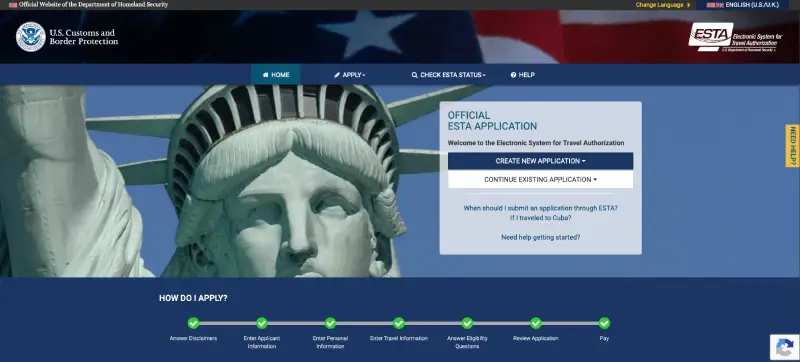
If you qualify to travel under the Visa Waiver Program, submit your application through the official ESTA website or its official app. Lookalike sites can charge inflated amounts or collect your details without completing the application.
Pay attention to the website address before entering passport information. A government-style logo, a sponsored search result or the word “official” in an advertisement is not proof of government ownership.
Paid assistance and impersonation are different things: the warning sign is a business concealing who it is or falsely presenting itself as the government. If you have already applied through an unfamiliar site, use the official ESTA service to establish whether an application exists and what its status is.
Vacation rentals that are copied or invented
Fraudulent listings may reuse photographs and an address from a genuine property. Others advertise accommodation that is unavailable or does not exist. Receiving an address and attractive photos is therefore the start of verifying a booking.
Search the address alongside the rental company or host’s name. Conflicting hosts, inconsistent contact details or a property missing from the management company’s own listings deserve further investigation. Contact the company through independently obtained details before sending a deposit.
Be particularly cautious when a supposed host pressures you to pay immediately by wire transfer, gift card or cryptocurrency. Keep the listing, cancellation terms and payment confirmation together so you have a record of the offer you accepted.
Fake hotel and airline customer service
Sometimes the booking is real, but the person offering to help with it is not. Search advertisements can place a fraudulent phone number beside a genuine hotel or airline name, or direct you to a website that imitates the brand.
Open the company’s app, your original confirmation or its independently verified website to find support. If you expected to speak directly to a hotel but reached a booking agency, establish the seller’s identity and terms before paying.
Airport Rides: Start at the Authorized Pickup Point

At JFK, ignore unsolicited transport offers inside the terminal and use the official taxi stand, designated rideshare pickup area or airport information staff. The airport specifically warns about fraudulent drivers and unauthorized solicitors.
Someone approaching you with “taxi?” before you reach the pickup area may be trying to move you into a transaction outside the service you intended to use. A verbal promise of a good price leaves important questions unanswered: who operates the vehicle, how the fare is calculated and where a complaint would go.
With an app-booked ride, match the vehicle registration, driver and car to the booking before boarding. Keep the journey and payment within the service you selected. If the details differ, resolve that through the app rather than accepting an explanation at the curb.
Legitimate taxi fares can include tolls and other permitted charges. Ask how the total is calculated and retain the receipt; a higher total than the headline fare is not, by itself, evidence of fraud. Our guide to getting around the USA explains the wider transport choices.
Have your destination and pickup instructions available before leaving the terminal. Comparing internet options in the USA before departure makes that practical preparation easier.
New York Tickets: Seeing the Statue Is Not the Same as Landing

Near The Battery in Lower Manhattan, the crucial question is whether your ticket takes you onto Liberty Island and Ellis Island or past them.
Statue City Cruises is the National Park Service-authorized ferry operator permitted to dock and let passengers off at those islands. Other sightseeing cruises may legitimately offer views from the water. The deception occurs when the seller misrepresents that different experience as an island visit.
The National Park Service’s ticket guidance warns about misleading street sales and identifies the official ticket office inside Castle Clinton. Book through the authorized channel or establish exactly what a guided package includes before paying.
The Staten Island Ferry is a separate service and is free. It provides views of the harbor, but it does not take you Liberty Island. Someone selling you admission to that ferry is charging for a ticket you do not need.
With other attractions and shows, the same buying decision applies: establish the event, date, admission type and seller. A real ticket for a different experience can be just as useless to your plans as a counterfeit.
Pedicabs, Photos and “Free” Gifts
Pedicab prices: understand the unit before boarding
In New York City, pedicab rates must be posted and charged per minute using a timer. Drivers must provide a Pedicab Information Card and cannot add tax, extra-passenger charges or other fees.
The important question is not simply “How much?” It is “How much per minute, and how long will this ride last?” Get that clear before boarding, including whether you are agreeing to a short transfer or a longer sightseeing ride.
Photograph the displayed rate if you can do so comfortably, and keep the information card and payment record if the final bill does not match the agreed basis.
Photo requests that become payment pressure
Around busy New York tourist areas, costumed performers may invite you to pose and then request a tip. NYC’s consumer guidance states that you do not have to pay simply because you watched a performance or took a photograph.
Decide whether you want the interaction before joining it. Keep your phone in your own hands where possible, and step away if a voluntary tip becomes pressure or harassment.
Gifts that acquire a price after you accept them
Another reported street tactic involves offering a music CD or small token as a gift, then demanding a purchase or donation it is in your hand. The mechanism is the sudden change from “free” to an obligation.
Decline items you did not seek out. If you have already accepted something, calmly offer it back and leave the interaction when safe. Avoid turning the disagreement into a confrontation or opening your wallet under pressure.
Hotel Calls About a “Payment Problem”
After check-in, another impersonation can happen: your room phone rings, and someone claiming to work at reception says the card on file has failed or needs to be verified.
The caller offers to save you a trip downstairs by taking the details over the phone. That convenience is the trap. A call reaching your room does not establish that it came from hotel staff.
End the call and visit reception, or initiate a fresh call using the hotel’s known internal contact. Let staff establish whether there is a genuine account issue. Do not give the unexpected caller your full card details, security code or banking verification codes.
If you already shared payment information, contact your card issuer promptly and tell the hotel what happened.
Road Trips: Fake Toll Texts and Parking QR Codes
Urgent messages about unpaid tolls
Texts claiming you owe a small road toll can lead to a fake payment page. The apparent urgency encourages you to settle it before considering whether the sender is genuine.
Use the toll agency’s independently verified website or contact details to investigate. With a rental car, also establish how your rental company handles tolls under your agreement. An unexpected text and a genuine rental-company toll charge require different checks.
Roafly’s data-only United States eSIM can provide mobile internet for accessing booking records, maps and official websites while traveling. Verify the payment destination yourself before entering any details.
Stickers that redirect parking payments
New York City has warned about fraudulent QR stickers placed on parking meters to collect card information. Its warning directs motorists to the official ParkNYC app or the physical meter.
This is a local example, not a rule that every parking QR code across America is fraudulent. Payment systems differ between cities and private parking operators.
If a sticker looks added, covers existing information or takes you to an unfamiliar payment page, stop. Find the operator through the official city or parking-provider website and use its stated payment method. Paying a fraudulent page may leave the actual parking session unpaid.
Card Skimming at ATMs and Gas Pumps
Skimming devices capture card information at payment terminals, ATMs or fuel pumps. Some are concealed inside the equipment, so a normal-looking machine is not proof that it is secure.
At a gas station, consider paying inside or using contactless payment where supported. The FBI recommends pumps closer to the shop and within the attendant’s view as a way to reduce exposure.
With an ATM, prefer a well-lit indoor location, cover the keypad while entering your PIN and avoid equipment with loose, damaged or unusual parts. Indoor machines can still be compromised; the location is a precaution, not a guarantee.
Turn on transaction alerts if your bank offers them. Report unfamiliar charges promptly through your bank’s own app or the number on your card.
Which Extra Charges Are Actually a Warning Sign?
US bills can be confusing when you are used to different pricing conventions. Separate the charge itself from the way it was presented.
| Situation | What to establish |
|---|---|
| Sales tax appears at checkout | Whether it is the applicable tax rather than an unexplained added charge |
| A restaurant bill includes a service charge or gratuity | Whether it was disclosed and whether you intend to leave any additional tip |
| A hotel charges a mandatory resort or destination fee | Whether it was included in the upfront advertised total |
| A rental company offers insurance or toll services | What is optional, what your contract requires and what you already have |
| The card charge exceeds the receipt | Whether there is an explanation or an unauthorized amount to report |
Mandatory short-term lodging fees must be included in the upfront price under the federal fee rule; certain charges, including government taxes, can be handled separately with the required disclosure. The presence of a resort fee alone does not prove fraud. Concealing a compulsory fee until a later stage is the issue.
Read the total before authorizing payment, then retain the receipt. That gives you something concrete to compare with the final transaction.
If You Have Already Paid or Shared Your Details
Stop further payments and move to a safe public place if an encounter feels threatening. You do not need to win an argument at the scene to document what happened.
-
Contact your bank or payment provider immediately. Use its official app or a known number. Explain whether the payment was unauthorized or whether you were deceived into approving it, and ask what recovery or card-protection options are available.
-
Keep the evidence. Save receipts, messages, booking confirmations, website addresses and the time and location. Preserve these without returning to confront anyone.
-
Report through the appropriate channel. Notify the booking platform, hotel, transport service or parking operator involved. In NYC, 311 can direct consumer complaints; use 911 for immediate danger or an emergency.
-
Secure any affected accounts. Change a disclosed password and any reused versions of it. Enable two-factor authentication where available.
The FTC’s steps to take after a scam explain responses by payment method and provide a reporting route. Reporting helps authorities investigate patterns, but it does not guarantee reimbursement.
These checks address deceptive transactions. Questions about neighborhoods, crime and the broader trip belong in our guide to general travel safety in the USA.