Download the App and manage your eSIMs easily
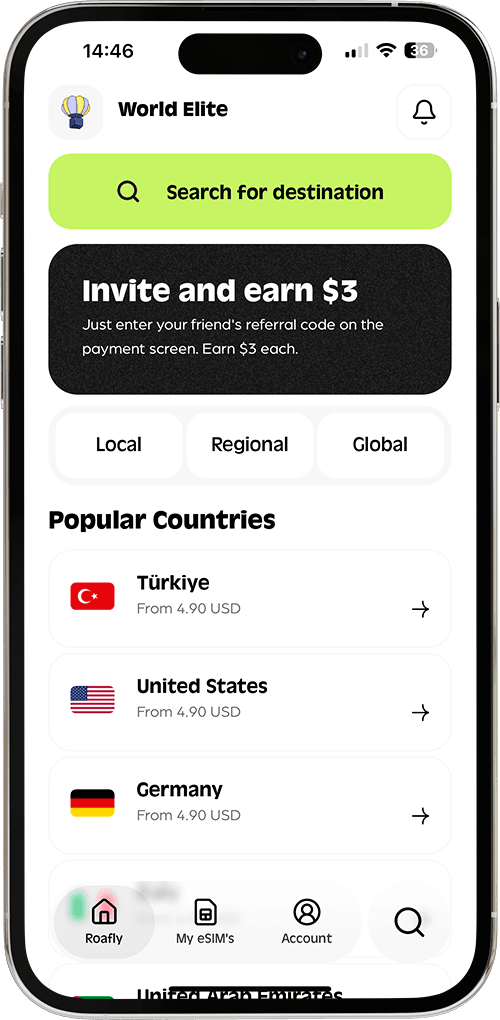
Create your order quickly
See your eSIM details
Track your remaining data
Download the App and manage your eSIMs easily
Create your order quickly
See your eSIM details
Track your remaining data
New York sightseeing and a road trip through the American West call for different connectivity plans.
Verizon, AT&T
Instant delivery
3.90 USD From 3.31 USD

Sophie Callahan
Updated Sep 16, 2026
7 min read

Best for most trips
Verizon, AT&T

United States
10 GB · 30 days
Enough for maps, bookings and everyday travel.
Hotspot supported
$16.90
$14.36
USA15 automatically applied
$3.90From 3.31 USD
15% reader discount
If your phone is unlocked and supports eSIM, prepaid mobile data is a practical starting point for maps, bookings and messaging. Your existing plan may already include enough US roaming, though, while a local prepaid line can make more sense if you need a US number and regular calls.
| Option | Suits whom | Main trade-off |
|---|---|---|
| Airport SIM card | Visitors who want to buy a physical SIM on arrival | Sellers, opening hours and terminal access vary |
| Local SIM card | Visitors who need a US number or help setting up a line | Requires a compatible phone and time to arrange service |
| Roafly eSIM | Visitors who want prepaid data on their own phone | Requires an unlocked, eSIM-compatible device; no US number |
| Wi-Fi | Light users who can connect at planned stops | Access ends when you leave the hotspot |
| Pocket Wi-Fi | People sharing a connection across several devices | Another device to carry, charge and arrange delivery or return for |
| Home roaming | Visitors with suitable included coverage or a travel add-on | Allowances, charges and activation depend on the home plan |
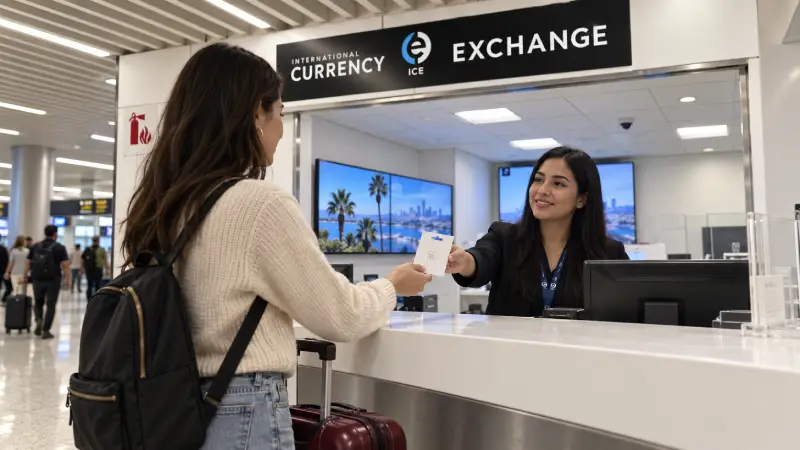
Buying a SIM after landing is possible at some US airports, but the experience depends on where you arrive. At Los Angeles International Airport, ICE currency-exchange booths sell domestic and international SIM cards. That gives you a physical-SIM option without first finding a city shop.
The useful questions are whether a seller is accessible from your arrival terminal, whether it will be open, and what the complete purchase includes. Ask for the total with any taxes or setup fees, the data allowance, validity and whether calls and texts are included. Buying at an airport is a location choice; the SIM still needs to suit your phone and journey.
Our guide to buying a SIM card at LAX covers that airport’s purchasing options in more detail. Its counter information applies to Los Angeles, so use your own arrival airport’s directory if you land elsewhere.
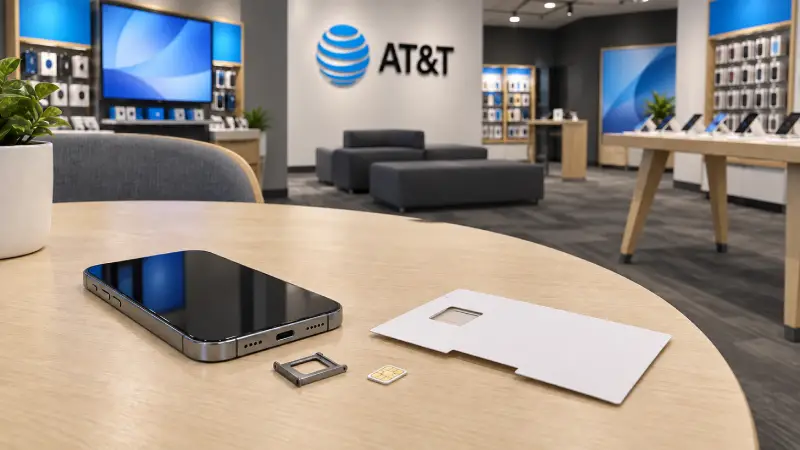
Local prepaid service is worth considering if you need a US phone number for ordinary calls and texts, prefer in-person setup, or expect to use the line throughout a longer stay. AT&T and T-Mobile offer prepaid options, including service for compatible phones you already own.
Phone compatibility deserves attention before you pay. Being unlocked lets you use another provider, but the exact model must also work on its network. AT&T’s prepaid compatibility guidance is a useful starting point if you are considering that operator. Local service may be supplied through a physical SIM or an eSIM, depending on the phone and offer.
In a store, explain how long you are staying and whether you need calls, texts or hotspot data. Compare the amount due today and the renewal terms, including any discount that depends on automatic payments. That is more useful for a short visit than comparing the advertised monthly prices alone.
The detailed guide to local SIM cards for tourists in the USA covers operators, package prices and where to buy.
Roafly’s USA eSIM suits visitors who mainly need internet for navigation, tickets, messaging and app-based calls. It provides data through Verizon and AT&T, with availability depending on your location, device and local network conditions.
The service is data-only: it does not include a US phone number, ordinary voice minutes or SMS. You can share the purchased allowance through your phone’s hotspot without a separate hotspot quota, and top-ups are supported. Occasional laptop use can therefore fit into the same allowance, although large uploads and video meetings will use it more quickly.
Your phone must be carrier-unlocked and eSIM-compatible. Install using a reliable internet connection, then follow the supplied setup instructions and select Roafly for mobile data. Keep your home SIM’s data roaming off if you are not using its roaming allowance; calls made or received on that home line can still have separate charges.
Exclusive Reader Bonus!
Enjoy an extra %15 OFF your first Roafly eSIM purchase as a thank you for reading.
If you want to weigh different providers before choosing, compare USA eSIM providers by allowance, validity, networks and service features.
Roafly’s North America eSIM covers the United States, Canada and Mexico. It is worth comparing with a country-only package when your itinerary crosses those borders. Match the regional plan’s validity and data allowance to the whole journey, rather than choosing solely around your days in the USA.
Wi-Fi can cover a meaningful part of a city visit. LAX offers free Wi-Fi throughout the public areas of its terminals, while New York’s LinkNYC kiosks provide free Wi-Fi at locations across the five boroughs. At your accommodation, establish whether internet access is included and available where you intend to use it.
Relying mainly on Wi-Fi can work if your plans are settled, you use little data and you are comfortable downloading maps and tickets ahead of time. It becomes less convenient when you need to change a booking or contact someone between stops. Access at a café, hotel or kiosk gives you a place to connect; it does not provide a continuous connection as you move around.
Sort out your airport transfer and onward transport before arrival, then save the pickup instructions. Airport Wi-Fi may be enough to arrange a ride inside the terminal, but mobile data gives you more flexibility if the driver messages after you have walked outside its range.
Portable routers are a credible option for US travel. TravelWifi, for example, includes the USA in its rental coverage. You connect phones, tablets or laptops to the router’s Wi-Fi, and the router supplies the mobile-data connection.
The strongest reason to carry one is shared access across several devices while your group stays together. The trade-off becomes clear when you split up: the person carrying the router takes the connection with them. Everyone else needs another way to get online.
Factor delivery, return arrangements and daily charging into the decision, alongside the allowance and any speed restrictions. Rental logistics should fit your accommodation and departure plans. If you only need to connect a laptop occasionally, sharing your phone’s data may avoid the extra device altogether. Both approaches still depend on mobile coverage.
Start with your carrier’s app or account: look for the USA in your plan’s included destinations, then read the usable data allowance and any speed limit. If it already covers your trip, keeping your existing service can be the simplest choice.
Paid roaming needs a trip-length comparison. Look at what triggers a daily charge, whether an add-on renews, and how much data you receive before speeds change or extra charges apply. Include calls and texts if those are part of what you need. Someone visiting for two days may reach a different decision from someone spending three weeks on the road.
Canada and Mexico are separate destinations for this calculation. Their inclusion depends on your home tariff, even when the same trip takes you across all three countries.
Your route matters as much as your data allowance. City use and remote stretches of a national park can produce very different experiences on the same plan. More gigabytes will not solve a location with no usable signal.
In Yellowstone, cell service is extremely limited, with access concentrated around developed areas and some entrances. Summer demand can also overwhelm the available service. Plan park days around downloaded information instead of expecting the connection you had in town to continue throughout the drive.
Before leaving a reliable connection, download the relevant maps, save accommodation details and tickets, and make any time-sensitive arrangements. If your itinerary includes remote lodging and scheduled video meetings, ask the property specifically about its internet access before booking. Mobile data is useful on a US road trip; offline preparation is what keeps the plan workable through its gaps.
Best for most trips
Verizon, AT&T
United States
10 GB · 30 days
Enough for maps, bookings and everyday travel.
Hotspot supported
$16.90
$14.36
USA15 automatically applied
$3.90From 3.31 USD
15% reader discount

Manage your eSIM in the app
Install, top up and track data.
Choose the perfect data plan for your trip
