

The sheer scale of the United States makes its transportation system incredibly diverse and heavily dependent on your specific destination. You are dealing with a country that spans multiple time zones, climates, and vastly different infrastructure priorities. In major East Coast hubs, subway systems reign supreme, while the South and West Coast are completely dominated by car culture.
Navigating this reality in 2026 requires understanding that there is no single transit app or card for the entire country. Every major city operates its own independent public transit authority with distinct rules, payment methods, and pricing structures. If you step off a plane expecting European-style high-speed rail connections nationwide, you will be in for a severe logistical shock.
However, the modernization of payment systems and ride-sharing networks has made getting around significantly easier for international visitors. You simply need to know exactly which apps to download and which transit methods are viable in your specific region. Understanding these local nuances is the key to preventing budget blowouts on overpriced taxi rides or getting stranded in transit deserts.
The Basics: Understanding the Network
Public transportation in the United States is primarily regional and heavily concentrated in major metropolitan areas. Cities like New York, Boston, Chicago, and Washington D.C. boast robust subway and elevated train systems that operate extensively. These rapid transit networks are the lifeblood of their respective cities, offering the fastest way to bypass crushing urban gridlock.
Conversely, cities like Los Angeles, Houston, and Miami have sprawling, low-density layouts where rail networks are limited and often supplemented by massive bus systems. While places like Los Angeles have significantly expanded their Metro rail lines ahead of global sporting events, buses still remain a necessary reality for many routes. Unfortunately, urban bus systems in the US can be subject to severe traffic delays and confusing route maps.
-
Subways and Light Rail: Best utilized in NYC, Boston, Chicago, Philadelphia, and Washington D.C.
-
Commuter Rail: Excellent for traveling from city centers to outer suburbs (e.g., Metro-North in NY, Metrolink in LA).
-
Urban Buses: Plentiful but often slow due to traffic; use them when train routes do not connect to your destination.
-
Transit Deserts: Be aware that many smaller cities or suburban regions have virtually zero public transit available.
It is crucial to research your specific destination city before arriving to determine if you need to rent a car or if you can rely entirely on trains. Do not assume that a city with a famous name automatically has a functional subway system.
Payment & Tickets: Mobile Apps vs. Physical Cards
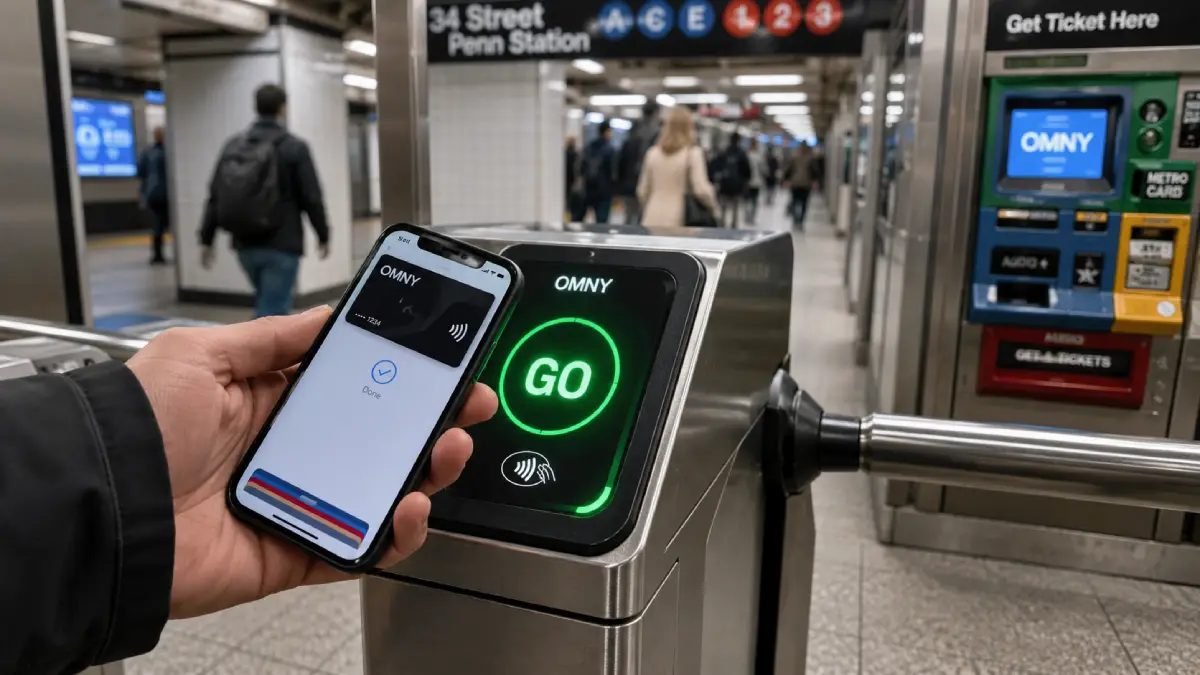
The year 2026 marks a massive shift toward open-loop contactless payments across American public transit. You no longer need to figure out confusing ticket vending machines or purchase dedicated plastic transit cards in most major cities. Systems like New York’s OMNY, Boston’s Charlie System, and Chicago’s Ventra now allow riders to simply tap their credit card or mobile wallet at the turnstile.
If your debit or credit card has a contactless symbol, or if you use Apple Pay or Google Wallet, you can seamlessly enter the transit networks of almost all tier-one US cities. This tap-and-go technology automatically calculates the correct fare, and many cities have implemented fare capping. Fare capping ensures that after you spend a certain amount in a day or week, the rest of your rides are completely free.
-
Tap-to-Pay: Widely accepted in NYC, Chicago, LA, Boston, and Washington D.C.
-
Mobile Wallets: The safest and fastest way to pay without fumbling for physical cards.
-
Physical Smart Cards: Still available (e.g., Clipper in San Francisco, TAP in LA) for those who prefer reloading a dedicated transit card.
-
Cash Fares: Increasingly discouraged and outright banned on certain bus routes or rapid transit lines.
While the convenience of tapping your phone is unmatched, tourists should be highly vigilant about international transaction fees from their home banks. If your bank charges a fee for every foreign tap, it might be cheaper to load a digital transit card into your Apple Wallet or buy a physical pass. Always avoid loading too much money a physical, non-refundable transit card, as extracting leftover funds when you leave the country is nearly impossible.
Airport Transfers: Getting to the City Safely
Getting from the airport to the city center is where many tourists experience their first major logistical hurdle and potential scam. Major airports like JFK (New York), ORD (Chicago), and SFO (San Francisco) offer dedicated train lines connecting terminals directly to downtown hubs. These rail options are invariably the cheapest and most immune to unpredictable highway traffic.
If you opt for a taxi or ride-share from the airport, prepare for a maze of specific pickup zones and high surge pricing. Airports have designated, heavily monitored ride-share pickup areas, and you absolutely cannot flag down an Uber or Lyft at the standard arrivals curb. Follow the prominent "App-Based Rides" or "TNC Pickup" signs to locate your driver safely.
-
JFK to Manhattan: The AirTrain connects to the subway or Long Island Rail Road (LIRR) for a fast, traffic-free transfer.
-
LAX to Los Angeles: Rely on the FlyAway bus to Union Station or dedicated ride-share zones (LAX-it), as the rail connection is still a work in progress.
-
ORD to Chicago: The Blue Line train is cheap, efficient, and runs directly from the airport into the Loop.
-
Airport Taxis: use official taxi ranks with dispatchers; absolutely ignore anyone soliciting rides inside the terminal.
It is vital to familiarize yourself with our USA Airport Customs Rules guide before your flight lands so you don't face delays retrieving your luggage. Unlicensed drivers known as "hustlers" still operate in the arrivals halls of major airports, aggressively offering rides. Never accept a ride from someone who approaches you directly; official drivers will never solicit you inside the building.
Shifting Cities: Inter-City Trains, Shuttles & Domestic Flights
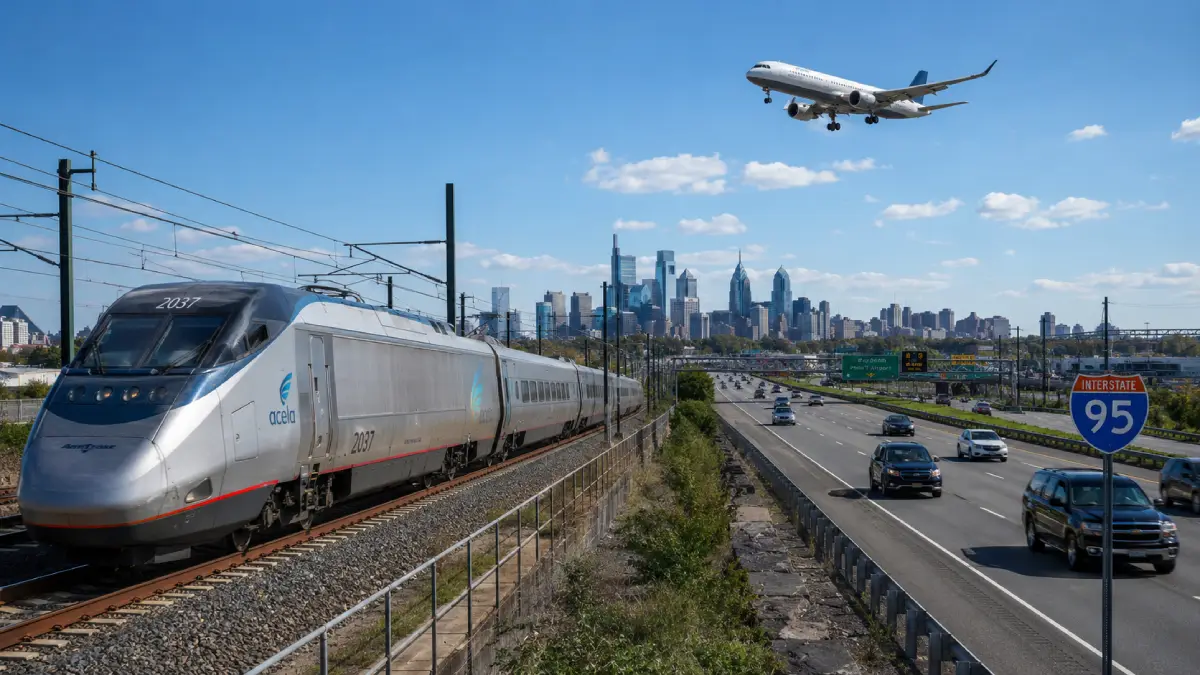
Unlike Europe or Japan, the United States lacks a comprehensive, nationwide high-speed rail network. For traversing the vast distances between major regions—like New York to Los Angeles or Chicago to Miami—domestic flights are the practical option. The domestic aviation market is massive, heavily competitive, and dominated by major carriers like Delta, United, American Airlines, and budget options like Southwest.
If you are traveling within the Northeast Corridor (Washington D.C., Philadelphia, New York, Boston), train travel is actually superior to flying. Amtrak’s Acela line provides reasonably high-speed rail service that takes you directly from city center to city center, completely bypassing airport security lines. However, Amtrak routes outside of this specific corridor are notoriously slow, prone to freight delays, and are better suited for scenic journeys rather than efficient transit.
-
Domestic Flights: Essential for cross-country travel; book weeks in advance and watch out for severe baggage fees on budget airlines.
-
Amtrak Northeast Corridor: The optimal way to travel between D.C., NY, and Boston.
-
Luxury Long-Distance Buses: Companies like Megabus and FlixBus offer very cheap, surprisingly comfortable inter-city travel with Wi-Fi.
-
Regional Shuttles: Private van services are popular for connecting nearby cities or tourist hubs without train access.
Always factor in the time and cost of getting to the airport, passing through TSA security, and boarding when comparing flights to trains. Sometimes a three-hour train ride is functionally faster than a-hour flight airport logistics are calculated. Pack light if you plan to fly domestically, as checked baggage fees in the US have climbed significantly in 2026.
Taxis, Ride-Sharing & Local Driving Laws
Ride-sharing apps completely dominate the personal transport sector in the United States, rendering traditional street-hailing taxis largely obsolete outside of New York City and Las Vegas. Uber and Lyft are the two ubiquitous giants; there is no Grab, Bolt, or Careem here. You absolutely must have both apps downloaded, as prices and wait times can fluctuate wildly between them during rush hour or poor weather.
Renting a car is practically mandatory if your itinerary includes national parks, the Pacific Coast Highway, or sprawling cities like Los Angeles and Orlando. To drive in the US, foreign tourists typically need a valid driver’s license from their home country, though some states strictly require an International Driving Permit (IDP). Driving laws vary significantly by state, particularly regarding right turns on red lights, HOV (carpool) lane rules, and speed limit enforcement.
-
Ride-Sharing: Uber and Lyft are essential; link your credit card before you arrive to avoid payment issues.
-
Taxis: competitive in NYC (Yellow Cabs) where they can be hailed on the street; always ensure the meter is running.
-
Car Rentals: Book far in advance, and heavily scrutinize the insurance options like Collision Damage Waiver (CDW) and Liability coverage.
-
Driving Habits: Americans drive on the right side of the road, and highway speeds are generally fast and aggressive.
Scams in ride-sharing are rare due to app tracking, but always verify the license plate and driver's name before entering the vehicle. When renting a car, never prepay for a full tank of gas from the rental agency, as their rates are heavily inflated. Familiarize yourself with our USA Tourist Bans & Laws guide to ensure you do not inadvertently violate local traffic ordinances or parking restrictions.
Transit Etiquette & Unwritten Rules
Public transportation in the United States operates on a set of unwritten social rules that, if broken, will quickly single you out as a tourist. The most universal rule is the escalator etiquette: you must stand on the right and walk on the left. Blocking the left side of an escalator during rush hour in New York or D.C. will immediately draw verbal reprimands from rushing commuters.
Personal space is highly valued in American culture, even on crowded trains. Avoid making prolonged eye contact with strangers, keep your voice down when talking, and never play music or videos from your phone without headphones. Furthermore, taking up an extra seat with your backpack or luggage while people are standing is considered incredibly rude; always place bags on your lap or between your feet.
-
Escalators: Stand right, walk left. This is non-negotiable in major transit hubs.
-
Exiting: Always let passengers exit the train or bus completely before you attempt to board.
-
Eating: While technically banned on many systems, light snacking is common, but bringing hot, strong-smelling food on board is a major faux pas.
-
Priority Seating: Immediately yield seats near the doors to elderly passengers, pregnant women, or those with disabilities.
Unlike many European or Asian systems, you will encounter a wider variety of social situations and unpredictable behavior on US public transit. Maintain situational awareness, keep your valuables secure, and simply move to a different train car if someone is causing a disturbance. Do not engage with erratic individuals; keeping a low profile is the smartest transit strategy.
Navigation Apps & The Best Route Tools
Navigating the fragmented American transit system is nearly impossible without a smartphone and the right suite of digital tools. Google Maps is universally the most reliable application for walking directions, driving routes, and general public transit schedules across the country. It integrates live traffic data, predicts transit delays, and even estimates the cost of ride-shares right from the app.
For more granular transit navigation in major cities, the Transit app is highly recommended. It provides incredibly accurate, real-time tracking of buses and subways, telling you exactly when the next vehicle will arrive. Citymapper is another excellent alternative, specifically tailored for complex metropolitan areas like NYC, Chicago, and Boston, offering multi-modal route comparisons.
-
Google Maps: The undisputed king for driving, walking, and broad transit planning.
-
Transit App: The best tool for live countdowns of incoming buses and trains.
-
Citymapper: Highly detailed routing for major urban centers, mixing subways, walking, and bike-shares.
-
Amtrak App: Essential if you are taking inter-city trains, used for displaying digital tickets and tracking train status.
Do not rely on physical paper maps or static bus schedules posted at stops, as they are rarely updated to reflect real-time delays or route changes. Having these apps installed and functioning is critical, which brings us to the absolute necessity of maintaining a stable internet connection.
Staying Connected: Your Ultimate Navigation Tool
Relying on public Wi-Fi to navigate the United States is a recipe for disaster and severe frustration. Station Wi-Fi is notoriously spotty, and losing connection while trying to call an Uber at a busy intersection or reloading your digital transit card can leave you completely stranded. You need continuous, high-speed cellular data the moment your plane touches down to access ride-share zones, utilize live translation tools, and load complex subway maps.
Need data in United States? Get an eSIM!
Choose the perfect data plan for your trip

Manage your eSIM in the app
Install, top up and track data.
Physical SIM cards are rapidly becoming obsolete, often requiring you to waste vacation time hunting down a cellular store and dealing with language barriers or activation fees. The most efficient, secure, and cost-effective solution for modern travel is utilizing an eSIM. An eSIM grants you instant data access, allowing you to bypass airport queues and immediately request your ride-share or map your transit route.
If you are unsure how this technology works, check out our comprehensive How to Get Mobile Internet in the USA to understand the seamless setup process. For a deep dive into the most reliable networks and data packages available this year, read our Best eSIM for USA breakdown.
Do not let dead zones dictate your itinerary. Ensure your phone is fully equipped to handle America's sprawling infrastructure by downloading a United States eSIM before you even board your flight.
Summary Checklist: 2026 Transport Tips
-
Download Uber and Lyft: Both apps are mandatory; compare their prices in real-time before booking any ride.
-
Tap and Go: Use Apple Pay or a contactless credit card for instant access to subways in NYC, Chicago, and Boston.
-
Fly the Distances: Book domestic flights for any travel outside the Northeast; the US is too large for casual cross-country train rides.
-
Stand Right, Walk Left: Strictly adhere to this escalator etiquette in all train stations to avoid angering locals.
-
Secure an IDP: If you plan to rent a car, verify if your specific destination state requires an International Driving Permit.
-
Stay: Transit apps and ride-shares require constant data, making an eSIM absolutely critical for a smooth trip.