



The rules and fees below were checked on September 30, 2026. Start by identifying your entry route, then check whether a nationality-specific restriction or an additional requirement changes it.
Do You Need a Visa for the USA?
These examples cover ordinary tourist travel. They are representative groups, not a complete nationality list.
| Tourist entry route | Passport examples | Main requirement |
|---|---|---|
| Visa exemption under separate arrangements | Canada (Canadian citizens) | Generally no tourist visa; admission and length of stay are determined by CBP |
| Visa exemption under separate arrangements | Bermuda (Bermudian citizens) | Generally no tourist visa for visits of up to 180 days, subject to admissibility and CBP admission |
| Visa Waiver Program with ESTA | United Kingdom, France, Germany, Italy, Spain, Australia, Japan, South Korea | Eligible electronic passport, approved ESTA and a visit of 90 days or less |
| Advance tourist visa | Türkiye, India, Brazil | Obtain a B-2 or combined B-1/B-2 visa before traveling |
| Tourist visa with an additional electronic update | China, for PRC passport holders with a 10-year B-1, B-2 or B-1/B-2 visa | Valid visa plus current EVUS enrollment |
| Visitor visa or qualifying Border Crossing Card | Mexico | Use documentation appropriate to your journey; a Border Crossing Card has specific conditions |
The Canadian and Bermudian exemptions are separate from the ESTA-based VWP. British participation in the VWP applies to eligible British citizens; not every type of British nationality has identical rights. Likewise, living in a participating country does not make another country's passport eligible for ESTA.
Is There a US Tourist eVisa or Visa on Arrival?
The USA does not have a general tourist eVisa or visa-on-arrival route that replaces the options above.
ESTA is an electronic travel authorization, not an eVisa. Completing the DS-160 form begins a consular visa application; it does not issue a visa. EVUS is a separate update requirement for specified Chinese visa holders, not a substitute for their visa.
ESTA: Eligibility, Cost and the 90-Day Limit
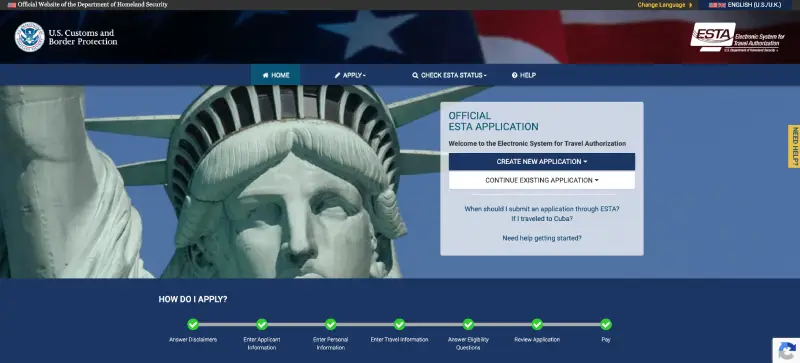
Confirm your passport's eligibility and submit your application through the official ESTA service. Having a participating passport is the starting point; your answers about travel history and other eligibility matters also affect the decision.
ESTA approval costs $40.27. Apply when arranging the trip and allow at least 72 hours before departure. Do not arrive at the airport with an application still awaiting a decision.
ESTA is generally valid for two years or until the associated passport expires, whichever comes first. Some authorizations have shorter validity. The authorization's lifetime and the length of each visit are separate: VWP visits are limited to 90 days.
Each traveler, including a child or infant, needs their own passport and authorization. Travel on an appropriate valid US visa does not also require ESTA.
Travel History Can Change Your Eligibility
Visiting Cuba can affect a later US trip, even when your passport normally qualifies for ESTA.
Presence in Cuba on or after January 12, 2021 generally makes a traveler ineligible for the VWP. The corresponding date is March 1, 2011 for travel to North Korea, Iran, Iraq, Libya, Somalia, Sudan, Syria or Yemen. Limited diplomatic and military exceptions exist.
Dual nationality with Cuba, North Korea, Iran, Iraq, Sudan or Syria can also remove VWP eligibility. In these situations, assess the visa route and any separate entry restrictions before buying non-refundable travel.
Use an application channel you can identify. Commercial assistance may carry a service charge, but watch for ESTA lookalike websites and tourist scams in the USA that conceal who operates the service or what you are paying for.
Applying for a B-2 or B-1/B-2 Tourist Visa
B-2 covers tourism and visits to friends or family. The combined B-1/B-2 visa also covers permitted short business visits. These are temporary-visitor categories, not permission to take employment in the United States.
The usual application sequence is:
-
Complete the DS-160 and retain its confirmation page.
-
Pay the non-refundable $185 application fee using the applying post's instructions.
-
Arrange the required interview, unless you qualify for a specific interview waiver.
-
Prepare your passport, photograph and supporting evidence, then attend the appointment.
Use the official visitor visa instructions for the application and documentation requirements. Reciprocity-based issuance fees or a visa bond may apply separately; $185 is not a universal all-inclusive total.
Appointments should generally be scheduled in your country of nationality or residence, or at the designated post where routine services are unavailable. Applying elsewhere can involve longer waits and greater difficulty establishing eligibility.
Be ready to explain the trip's purpose, how it will be funded and why you intend to leave afterward. Invitation letters from US friends or relatives are not a general requirement for a visitor visa.
Processing varies by post and individual application. Avoid treating an interview appointment as approval or committing to non-refundable travel before the visa is issued.
Nationality Restrictions and Visa Bonds
Some Passports Face Additional Restrictions
Since January 1, 2026, certain nationalities have been subject to full or partial suspensions of entry and visa issuance.
Examples of the full-suspension group include Afghanistan, Iran and Libya. The partial-suspension group includes Cuba, Nigeria and Venezuela, with B-1/B-2 visitor visas among the affected categories. These examples are not the complete list.
Read the current nationality restrictions and exceptions before starting a new application if your nationality may be affected.
The proclamation applies to covered people who were outside the United States and lacked a valid visa on January 1, 2026. It does not itself revoke visas valid on that date. Exceptions include certain dual nationals using a passport from an unrestricted country, but other visa and ESTA eligibility rules still apply.
A Visa Bond Is Separate From the Application Fee
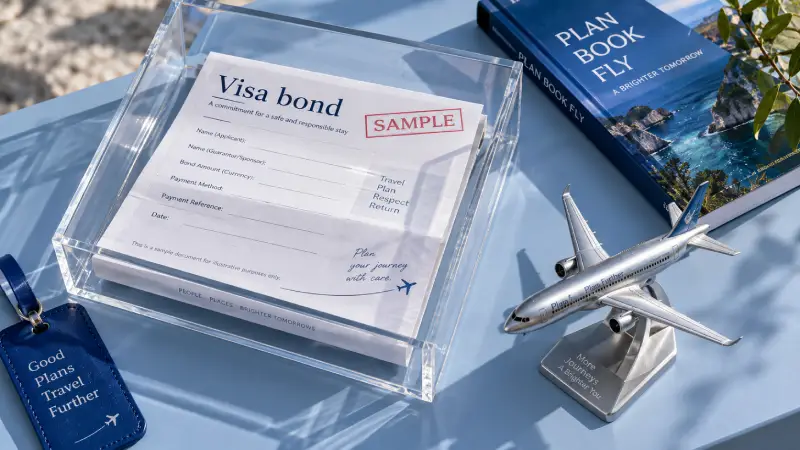
Some otherwise eligible B-1/B-2 applicants must provide a refundable bond. The published country list includes Algeria, Bangladesh and Nepal, among others.
Under the final rule effective August 3, 2026, the bond tiers are $10,000, $15,000 or $20,000, with the amount determined by the consular officer. This is a substantial additional funding requirement, even though compliant travelers can recover the deposit under the bond terms.
Post a bond when directed by the consular officer, using the official payment instructions. Payment alone does not secure a visa.
Bond conditions also affect your route: covered travelers must enter and leave through qualifying commercial air ports, including eligible preclearance locations. Flying into the USA and leaving by road into Canada or Mexico would not satisfy those conditions.
Passport Validity and Documents to Keep Ready
The general passport rule is validity for at least six months beyond the intended US stay, but country-specific agreements exempt many passports from that extra period. Establish which rule applies to yours; do not assume every visitor needs six additional months.
VWP travel also requires an electronic passport. Emergency or temporary passports must meet the relevant electronic-passport requirement to be used under the VWP.
Keep the following accessible in your hand luggage:
-
Passport and entry permission: your passport and any visa or ESTA details required for your route, with EVUS confirmation where applicable.
-
Accommodation details: the address of your first hotel or host and a way to contact them.
-
Travel plans: your return or itinerary and the outline of your visit.
-
Funding information: a clear explanation of how you will pay for the trip, with supporting evidence available if requested.
Treat accommodation confirmations as useful evidence of your plans. They do not mean every visitor must prepay every hotel night or obtain an invitation letter.
Save booking details offline so you can retrieve them without a connection. Before departure, compare your options for getting internet in the USA and decide whether roaming, a local SIM or an eSIM suits your journey.
Transit Flights, Land Borders and Trips to Canada or Mexico
Connecting Through a US Airport
Connecting through a US airport still involves entry-document requirements. Eligible visitors can transit under the VWP with ESTA; an appropriate valid visitor visa may also cover transit. Otherwise, the relevant route is normally a C transit visa.
If your stop includes sightseeing or visiting friends, use permission that covers those activities. Transit visas are intended for immediate and continuous travel.
Entering From Canada or Mexico
VWP visitors need approved ESTA for land entry as well as air or sea travel. Crossing by road is not a way to avoid authorization.
Where a land-border I-94 application is required, the fee is $30, separate from ESTA. That is not an additional I-94 application charge imposed on every arriving airline passenger.
Mexican travelers using a Border Crossing Card should establish its conditions for their transport mode, destination and stay. Do not treat it as unrestricted documentation for every US itinerary.
Side Trips Do Not Restart the VWP Clock
Short visits to Canada, Mexico or nearby islands normally use time within the original VWP admission period. Returning to the USA generally means using the remainder of those 90 days.
Consider a trip of 60 days in the USA followed by 10 days in Canada: this generally leaves 20 days of the original allowance, subject to readmission. It does not create a fresh 90-day visit.
Plan the whole regional itinerary against the original admission period, including the eventual departure.
What Happens at the US Border?
CBP decides whether to admit you and how long you may stay. Your visa or ESTA permits travel to request admission; the officer makes the entry decision.
Answer questions about your purpose, accommodation, itinerary and funding accurately and directly. Keep your travel details consistent with the application and the permission you are using.
After admission, check your I-94 “admit until” date, where an I-94 is issued. That date governs the authorized stay. The expiration date printed on a ten-year visa does not authorize ten years inside the country.
Goods declarations are a separate part of arrival. Review the USA customs rules for food, cash and other items before packing.
Before you arrive, compare options in the USA transport guide and save your hotel's address and pickup instructions.
If you need mobile data to retrieve directions or message your host, a Roafly USA eSIM is option for an unlocked, compatible device. It provides data rather than a local telephone number.
Before You Fly
Finish these checks before the travel day:
-
Match the passport and entry route: carry the documents required for your visa exemption, ESTA or visa route, including EVUS enrollment where applicable.
-
Check your individual exceptions: nationality restrictions, relevant travel history and bond conditions can change the usual route.
-
Plan the complete stay: include transit arrangements and neighboring-country visits, then follow the admission period actually granted.
-
Keep essential records available: save your accommodation, itinerary and application details offline.
-
Arrange arrival connectivity: if you have chosen an eSIM, compare USA eSIM providers and plans before departure.
Common Questions About US Entry
Can I Travel With a Valid Visa in an Expired Passport?
Generally, you can travel with the expired passport containing your valid visa and a new valid passport. Both passports must be issued by the same country and be of the same passport type. The visa must be undamaged, appropriate for your trip, and neither canceled nor revoked. Carry both passports and leave the visa in the original; do not try to transfer it.
Does Canadian or European Residence Make Me ESTA-Eligible?
Residence alone does not establish VWP eligibility. Your nationality and the passport you use matter. Someone living in Canada or an EU country may still need a US visitor visa.
Can I Extend a Tourist Stay?
VWP admission generally cannot be extended or changed to another status. Eligible visa holders may apply to USCIS for an extension before their authorized stay expires; submitting a request is not the same as receiving approval.