

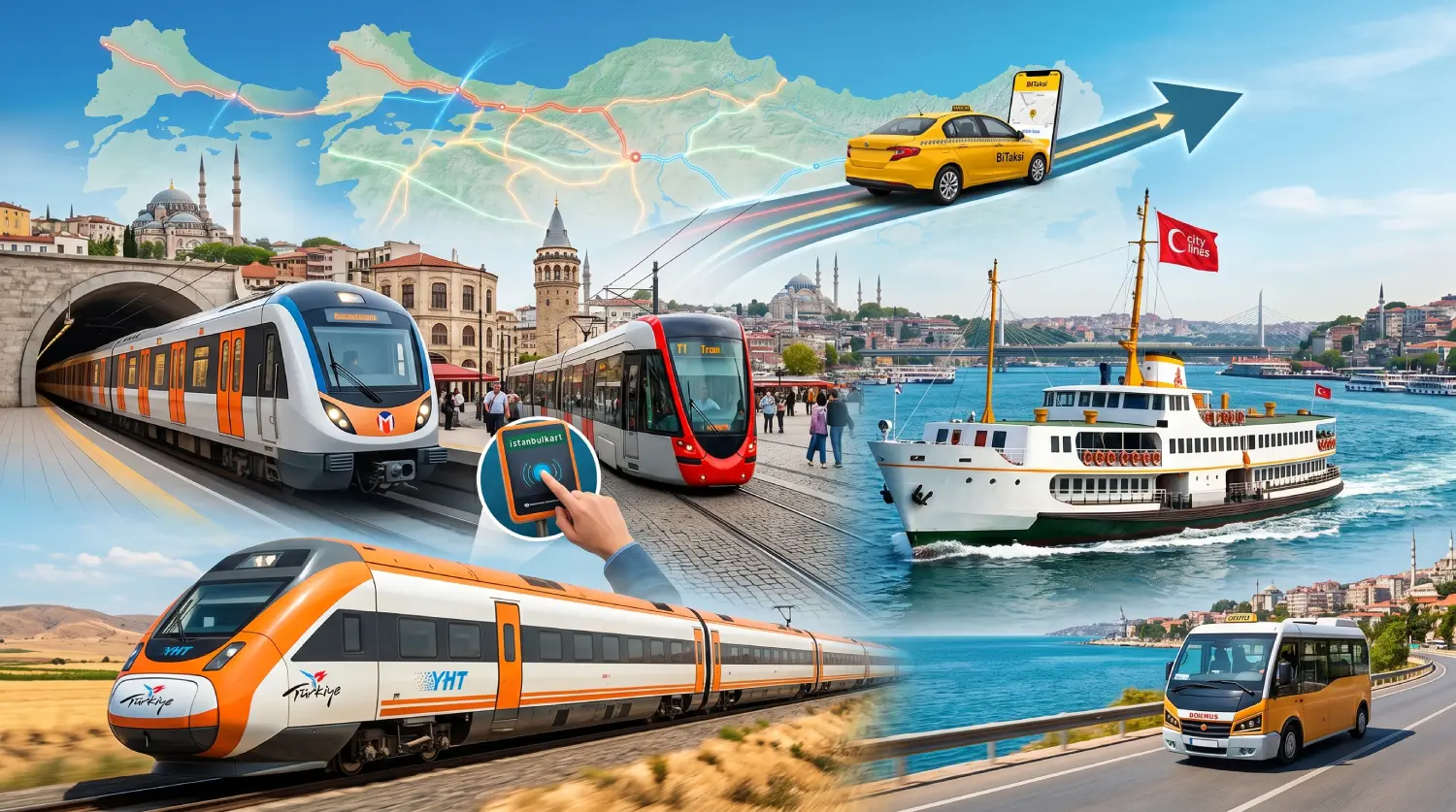

Türkiye in 2026 boasts an incredibly advanced public transport ecosystem. Mega-cities like Istanbul have expanded their metro lines deep into the suburbs and airports, while the national rail network now shoots across the country at blistering speeds. However, the sheer size of the country and the language barrier can turn simple transfers into chaotic logistical hurdles.
While the trains and ferries are a dream, the private transport sector requires serious street smarts. Unlicensed cabs and deceptive meters still trap unwary tourists daily. You must arm yourself with the right transit cards, ride-sharing apps, and route knowledge before you land.
Whether you are navigating the ancient cobblestones of Sultanahmet or catching a night bus to Cappadocia, timing is everything. Smart travelers align their transit plans with seasonal weather patterns, which you can master using our Best Time to Visit Türkiye. Prepare to swap expensive tourist mistakes for seamless, local-approved travel strategies.
The Basics: Understanding the Network
Türkiye's public transport operates on a massive scale, relying heavily on modern rail, extensive bus networks, and iconic ferries. Istanbul alone moves millions daily across two continents using a heavily integrated system. The Marmaray commuter train is the crown jewel, diving under the Bosphorus Strait to connect Europe and Asia in minutes.
In major hubs like Istanbul, Ankara, and Izmir, the Metro and Tram lines form the backbone of your daily exploration. Istanbul's T1 Tram is particularly vital for tourists, linking the Grand Bazaar, Hagia Sophia, and the Galata region. Ferries are not just scenic cruises; they are the most relaxing, traffic-free way to cross city waterways.
Smaller coastal towns and regional hubs rely on Dolmuş (shared yellow or blue minibuses). These run on set routes but do not have fixed stops. You simply flag them down from the sidewalk and hand your cash directly to the driver.
Payment & Tickets: Mobile Apps vs. Physical Cards
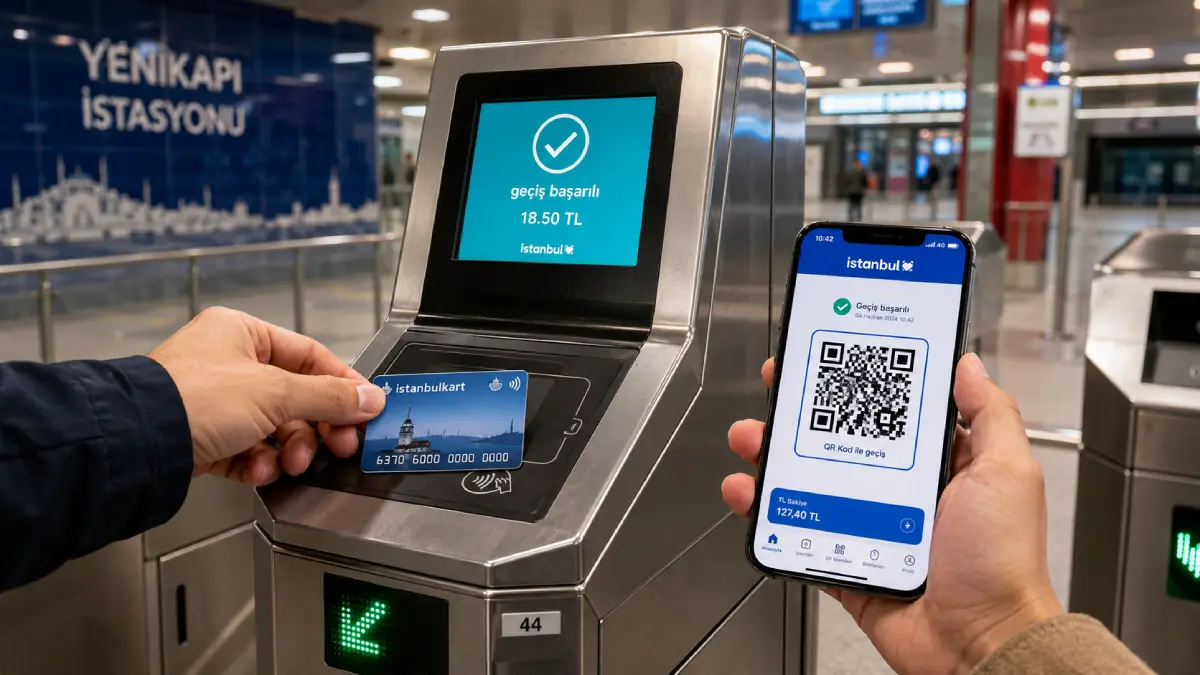
The era of cash tokens is entirely dead in major Turkish cities. To ride anything, you absolutely need a local transit smart card. In Istanbul, the Istanbulkart is mandatory and costs 165 TL just for the empty physical card.
You can buy an Istanbulkart at any yellow or blue automated kiosk inside metro stations or airport arrival halls. Important 2026 Warning: Many ticket machines accept Turkish Lira banknotes and will not give change. Always carry small bills (50 or 100 TL notes) to top up your card without losing money.
Alternatively, the Istanbul City Card offers unlimited public transport for 1 to 15 days, which is perfect for heavy travelers. If you find yourself stranded without a top-up, you can now tap your standard contactless credit or debit card at most turnstiles. However, foreign bank cards incur a higher per-ride fee than the standard 42 TL Istanbulkart deduction.
Airport Transfers: Getting to the City Safely
Landing in Istanbul means dealing with colossal airports located far from the historic city center. From Istanbul Airport (IST), the absolute best budget option is the Havaist luxury shuttle bus. For a fraction of a taxi fare, these buses offer plush seating, luggage storage, and direct routes to Taksim Square or Sultanahmet.
The new metro extensions are fully operational in 2026, allowing you to ride the M11 Metro Line directly from IST. Sabiha Gökçen Airport (SAW) on the Asian side is also fully connected via the M4 Metro, making the journey into the city completely traffic-free. If you must take a private car, heavily scrutinize the driver.
Airport taxi scams are ruthless. A legitimate metered ride from IST to Sultanahmet should cost around 2350 TL in perfect traffic. Scammers will aggressively try to quote flat rates that are triple the actual price. Never accept a ride from a hustler inside the terminal; use the official taxi queues or book an app-based ride.
Shifting Cities: Inter-City Trains, Shuttles & Domestic Flights
Traveling between regions in Türkiye is incredibly comfortable thanks to the expanding YHT (High-Speed Train) network. In 2026, you can zip from Istanbul to Ankara in just four hours. The brand-new lines connecting Ankara to Sivas and the upcoming Kayseri route make rail travel superior to flying for central routes.
For destinations without high-speed rail, the luxury inter-city bus network is legendary. Companies like Kamil Koç, Metro Turizm, and Pamukkale operate massive coaches with reclining seats, seat-back screens, and an attendant serving free tea and snacks. Long-haul routes, such as the overnight journey to Cappadocia, are safe, cheap, and deeply popular.
If you are short on time, domestic flights via Turkish Airlines or Pegasus remain highly affordable. However, factor in the time and cost of getting to remote regional airports. If you are ever anxious about embarking on a 10-hour night transit, reassure yourself by reading Is Türkiye Safe.
Taxis, Ride-Sharing & Local Driving Laws
Ride-sharing exists in Türkiye, but it operates differently than in North America. Uber is available, but it strictly dispatches official yellow, turquoise, or black taxis rather than private citizen cars. The best local alternative is BiTaksi, which functions identically and is widely used by locals to secure metered rides.
Even when using apps, drivers may message you asking for extra cash due to heavy traffic or bridge tolls. The current minimum taxi fare is 210 TL, regardless of how short the trip is. Never get into a cab without ensuring the meter (usually located in the rearview mirror) is turned on and set to the starting rate of 65 TL.
Renting a car is highly recommended for exploring the Aegean coast or the ruins of the southeast. You can legally drive using your home country's license for up to six months, though an International Driving Permit (IDP) is recommended for insurance purposes. Be prepared for aggressive tailgating, sudden lane changes, and chaotic roundabouts. Familiarize yourself with road rules and general compliance in our Turkey Tourist Bans & Laws guide.
Transit Etiquette & Unwritten Rules
Turkish culture places a massive emphasis on respect for elders and pregnant women. If you are sitting on a crowded metro and an older person boards, you are expected to surrender your seat immediately. Failing to do so will result in intense, collective glaring from the entire carriage.
Eating heavy meals or drinking coffee on public transit is socially frowned upon and technically against the rules. Stick to bottled water if you must hydrate during the sweltering summer months. When boarding the Marmaray or trams, wait for passengers to exit completely; though you will notice many locals aggressively pushing their way on.
When riding in a taxi, it is common practice for solo male travelers to sit in the front passenger seat. Solo female travelers should always sit in the back. Do not slam taxi doors, as drivers take immense pride in their vehicles and will loudly scold you for being too forceful.
Navigation Apps & The Best Route Tools
Google Maps is highly accurate for walking and driving routes across Türkiye. However, its public transit times can occasionally lag during unexpected track maintenance or ferry delays. For the most up-to-date bus and train schedules, download the local Moovit app.
To manage your funds, the official Istanbulkart App is a lifesaver. You can link your physical card to the app to check your balance and top up via a credit card, allowing you to bypass the long kiosk lines completely. For high-speed rail, the official TCDD application is mandatory for booking inter-city train tickets in advance.
When navigating massive transit hubs like Yenikapı or the underground Marmaray tunnels, follow the color-coded floor lines. If you ever feel lost, look for the transit security guards stationed at every turnstile; they are generally very helpful to tourists.
Staying Connected: Your Ultimate Navigation Tool
Navigating the sprawling Turkish transit network requires a relentless, high-speed data connection. You cannot risk losing your signal while trying to negotiate a fare on BiTaksi or when tracking your blue dot on a complicated tram route. Free public Wi-Fi in stations requires a local phone number for SMS verification, making it useless for most foreigners.
Need data in Türkiye? Get an eSIM!
Choose the perfect data plan for your trip

Manage your eSIM in the app
Install, top up and track data.
Having instant internet access allows you to top up your digital transit cards, use live translation apps with drivers, and check live ferry departures. To achieve this instantly, you need an eSIM activated the second your plane touches down. A Türkiye eSIM guarantees you will never be stranded offline in a foreign city.
Before your trip, learn exactly how to set up your device by reading How to Get Mobile Internet in Turkey. To find the absolute best data packages, review our detailed breakdown in Best eSIM for Turkey.
Summary Checklist: 2026 Transport Tips
-
Buy the Istanbulkart immediately: Secure this card at the airport; it works for the metro, ferries, trams, and public buses.
-
Always carry small Lira notes: Ticket machines frequently reject large bills and often refuse to dispense change.
-
Use BiTaksi or Uber: Never hail a cab off the street; app-based bookings provide a digital trail and price estimates to prevent scams.
-
Watch the taxi meter: Ensure the mirror meter starts exactly at the 65 TL base rate and know that the absolute minimum fare is 210 TL.
-
Book YHT trains early: High-speed rail tickets between Istanbul, Ankara, and Konya sell out weeks in advance during the summer.
-
Avoid the rush hour crush: Do not attempt to use the T1 Tram or the Metrobus between 5:00 PM and 7:00 PM unless absolutely necessary.