


In most countries, grabbing a SIM card is a cheap, 5-minute errand. In Turkey, it is a complex, bureaucratic, and surprisingly expensive process due to unique local regulations.
With Turkey's inflation impacting prices monthly, information from 2023 or even 2024 is already outdated. This guide is your 2025 definitive resource. We will break down the hidden costs of airport kiosks, analyze the coverage of local operators, and explain why digital eSIM technology (like Roafly) is replacing the old-school plastic SIM for smart travelers.
The "Tourist Pricing" Reality: Why is it so expensive?
Before we compare brands, you need to understand the system. Many travelers think they are being scammed when they see the prices. Usually, they aren't being scammed—they are just subject to "Tourist Rules."
The "Welcome Pack" Regulation
In Turkey, mobile carriers separate inventory into two categories:
-
Local Lines: For Turkish citizens and residents (Requires a Turkish ID / Kimlik). These are cheap.
-
Visitor Lines: For tourists (Requires a Passport). These are mandatory "Tourist Welcome Packs."
The Problem: You cannot walk into a Turkcell store and ask for "just 5GB of data." The Tourist Packs are pre-bundled, typically starting at 20GB or 30GB. This means you are forced to pay for a huge amount of data ($35-$45 USD minimum) even if you don't need it.
The Inflation Factor (2025 Update)
Turkey has experienced significant inflation. Telecom taxes and service fees are adjusted frequently. A SIM card that cost 800 TL last year might cost 1500 TL today. If you are reading a blog post from two years ago, multiply those prices by three to get a realistic estimate.
Where to Buy? The "Airport vs. City" Dilemma
Where you buy your physical SIM card matters just as much as which brand you choose.

The Airport Trap: Istanbul (IST) & Sabiha Gökçen (SAW)
Upon landing, you will be bombarded with bright kiosks in the arrivals hall.
-
The Convenience Premium: These kiosks operate with extremely high rents. To cover costs, they add a surcharge to the standard tourist pack.
-
The Price Gap: A package sold for 1200 TL ($35) in the city center can easily be sold for 1800 TL - 2500 TL ($50 - $70) at the airport.
-
The Queue: After landing, you just want to get to your hotel. Do you really want to spend 45 minutes waiting in line behind 50 other tourists while a clerk photocopies passports by?
Buying in the City Center (Taksim, Sultanahmet, Kadıköy)
Buying from a street vendor is cheaper than the airport, but it has its own risks:
-
Language Barrier: Staff in smaller shops may not speak English well, leading to misunderstandings about package details.
-
Bureaucracy: You still need to present your passport, wait for the photocopy, and sign contracts.
-
Activation Delay: Sometimes, "system errors" mean your line won't active for 1-2 hours after purchase.
Detailed Analysis of Turkish Mobile Operators
If you decide to go the physical SIM route (or use Roafly, which utilizes these networks), here is the breakdown of the "Big Three."
Turkcell (The Premium Giant)

-
Best For: Travelers going off the beaten path (Eastern Turkey, Lycian Way hiking, Black Sea mountains).
-
Network Quality: Turkcell has the widest 4.5G coverage and generally the highest speeds. It is the "Verizon" or "Deutsche Telekom" of Turkey.
-
Tourist Price: The most expensive. Expect to pay a premium for this coverage.
-
Verdict: Necessary if you are a digital nomad who needs to upload 4K video from a mountain top. Overkill for a city break.
Vodafone Turkey (The Urban Reliable)

-
Best For: City trips (Istanbul, Izmir, Ankara) and popular beach resorts (Bodrum, Antalya).
-
Network Quality: Very strong in urban areas and European Turkey. Roaming agreements are solid.
-
Tourist Price: Slightly cheaper than Turkcell, but still expensive compared to global standards.
-
Verdict: A solid middle ground, but their "Holiday Line" packs are still rigid and pricey.
Türk Telekom (The Budget Option)

-
Best For: Budget-conscious travelers staying strictly in city centers.
-
Network Quality: They have improved significantly, but you might experience signal drops on highways between cities or inside thick-walled historical buildings.
-
Tourist Price: Usually the most affordable of the physical SIM options.
-
Verdict: Good value, but speed consistency can vary.
Hidden Technical Hurdles for Physical SIMs
Buying the card is just step. Turkey has unique technical laws that catch travelers off guard.
The "120-Day" IMEI Rule (MCKS System) Turkey has of the strictest mobile device registration systems in the world.
-
How it works: When you insert a Turkish SIM card into a foreign phone, the government's system detects your device's IMEI (serial number).
-
The Timer: You have 120 days to use that device in Turkey.
-
The Block: After 120 days, if you haven't paid the registration tax (which is currently over 30,000 TL - approx $850 USD), your phone's IMEI is blacklisted from Turkish networks.
-
The Risk: While 120 days is enough for most tourists, if you are a frequent visitor or a digital nomad, using a physical SIM "burns" this slot. it's blocked, your phone effectively becomes a Wi-Fi-only tablet in Turkey.
The "Sim Slot" Issue If you buy a physical Turkish SIM, you have to remove your home SIM card (unless you have a dual-SIM phone).
-
The Consequence: You lose access to your home phone number. You won't receive SMS OTP codes from your bank, you'll miss urgent calls from home, and you have to keep that tiny plastic chip safe for the whole trip.
The Smarter Solution: Why Switch to an eSIM?
If Part 1 sounded exhausting (queues, passports, high costs), here is the good news. Technology has solved these problems. An eSIM (Embedded SIM) is a digital SIM card already built into your phone. You don't need to insert a piece of plastic; you just download a digital profile.
For travelers in Turkey, eSIMs are not just "new tech"—they are a wallet-saver.
1. The "Roafly" Price Advantage (The Math) Let’s look at the numbers. Local operators force you to buy expensive 20GB+ bundles. Roafly lets you pay for what you actually need.
-
Scenario A: The Light User
-
Needs: Google Maps, WhatsApp text, occasional Uber.
-
Local SIM Cost: $35.00 (Minimum mandatory pack).
-
Roafly Cost: $3.90 (1GB Plan).
-
Result: You save ~$31.
-
-
Scenario B: The Heavy User
-
Needs: Instagram Stories, video calls, Netflix on the bus.
-
Local SIM Cost: $40.00+ (For premium high-data packs).
-
Roafly Cost: $18.00 (20GB Plan).
-
Result: You save ~$22 (Over 50%).
-
2. Zero Bureaucracy With Roafly, there is no passport scanning. No photocopies. No waiting for a clerk to type your details into a government system. You maintain your privacy, and you save precious holiday time.
3. Keep Your Number Active When you use an eSIM for data, your physical SIM slot remains free. This means you can keep your home SIM active to receive SMS OTPs (One Time Passwords) from your bank or keep your WhatsApp number linked to your original contacts without any hassle.
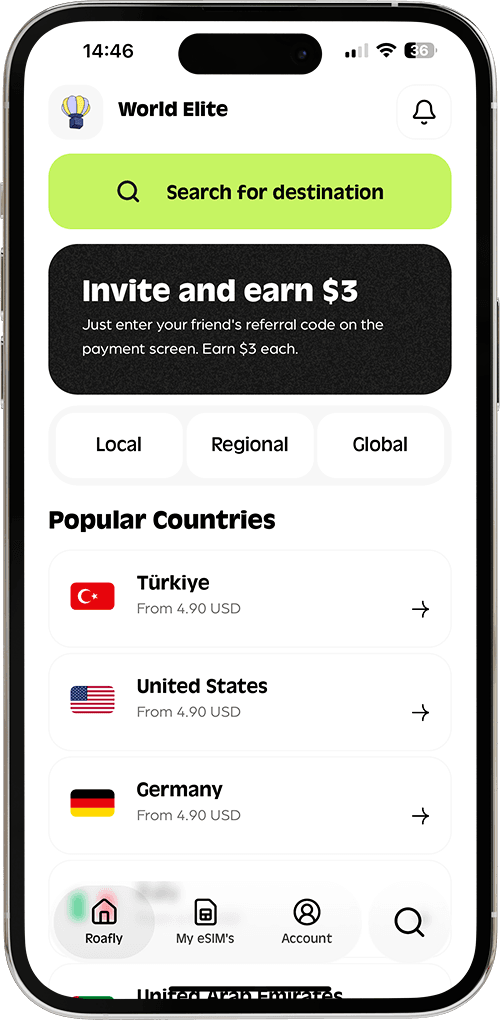
Need data in Türkiye? Get an eSIM!
Choose the perfect data plan for your trip

Manage your eSIM in the app
Install, top up and track data.
2025 Showdown: Roafly vs. Physical Tourist SIM
A side-by-side comparison to help you decide.
| Feature | Physical Tourist SIM (Turkcell/Vodafone) | Roafly eSIM (Turkey) |
| Price (Entry Level) | $35 - $45 (Mandatory Bundle) | $3.90 (Flexible) |
| 20GB Data Cost | ~$35.00+ | $18.00 |
| Purchase Location | Airport (Expensive) or Store (Slow) | Online (Anywhere) |
| ID Requirement | Physical Passport Required | No ID Required |
| Activation Time | 30 mins to 2 hours | Instant |
| WhatsApp Number | Might change / Complicated | Keeps your original number |
| Contract | Tourist Contract | Prepaid / Pay-as-you-go |