Download the App and manage your eSIMs easily
Create your order quickly
See your eSIM details
Track your remaining data
Download the App and manage your eSIMs easily
Create your order quickly
See your eSIM details
Track your remaining data
Tourist scams in Indonesia can start before your flight: a website charges for a free arrival form, or someone posing as an immigration agent takes payment for a visa they never deliver. On the ground, the risks include short-changing at currency exchanges, drivers impersonating app bookings and misleading requests for entrance fees.

Sophie Callahan
Updated Nov 2, 2026
10 min read
Save 15% on your Roafly eSIM
Stay connected on your next trip. Use the code below at checkout.
View All DestinationsJump to section
👇Save 15% on your Roafly eSIM
Stay connected on your next trip. Use the code below at checkout.
View All Destinations
Manage your eSIM in the app
Install, top up and track data.
Bali features heavily in these warnings, but the useful precautions extend beyond the island. The key is to establish who you are paying, what the payment covers and whether the person requesting it has the authority they claim.
| Situation | Warning sign | Your next step |
|---|---|---|
| Arrival forms and visas | A supposed government fee for the free arrival declaration, or an unverifiable agent | Open the official application channel yourself |
| Taxis and app pickups | Driver or vehicle details differ from your booking | Match both before getting in |
| Money changers | Cash leaves your view or is handled again after you count it | Verify the licence and count the final handover |
| Street currency requests | A stranger wants you to open your wallet or exchange notes | Keep your money put away and decline |
| ATMs | Suspicious fittings or a support-number sticker | Use another machine; contact your bank independently |
| Attraction entrances | Someone intercepts you before the official ticket counter | Establish which operator and service the payment belongs to |
| Spa and beauty services | The total or included work remains unclear | Agree the complete price before treatment starts |
| Vehicle and equipment rentals | Existing damage goes unrecorded or deposit deductions are undefined | Document the condition and get the terms in writing |
| Gambling invitations | A new acquaintance encourages you to join a game for money | Decline and leave |
High prices, bargaining and clearly disclosed charges are different from deception. Concentrate on false identities, misleading promises, unauthorized transactions and charges changed after you have committed.
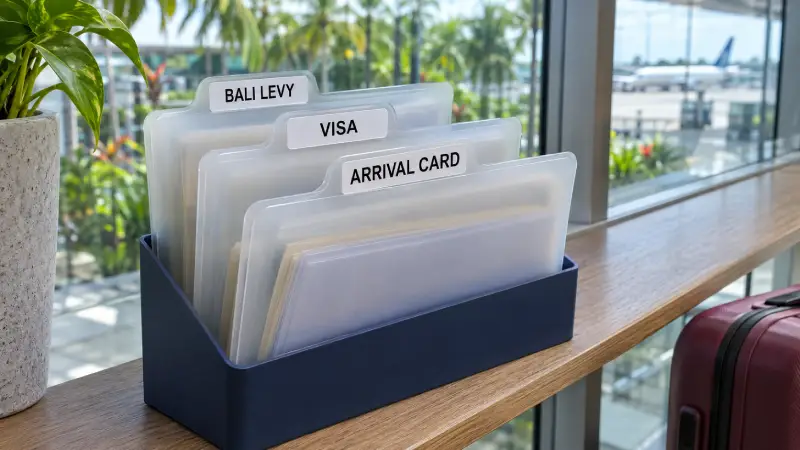
Indonesia’s arrival declaration, visa and Bali tourist levy serve different purposes. Knowing which one you are completing makes a false payment request easier to spot.
The All Indonesia arrival declaration is free. Complete it through the official All Indonesia website. Payment presented as a compulsory government charge just to submit that declaration is a warning sign.
Visas can carry legitimate fees. Use the official Indonesian eVisa portal for the relevant online application. Fraudulent agents may take payment without obtaining a visa, or arrange the wrong visa for the traveler’s plans. Keep copies of your application, payment record and issued documents; an agent’s assurance alone is insufficient.
Visa eligibility depends on your passport and purpose of travel. Our Indonesia entry requirements guide explains the legitimate routes.
Bali’s tourist levy is a separate, genuine charge. Use Love Bali to access the provincial government’s payment service. Paying this levy does not replace a visa or the arrival declaration. Similarly, completing a free arrival form does not remove any duties that apply to your belongings under Indonesia’s customs rules.
Take care with contact details, too. Indonesian immigration authorities have identified fake WhatsApp numbers inserted into immigration-office listings on Google Maps. Obtain an office’s contact information from its official government website before sending documents or money. A familiar office name on a map listing is not enough to authenticate the person answering.
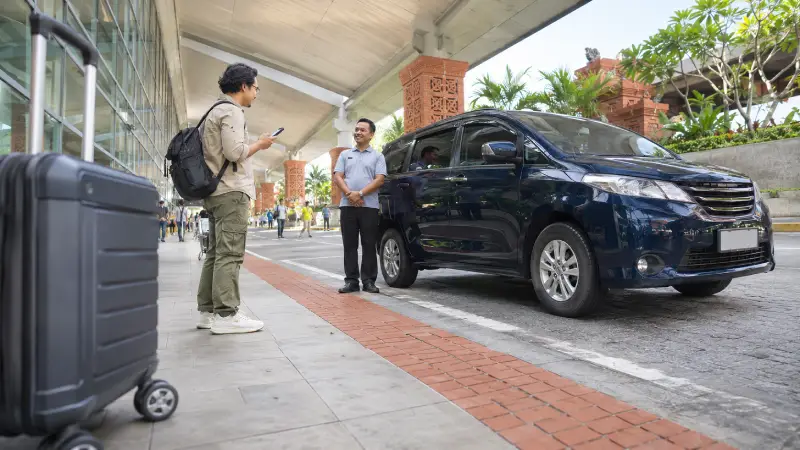
At airports and stations, someone approaching you may claim to be your app driver. Before entering, match the registration plate, vehicle and driver with your booking. Keep the booking available on your own phone.
With a metered taxi, establish that the meter will be used. For an agreed fare, get the total written in IDR with all zeros included, and ask whether parking or tolls are additional.
If the price changes or the driver’s identity differs, resolve it before departure through the booking service or official taxi counter. If a disagreement becomes threatening during the journey, prioritize reaching a safe place.
Arrange internet access in Indonesia before you need to make your own pickup booking.
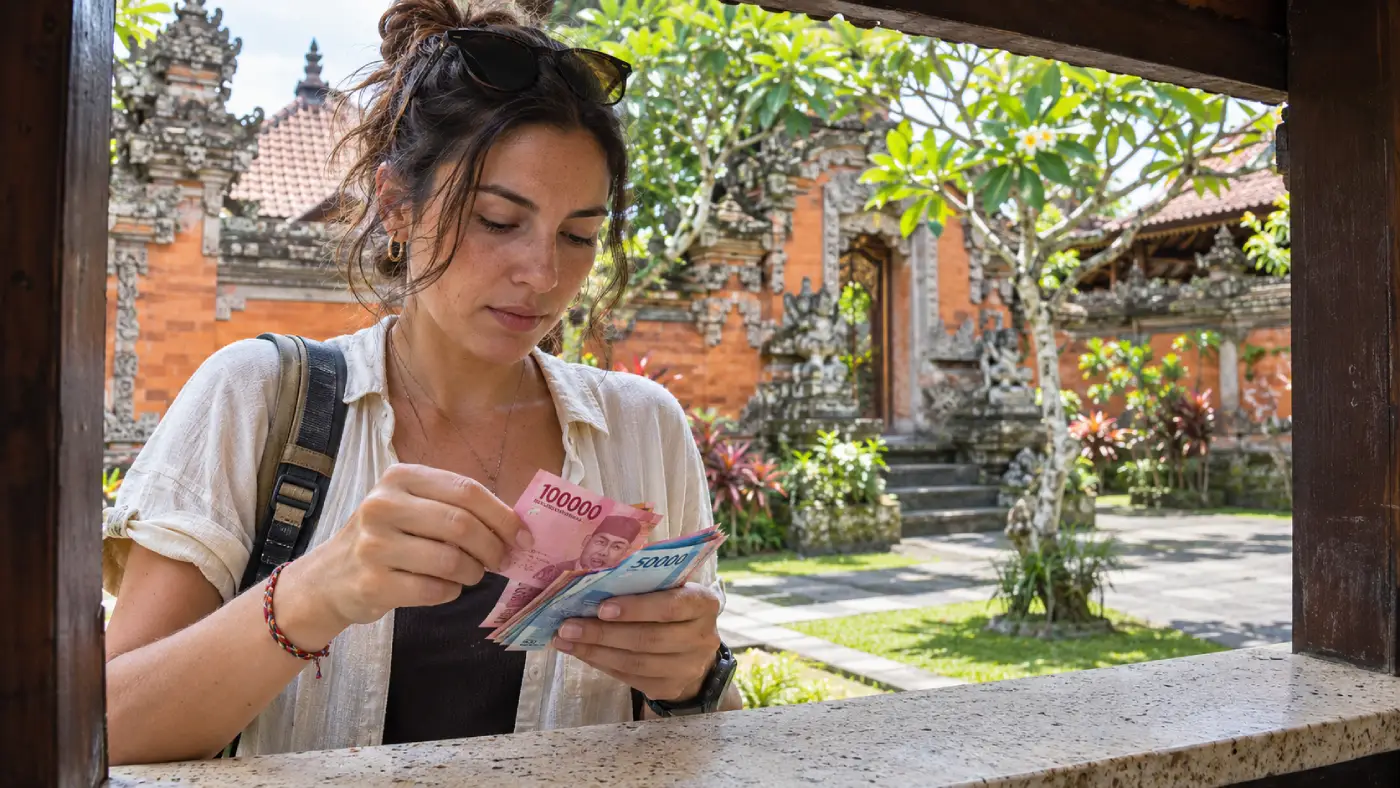
The exchange rate on the sign is only part of the transaction. At an unlicensed money changer, you may be shown the correct stack of rupiah and receive less after the notes are gathered or handled again.
Use a licensed exchange displaying its Bank Indonesia authorization. Scan the licence QR code where provided and match the business name and licence details to the premises.
Before handing over your currency, establish the net rupiah amount after any commission. Count the money you actually receive, in full view, and keep it in your possession afterward. If someone takes it back to recount or rearrange it, count it again before leaving.
Licensed money changers may request identification as part of customer checks. That request alone is not evidence of fraud; the business identity, transaction record and cash total matter.
Street currency approaches involve a different problem: a stranger creates a reason for you to expose your cash. Police have investigated an Ubud case in which a request to exchange money was allegedly used as a distraction to steal from a visitor.
Keep your wallet closed when someone you have just met asks to inspect foreign notes or exchange cash. Direct them to an exchange business instead. This applies regardless of whether the person appears to be a local resident or another traveler.
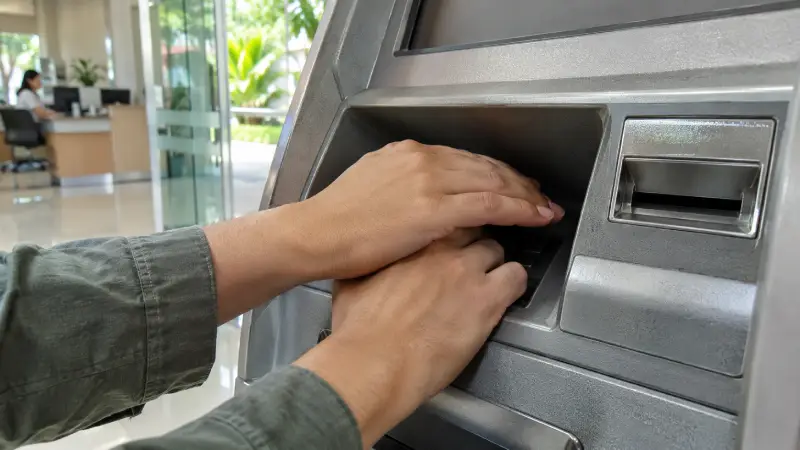
ATM skimming captures card information, while a concealed camera can record the PIN. Prefer a machine at a staffed bank location during opening hours, and leave any machine with loose, unusual or visibly altered fittings unused.
Cover the keypad while entering your PIN. Keep transaction alerts enabled and review withdrawals in your banking app. During purchases, keep your card in sight and read the terminal amount before authorizing it.
Fake support-number stickers create a second route to your banking details. A problem at the ATM can send you straight to a criminal posing as bank staff.
If a machine retains your card, contact your card issuer through its app or a number obtained independently from its official website. Ask bank-branch staff for assistance where available. Do not disclose your PIN, password or one-time security code to someone offering to fix the problem.
Freeze or block the card through your issuer’s official service if it may be compromised. Save the ATM location, time and transaction details for the report.
The first person collecting money on the road to an attraction may be selling a separate service rather than the attraction’s entrance ticket.
At Sekumpul waterfall in Bali, tourism officials identified unofficial roadside ticket posts following complaints in November 2023. The practical lesson is to establish who operates the payment point and whether the charge covers entry, guiding, transport or a package.
Get an itemized explanation and receipt before committing. Legitimate attractions can have guide requirements, access restrictions and different visitor tariffs. Follow the site’s actual rules; do not assume every guide fee is optional or every checkpoint is fraudulent. Our guide to local laws and temple rules covers the wider visitor obligations.
In Yogyakarta, visitors reported being directed toward a supposed batik visit that became a painting sales encounter in October 2026. They had initially reached a closed performance-ticket counter, while the palace attraction itself remained open; palace representatives investigated the complaint.
If an entrance appears closed, establish the situation with the attraction’s own staff before accepting an alternative outing. Yogyakarta’s palace sells tickets at the entrances to its individual visitor units and through its official tourism website.
Ask where an offered detour goes and whether it involves shopping. Leave if the experience changes into a purchase you never intended to make. Ordinary batik shops and paid workshops are legitimate businesses; misleading the visitor about the destination or applying purchase pressure is the concern.
Bali scam warnings include spas, nail salons and tattoo parlours. Settle the complete price and scope before the service begins.
The quote for a massage should specify the treatment and duration. With nails or tattoos, agree the design, size, materials and additions that affect the total. Save the written quote or photograph the relevant price list, and ask staff to obtain your agreement before adding paid work.
If the final bill differs, request an itemized explanation and compare it with the agreement. An expensive treatment you knowingly ordered is a different situation from work added without consent or a price changed afterward.
False damage claims make you responsible for defects that existed before the rental. Bali jet-ski scams have included concealed damage revealed after use. With scooters and other hired equipment, a documented handover also helps separate genuine damage responsibility from an unsupported demand.
Before taking possession:
Photograph or film existing scratches, cracks and other defects with staff present.
Have those defects recorded in the rental agreement or booking messages.
Get the deposit amount, return conditions and damage terms in writing.
Keep your original passport with you; arrange another accepted form of deposit.
Inspect the equipment together again when returning it. If a deduction is proposed, request the damage details, supporting evidence and calculation.
Your photographs help establish the starting condition; they do not remove responsibility for damage you cause. Stay with the contract and evidence if a disagreement develops, and seek assistance rather than escalating a confrontation.
Visitors have lost money in organized card-game scams, particularly in Bali. Decline invitations to gamble with people you have just met, even when the encounter begins as a friendly social invitation.
Gambling is illegal in Indonesia. If a game turns into pressure to hand over money or visit an ATM, focus on leaving safely and obtaining help.
Get somewhere safe first. If you are threatened, move to a staffed public place when you can do so safely. Avoid chasing someone, grabbing property or prolonging a confrontation to recover money.
Contact your bank promptly when a card or payment is involved. Use its own app or official contact channel. Explain whether the issue is an unauthorized transaction, a payment you were deceived into making or a disputed service charge. Ask what blocking, investigation or payment-dispute options apply.
Preserve the evidence. Keep receipts, quotations, booking references, messages and screenshots. Record the location, time, amount and any vehicle or business details you already have. Collecting additional evidence should never put you at risk.
Report criminal conduct to the local police. Indonesia’s police assistance number is 110, available free of charge, 24 hours a day. You can also seek help at a police station. Ask your accommodation to assist with calling or explaining the incident if needed.
Keep useful contact details and booking records accessible before heading out. Roafly’s Indonesia eSIM provides mobile data for maps, messaging and accessing reservations. It is data-only, so use a line capable of ordinary calls or ask someone nearby to help when you need to telephone the police.
If your passport is lost or stolen, contact your embassy or consulate. For wider questions about transport risks, health and regional conditions, continue with our Indonesia safety guide.
