

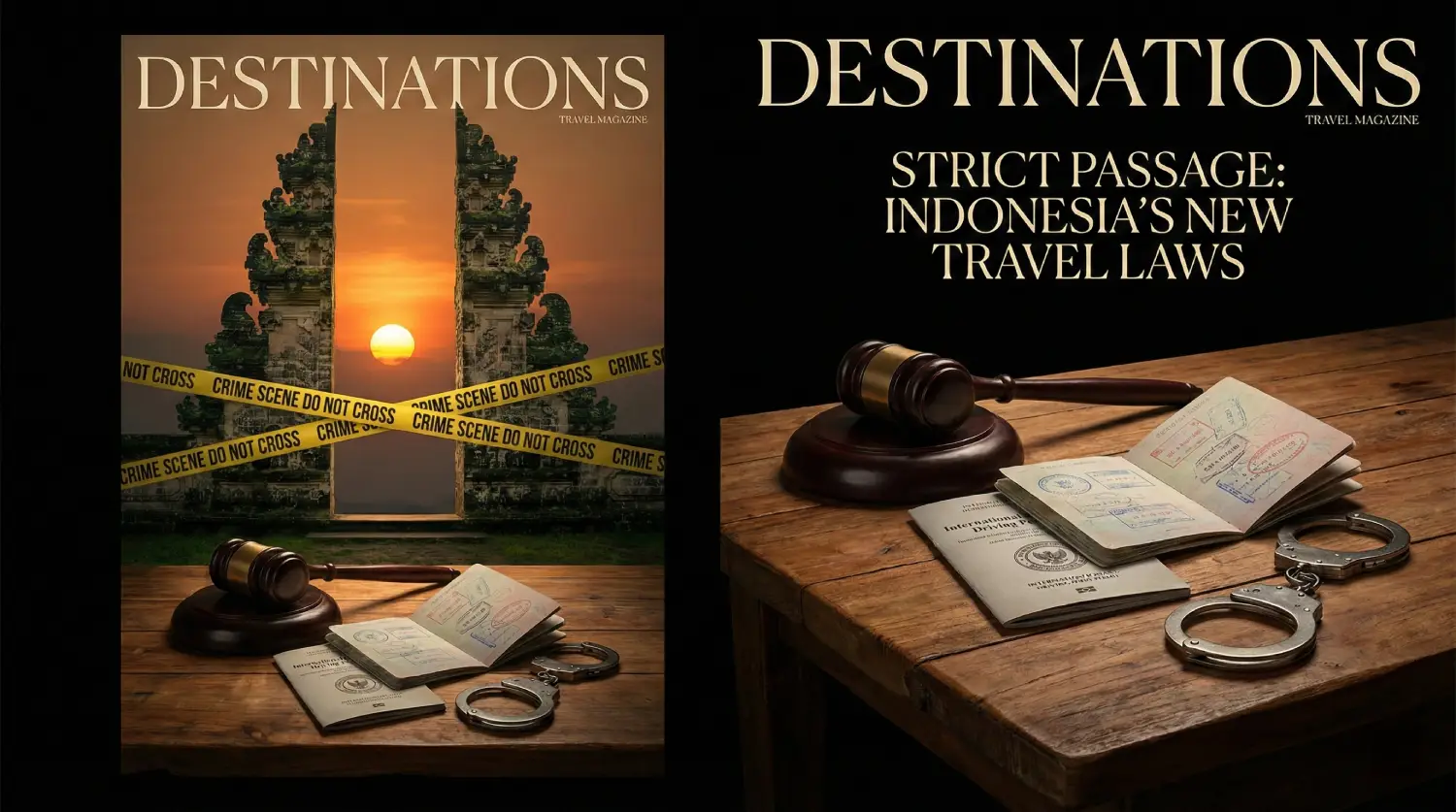

Indonesia is a country of breathtaking beauty and profound cultural depth, stretching across more than 17,000 islands. However, its legal system is notoriously unforgiving toward foreigners who flout the rules. From the bustling, gridlocked streets of Jakarta to the spiritual and tourist-heavy epicenter of Bali, local authorities and immigration officials are actively cracking down on misbehaving visitors. In 2026, the implementation of the new national Criminal Code (KUHP) fundamentally altered the legal landscape, introducing stringent moral and societal laws that made international headlines. At the same time, Bali police have launched aggressive campaigns against traffic violations, and deportations for cultural disrespect are at an all-time high. To enjoy your Bintang on the beach without a side of legal panic, you must understand exactly what is legal, what is heavily restricted, and what will land you in a local jail cell.
The "Big Red Line" (The #1 Strict Rule): Drugs and the 2026 Criminal Code
The absolute, non-negotiable red line in Indonesia is its zero-tolerance policy toward narcotics. While some countries are relaxing their stances on recreational substances, Indonesia is doubling down.
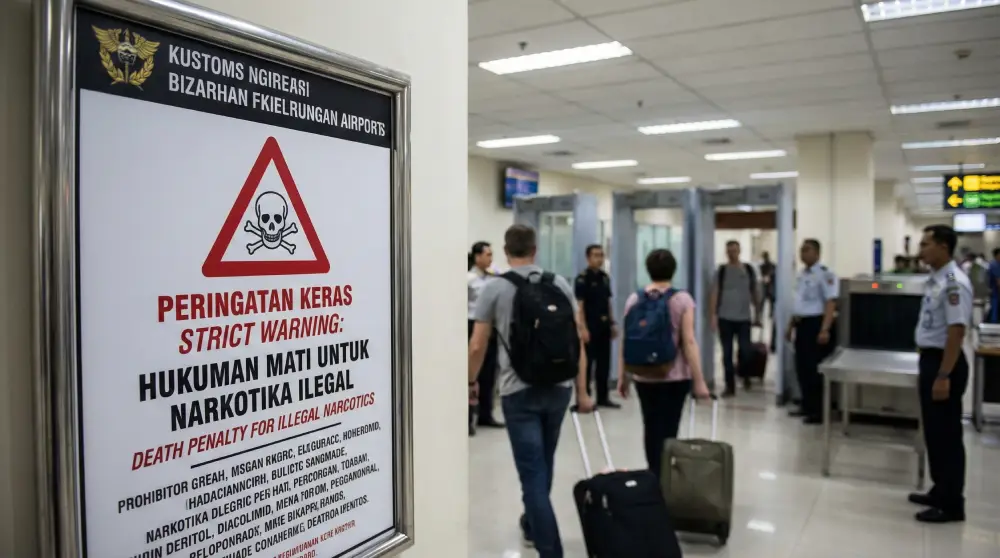
The Death Penalty for Narcotics The Indonesian narcotics law is among the strictest in the world. Bringing in, buying, selling, or using illegal drugs—including marijuana, which is legally grouped with heroin and cocaine—can result in lengthy prison sentences, life behind bars, or execution by firing squad. Do not assume that Bali is a relaxed party island where the rules bend for foreigners. Undercover police operate heavily in popular tourist nightlife spots like Kuta, Seminyak, and Canggu. If a friendly local or a fellow traveler offers you drugs on the street or at a beach club, walk away immediately. It is frequently a setup by police informants. If caught, your embassy cannot save you, and foreign passports do not grant immunity.

The New Criminal Code (KUHP) & Morality Laws You have likely seen the panic regarding Indonesia's new Criminal Code (KUHP), which officially took effect in January 2026. Global headlines warned that sex outside of marriage and unwed cohabitation are now illegal and punishable by up to a year in prison.
Here is the street-smart reality for tourists: While the law is real, there is a massive legal caveat. Charges can only be brought forward if a direct family member (a parent, spouse, or child of the individuals involved) files an official police complaint. Therefore, foreign tourists traveling together are virtually immune to this law, as local police cannot randomly raid your hotel room and demand a marriage certificate. Hotels and resorts across the archipelago have confirmed they do not check marital status at check-in. However, if you are dating an Indonesian citizen, their family could theoretically report you, so discretion is advised.
Another critical update in the 2026 KUHP is the strict ban on insulting the President, state institutions, or the national ideology (Pancasila). Keep your political opinions to yourself, both in public and on your social media accounts. Deportation is the standard, swift penalty for foreigners who violate this rule. For official governmental regulations and travel advisories, it is always wise to verify updates via the Official Ministry of Tourism website.
Traffic & Scooter Rules (The Tourist Trap)
Bali's chaotic traffic is legendary, and so are its daily police checkpoints. For years, tourists treated the island like a lawless scooter playground, but as of 2026, the police have implemented severe, unyielding crackdowns.
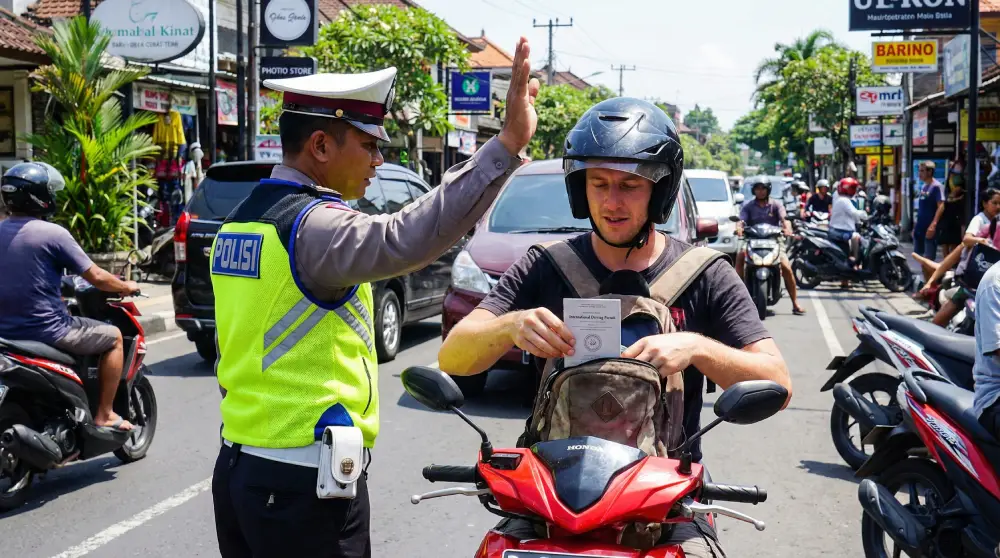
The License Trap: IDP is Mandatory To legally ride a scooter in Indonesia, you must possess an International Driving Permit (IDP) with a specific motorcycle endorsement, alongside your home country's valid motorcycle license. A standard car license is absolutely not enough to ride a 125cc scooter in Bali. If you are pulled over at a checkpoint (which is highly likely in tourist corridors) and cannot produce an IDP and the physical vehicle registration (STNK), you face immediate on-the-spot fines ranging from IDR 250,000 to over IDR 1,000,000.
The Insurance Void The biggest financial risk isn't the police fine; it is the hospital bill. If you crash a scooter without the proper motorcycle license and IDP, your travel insurance policy is instantly invalidated. You will be paying entirely out of pocket for any medical emergencies, surgeries, or medical evacuations, which can cost tens of thousands of dollars.
Helmets and Decency Laws Riding without a helmet is illegal, extremely dangerous, and heavily fined. The helmet must be securely fastened. Furthermore, riding a scooter shirtless or wearing a bikini is considered highly offensive to the local population and is frequently targeted by traffic police under public decency guidelines. Put a shirt on, strap your helmet down, and respect the structured chaos of local traffic.
Substance Regulations (Vaping, Alcohol & Meds)
Is Vaping Legal?
Yes, vaping is legal in Indonesia in 2026, but it is under intense regulatory scrutiny. While bringing a personal vape device and a modest amount of e-liquid (around 30ml) for personal use is tolerated, you will find that the local market is heavily restricted due to recent nationwide flavor bans (mostly limiting sales to tobacco flavors) and high taxes.
More importantly, the National Narcotics Agency (BNN) has launched aggressive campaigns against vaporizers because international drug syndicates have been caught lacing e-liquids with severe narcotics, including liquid methamphetamine, ketamine, and etomidate. Because of this, local police are highly suspicious of unlabelled or locally purchased vape juices. Stick strictly to commercial, factory-sealed liquids that you brought from home, and never buy "special" vape juice from a beach vendor. Also, be aware that vaping is strictly banned in all indoor public spaces, hospitals, and on public transport.
Alcohol Restrictions
Alcohol rules vary wildly depending on where you are in the 17,000-island archipelago. In Bali, alcohol flows freely, and you can buy local Bintang beers at almost any minimart. The legal drinking age is 21. In other regions, like Jakarta or Sumatra, sales are heavily regulated and restricted to licensed supermarkets, high-end hotels, and designated bars.
The Danger Zone: Do not travel to Aceh province expecting a cold beer. Aceh operates under strict Islamic Sharia Law, and alcohol consumption is entirely illegal, punishable by public caning.
Methanol Poisoning Warning: Beware of "Arak," a traditional local palm spirit often sold in unmarked bottles or served in cheap beach cocktails. Methanol poisoning from badly brewed, unregulated Arak is a persistent and deadly issue for tourists in Indonesia. Stick to sealed, international brands or bottled beers. For detailed limits on what you can legally bring into the country upon arrival, read our detailed breakdown on Indonesia Airport Customs Rules 2026: Alcohol Limits, IMEI Tax & Drugs
Medicine & Drugs
Indonesia's definition of "illegal narcotics" includes many common prescription medications that are completely legal and standard in the US, UK, or Australia. ADHD medications containing amphetamines (like Adderall), strong painkillers (Codeine), and certain sleeping pills or anti-anxiety meds are heavily restricted or outright banned.
If you must bring prescription medication, you must carry it in its original labeled bottle alongside a physical, signed, and stamped letter from your doctor explaining exactly why it is medically necessary. Never bring more than a 30-day supply. Ignorance of the Indonesian drug schedule will not save you at customs, and having restricted pills without documentation can lead to immediate detention at the airport.
Weird & Niche Laws (Must Research)
Indonesia's unique blend of ancient traditions and modern bureaucracy has created some highly specific laws that routinely catch tourists off guard.
-
Nyepi Day (The Day of Silence): If you are in Bali during Nyepi (the Balinese New Year, usually falling in March), you are legally and culturally required to stay indoors for 24 hours. The entire island completely shuts down. There are no flights, no lights, no internet providers operating, no going to the beach, and absolutely no noise allowed. Local village guards, known as Pecalang, aggressively patrol the empty streets. Tourists who try to sneak out for a walk or a quick swim are arrested, heavily fined, forced to participate in cleansing rituals, and often face immediate deportation.
-
Gambling is Strictly Illegal: There are no legal casinos in Indonesia. Hosting a private poker night with money in your rented villa, or placing bets on a sports app over local Wi-Fi, can get you arrested. Under Indonesian law, all forms of gambling are prohibited, and cyber police actively monitor betting traffic.
-
Disrespecting Sacred Sites: You cannot disrespect religious sites or nature. Over the past few years, dozens of tourists have been deported and banned from Indonesia for posing naked or inappropriately on sacred Hindu trees (like the Kayu Putih tree), temples, or active volcanoes like Mount Agung. If a site is marked as sacred, treat it with the utmost reverence.
Cultural Taboos (Don't Be Rude)

Beyond the strict written laws, Indonesian society operates on a deep, unspoken code of respect, hierarchy, and etiquette. Breaking these taboos won't necessarily land you in a jail cell, but it will make you deeply unpopular, ruin your service experience, and can lead to aggressive local confrontations.
-
The Left-Hand Rule: In traditional Indonesian culture, the left hand is strictly reserved for bathroom hygiene. You must never use your left hand to hand money to a cashier, pass an item to someone, point, or eat food. Always use your right hand to interact with people and objects.
-
Don't Touch Heads: The head is considered the most sacred and spiritual part of the body. Never pat a child on the head or playfully touch an adult's head, as it is considered deeply offensive and intrusive.
-
Temple Dress Codes: You cannot casually stroll into a Balinese Hindu temple or a Javanese Mosque wearing shorts and a tank top. Both men and women must cover their shoulders and wear a traditional sarong to cover their legs below the knee. Most temples rent or provide sarongs at the entrance, but purchasing your own at a local market is highly recommended.
-
Public Displays of Affection (PDA): While casually holding hands is generally fine in heavy tourist areas like Bali, aggressive kissing, making out, or groping in public is highly frowned upon across the country. In more conservative islands, it can draw unwanted police attention under public decency laws.
Stay Connected to Stay Safe
When navigating a massive country with complex legal rules, unexpected police checkpoints, and varying cultural norms, having a reliable and fast internet connection is your absolute strongest safety tool. You need instant data access to translate warning signs, communicate with local authorities or doctors via Google Translate, navigate chaotic unmarked roads with Google Maps, and quickly pull up your digital travel documents. For a complete guide on connectivity, refer to our post on How to Get Internet in Indonesia
Do not rely on patchy hotel Wi-Fi or unsecure public networks when you are out exploring. The smartest, safest way to guarantee a secure connection from the exact moment your plane lands on the runway is by using a prepaid travel eSIM. This allows you to avoid the overpriced, chaotic airport kiosks and the frustrating hassle of registering your phone's physical IMEI hardware with the Indonesian government. Check out our comprehensive review of the Best eSIM for Indonesia to find the perfect plan for your itinerary.
Having an active connection helps you avoid street vendor scams and keeps you linked to emergency services and reliable ride-hailing apps like Grab and Gojek 24/7.
Secure your connection before you fly. Get your Indonesia eSIM today.
Need data in Indonesia? Get an eSIM!
Choose the perfect data plan for your trip

Manage your eSIM in the app
Install, top up and track data.
Summary Checklist (Don't Be That Tourist)
-
Never, ever do drugs: The death penalty is strictly enforced. Walk away immediately from any beach vendor offering narcotics.
-
Get an IDP for scooters: You must have an International Driving Permit with a specific motorcycle endorsement to ride legally and keep your medical insurance valid.
-
Respect the temples and nature: Always wear a sarong, cover your shoulders, and never pose disrespectfully or naked at sacred sites or trees.
-
Check your prescriptions: Ensure your daily medications aren't classified as illegal narcotics in Indonesia and always carry a doctor's signed note.
-
Observe Nyepi in Bali: If you are on the island on the Day of Silence, stay inside, keep the lights off, and respect the total shutdown.
-
Use your right hand: Hand over money, pass items, point, and eat food using your right hand to show respect.