

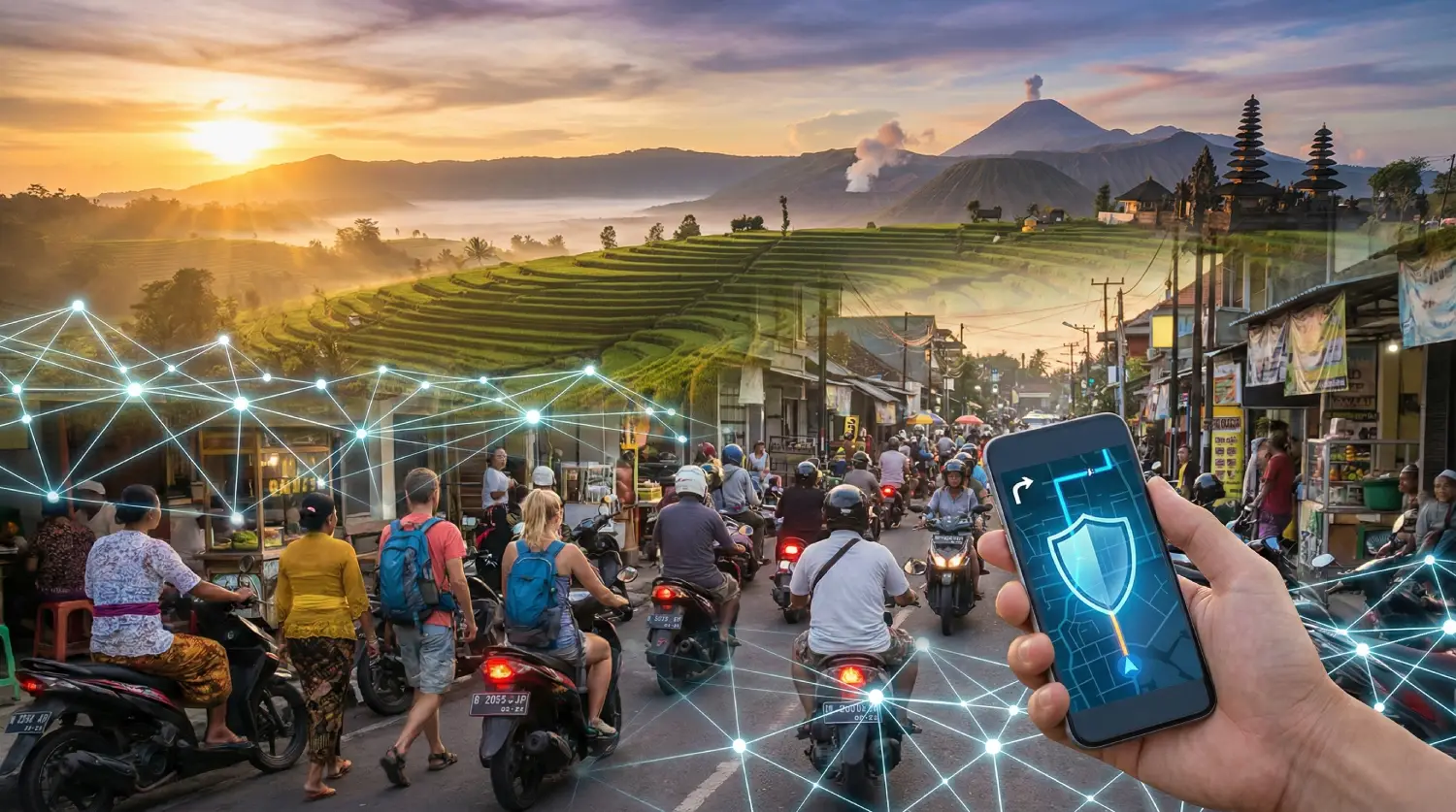

Because places like Bali are marketed as "paradise," many tourists arrive, take off their shoes, and completely leave their common sense at the airport.
So, is Indonesia actually safe in 2026?
The short answer is Yes. Statistically, violent crime against foreigners (like armed robbery or assault) is incredibly low. You are far less likely to face a violent mugging in Jakarta or Denpasar than you are in many major European or American cities.
However, the illusion of total safety is what gets tourists in trouble. Indonesia is plagued by micro-hazards: sophisticated street scams, lethal traffic conditions, digital theft, and severe health risks that can ruin your trip in an afternoon.
This comprehensive, 1500+ word survival guide strips away the Instagram filters. We will break down exactly how ATM skimmers target tourists, how to spot a fake taxi, the deadly reality of cheap alcohol, and how to navigate the streets without becoming a victim.
1. Violent Crime vs. Petty Theft: The Street Reality
Let’s get the good news out of the way first: You do not need to worry about cartels or violent street gangs targeting tourists in Indonesia. Walking around popular tourist hubs at night is generally safe regarding physical violence.
The real threat is crimes of opportunity.
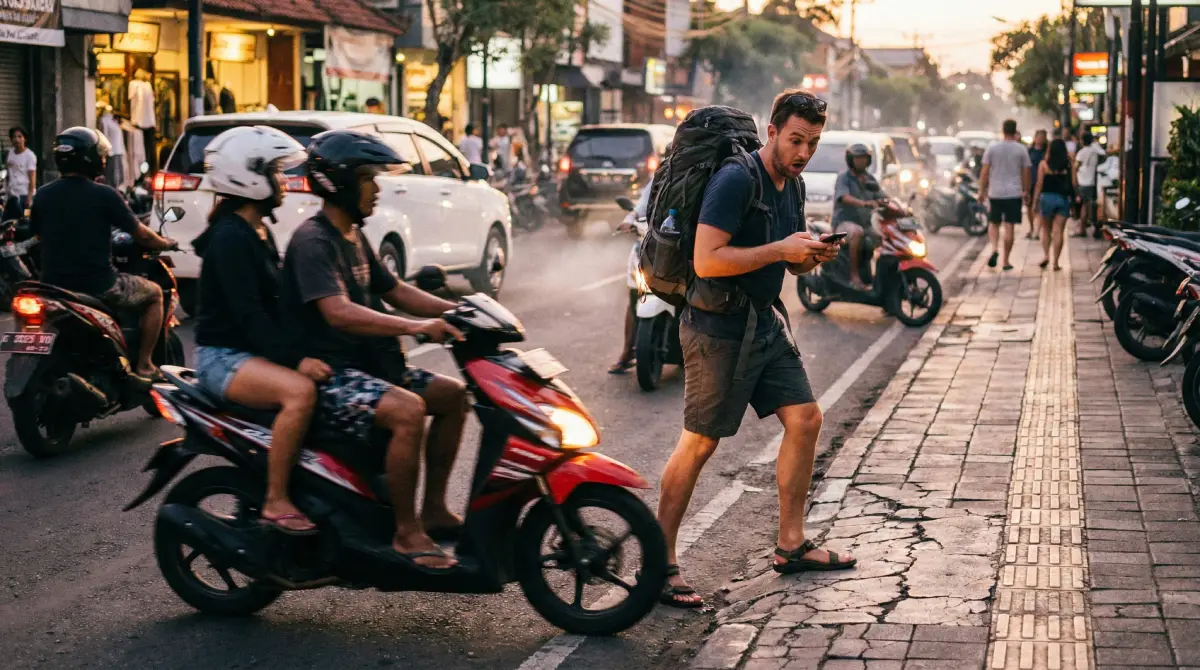
The "Drive-By Snatching" Epidemic
This is the most common crime against tourists in areas like Canggu, Seminyak, and Kuta. You are walking down the side of the road, holding your iPhone 16 out to look at Google Maps. Suddenly, a scooter with two men speeds past you, the passenger grabs your phone out of your hand, and they disappear into traffic before you even realize what happened. They also target women carrying tote bags or purses on a single shoulder.
-
The Defense: Never walk near the street with your phone in your hand. If you need to check a map, stop, step away from the curb, put your back to a wall, and hold your phone with both hands. Always wear cross-body bags and keep the pouch facing your front.
Villa Break-Ins
While hotels have heavy security, private villas (often rented on Airbnb) can be vulnerable. Thieves look for villas where tourists have gone out for dinner and left windows open or doors unlocked. Always use the provided safe for your passport and cash, and lock all doors, even if you are just stepping into the pool.
2. Tourist Scams: The Art of the Hustle
Indonesian scammers are highly skilled. They operate in plain sight and rely on the fact that you are confused by the exchange rate (where 100 USD equals roughly 1.5 million Indonesian Rupiah).
The "Sleight of Hand" Money Changer
This is a classic Bali scam. You go to a small, unofficial money exchange booth off the main road because they advertise a slightly better rate than the banks. The vendor counts out your millions of Rupiah right in front of you. You verify the stack. Then, as he taps the stack on the counter to align the bills before handing them to you, he seamlessly drops several 100,000 IDR notes behind the counter. You walk away with 30% less than you paid for.
-
The Defense: use official, air-conditioned money changers (like BMC Money Changer) that have security guards and glass windows. Never use a guy operating out of a souvenir shop.
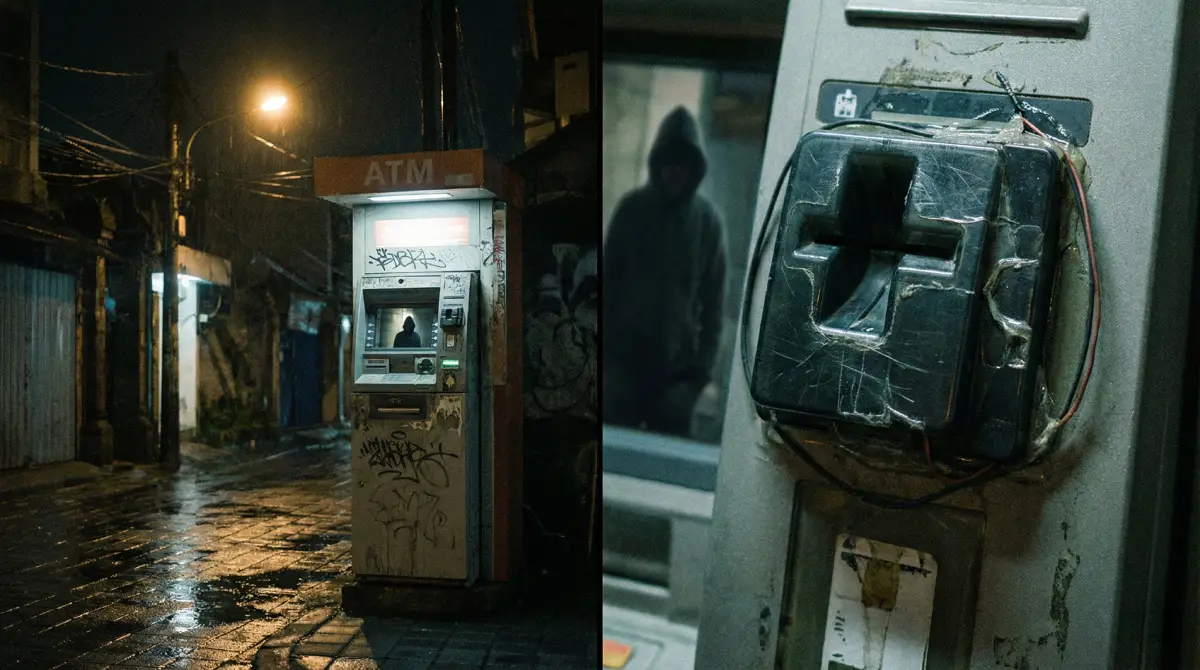
The ATM Skimming Hotspots
Bali is notorious for ATM skimming. Criminals place sophisticated card readers over the ATM slot and hidden cameras pointing at the keypad to steal your PIN. Within hours, your bank account is drained from another country.
-
The Defense: Never use a standalone ATM on the street or outside a convenience store (Indomaret/Alfamart). withdraw cash from ATMs located inside actual bank branches where there is a security guard and CCTV. Use Apple Pay or contactless card taps wherever possible.
3. Transportation: Scooters and Fake Taxis
Your biggest physical threat in Indonesia does not come from a criminal; it comes from the asphalt.

The "Bali Tattoo" (Scooter Accidents)
Renting a scooter for $5 a day is a rite of passage, but it is also highly dangerous. The traffic rules are more of a "suggestion," dogs run into the road, and sand makes corners incredibly slippery. The "Bali Tattoo" is the local joke for the massive exhaust pipe burns or road rash tourists get on their legs.
-
The Insurance Trap: If you crash a scooter and you do not have a valid International Driving Permit (with a motorcycle endorsement) and a helmet, your travel insurance will deny your medical claim.
The Fake "Bluebird" Taxis
In Jakarta and Bali, the Bluebird Taxi group is the most reputable, metered, and safe taxi company. Scammers know this, so they paint their cars the exact same shade of blue and put a fake bird logo on the roof. you get in, the "meter is broken," and you are suddenly forced to pay an extortionate rate.
-
The Defense: A real Bluebird taxi has the "Bluebird" URL on the windshield, a specific ID number on the door, and the driver wears a blue batik uniform.
To avoid the taxi mafia entirely, you should use ride-hailing apps like Gojek or Grab. However, you need an active internet connection to summon them when you are out on the street.
4. Health Hazards: From Bali Belly to Methanol
Indonesia’s tropical environment means bacteria thrives, and local regulations on alcohol can be dangerously lax in cheap establishments.
"Bali Belly" (Food and Water Poisoning)
This is not just a mild stomach ache; it can put you in bed for a week with severe dehydration. The water infrastructure in Indonesia is not suitable for drinking.
-
The Defense: Do not drink tap water. Do not even use tap water to brush your teeth. Stick to bottled water (make sure the seal is intact). Avoid salads or raw vegetables in cheap warungs (local eateries) because they are washed in tap water. Stick to cooked food.
The Deadly Threat of Methanol Poisoning
Alcohol is heavily taxed in Indonesia. To bypass this, some shady bars in Kuta, Seminyak, or the Gili Islands mix cheap, locally brewed spirits (Arak) with their cocktails. If Arak is brewed incorrectly, it produces methanol—a highly toxic chemical that causes permanent blindness, organ failure, and death.
-
The Defense: Never buy heavily discounted cocktails (e.g., "Free Flow Spirits for $5"). If you want to drink cheaply and safely, stick to bottled beer like Bintang, which cannot be tampered with.
5. Nature's Wrath: Volcanoes, Earthquakes & Riptides
Indonesia sits right on the Pacific "Ring of Fire." Natural disasters are a fact of life.
-
Earthquakes: They happen frequently. If you feel a strong tremor while in a building, get under a sturdy table or move to an open outdoor space away from power lines.
-
The Ocean: The Indian Ocean currents hitting the southern coasts of Bali (Uluwatu, Canggu, Nusa Penida) are incredibly powerful. Riptides can pull even Olympic-level swimmers out to sea. If you are not an experienced surfer, do not go deeper than your waist, and always obey the red flags on the beach.
6. The Monkey Forests: Cute but Criminal

Visiting the Sacred Monkey Forest in Ubud or the cliffs of Uluwatu is a must, but these macaques are not your friends; they are organized crime syndicates.
They are trained to steal your sunglasses, your iPhone, and even your flip-flops. They will not give the item back until a local "offers" them a piece of fruit (and expects a tip from you).
-
The Danger: Monkeys carry diseases, including Rabies. If a monkey bites or aggressively scratches you, you must seek a hospital immediately for Rabies post-exposure shots.
-
The Defense: When entering monkey territory, take off your sunglasses, secure your phone inside your bag, and do not carry plastic water bottles (they associate plastic with food).
7. Legal Safety: The Danger of Breaking the Rules
Sometimes, the biggest threat to your safety and freedom isn't a criminal, but the Indonesian legal system itself.
Indonesia has strict laws that often surprise Westerners. For instance, overstaying your visa by even a few days results in massive daily fines, and any involvement with illegal drugs—even possessing a tiny amount of marijuana—can lead to decades in a notorious prison like Kerobokan, or even the death penalty.
To ensure you don't accidentally become a criminal, it is vital to read our comprehensive guide on [Indonesia Tourist Bans & Laws (2026): What Not To Do].
Furthermore, you can easily get in trouble right as you land if you don't declare certain items or misunderstand the complex taxes. Make sure you check the Indonesia Airport Customs Rules 2026: Alcohol Limits, IMEI Tax & Drugs so your luggage isn't seized at the Denpasar airport.
8. Connectivity: Your Ultimate Safety Net
In a country where you need to order a Gojek to avoid a fake taxi, translate a menu to avoid food allergies, or check earthquake warnings, being offline is a massive safety risk.
You cannot rely on café Wi-Fi when you are lost in a dark alley in Seminyak or driving a scooter through the rice terraces of Ubud.
The Physical SIM Card Hassle
Getting a local SIM card in Indonesia is no longer as simple as buying at a 7-Eleven. The government now requires all foreign phones to have their IMEI numbers registered to use local networks. If you buy a physical SIM at the airport, you will pay highly inflated tourist prices, wait in long lines after a 15-hour flight, and hand over your passport for registration.
To avoid the airport chaos entirely, grab your Indonesia eSIM before you fly and guarantee seamless connectivity the moment you land.
If you want to understand exactly how much airport vendors overcharge and the technicalities of the registration process, check out our breakdown: How to Get Internet in Indonesia
The Smart Move: Use an eSIM
The safest, fastest, and most secure way to ensure you have data the second your plane touches down is to use a travel eSIM. It bypasses the physical IMEI registration lines, allowing you to instantly call a trusted Grab driver and navigate safely to your hotel.
Don't wait until you are stranded to figure out your internet. We have tested the networks across Bali and Jakarta to find the most reliable connection. Read our Best eSIM for Indonesia guide to choose the right plan for your trip.
Final Verdict: Should You Visit?
100% Yes. Indonesia is perfectly safe as long as you travel with intent and awareness. The country is welcoming, the culture is profound, and the landscapes are unparalleled.
The vast majority of tourists who get into trouble are those who treat Indonesia like a lawless playground rather than a sovereign nation with its own rules and risks.
Your 2026 Safety Checklist:
-
Never use your phone near moving traffic. 2. Stick to Bintang beer or high-end bars to avoid methanol.
-
Use ATMs inside bank branches.
-
Use Gojek or Grab instead of street taxis.
-
Get connected before you land with an eSIM.
Stay sharp, respect the ocean, and enjoy the Island of the Gods safely.