

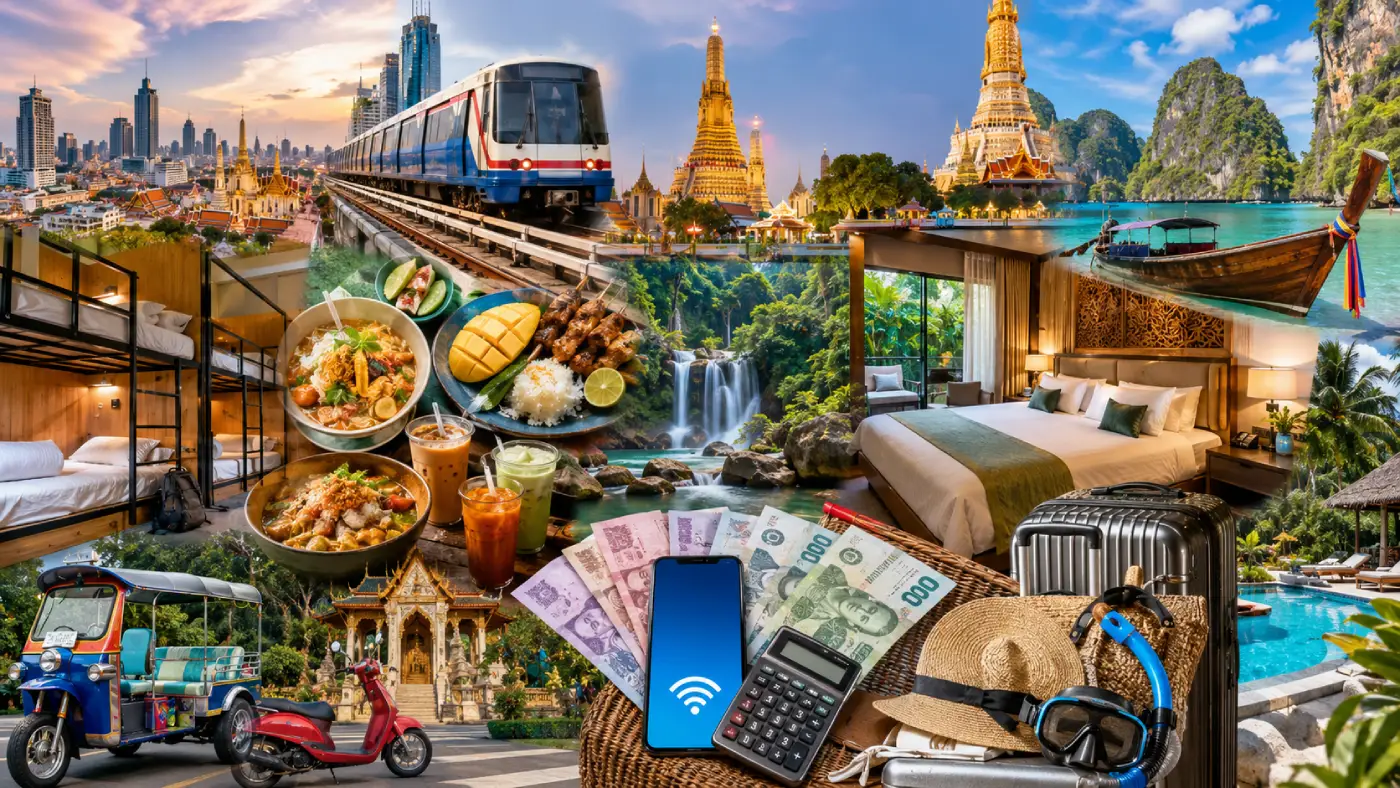

Travel costs in Thailand vary dramatically by destination and travel style. A careful backpacker can manage on roughly $35 to $55 per day, while a comfortable mid-range trip usually costs $90 to $160 per day.
Luxury travelers should expect at least $250 to $500 per day. Private pool villas, five-star island resorts, premium dining, and private boats can raise that figure much further.
For easy comparison, the calculations below use an approximate exchange rate of $1 USD = 33 THB. Since exchange rates change, adding a 5% to 10% currency buffer is sensible.
Bangkok, Chiang Mai, Chiang Rai, and smaller northern towns usually offer the strongest value. Phuket, Koh Samui, Koh Phi Phi, Railay, and beachfront parts of Krabi can cost 20% to 60% more, particularly during peak season.
The Daily Estimator: 3 Travel Tiers for 2026
Backpackers can keep costs low by sleeping in dorms, eating at local restaurants, using public transport, and limiting organized tours. This budget becomes harder to maintain on expensive islands or during major events.
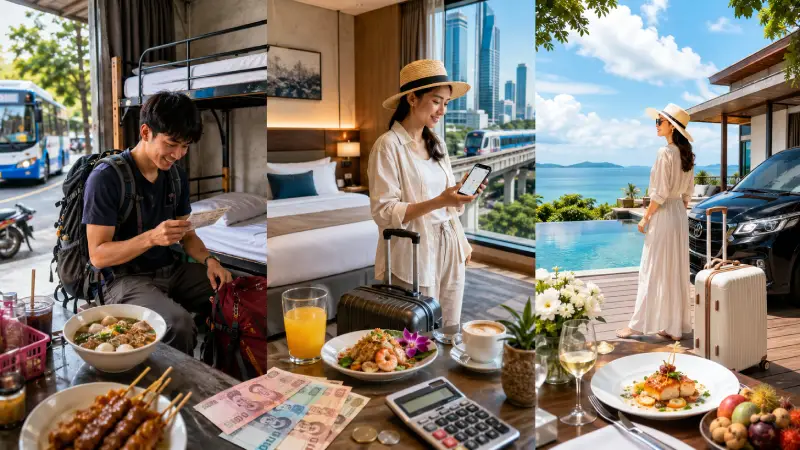
Mid-range travelers can expect private air-conditioned rooms, a mixture of Thai and Western meals, frequent Grab rides, domestic trains or occasional flights, and several paid activities.
Luxury budgets cover five-star hotels, private transfers, upscale restaurants, premium spa treatments, cocktails, and high-end excursions. Beachfront villas and internationally branded resorts may exceed these estimates.
| Traveler Style | Estimated Daily Cost | Accommodation | Typical Transport | What the Budget Covers |
|---|---|---|---|---|
| Backpacker | $35 to $55 | Hostel dorm or basic guesthouse | Bus, train, songthaew, walking | Local meals, low-cost attractions, occasional drinks |
| Flashpacker | $90 to $160 | Boutique hotel or modern private room | Grab, BTS, MRT, trains, shared transfers | Comfortable rooms, mixed dining, regular activities |
| Luxury Seeker | $250 to $500+ | Five-star resort, suite, or villa | Private car, premium transfers, flights | Fine dining, private tours, spas, premium hotels |
International flights are not included in these figures. Couples may spend less per person because they can share hotel rooms and private transfers.
Location also plays a major role. Use Where to Stay in Thailand: Best Areas, Hotels and Towns to compare Bangkok districts, northern cities, resort zones, and island bases before booking.
Accommodation Costs: Hostels to Luxury Resorts
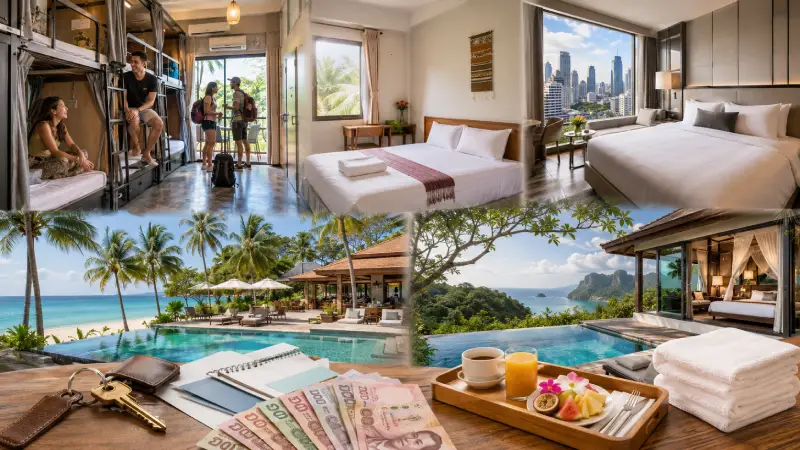
Accommodation is of the largest variables in a Thailand budget. The same room category can cost twice as much on Phuket or Koh Samui as it does in Chiang Mai.
Peak travel periods create another major difference. Christmas, New Year, Lunar New Year, Full Moon Party dates, and the dry-season months can raise room prices sharply.
| Accommodation Type | Typical Price in THB | Approximate Price in USD |
|---|---|---|
| Basic hostel dorm | 330 to 660 THB | $10 to $20 |
| Premium social hostel | 660 to 1,000 THB | $20 to $30 |
| Simple private guesthouse room | 600 to 1,200 THB | $18 to $36 |
| Mid-range hotel | 1,500 to 3,500 THB | $45 to $106 |
| Stylish four-star hotel | 3,000 to 6,500 THB | $91 to $197 |
| Five-star hotel or resort | 6,000 to 15,000 THB | $182 to $455 |
| Private pool villa or ultra-luxury resort | 15,000 to 40,000+ THB | $455 to $1,212+ |
Dorm beds in Chiang Mai and smaller northern towns often sit near the lower end of the range. Bangkok party hostels, Phuket beach hostels, and island properties tend to charge more.
Koh Phangan becomes especially expensive around the Full Moon Party. Dorm beds may rise to 1,000 to 2,000 THB, or roughly $30 to $61, and many properties introduce minimum-stay rules.
Guesthouses priced between 600 and 1,200 THB usually provide air conditioning, a private bathroom, and basic furniture. At the lowest prices, soundproofing, elevators, daily cleaning, and modern bathrooms should not be expected.
Mid-range hotels generally offer the best balance between comfort and cost. Around 1,500 to 3,500 THB usually buys reliable Wi-Fi, air conditioning, daily housekeeping, a private bathroom, and sometimes breakfast or a small pool.
Central Bangkok, beachfront Phuket, Koh Samui, and Railay command much higher rates. Sea views, direct beach access, international branding, and walkable resort locations can add thousands of baht per night.
Five-star properties normally begin at around 6,000 THB. Premium villas and high-end island resorts frequently cost 10,000 to 25,000 THB, while exceptional villas can exceed 40,000 THB per night.
Always check whether the displayed rate includes breakfast, taxes, service charges, and airport transfers. Some luxury resorts also impose compulsory New Year or holiday dinners costing several thousand baht per guest.
Thailand’s busiest season generally runs from November through February, although weather patterns differ between the Gulf and Andaman coasts. Popular properties may raise prices by 25% to 70% during the most desirable weeks.
Cheaper rooms do not always mean better value if heavy rain disrupts ferries and activities. Consult Best Time to Visit Thailand: Weather, Seasons & Islands before choosing dates based on hotel prices.
Food and Drink Costs
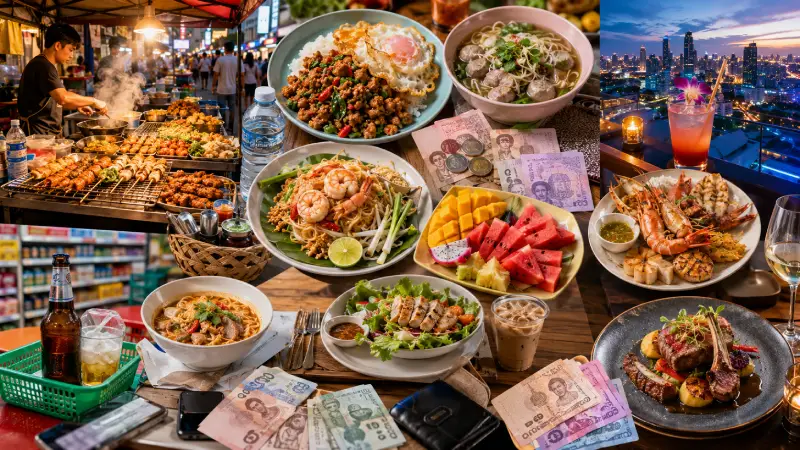
Thai food can still be remarkably inexpensive, particularly in local markets, neighborhood restaurants, and food courts. Western cafés, beach clubs, rooftops, and resort restaurants operate in a completely different price category.
| Food or Drink | Typical Price in THB | Approximate Price in USD |
|---|---|---|
| Street-food dish | 50 to 80 THB | $1.50 to $2.40 |
| Local restaurant meal | 100 to 180 THB | $3 to $5.50 |
| Western-style café lunch | 220 to 450 THB | $6.70 to $13.60 |
| Tourist restaurant dinner | 300 to 700 THB | $9 to $21 |
| High-end dinner | 1,500 to 4,000 THB | $45 to $121 |
| Convenience-store beer | 45 to 70 THB | $1.35 to $2.10 |
| Beer in a casual bar | 90 to 160 THB | $2.70 to $4.85 |
| Rooftop or beach-club cocktail | 250 to 550 THB | $7.60 to $16.70 |
| 1.5-liter water bottle | 12 to 25 THB | $0.35 to $0.75 |
Pad kra pao, fried rice, noodle soup, and pad Thai commonly cost 50 to 80 THB at local stalls. The same dishes may cost 100 to 180 THB near major beaches, nightlife streets, and heavily touristed landmarks.
Neighborhood restaurants offer more comfortable seating without dramatically increasing the bill. Rice, main dish, and a soft drink generally total 100 to 180 THB.
Western-style cafés are considerably more expensive. Smoothie bowls, specialty coffee, imported cheese, avocado dishes, sandwiches, and hotel breakfasts often cost 220 to 450 THB.
Dinner in a tourist-oriented restaurant usually falls between 300 and 700 THB per person. Seafood sold by weight, cocktails, imported wine, and multiple shared dishes can double the final bill.
Rooftop restaurants, chef-led venues, and luxury hotels often charge 1,500 to 4,000 THB per person. Tasting menus with premium drinks may exceed 6,000 THB, or approximately $182.
Beer remains inexpensive when purchased from supermarkets or convenience stores. Bars normally charge at least twice the shop price, while beach clubs and rooftop venues may ask 180 to 300 THB for a single bottle.
Cocktails commonly cost 250 to 550 THB in upscale venues. Several drinks, an entrance fee, and late-night transportation can easily turn an ordinary evening into a 2,000 to 4,000 THB expense.
Basic groceries are reasonably priced when the basket contains water, fruit, yogurt, snacks, and local breakfast items. Imported products, wine, cheese, protein bars, and foreign cereal can be surprisingly expensive.
Nightlife costs deserve special attention in Bangkok, Phuket, Pattaya, and Koh Samui. Thailand Nightlife: Best Clubs, Scams covers drink prices, venue rules, and common billing problems.
Transportation Costs in Thailand
Thailand offers transportation for almost every budget. Local buses and urban rail are extremely economical, while domestic flights, private transfers, island taxis, and last-minute ferry bookings can become expensive.
| Transport Type | Typical Price |
|---|---|
| Bangkok public bus | 8 to 30 THB |
| BTS or MRT journey | 17 to 65 THB |
| Songthaew ride | 20 to 60 THB |
| Short Grab or Bolt journey | 80 to 220 THB |
| Bangkok airport train | 15 to 45 THB |
| Airport taxi to central Bangkok | 350 to 600 THB |
| Intercity bus | 150 to 800 THB |
| Overnight train sleeper | 940 to 2,450 THB |
| Shared regional shuttle | 300 to 1,200 THB |
| Bus-and-ferry combination | 700 to 1,700 THB |
| Domestic flight with extras | 2,000 to 4,500 THB |
| Scooter rental | 200 to 400 THB per day |
| Small rental car | 900 to 1,800 THB per day |
Bangkok’s BTS and MRT networks usually cost 17 to 65 THB per ride. Staying within walking distance of a station can eliminate hundreds of baht in daily taxi expenses.
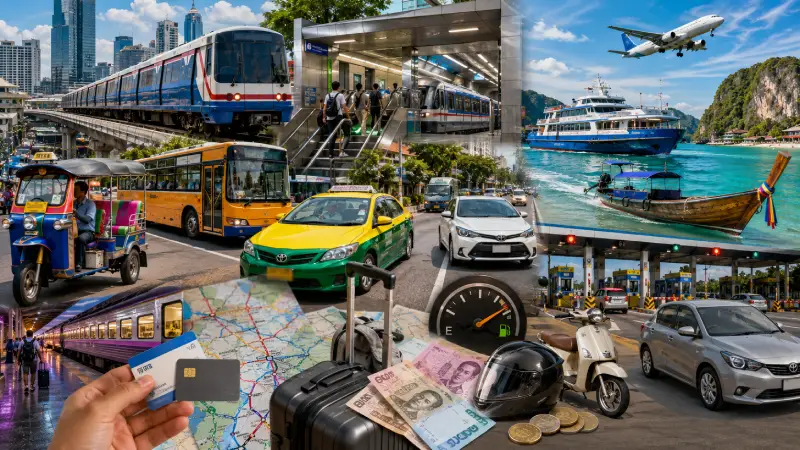
Public buses cost as little as 8 THB, although routes may be confusing for first-time visitors. Traffic also makes buses less practical during rush hour.
Songthaews operate as shared pickup trucks in many destinations. Established local routes may cost 20 to 60 THB, but private trips and tourist routes attract much higher quotes.
Short Grab or Bolt rides generally cost 80 to 220 THB. Rain, rush-hour demand, airport pickups, and late-night travel can increase the price above 300 THB.
Bangkok taxis usually begin with a meter fare of around 40 THB. Extra costs may include expressway tolls, airport surcharges, and charges for luggage or waiting time.
The Airport Rail Link provides of the cheapest routes from Suvarnabhumi Airport. Tickets cost roughly 15 to 45 THB, compared with around 350 to 600 THB for a taxi into central Bangkok.
Intercity buses usually cost 150 to 800 THB, depending on distance and service class. Overnight VIP buses may save the cost of hotel night, although train sleepers are often more comfortable.
Train fares vary substantially by class. Bangkok-to-Chiang Mai seats may cost around 270 to 860 THB, while second-class air-conditioned sleepers generally cost 940 to 1,140 THB.
First-class sleeper cabins usually cost 1,450 to 2,450 THB. Booking platforms and travel agents may add another 50 to 150 THB in handling fees.
Shared shuttles between hotels, ferry terminals, and regional destinations generally cost 300 to 1,200 THB. Combined bus-and-ferry tickets to the islands often range from 700 to 1,700 THB.
Low-cost airline fares occasionally appear near 1,000 THB, but this price rarely represents the complete journey. Checked baggage, seat selection, airport transport, food, and booking fees often raise the real cost to 2,000 to 4,500 THB.
Scooter rentals typically cost 200 to 400 THB per day. Larger engines, premium models, island delivery, and high-season demand may raise the price to 500 to 900 THB.
Rental cars generally start around 900 to 1,800 THB per day. SUVs, automatic vehicles,-way rentals, and island locations can increase the rate to 2,000 to 3,500 THB.
Basic insurance may leave the driver responsible for a large excess. Better coverage often adds another 200 to 700 THB per day.
Never surrender a passport as scooter security. Photograph every existing scratch, check the tires and brakes, confirm the fuel level, and make sure your driving documents legally cover motorcycles.
Thailand Transport Guide: Uber, Grab, Trains & Taxis provides a more detailed comparison of trains, taxis, ride-sharing apps, and regional routes. Is Thailand Safe? explains common transport scams and practical safety precautions.
Activities and Sightseeing Costs
Thailand combines inexpensive temples and museums with costly island excursions, diving courses, ethical wildlife experiences, and private tours.
| Activity | Typical Price in THB | Approximate Price in USD |
|---|---|---|
| Small museum or attraction | 100 to 300 THB | $3 to $9 |
| Wat Pho entrance | 300 THB | $9.10 |
| Grand Palace entrance | 500 THB | $15.20 |
| National park entrance | 100 to 400 THB | $3 to $12 |
| Snorkeling day trip | 1,200 to 2,500 THB | $36 to $76 |
| Premium speedboat excursion | 2,500 to 4,500 THB | $76 to $136 |
| Two scuba dives | 2,500 to 3,800 THB | $76 to $115 |
| Entry-level diving course | 10,000 to 14,000 THB | $303 to $424 |
| Thai cooking class | 900 to 1,800 THB | $27 to $55 |
| Zip-lining package | 2,000 to 4,000 THB | $61 to $121 |
| Guided jungle hike | 1,200 to 3,500 THB | $36 to $106 |
| Ethical elephant sanctuary visit | 2,000 to 3,500 THB | $61 to $106 |
| Traditional Thai massage | 250 to 500 THB | $7.60 to $15.20 |
Many local temples are free or request a small donation. Major attractions charge formal entrance fees, with Wat Pho costing approximately 300 THB and Bangkok’s Grand Palace around 500 THB.
National park fees for international visitors generally range from 100 to 400 THB. Marine parks and famous island areas usually sit near the upper end.
Tour operators may not include national park fees in the advertised package. Carry enough cash to cover separate entrance charges at piers or park checkpoints.

Snorkeling excursions typically cost 1,200 to 2,500 THB. Speedboat trips to popular islands can reach 2,500 to 4,500 THB, excluding park fees, photographs, tips, and premium seating.
Koh Tao remains of the most popular destinations for diving. Two recreational dives commonly cost 2,500 to 3,800 THB, while entry-level certification courses usually cost 10,000 to 14,000 THB.
Cooking classes generally charge 900 to 1,800 THB. Farm visits, market tours, hotel pickups, and smaller class sizes can raise the cost to 1,500 to 2,500 THB.
Zip-lining packages near Chiang Mai usually fall between 2,000 and 4,000 THB. Confirm whether transportation, lunch, equipment, photographs, and insurance are included.
Guided jungle walks and village tours normally cost 1,200 to 3,500 THB. Multi-day treks may range from 2,800 to 7,000 THB, depending on accommodation, meals, transport, and group size.
Reputable elephant sanctuaries charge approximately 2,000 to 3,500 THB for a half-day visit. Observation-focused experiences are preferable to programs involving riding, tricks, or forced bathing.
Traditional massage shops remain of Thailand’s best-value experiences. hour usually costs 250 to 500 THB, while hotel spas may charge 1,500 to 4,000 THB for premium treatments.
Travelers heading to Koh Phangan should budget beyond the event ticket itself. Accommodation minimums, drinks, island taxis, and ferry demand are explained in Full Moon Party Thailand Guide: Dates, Festival Tips.
Hidden Costs and Tourist Traps
Taxes and service charges
Some hotels, rooftop bars, beach clubs, and upscale restaurants display prices before service charges and VAT. Adding a 10% service charge and 7% VAT can make the final total roughly 17% higher than the menu or booking rate.
Look for phrases such as “net price” or “all taxes included.” The difference becomes substantial on expensive rooms, bottle service, spa packages, and premium dinners.
ATM withdrawal fees
Thai ATMs commonly charge foreign cards around 220 THB per withdrawal. Home banks may add their own foreign transaction fee and exchange-rate margin.
Frequent small withdrawals waste money. Taking out 10,000 THB normally incurs the same Thai ATM charge as withdrawing 1,000 THB.
ATMs may also offer to convert the transaction into your home currency. That conversion rate is often poor, so choosing to be charged in THB is usually preferable.
Taxi and tuk-tuk overcharging
Fixed tourist fares can be several times higher than the normal metered price. Drivers may quote 400 to 800 THB for journeys that should cost far less.
Grab or Bolt provides a useful reference price before negotiating. In Bangkok taxis, confirm that the driver will use the meter before getting inside.
Very cheap tuk-tuk sightseeing offers often involve unwanted stops at tailor shops, gem stores, or travel agencies. The driver earns a commission for bringing tourists into those businesses.
Scooter damage claims
Disputed damage charges can range from 2,000 to 20,000 THB. Scratches, broken mirrors, missing keys, and alleged mechanical damage are common areas of conflict.
Record a continuous video when collecting and returning the scooter. Written rental terms and a reputable operator are worth paying slightly more for.
Unclear tourism charges
Thailand has discussed a tourism fee of approximately 300 THB for international air arrivals. Since implementation plans have changed repeatedly, do not include it as a guaranteed expense unless it appears in the confirmed airline or arrival process.
Travelers should also be suspicious of anyone requesting an unofficial cash departure fee. Standard airport passenger charges are generally included in airline tickets.
Fines and prohibited items
Vaping devices can create serious legal and financial trouble because Thai importation and possession rules are strict. Drug laws, drone requirements, protected wildlife rules, and temple conduct can also lead to confiscation or fines.
Before packing, review Thailand Tourist Bans & Laws and Thailand Customs Rules: Alcohol Limits & Vape Ban.
The Final Weekly Math: 7-Day and 14-Day Budgets
The estimates below exclude international flights. Accommodation, food, local transport, ordinary sightseeing, and basic incidental spending are included.
7-Day Thailand Budget
| Travel Style | Estimated Total in USD | Estimated Total in THB |
|---|---|---|
| Backpacker | $245 to $385 | 8,100 to 12,700 THB |
| Mid-Range | $630 to $1,120 | 20,800 to 37,000 THB |
| Luxury | $1,750 to $3,500+ | 57,800 to 115,500+ THB |
14-Day Thailand Budget
| Travel Style | Estimated Total in USD | Estimated Total in THB |
|---|---|---|
| Backpacker | $490 to $770 | 16,200 to 25,400 THB |
| Mid-Range | $1,260 to $2,240 | 41,600 to 73,900 THB |
| Luxury | $3,500 to $7,000+ | 115,500 to 231,000+ THB |
Trips involving domestic flights, diving courses, private island tours, or major party dates need a larger activity budget. Adding $150 to $400 is realistic for several premium experiences.
Couples sharing mid-range rooms may spend 10% to 20% less per person than solo travelers. Private transfers and taxis also become more economical when divided between two people.
Keep an emergency reserve equal to 10% to 15% of the full budget. For a 14-day mid-range trip, this means setting aside another $125 to $335.
Budgeting for Connectivity
International roaming can become of the most avoidable costs of a Thailand trip. Maps, automatic app updates, cloud backups, ride-sharing apps, and video streaming may continue using mobile data without the traveler noticing.
Reliable internet access also helps reduce other expenses. Travelers can compare Grab fares, check public transport routes, translate menus, monitor banking activity, and locate local restaurants away from tourist streets.
Need data in Thailand? Get an eSIM!
Choose the perfect data plan for your trip

Manage your eSIM in the app
Install, top up and track data.
Thailand eSIM is usually the most cost-effective way to activate 5G or 4G data without spending time at an airport phone counter. Keeping the physical home SIM in the phone also makes it easier to receive banking verification messages.
Package comparisons and installation advice are available in Best eSIM for Thailand. Complete breakdown of airport SIM cards, local operators, eSIMs, and public Wi-Fi appears in Internet in Thailand.
5 Money-Saving Hacks for Thailand
- Choose local food courts over tourist cafés. Replacing a 350 THB café lunch with a 70 THB Thai meal saves around 280 THB, or $8.50, each day.
- Stay close to urban rail. Paying an extra 200 THB for a hotel near the BTS or MRT may still cost less than spending 400 to 700 THB on daily taxis.
- Make fewer ATM withdrawals. larger withdrawal avoids repeated 220 THB foreign-card fees.
- Target shoulder-season weeks. Hotel prices can fall by 20% to 40% outside peak periods, but regional weather conditions should be checked carefully.
- Buy combined transport tickets. Bus-and-ferry packages may save 200 to 600 THB compared with separately booked tourist transfers.
Solo travelers can reduce costs by staying in social hostels, joining shared excursions, and avoiding expensive single-occupancy resort rooms. Solo Travel in Thailand explains how to combine savings with sensible precautions.
Long-stay visitors need a different financial plan from short-term tourists. Visa fees, apartment deposits, insurance, coworking access, and legal work requirements are covered in Thailand Digital Nomad Visa: DTV Guide & Income.
Eligible shoppers may recover part of the tax paid on qualifying purchases. Receipt requirements and airport procedures are explained in Thailand VAT Refund: Tax-Free Shopping Rules & Steps.