

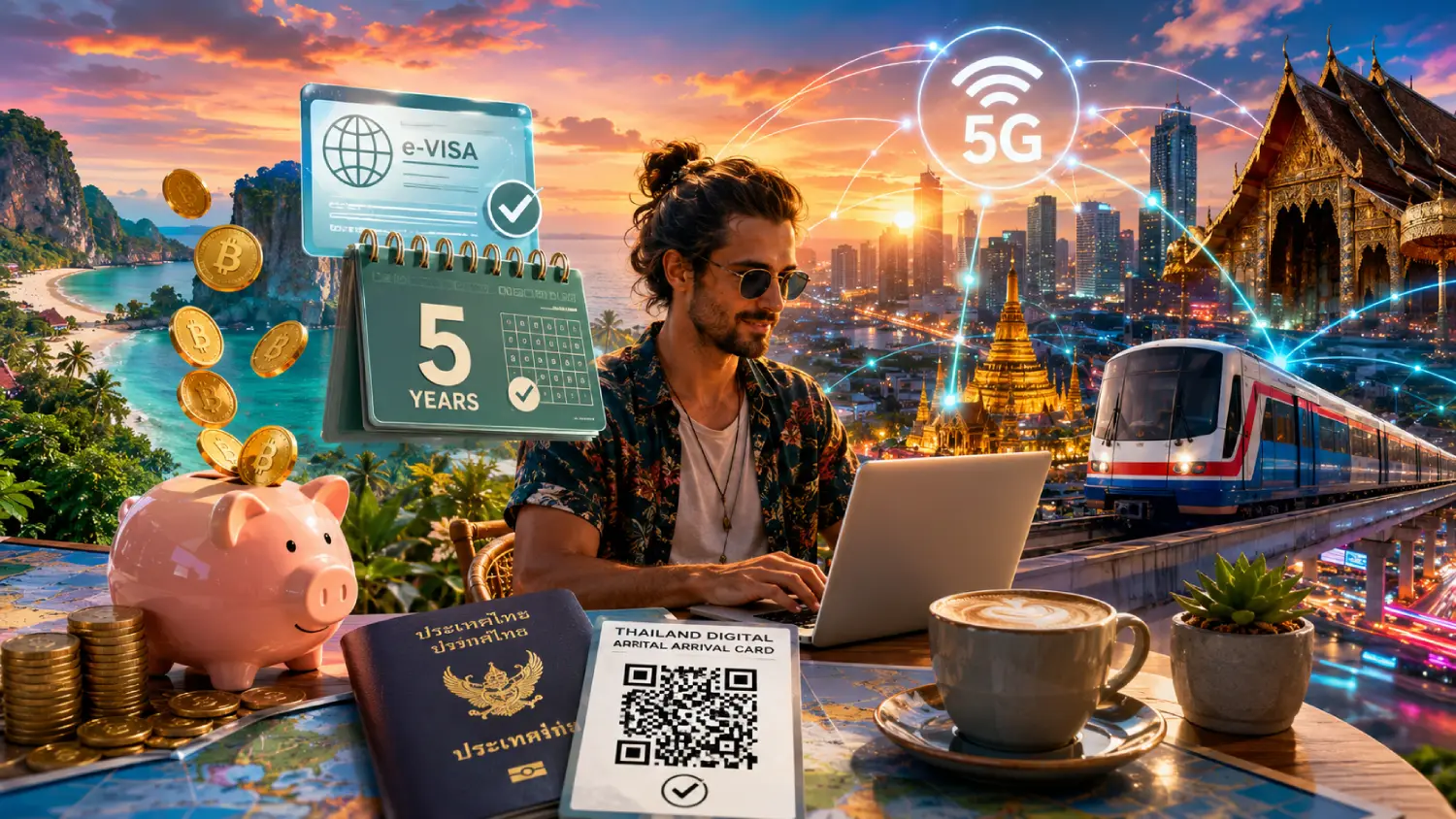

This guide is strictly designed for remote employees, self-employed freelancers, and business owners registered outside of Thailand. Working for a local Thai company on this specific visa is strictly prohibited and requires a completely different work permit. If your income originates abroad and you want to live in Southeast Asia legally, the Destination Thailand Visa (DTV) is your golden ticket.
Eligibility & Minimum Income Requirements
Thailand revolutionized its immigration system for remote workers by introducing the Destination Thailand Visa (DTV). Unlike other global nomad visas that demand high monthly salaries, the DTV focuses strictly on your liquid savings. This makes it incredibly accessible for freelancers and entrepreneurs with fluctuating monthly incomes.
To qualify for the Workcation category, you do not need to prove a strict monthly income threshold. Instead, you must show a guaranteed bank balance of at least 500,000 THB (approximately $14,500 USD). These funds must sit in your account for a minimum of three to six months prior to your application date.
Beyond the bank balance, your employment documentation must be flawless. Remote employees must provide a formal contract and a letter from their overseas company explicitly stating they are allowed to work remotely. Freelancers and agency owners must submit a comprehensive professional portfolio, active client contracts, and business registration documents from their home country.
Families looking to relocate can also breathe easy under the current DTV framework. The visa allows the primary applicant to bring their legal spouse and any legitimate children under the age of 20. You will need to provide official marriage certificates and birth certificates, fully translated and legally notarized.
Before committing to the move, you must understand the local legal landscape. Thai authorities are increasingly strict regarding foreigners, and background checks are standard for all DTV approvals. You should intimately familiarize yourself with Thailand Tourist Bans & Laws: Vaping, Weed & Fines to ensure you maintain a spotless record.
How to Apply: Step-by-Step Guide
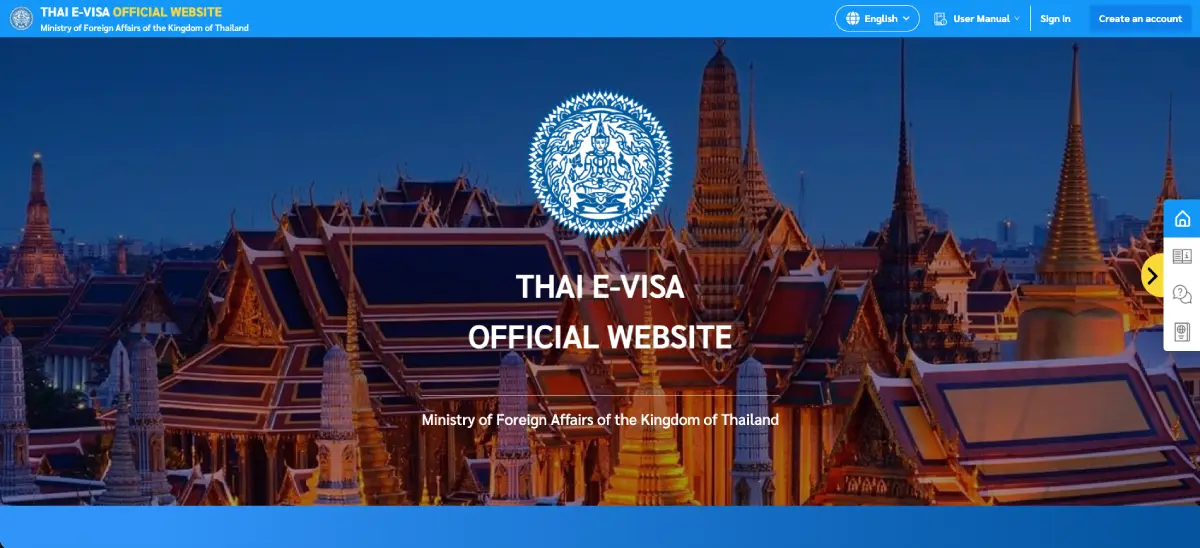
Applying for the Destination Thailand Visa is now a fully digitized process for most nationalities, handled through the official Thai e-Visa portal. You are legally required to be physically outside of Thailand when you submit your initial application. Applying while on a tourist stamp inside the country will result in an immediate rejection and forfeiture of your fee.
1. Prepare Your Core Documents
Your passport must have at least six months of validity remaining, though it is highly recommended to have several years left to match the visa's lifespan. You will need a recent passport-sized photograph with a white background and official bank statements showing your 500,000 THB balance. You must also compile your remote work contracts and portfolio into a single, clean PDF file.
2. Submit the e-Visa Application
Create an account on the official Thai e-Visa website and select the Destination Thailand Visa under the Workcation category. You will upload all your prepared documents and fill out extensive background information regarding your global travel history. submitted, you must pay the non-refundable application fee using a credit or debit card.
3. Monitor Your Processing Window
The processing time typically takes between two to four weeks, so apply well in advance of your flight. If your application is flagged for missing information, the embassy will request additional documentation via email. Monitoring your inbox daily during this processing period is absolutely essential to avoid outright rejection.
4. Complete the Thailand Digital Arrival Card (TDAC)
Starting in 2026, Thailand has fully mandated the Thailand Digital Arrival Card (TDAC) for all foreign arrivals. You must complete this form within 72 hours before your flight departs. Upon completion, you will receive a QR code that you must present to immigration officers upon landing.
5. Arrive and Clear Customs
When you land, present your passport, approved e-Visa printout, and TDAC QR code to immigration. Review the Thailand Airport Customs Rules: Alcohol Limits & Vape Ban closely before arriving. Carrying prohibited items like e-cigarettes can lead to severe fines and immediate visa cancellation at the border.
6. Address Reporting and Settle In
Like all long-term residents in Thailand, DTV holders are subject to the 90-day address reporting rule. If you stay in the country for 90 consecutive days, you must notify immigration of your current residential address. Your landlord must also file a TM30 form registering your presence at their property within 24 hours of your arrival.
Visa Costs, Validity, and Renewal Timelines
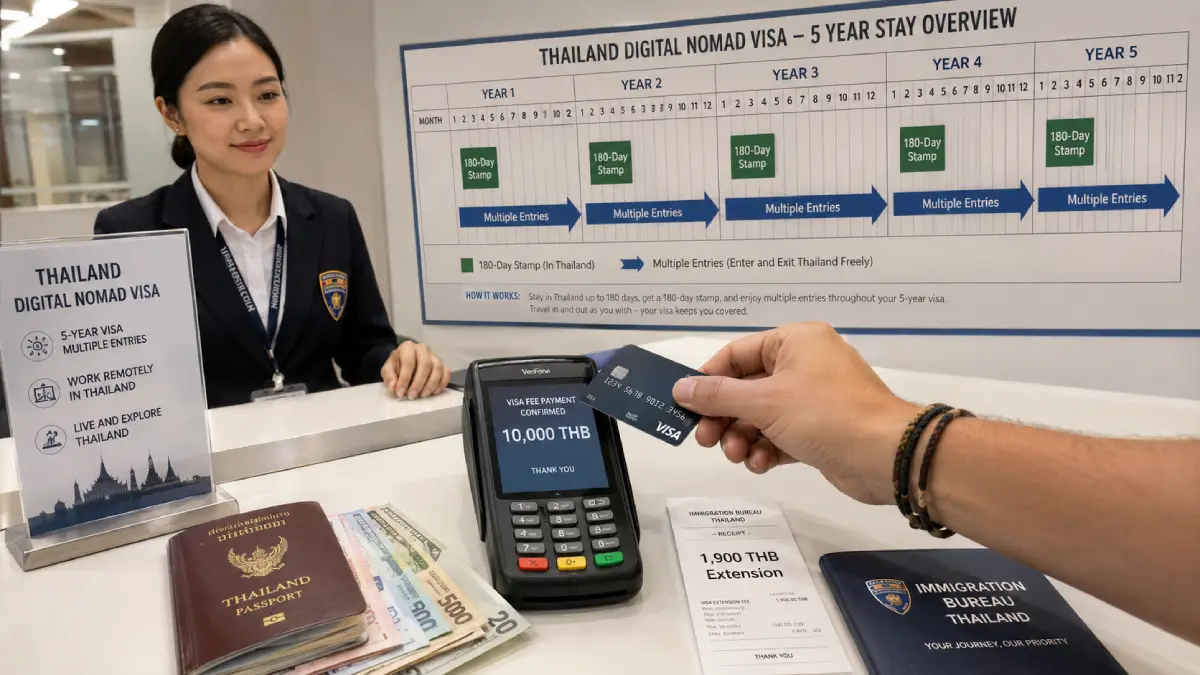
The financial structure of the Destination Thailand Visa is widely considered the best value in the global remote work landscape. The standard application fee is strictly set at 10,000 THB (approximately $280 USD). Depending on which global Thai embassy processes your application, this fee may fluctuate slightly due to local currency conversions, sometimes reaching up to $400 USD.
The DTV boasts an impressive validity period of exactly five years from the date of issue. It is a multiple-entry visa, meaning you can leave and re-enter Thailand as many times as you wish during this five-year window. Every single time you enter the country, you are granted a fresh stay of 180 days.
If you wish to stay longer than six months without leaving the country, you can apply for a local extension. You are allowed to extend your stay per entry for an additional 180 days. This extension must be processed at a local Thai immigration office and costs exactly 1,900 THB (around $58 USD).
By utilizing this extension, you can live in Thailand continuously for 360 days before a mandatory border run is required. you hit that 360-day limit, you must physically exit Thailand. Upon returning from a brief weekend trip abroad, the clock resets, and you receive a brand new 180-day stamp to start the cycle over again.
The Digital Infrastructure Reality: Internet Speeds & Connectivity
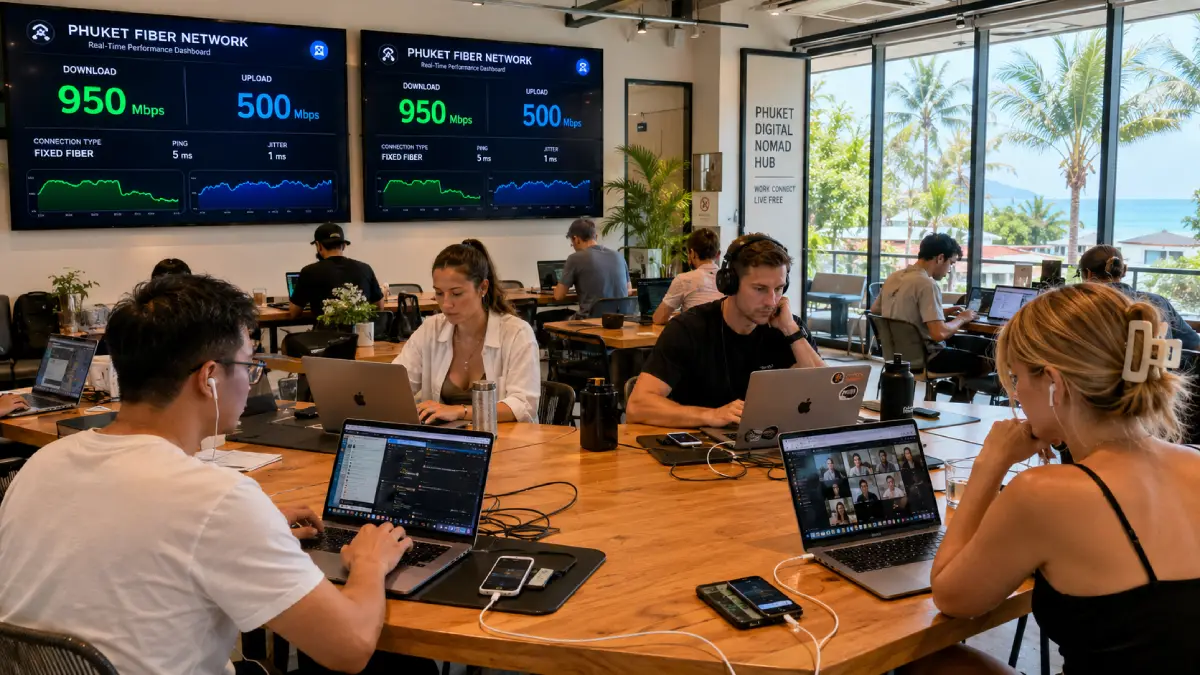
Thailand is an absolute powerhouse when it comes to digital infrastructure in 2026. The country heavily prioritized telecommunications, making it of the most connected nations in Southeast Asia. Fixed fiber-optic internet is standard in almost every modern condo, boasting download speeds ranging from 500 Mbps to 1 Gbps.
Mobile connectivity is equally impressive, with dense 5G networks covering all major cities and tourist hubs. Average mobile download speeds hover between 50 Mbps to 150 Mbps, making it effortless to take video calls from a cafe. However, heavy monsoon rains can occasionally disrupt both fiber lines and local power grids.
Working from cafes is a major part of the nomad lifestyle in Thailand. Most specialty coffee shops provide free, unlimited Wi-Fi for paying customers, making them perfect temporary offices. Just remember to pack a universal travel adapter, as power outlet availability can be surprisingly scarce in older establishments.
Island connectivity requires a bit more strategic planning. Knowing How to Get Internet in Thailand: Airport, Local SIM, eSIM & WiFi is crucial before venturing off the grid. A remote worker must always carry a fully charged power bank and a dual-network mobile setup to survive rolling island brownouts.
Having a robust backup mobile network is entirely mandatory for survival here. If your condo's Wi-Fi drops ten minutes before a critical client presentation, your mobile hotspot is your safety net. True digital nomads treat their cellular data as critical business infrastructure, not just a travel convenience.
Cost of Living Analysis for Remote Workers
Living in Thailand offers an incredible quality of life at a fraction of Western costs, but 2026 inflation has shifted the landscape. A modern, fully furnished-bedroom condo in Chiang Mai typically rents for $400 to $600 USD per month. In central Bangkok, expect to pay between $600 to $1,000 USD for similar amenities near a BTS Skytrain station.
Food remains the most significant area for daily savings. Eating delicious local street food or at casual Thai restaurants will cost between $2 to $4 USD per meal. If you prefer imported groceries, artisanal coffee, and Western-style dining, your daily food budget will quickly escalate to $15 to $30 USD.
Coworking spaces are vital for networking and guaranteed fast internet. A monthly hot-desk membership in top-tier facilities costs roughly $100 to $150 USD. For a broader regional perspective on expenses, many nomads consult Thailand vs. Vietnam: Which is Better? (Cost, Food & Vibe) to finalize their destination choice.
Healthcare is another critical factor where Thailand shines for remote workers. International hospitals in major cities offer world-class medical care at a fraction of Western prices. However, comprehensive travel medical insurance is still highly recommended to protect your savings from unexpected emergencies.
Tech gear and electronics are not inherently cheaper in Thailand and are sometimes more expensive due to import taxes. However, as a long-term visitor, you can leverage the Thailand VAT Refund: Tax-Free Shopping Rules & Steps when purchasing new laptops. Overall, a single digital nomad can live very comfortably in Thailand on a budget of $1,500 to $2,500 USD per month.
Where to Live: Choosing Your Nomad Base
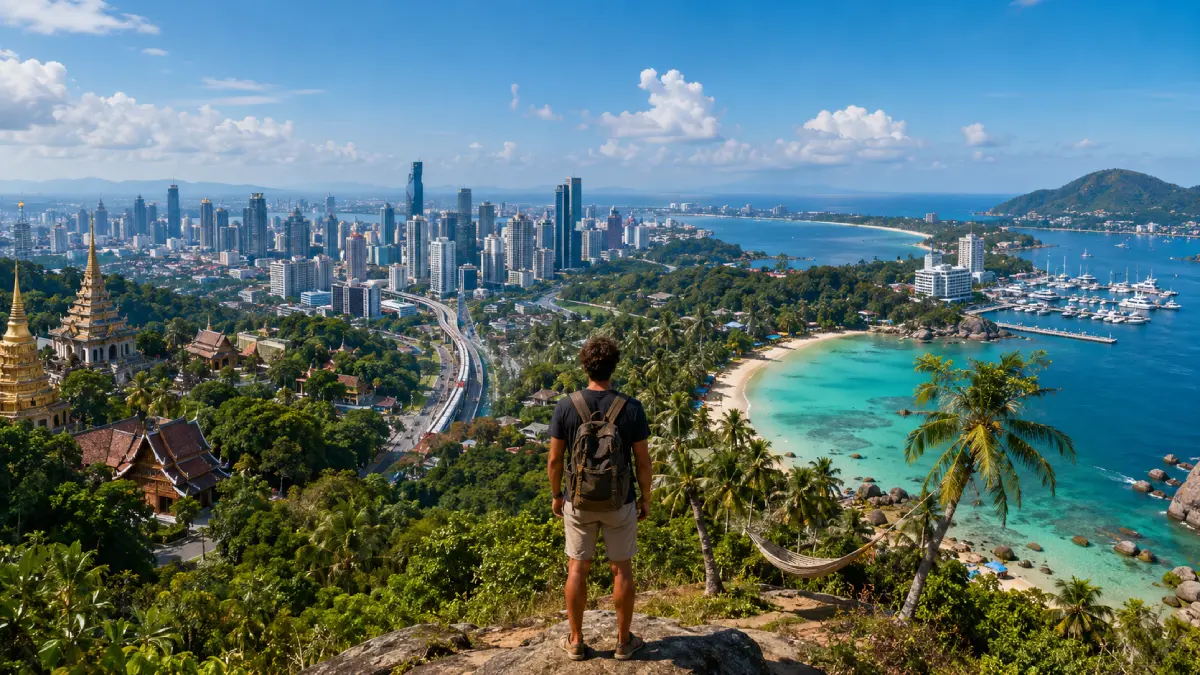
Chiang Mai: The undisputed global capital for remote workers. Nestled in the northern mountains, Chiang Mai offers an unbeatable mix of low living costs, endless cafes, and a massive community of entrepreneurs. The major downside is the annual burning season from February to April, where toxic air quality forces many nomads to temporarily relocate.
Bangkok: The sensory overload of Bangkok is perfect for nomads who thrive on hyper-urban energy. The city boasts world-class public transit, high-speed 5G on every corner, and luxury condos at reasonable prices. Before diving into the city's legendary after-hours scene, review the Thailand Nightlife to stay safe and savvy.
Koh Phangan: strictly known for backpacker parties, Koh Phangan has evolved into a premier wellness and remote work destination. While the digital infrastructure has drastically improved, you must check the Full Moon Party Thailand Guide to understand how the island's logistics and prices change during peak party weeks.
Phuket & Koh Samui: These southern islands offer premium coastal living, massive western supermarkets, and excellent international hospitals. Relying on local taxis can be notoriously pricey, so read Is Thailand Safe? Scams, Taxis & Transport Guide before signing a long-term lease. To time your island hop perfectly, check the Best Time to Visit Thailand: Weather, Seasons & Islands Guide.
Staying Connected: Why Your Phone is Your Lifeline
For a digital nomad, a stable data connection is literally your currency. The moment your plane touches down at Suvarnabhumi Airport, you need immediate access to the internet to book a Grab taxi and contact your host. Two-factor authentication for your international banking apps also requires a secure, private connection right from the start.
Need data in Thailand? Get an eSIM!
Choose the perfect data plan for your trip

Manage your eSIM in the app
Install, top up and track data.
Relying on airport Wi-Fi is a rookie mistake, as the networks are heavily congested and pose massive cybersecurity risks. You also want to avoid wasting your first hour in Thailand standing in line at physical SIM card kiosks. Purchasing a Thailand eSIM removes the hassle of hunting for local physical SIM cards entirely.
You can scan a QR code from your couch at home and instantly connect to a local 5G network the moment your plane lands. If you are unsure which provider offers the fastest speeds, review the Best eSIM for Thailand to compare data packages. Secure your connection right now and start your nomad journey completely stress-free.
Summary: The Nomad Checklist for Thailand
-
Secure the Funds: Ensure you have exactly 500,000 THB (approx $14,500 USD) resting in your bank account for a minimum of three months before applying.
-
Prepare the Portfolio: Compile your remote work contracts, business registration, or freelance portfolio into a pristine PDF.
-
Apply Offshore: Submit your DTV application via the Thai e-Visa portal strictly while you are physically outside of Thailand.
-
Track the 180 Days: Monitor your entry stamp closely; you must either extend your visa at immigration or leave the country before your 180 days expire.
-
Complete the TDAC: Do not forget to fill out your Thailand Digital Arrival Card within 72 hours of your inbound flight to get your QR code.
-
Stay Compliant: Respect the 90-day address reporting rule and ensure your landlord files your TM30 form immediately upon your arrival.