Download the App and manage your eSIMs easily
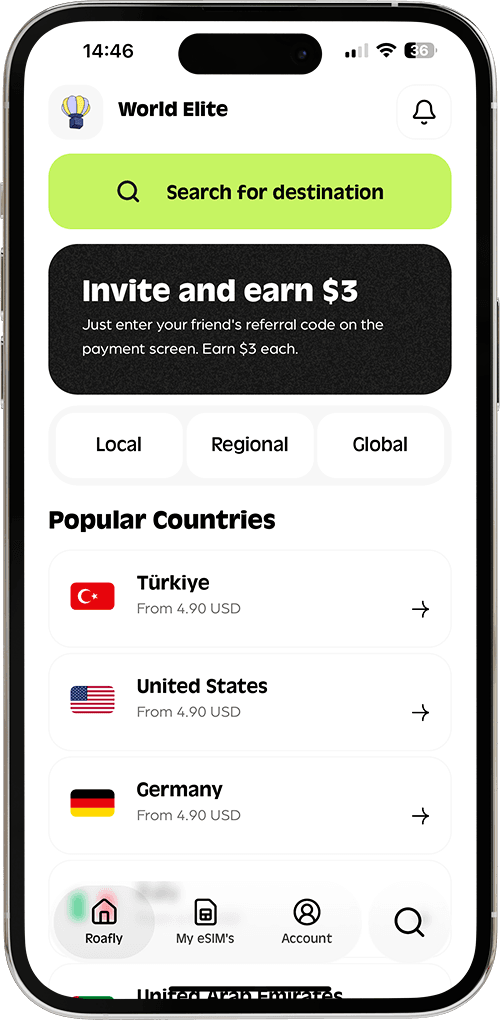
Create your order quickly
See your eSIM details
Track your remaining data
Download the App and manage your eSIMs easily
Create your order quickly
See your eSIM details
Track your remaining data
Thailand’s eSIM choice gets more interesting once a trip moves beyond Bangkok. The best deal depends on data allowance, the local network behind the plan and whether you genuinely need an unlimited-style package.
TrueMove H, DTAC
Instant delivery
3.90 USD From 3.51 USD

Lena Hartley
Updated Aug 16, 2026
9 min read

Jump to section
👇Best for most trips
TrueMove H, DTAC

Thailand
10 GB · 30 days
Enough for maps, bookings and everyday travel.
Hotspot supported
$10.00
$9.00
THAILAND10 automatically applied
$3.90From 3.51 USD
10% reader discount
Landing in Bangkok with mobile data already working takes some friction out of the first hour: Grab, maps and hotel messages are ready before you leave the airport. The harder buying decision comes when the itinerary stretches north to Chiang Mai, south toward Phuket or Krabi, or across several islands and cities.
Among the plans verified for this comparison, Roafly is our overall fixed-data pick for Thailand. Its 10GB package costs $10, matching Nomad and undercutting Saily and Airalo at the same data level. Roafly also lists TrueMove H and dtac and supports hotspot use across the purchased data allowance.
Nomad is the closest fixed-data rival and has the lowest verified 10-day unlimited price in this set. Saily wins the smallest-data price battle, while Roamless offers a different pay-as-you-go model.
The table separates fixed allowances from unlimited-style products rather than treating them as equivalent.
| Provider | Entry option | Practical fixed-data option | 10-day unlimited | Listed network(s) | Key difference |
|---|---|---|---|---|---|
| Roafly | 1GB — $3.90 | 10GB — $10 | — | TrueMove H, dtac | Strong 10GB value plus full-allowance hotspot support |
| Saily | 1GB — $2.99 | 10GB — $10.99 | — | Not specified | Lowest verified 1GB price |
| Nomad | 1GB — $5 | 10GB — $10 | $16 | Fixed: AIS, dtac; unlimited: True | Matches Roafly at 10GB; cheapest verified 10-day unlimited option |
| Airalo | 1GB — $4 | 10GB — $11 | $31 | True, AIS | AIS + True network disclosure |
| Roamless | PAYG — $2.45/GB | PAYG — $2.45/GB | — | AIS, True, dtac | Usage-based charging instead of a bundle |
| Holafly | — | — | $36.50 | True, dtac | Day-based unlimited model |
Commercial details were owner-verified for August 16, 2026. Prices, plan structures and network listings can change.
Exclusive Reader Bonus!
Enjoy an extra %10 OFF your first Roafly eSIM purchase as a thank you for reading.
Thailand produces a very close race around 10GB. Roafly and Nomad both charge $10 for 10GB, compared with $10.99 at Saily and $11 at Airalo.
Once prices are that close, secondary differences deserve more weight. Roafly lists TrueMove H and dtac and supports hotspot/tethering across the full purchased allowance, with no separate hotspot quota. That is useful when the same plan needs to cover normal phone use plus occasional laptop or second-device tethering.
The smallest package is not where Roafly leads. Its 1GB option costs $3.90, while Saily comes in at $2.99. But a starting price can become a weak comparison point if you actually expect to use several gigabytes during the trip.
Roafly also covers 200+ destinations, which matters more for someone continuing through Asia or planning future trips than it does for a Thailand-only purchase.
You can compare Roafly’s current Thailand eSIM packages before departure and choose the allowance that fits the trip rather than buying around a teaser starting price.

Nomad is the strongest direct challenger at the 10GB level because it also charges $10 for 10GB.
Its fixed-data product lists AIS and dtac, giving it a different disclosed network combination from Roafly. That matters in Thailand because independent network studies split their awards across AIS, TrueMove H and dtac rather than pointing to one operator as the unquestioned winner.
Nomad also sells a 10-day unlimited-style plan for $16, the lowest verified unlimited price in this comparison. That product is more relevant to genuinely heavy-data users than to someone who already knows a 10GB allowance will be enough.

Saily’s strongest case is simple: 1GB costs $2.99, the lowest verified entry price here.
That can work for a short stop where mobile data is mainly reserved for messaging, maps and transport while hotels and cafés handle most heavier usage.
The advantage narrows quickly at the practical larger tier. Saily charges $10.99 for 10GB, putting it slightly above Roafly and Nomad. Its local Thailand network was not specified in the owner-verified information used for this comparison, so there is less network transparency to use as a tie-breaker.
Airalo charges $4 for 1GB and $11 for 10GB. Those prices do not lead the table, but its disclosure of AIS and True gives it a relevant network combination.
Its 10-day unlimited-style option costs $31, considerably more than Nomad’s $16 offer. That makes Airalo harder to justify on price alone in this particular comparison, although its network combination may still appeal to someone who specifically wants AIS and True listed on the same product.
Roamless takes a different approach rather than selling another conventional Thailand bundle. Its verified rate is $2.45 per GB, with AIS, True and dtac listed.
That structure can make sense when usage is low or hard to predict. Someone who uses only 1GB would spend $2.45; someone who reaches 10GB would spend $24.50, making the PAYG model much less competitive against Roafly or Nomad at heavier usage.
The three listed network names are also noteworthy, but they should be read only as disclosed access. They do not prove automatic switching, priority, or guaranteed access to every operator at every location.
Holafly’s verified Thailand offer in this comparison is built around unlimited-style data rather than fixed 1GB or 10GB packages.
Ten days costs $36.50, with True and dtac listed. That is substantially above Nomad’s verified 10-day unlimited price and also far above the fixed-data options if 10GB is already sufficient for the trip.
Its value therefore depends on whether you actually need the unlimited model, not on being inherently better than a capped plan.
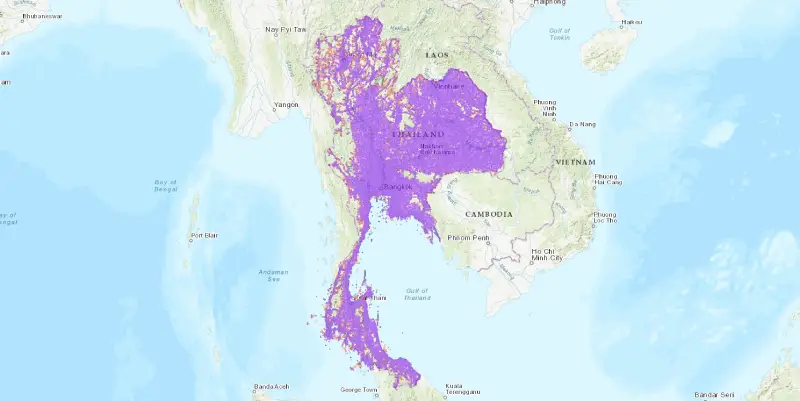
Thailand is a good example of why one national network statistic should not decide an eSIM purchase.
Opensignal’s June 2025 Thailand Mobile Network Experience report named AIS the most awarded operator overall, with five outright wins. AIS also won Coverage Experience outright with a score of 8.5 out of 10, giving it the strongest result in that specific geographic-coverage metric.
nPerf’s 2025 Thailand mobile awards, however, rank TrueMove H first for overall mobile performance. That points in a different direction because nPerf’s composite assessment and Opensignal’s individual experience metrics are not measuring exactly the same thing.
That split is useful rather than contradictory. AIS access is a legitimate positive for Nomad and Airalo, particularly when coverage is part of the decision, while TrueMove H has strong independent performance evidence behind Roafly’s disclosed network setup.
True and dtac also need to be interpreted carefully. True Corporation states that its One Network integration between True and dtac was completed in 2025, bringing their network infrastructure into one integrated network. Roafly listing TrueMove H and dtac is therefore useful disclosure, but it should not be marketed as two completely independent nationwide operator footprints in the way AIS versus True represents a more distinct network choice.
Local signal can still change by island, road, building and congestion level. None of these measurements guarantees the strongest connection at one particular resort, ferry pier or mountain route.
The numbers make this less complicated than the word “unlimited” can suggest.
Roafly offers 10GB for $10. Nomad’s verified 10-day unlimited-style plan costs $16, while Airalo charges $31 and Holafly $36.50 for 10 days.
If 10GB comfortably covers your expected maps, messaging, ride-hailing, browsing and social use, paying more simply to remove the visible data cap may not add much practical value. Roafly also allows hotspot use across its purchased allowance, which can make a fixed package more useful for laptop work.
The unlimited branch becomes more interesting for sustained video streaming, frequent large uploads or unusually heavy work use. All three unlimited products in this comparison are subject to fair-use policies. Detailed throttling, speed-management and hotspot terms were not verified consistently enough here to present any of them as guaranteed unrestricted full-speed data.
Read the current fair-use and tethering terms before purchasing an unlimited plan, especially if hotspot use is central to the trip.
Buying directly from a Thai operator can still make sense when you specifically want a local phone number, an operator-direct tourist package or another feature that a travel-data eSIM does not provide.
That is a broader internet-access decision rather than the main focus of this provider comparison. Our guide to How to Get Internet in Thailand covers local SIMs, eSIMs and other connection options in more detail.
The appeal of arranging a travel eSIM before departure is mostly convenience: the data plan can be installed in advance, while your existing physical SIM setup can remain untouched where your phone supports it.
Roafly is our overall fixed-data choice. At $10 for 10GB, it matches the lowest comparable fixed package verified here. Its TrueMove H/dtac disclosure is backed by strong network-performance evidence, and full-allowance hotspot support adds a useful practical advantage.
Saily makes more sense when 1GB is genuinely enough. Its $2.99 entry package is the cheapest verified small allowance.
Nomad deserves the closest comparison with Roafly. It matches the $10 price for 10GB, lists AIS and dtac for fixed data, and has the cheapest verified 10-day unlimited-style price at $16.
Roamless is the more flexible option for low or unpredictable PAYG use. Airalo gives you an AIS + True disclosure but at slightly higher fixed prices, while Holafly sits at the expensive end of the 10-day unlimited comparison.
Thailand does not have one provider that wins every package size and every network metric. At the practical fixed-data level, Roafly gives the strongest combination here of competitive price, disclosed local-network access and verified tethering terms.
Disclosure: Roafly publishes this guide and is included in the comparison.
Best for most trips
TrueMove H, DTAC
Thailand
10 GB · 30 days
Enough for maps, bookings and everyday travel.
Hotspot supported
$10.00
$9.00
THAILAND10 automatically applied
$3.90From 3.51 USD
10% reader discount

Manage your eSIM in the app
Install, top up and track data.
Choose the perfect data plan for your trip
