

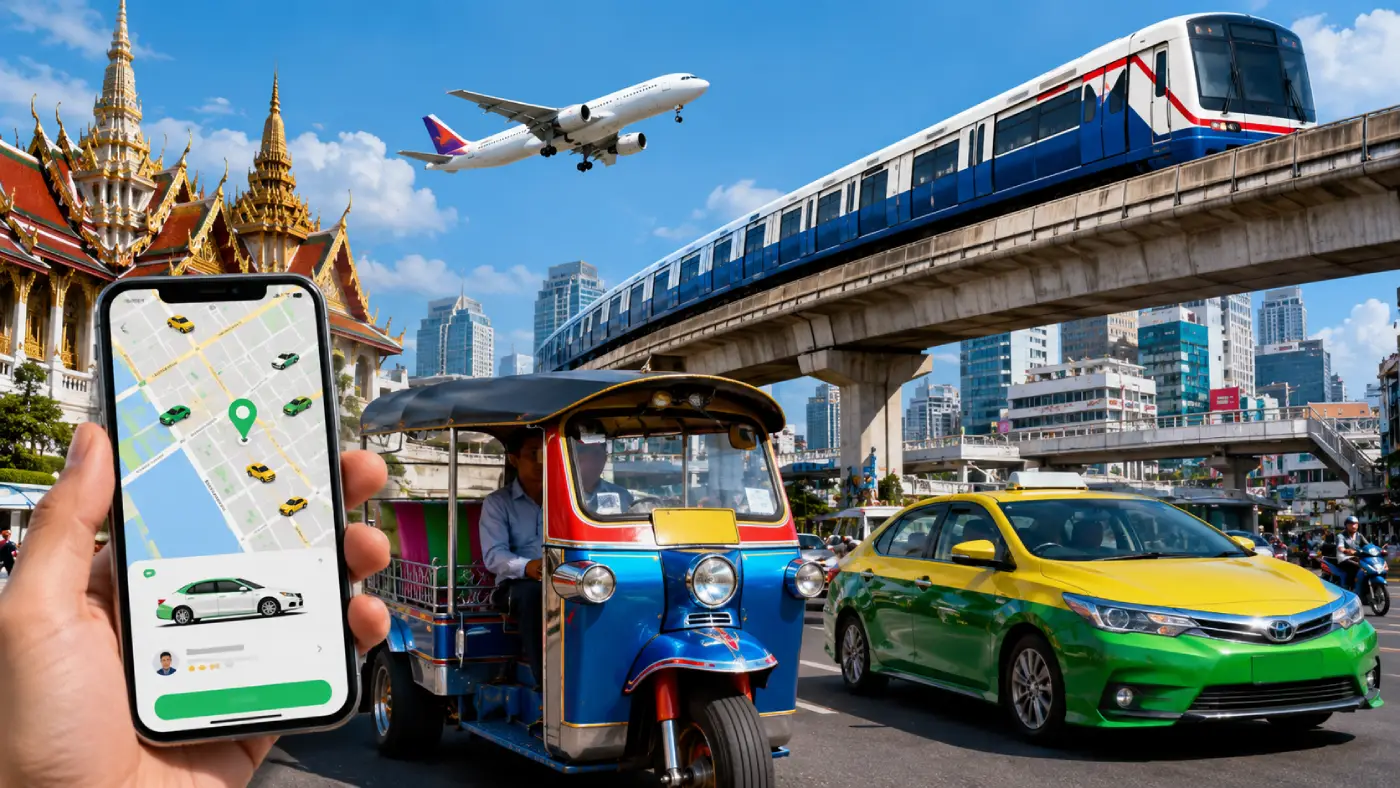

Thailand’s transit ecosystem is massive, dynamic, and constantly evolving. In 2026, the country has pushed hard toward digital integration, rendering older travel advice completely obsolete. The days of fumbling for loose change at ticket machines are fading, replaced by seamless contactless payments and high-speed rail hubs.
However, outside the capital city, the reality shifts drastically. You will still find yourself relying on open-air songthaews, negotiating with long-tail boat operators, and navigating winding mountain roads. Whether you are zipping past gridlock in Bangkok or island-hopping in the south, preparation is your best defense against travel fatigue.
The Basics: Understanding the Network
Bangkok’s Rail Dominance
The capital city is the place in Thailand with a comprehensive urban rail network. The BTS Skytrain operates above ground, while the MRT runs below ground, connecting major shopping districts, financial hubs, and residential zones. Planning your accommodation near a BTS or MRT station is the single best decision you can make, a strategy detailed in our Where to Stay in Thailand: Best Areas, Hotels and Towns Guide.
Water Transport
Do not ignore the waterways, as they are often the fastest route through Bangkok’s notorious traffic. The Chao Phraya Express Boat acts as a floating bus system, moving thousands of locals and tourists daily. Similarly, the Khlong Saen Saep canal boats offer a chaotic but thrilling shortcut through the center of the city.
Provincial Transport Realities
Outside of Bangkok, traditional metro systems do not exist. In cities like Chiang Mai and Pattaya, the primary public transport is the songthaew—a converted pickup truck with two benches in the back. You flag them down, state your destination, and pay a flat fee (usually 30 to 50 THB) when you jump off.
-
BTS Skytrain: Best for Sukhumvit, Siam, and Silom areas.
-
MRT Subway: Best for Chatuchak Market, Chinatown, and the central train station.
-
Songthaews: The lifeblood of Chiang Mai and beach towns.
-
Tuk-Tuks: Mostly for novelty short trips; heavily overpriced for daily commuting.
Payment & Tickets: Mobile Apps vs. Physical Cards
The Contactless Revolution
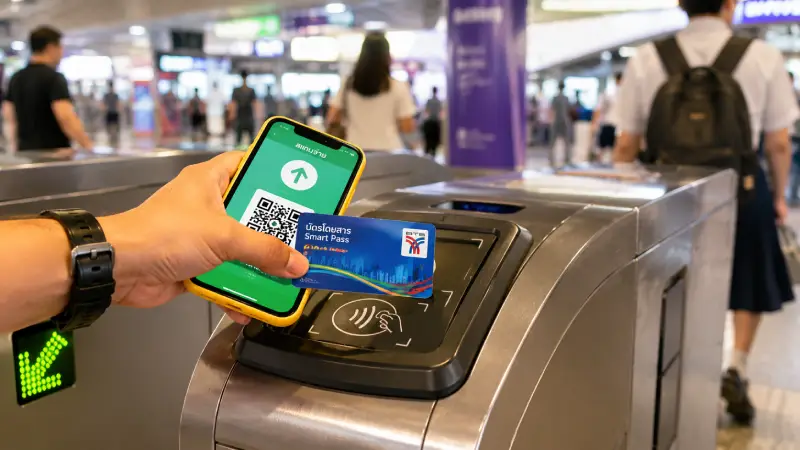
As of June 2026, the MRT fully transitioned to EMV Contactless payments, meaning you no longer need a dedicated subway card. You can simply tap your Visa or Mastercard at the turnstile and walk straight through. This eliminates the long queues at ticket machines and makes spontaneous travel effortless.
The Indispensable Rabbit Card
While the MRT accepts standard bank cards, the BTS Skytrain still relies heavily on the Rabbit Card. This is a reloadable smart card that has evolved into a mini eWallet in 2026. You can use your Rabbit Card not just for train rides, but also to buy coffee, snacks at 7-Eleven, and meals at food courts.
Cash is Still King on the Streets
Despite the digital push, you absolutely must carry cash for street-level transport. Tuk-tuk drivers, songthaew operators, and local ferry ticket collectors do not accept credit cards. Ensuring you have a connection to access banking apps or digital wallets is crucial, which you can learn about in our How to Get Internet in Thailand guide.
-
MRT: Tap your standard Visa/Mastercard (EMV Contactless).
-
BTS: Buy and load a Rabbit Card at any station booth.
-
Buses & Ferries: Keep small bills (20 and 50 THB notes) and coins handy.
-
Digital Wallets: Locals use PromptPay via QR code, but tourists mostly rely on cash or the Rabbit Card.
Airport Transfers: Getting to the City Safely
Suvarnabhumi Airport (BKK)
The absolute best way to leave BKK is the Airport Rail Link (ARL), located on the basement level. For a maximum of 45 THB, the train whisks you directly to Phaya Thai station in 30 minutes, bypassing Bangkok’s brutal highway gridlock. Before you land and clear immigration, brush up on the latest entry protocols in our Thailand Airport Customs Rules overview.
Don Mueang Airport (DMK)
DMK is the hub for budget airlines, and it now connects to the city via the SRT Red Line train. Alternatively, the A1 and A2 Airport Buses depart directly from the terminal doors, dropping you at BTS Mo Chit for a mere 30 THB. These buses are air-conditioned, cheap, and run continuously throughout the day.
The Airport Taxi Reality
If you have heavy luggage and prefer a taxi, use the official automated kiosks outside the arrivals hall. Never accept a ride from touts whispering "flat rate" inside the terminal.
-
Official Taxis: The driver must use the meter.
-
Surcharges: You must pay a 50 THB airport surcharge on top of the meter fare.
-
Tolls: The driver will ask you for cash to pay highway tolls (usually 70 to 120 THB total).
-
Grab/Bolt Pickups: Both airports now have designated ride-sharing pickup zones, making app-based booking totally legitimate and stress-free.
Shifting Cities: Inter-City Trains, Shuttles & Domestic Flights
The New Rail Hub: Krung Thep Aphiwat
Long-distance train travel has shifted away from the old Hua Lamphong station to the massive, ultra-modern Krung Thep Aphiwat Central Terminal. This is where you board the comfortable overnight sleeper trains to Chiang Mai or the southern provinces. Booking second-class air-conditioned sleeper berths in advance is highly recommended, as they sell out weeks ahead.
Island Hopping and Joint Tickets
To reach the southern islands, tourists rely on combined bus-and-ferry tickets offered by companies like Lomprayah and Seatran. These operators organize seamless transfers from the mainland ports directly to your island dock. If you are timing your transit around major events, consult our Full Moon Party Thailand: Dates, Festival Tips, Travel Routes and Connectivit. Weather also impacts ferry schedules heavily, so cross-reference your travel dates with the Best Time to Visit Thailand.
Domestic Low-Cost Carriers
Flying is often cheaper than taking a luxury bus. Airlines like AirAsia, Nok Air, and Thai VietJet dominate the domestic skies, usually flying out of Don Mueang (DMK). A-hour flight to Phuket or Chiang Mai routinely costs under $40 USD if booked a few weeks in advance.
-
Sleeper Trains: Book via the official SRT website; print your ticket or show the PDF.
-
VIP Buses: Companies like Sombat Tour offer massive reclining seats, snacks, and smooth rides for mid-distance trips.
-
Baggage Allowances: Budget airlines strictly enforce 7kg carry-on limits, so pre-book checked bags to avoid massive airport fines.
Taxis, Ride-Sharing & Local Driving Laws
Ride-Sharing
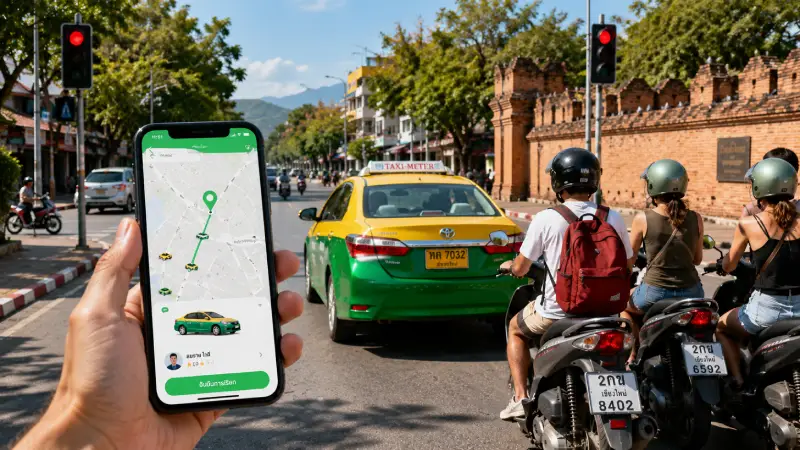
Uber does not operate in Thailand; the market is dominated by Grab and Bolt. Grab is highly reliable and offers faster pickups during rush hour, but Bolt is consistently 20% to 30% cheaper for the exact same route. InDrive is another excellent alternative where you can physically bid on the fare price with nearby drivers. For late-night transit after the bars close, always rely on these apps instead of street taxis, a tip echoed in our Thailand Nightlife breakdown.
The Bangkok Taxi Wars
Hailing a street taxi is a test of patience. Many drivers will refuse to turn on the meter, instantly demanding an inflated flat rate of 400 or 500 Baht. If a driver says "no meter," simply close the door and wait for the next. For a deeper dive into avoiding these street-level traps, read our Is Thailand Safe? Scams, Taxis & Transport
Renting Scooters & Driving Laws
Renting a scooter is a rite of passage, but police checkpoints in tourist hubs like Phuket and Chiang Mai are ruthless in 2026. You must have an International Driving Permit (IDP) with a specific motorcycle endorsement (Class A).
-
Car License Not Enough: A standard car IDP will not save you from a 500 to 1,000 THB fine if you are caught riding a scooter.
-
Helmet Laws: Always wear a helmet, as police actively target bare-headed tourists.
-
Passport Deposits: Never leave your actual physical passport as a deposit for a rental; offer a cash deposit or a photocopy instead.
-
For women and solo travelers navigating these roads, check out our Solo Travel in Thailand: Safety, Social Scenes for vital safety benchmarks.
Transit Etiquette & Unwritten Rules
Monks and Priority Seating
Public transport in Thailand operates on strict social hierarchies and respect. On the BTS, MRT, and local buses, you must immediately give up your seat to Buddhist monks, pregnant women, and the elderly. Monks traditionally sit at the rear of ferries and buses, and women must ensure they do not sit directly next to them or accidentally brush against their robes.
Royal Respect
The Thai Royal Family is deeply revered, and their images appear on currency and certain transit cards. If you drop a coin, ticket, or Rabbit card, never step on it to stop it from rolling, as placing your foot on an image of the King is deeply offensive and illegal. You can learn more about cultural boundaries in our Thailand Tourist Bans & Laws: Vaping, Weed & Fines article.
Sanitation and Space
Eating and drinking are strictly forbidden on the BTS and MRT; security guards will stop you if you try to enter with an open iced coffee.
-
Remove Backpacks: Take your backpack off and hold it low by your legs on crowded trains.
-
Keep Voices Low: Loud phone conversations on the Skytrain are considered highly rude.
-
Shoes Off: If you are boarding a private van or certain small island boats, look to see if locals have removed their shoes at the entrance.
Navigation Apps & The Best Route Tools
Google Maps vs. Reality
Google Maps is fantastic for walking directions and rail networks, but it often hallucinates when it comes to Bangkok's local bus schedules. It will show a bus arriving that simply doesn't exist.
The ViaBus App
If you want to ride the cheap local buses like a pro, download the ViaBus app. It uses GPS to track the exact location of Bangkok’s blue and red buses in real-time. You can literally watch your bus crawling through traffic on the map.
Translating the Journey
Always have Google Translate downloaded with the Thai language pack available offline. Showing a driver the Thai script for your destination is infinitely more effective than trying to pronounce it yourself.
Staying Connected: Your Ultimate Navigation Tool
Navigating Thailand’s complex transport web is impossible without continuous, high-speed internet. From tracking your Grab driver in real-time to topping up your digital transit wallets, data is your lifeline. Attempting to rely on scattered café Wi-Fi will leave you stranded at bus stops or vulnerable to taxi scams.
Need data in Thailand? Get an eSIM!
Choose the perfect data plan for your trip

Manage your eSIM in the app
Install, top up and track data.
Securing a reliable data connection before you even clear immigration guarantees you can summon a ride the moment you grab your bags. We highly recommend grabbing a Thailand eSIM so your phone instantly connects to local 5G networks upon landing. For a full breakdown of network providers and coverage quality, consult our Best eSIM for Thailand guide.
Summary Checklist: Transport Tips
-
Tap-and-Go: Use your Visa/Mastercard for seamless entry on the MRT subway.
-
App Dominance: Always compare prices between Grab and Bolt before booking a ride.
-
Demand the Meter: Never accept a flat rate from a street taxi in Bangkok; politely decline and hail another.
-
Avoid the Gems: Ignore tuk-tuk drivers offering unusually cheap "10 Baht" city tours—it is a notorious high-pressure shopping scam.
-
Proper Licensing: rent a scooter if you hold an International Driving Permit explicitly stamped for motorcycles.
-
Mind Your Manners: Never eat or drink on the rail networks, and immediately yield seats to monks and the elderly.