Download the App and manage your eSIMs easily
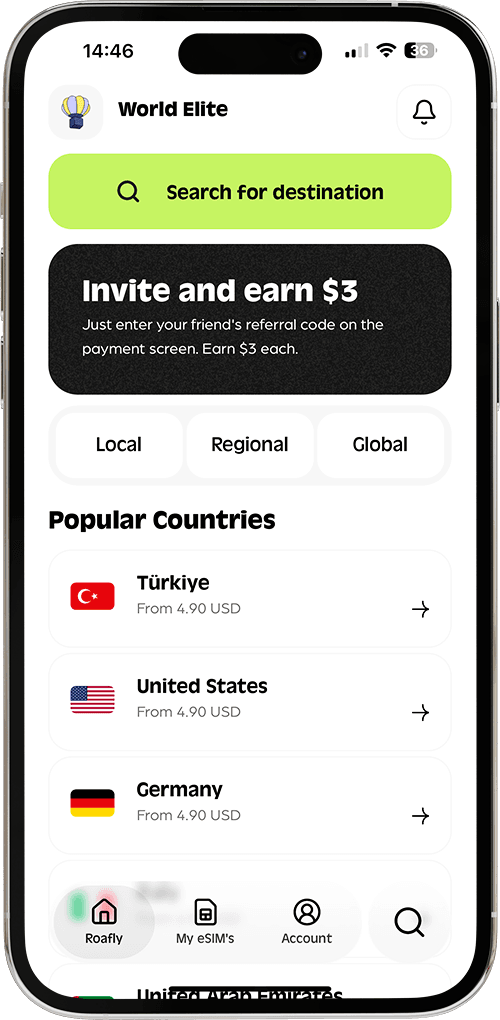
Create your order quickly
See your eSIM details
Track your remaining data
Download the App and manage your eSIMs easily
Create your order quickly
See your eSIM details
Track your remaining data
July and August offer the broadest choice for a first Canada trip combining cities, mountain scenery and outdoor activities. Early September is a strong alternative if you prefer cooler days. Fall colours, skiing and northern lights each need a more specific plan.

Sophie Callahan
Updated Oct 21, 2026
11 min read
Save 15% on your Roafly eSIM
Stay connected on your next trip. Use the code below at checkout.
View All DestinationsJump to section
👇Save 15% on your Roafly eSIM
Stay connected on your next trip. Use the code below at checkout.
View All Destinations
Manage your eSIM in the app
Install, top up and track data.
Canada’s seasons change sharply with latitude, elevation and distance from the coast. Vancouver can be enjoying spring flowers while high trails in Banff remain buried in snow. October can bring colourful drives in eastern Canada just as summer access around the Rockies starts winding down.
Start with the experience you most want, then build your route around its season. Trying to fit turquoise mountain lakes, peak maple colours and snowy winter activities into one short trip usually means compromising on at least one.
| Your main priority | When to consider | Where it fits best | Main trade-off |
|---|---|---|---|
| First trip with cities and outdoor sightseeing | July–August; early September as an alternative | Routes combining southern cities and the Rockies | Summer brings heavy demand at popular parks |
| High-elevation hiking | July–mid-September | Banff and the Canadian Rockies | Snow can affect mountain routes even within this window |
| Fall colours | Late September–October, depending on location | Québec, Ontario and Atlantic Canada | Peak colour moves between regions and varies each year |
| Skiing and snowy scenery | January–March; spring skiing at suitable resorts | Mountain resorts and winter destinations | Cold, holiday demand and resort-specific conditions |
| Northern lights | Mid-August–late September or mid-November–early April | Yellowknife and the Northwest Territories | Darkness helps, but clouds and aurora activity still matter |
| Icebergs | Late May–early June | Newfoundland’s iceberg-viewing coast | Timing differs along the coast and between years |
| Polar bears | October–November | Churchill, Manitoba | Specialist transport, accommodation and guided excursions need planning |
| Beluga whales | July–August | Churchill, Manitoba | This is a different seasonal trip from the main autumn bear season |
These windows describe the experience to plan around, rather than a promise of particular weather or wildlife sightings.
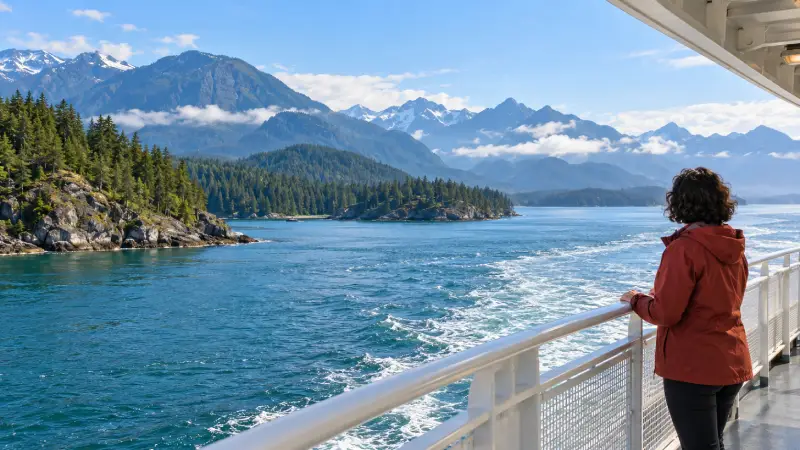
Summer suits a Vancouver trip built around waterfront walks, cycling, outdoor dining and nearby excursions. July and August are a straightforward choice if spending time outside matters more than avoiding the main visitor season.
Spring can work well for a city break, with flowers and a mix of sunshine and rain. September offers another useful option before the wetter part of autumn becomes a bigger consideration.
Vancouver’s comparatively mild winter is often rainy at city level. Nearby mountains have very different conditions, so a comfortable waterfront afternoon tells you little about the weather higher up. Pack for the actual excursion rather than the city forecast alone.
July through mid-September is the strongest general window for high-elevation hiking in Banff. Many higher trails and passes remain snowbound until late June. Lower walks can become accessible earlier, but they offer a different trip from an alpine hiking itinerary.
The distinction between visiting a lake and hiking above it matters. You may be able to reach a lakeshore while the trail you hoped to climb remains under snow. Similarly, a shuttle opening date does not establish that every nearby route is ready.
Lake thaw also varies. High-elevation lakes such as Lake Louise and Moraine Lake commonly begin thawing around early June, with timing influenced by the year’s conditions. If turquoise water is central to your plans, May is a less dependable choice.
September brings cooler days and golden larches later in the month. It remains popular: larch-season weekends can be particularly busy. October offers a more transitional experience, with a greater chance of winter conditions and reduced seasonal access.
Summer works well for a city-focused trip with outdoor sightseeing, waterfront time and evening activities. You can build a full itinerary without relying on mountain trails or seasonal backcountry access.
September is worth considering if you prefer cooler sightseeing weather. A trip focused on fall colours needs more precise regional timing: northern areas and higher elevations can change before lower, more southerly locations.
Around Tremblant, late September and early October are a useful starting point for fall planning. Québec’s broader colour season extends across several weeks, so use the regional fall-colour map to refine your route as departure approaches.
Winter changes the purpose of the trip. Snowy streets, winter celebrations and indoor cultural stops become the attraction, while long stretches of outdoor sightseeing require more preparation.
Separate a general coastal holiday from a trip built around a particular natural event.
Nova Scotia’s September can combine mild weather, coastal sightseeing and many seasonal businesses still operating. Fall colours develop later, often reaching their strongest display around mid-October, with differences between Cape Breton, higher ground and coastal areas.
Newfoundland’s iceberg season follows another calendar. Late May and early June are a useful target along its coast, while the timing stretches differently farther north. Humpback whales return between May and September, but icebergs and whales do not reliably appear together on demand.
If one boat trip or coastal excursion is the reason you are going, let its operating season and local conditions shape the dates.
Northern lights and long summer days pull a trip in opposite directions. Dark skies are essential for aurora viewing, while the bright northern summer suits daytime exploration.
In the Northwest Territories, the main visitor windows for aurora trips are mid-August to late September and mid-November to early April. The late-summer window offers a way to pursue the lights without making deep-winter conditions the centre of the holiday.
Churchill deserves its own seasonal decision. July and August favour beluga-focused trips; October and November are the main polar-bear-viewing period. Treat these as distinct itineraries with their own transport and excursion arrangements.
| Period | What to build the trip around | What to account for |
|---|---|---|
| January–February | Skiing, snowy scenery and winter city experiences | Short daylight, cold and busy holiday or festival dates |
| March–April | Spring skiing at suitable resorts; city visits with indoor alternatives | Winter can persist well beyond the calendar’s start of spring |
| May–June | Southern city sightseeing, coastal spring experiences and Newfoundland icebergs | Higher Rockies trails may remain snowbound; seasonal services open at different times |
| July–August | Mountain hiking, lakes, camping and broad outdoor itineraries | Heavy park demand, advance reservations and possible smoke disruptions |
| September–October | Early-autumn sightseeing, regional fall colours and specialist wildlife trips | Earlier snow in the mountains and services winding down later in autumn |
| November–December | City breaks, the transition into ski season and festive winter travel | Resort openings depend on conditions; late-December demand differs from quieter weeks |
May and October need particularly careful interpretation. Both can work well, but the route should match what is accessible. A lower hotel quote has limited value if the main activity you wanted is unavailable.
Eastern Canada’s red and orange forests and the Rockies’ golden larches are different seasonal experiences.
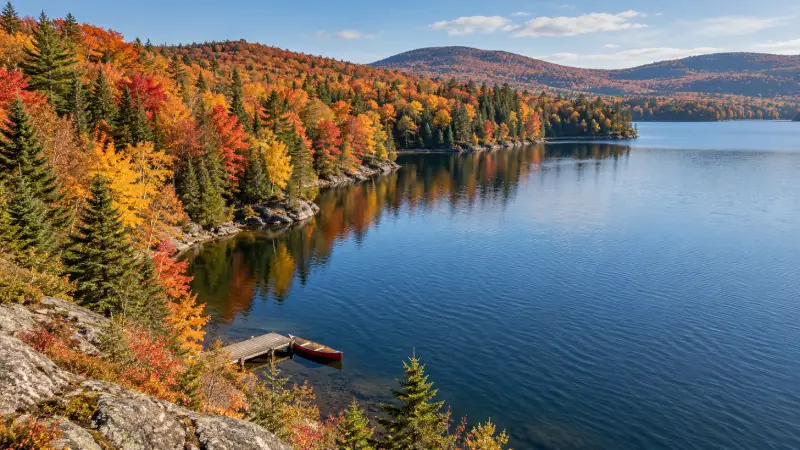
Québec is a strong choice for a trip organised around maple colours, with timing varying across the province. Late September and early October are useful planning dates for areas such as Tremblant, while other places develop earlier or later.
Nova Scotia often carries the display farther into October. Its coastal and inland differences make it possible for conditions to vary noticeably within one road trip.
In Banff, mid-to-late September can bring yellow larches and aspens. The mountain setting also means colder mornings and a greater need to adapt hiking plans.
Keep some flexibility between your bases rather than chasing a single predicted “peak day.” If combining western hiking with eastern foliage, putting the Rockies first can reduce the risk of leaving the mountain section until later autumn.
Winter is rewarding when winter activities are the reason for the trip. Skiing, snow-covered scenery and seasonal city celebrations give it a clear purpose.
January and February suit a snow-focused Banff visit, while March and April can appeal for spring skiing. Resort calendars and conditions differ, so select the ski area before assuming that a particular month works everywhere.
City trips need a different rhythm. In Montréal, Québec City or Ottawa, allow room for warm indoor stops between outdoor activities. Vancouver offers a milder coastal alternative, although rain is part of that choice.
Winter is less suitable if your main wish list is turquoise lakes, long mountain walks and an easy summer-style driving itinerary. Those experiences are better planned in their own season.
There is no single cheapest month across Canada. Cities, ski resorts, national parks and wildlife destinations have different demand patterns.
Banff’s visitor numbers peak in July and August, but September still attracts substantial crowds. Larch-viewing weekends can be especially busy, so moving a summer trip back a few weeks should not be treated as a guarantee of empty trails or low prices.
April, May and November can offer quieter periods in Banff, with a significant trade-off: some summer experiences are unavailable, while winter activities depend on the date and conditions.
The most useful budget comparison is between trips you would actually enjoy:
Compare weekday stays with weekends around popular parks and resorts.
Look at the full cost of accommodation, transport and activities for your dates.
Avoid choosing a cheaper base that creates an impractical daily journey.
Check whether a festival, long weekend or school holiday overlaps your stay.
Prioritise the main experience before adjusting dates to save money.
Keep taxes and tipping in the calculation, too. Our guide to paying in Canada explains the costs and payment details that can affect your daily budget.
Climate averages help you choose a season. They cannot tell you whether a particular hiking day, lake visit or coastal excursion will work.
Mountain weather can change quickly, and snow remains possible at higher elevations even in summer. Build demanding walks around current trail conditions rather than an itinerary fixed months earlier.
Wildfire smoke is another variable. Canada’s typical wildfire season runs from early April into October, and smoke can travel far beyond the fire itself. Moving a trip to September does not remove that possibility. Use current air-quality conditions and alerts when deciding on outdoor activities, alongside local closure information.
Flexible plans help most when they offer a real alternative: an indoor city day, a different excursion or time to wait for conditions to improve. Our broader guide to travel safety in Canada covers the preparation behind those decisions.
Access also has its own calendar. Moraine Lake is closed to personal vehicles, and seasonal transport requires planning. Use the current Lake Louise and Moraine Lake access arrangements before booking surrounding activities. Operating dates from one year should not be carried into the next.
Start with the part of the itinerary that has the least flexibility: a specialist wildlife excursion, a popular park stay or a specific seasonal activity. Build the remaining nights around it.
Before committing to non-refundable reservations, review Canada’s entry requirements for your passport and method of arrival. Your preferred season does not change the documents needed to enter.
If your trip includes camping or bringing food and outdoor equipment, include Canada’s customs rules in your packing preparation.
Mobile data is useful for transport changes, weather updates and accessing bookings while travelling. You can compare eSIM options for Canada against your trip length and expected use. Roafly’s Canada eSIM provides prepaid mobile data for compatible, unlocked devices.
Download maps and save essential tickets before heading into remote areas. Moraine Lake, for example, has no cellular service or Wi-Fi, so mobile data should complement your offline preparation.
For a first trip combining cities and the Rockies, start by comparing July, August and early September. Then adjust the dates around the experience that matters most: mountain trails, eastern fall colours, winter sports or northern wildlife. That gives you a more useful answer than choosing one “best month” for the entire country.
