

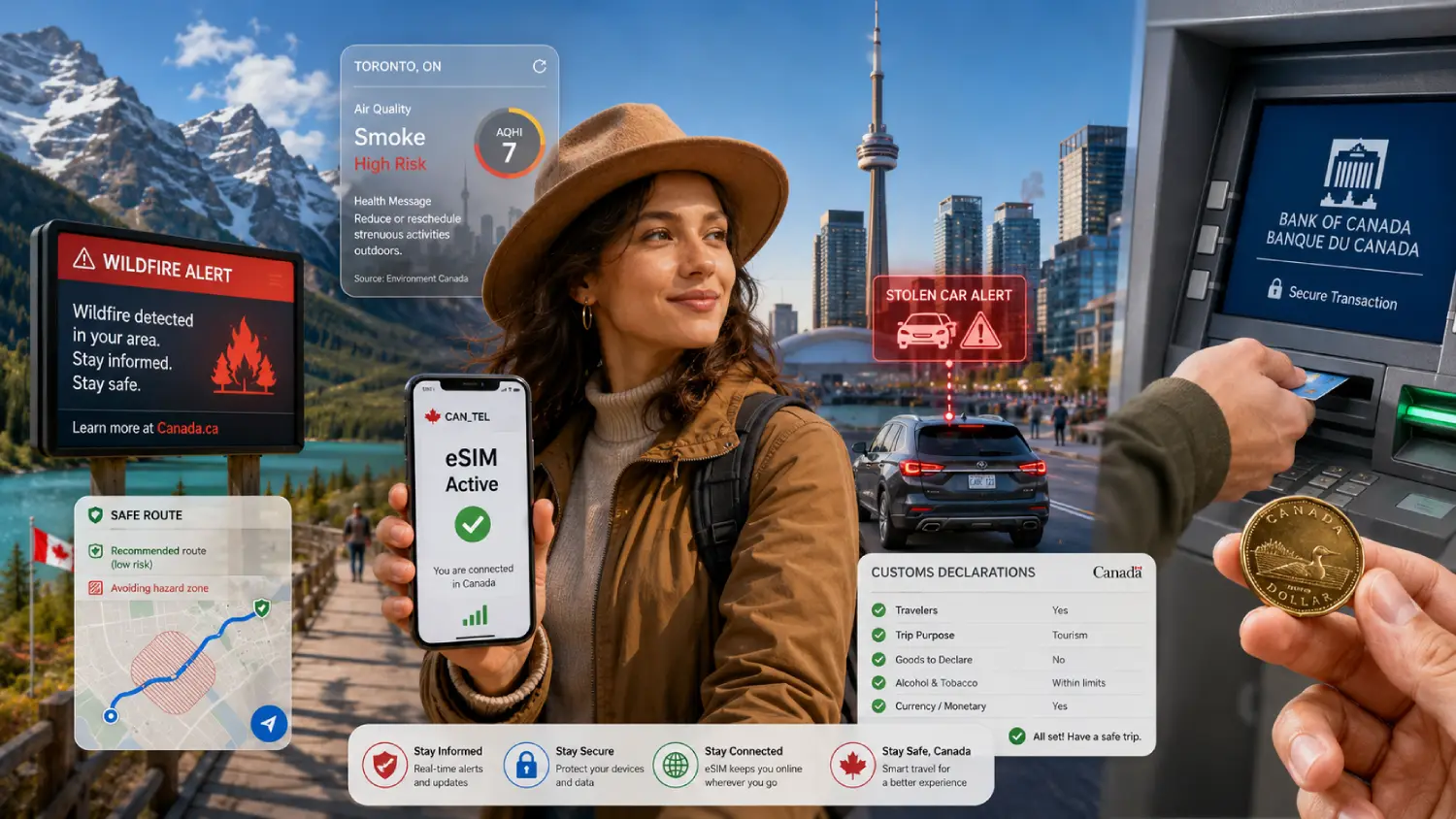

The short answer is Yes, Canada is incredibly safe. In fact, it remains of the safest countries in the Americas for travelers. However, the nature of "danger" has shifted in recent years, moving away from violent crime and toward climate-related disruptions and sophisticated urban property crimes. The biggest threats to your 2026 trip are more likely to be smoke-filled skies or a stolen rental car rather than physical harm.
The Current Reality: Petty Crime and the Auto Theft Crisis
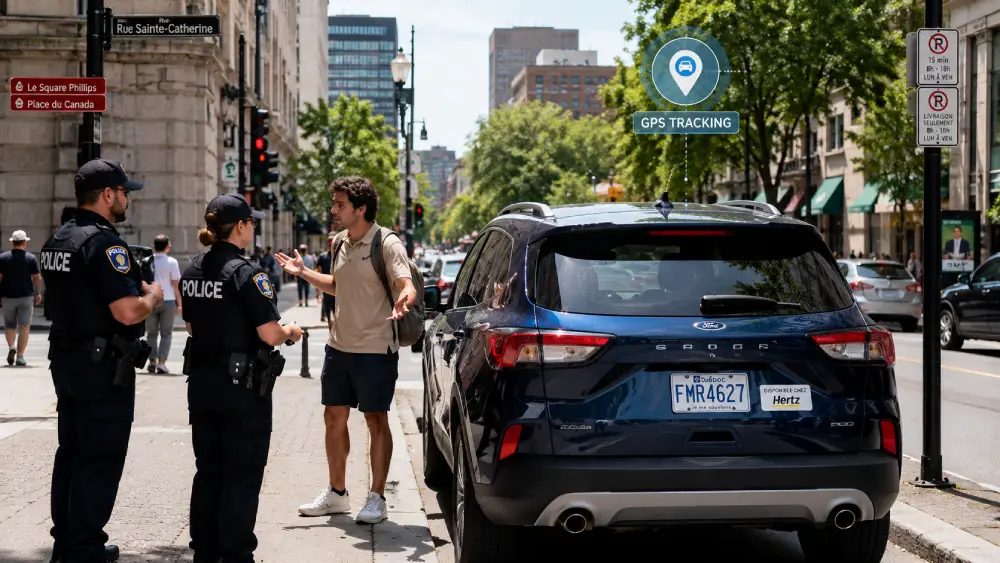
Canada’s reputation as a polite, law-abiding nation holds true, but urban centers have seen a shift in crime dynamics. While violent crime remains extremely low, property crime has surged, specifically auto theft in major cities like Toronto and Montreal. Organized rings target luxury rental SUVs and high-end vehicles parked at hotels or tourist attractions. It is highly advised to use secure, underground parking rather than leaving your rental on the street overnight.
The police presence in Canada is generally reliable, professional, and accessible. If you need help, dialing 911 connects you to emergency services instantly. Tourists are expected to follow local regulations closely, as Canadian authorities are strict regarding public behavior, traffic laws, and environmental protection. Before arriving, make sure you understand the local regulations outlined in our Canada Tourist Bans & Laws guide to avoid hefty fines.
At the border, enforcement is equally strict. Canadian customs officers are rigorous about what you can bring into the country, especially regarding agricultural products, alcohol, and weapons. Make sure to review the Canada Airport Customs Rules to ensure a smooth entry. Ignorance of the law is never accepted as an excuse at Canadian border checkpoints.
Regional Breakdown: Safe Zones vs. Areas to Avoid
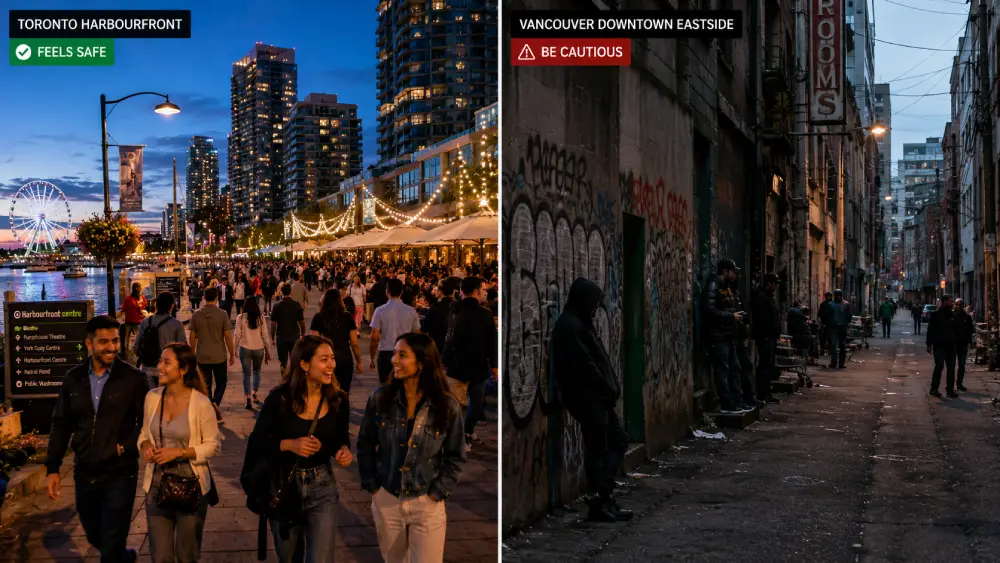
Canada is vast, and safety varies significantly by province and neighborhood. Major tourist hubs like Banff, Whistler, and Quebec City are exceptionally safe, with crime almost non-existent beyond occasional petty theft. In Vancouver, neighborhoods like Kitsilano, Coal Harbour, and Stanley Park are incredibly secure during the day and early evening. However, tourists should avoid the Downtown Eastside (DTES), which struggles with severe visible drug addiction, homelessness, and unpredictable street behavior.
In Toronto, areas like the Distillery District, Yorkville, and the Harbourfront are highly patrolled and safe for evening strolls. Conversely, areas around Sherbourne and Dundas, as well as certain parts of the Moss Park neighborhood, can feel sketchy at night due to higher rates of petty crime and loitering. While you are unlikely to be the victim of a violent attack, keeping your wits about you is essential.
Montreal is largely considered of the safest major cities in North America, with vibrant, secure nightlife in the Plateau and Old Montreal. Just be cautious of pickpockets in crowded tourist zones and transit hubs during festival season. Shopping is a major draw here, so if you plan on making big purchases, familiarize yourself with the Canada VAT Refund to save money safely.
Transportation Safety: Getting Around the Great White North

Getting around Canada is generally safe, but each method of transport carries its own specific risks in 2026. Public transportation in major cities is heavily used and highly reliable. However, late-night transit riders have reported a slight increase in erratic behavior from other passengers, so it is best to ride in the front car near the driver if you are traveling alone after midnight.
Uber and Lyft are widely available, safe, and heavily regulated in most major Canadian cities. Taxis are also metered and trustworthy, with drivers rarely attempting to scam tourists. If you choose to rent a car, the biggest danger is not the traffic, but the harsh driving conditions. Winter driving involves black ice, heavy snow squalls, and wildlife on the highways, requiring specialized winter tires and extreme caution.
If you are embarking on a cross-country road trip, never let your gas tank drop below half full. Distances between gas stations in rural provinces like Saskatchewan or Northern can be vast. Additionally, keep an emergency kit in your trunk, as cell phone reception can completely drop off in the Canadian wilderness.
Tourist Scams: The New 2026 Financial Traps
While violent crime is rare, Canadian cities have seen a rise in sophisticated financial scams targeting unsuspecting tourists. Always stay vigilant when handling money or personal data.
-
The Fake Parking Ticket Scam: Scammers place incredibly realistic, fake parking violation tickets on rental cars with a QR code. Scanning the code takes you to a phishing site that drains your credit card.
-
ATM Skimming in Tourist Zones: Highly advanced card skimmers are occasionally found on standalone ATMs in convenience stores around Toronto and Vancouver. Always use ATMs located completely inside official bank branches.
-
The "Loonie" Switch: While rare, some taxi drivers or street vendors may shortchange you by handing back similar-looking foreign coins instead of Canadian $1 (Loonie) or $2 (Toonie) coins in dimly lit areas.
-
Fake Wi-Fi Hotspots: Hackers set up unsecured Wi-Fi networks in airports or popular cafes named "Free Public Wi-Fi" to steal login credentials and banking info.
Women’s Safety & Solo Travel
Canada is widely regarded as a premier destination for solo female travelers. The culture is progressive, and "machismo" street harassment is culturally unacceptable and highly uncommon. Women can generally walk alone at night in well-lit, busy neighborhoods of major cities without fear of being catcalled or followed.
Nightlife in cities like Montreal and Toronto is vibrant and inclusive. However, standard global safety rules still apply: never leave your drink unattended, and always plan a safe ride home via a licensed ride-share app rather than walking through deserted areas. Dress codes are dictated purely by the weather, not by conservative cultural expectations.
If you are hiking alone in national parks, the threat isn't other humans, but wildlife and getting lost. Always log your hiking route with a park ranger, carry bear spray, and stick to well-marked trails. Solo female hikers should invest in a satellite messenger device if venturing out of cell service range.
Health, Tap Water & Nature: Wildfires and Wildlife
You can absolutely drink the tap water anywhere in Canada; it is among the cleanest and safest in the world. The major health and safety risks in 2026 are entirely environmentally based. Canada has experienced historically severe wildfire seasons over the last few years, meaning heavy smoke can blanket major cities during summer. This causes severe air quality drops that trigger asthma and respiratory issues, so always check local air quality indexes before planning outdoor activities.
Wildlife encounters are a very real danger. Bears, moose, and cougars roam freely in national parks and sometimes wander into mountain towns like Banff. Never approach or feed wildlife for an Instagram photo. A moose defending its young is incredibly aggressive and can easily total a rental car if provoked.
Finally, extreme weather is a constant threat. Winters bring life-threatening sub-zero temperatures and blizzards, while summers can trigger sudden, severe thunderstorms and localized flooding. Always pack modular, weather-resistant clothing and heed local weather warnings without hesitation.
The Ultimate Safety Tool: Staying Connected
In Canada, a reliable internet connection is a vital safety lifeline. Whether you need to use Google Maps to avoid a sketchy neighborhood, order an Uber late at night, or receive emergency government alerts about approaching wildfires, being offline is a major vulnerability. Searching for free public Wi-Fi is not frustrating but opens you up to cyber theft.
Need data in Canada? Get an eSIM!
Choose the perfect data plan for your trip
The most secure way to protect your data and stay connected is by using a Canada eSIM. It allows you to bypass expensive roaming charges and securely access the internet the moment you land. If you aren't sure which plan to choose, our Best eSIM for Canada has everything you need.
You can also explore all your connectivity options in our How to Get Internet in Canada breakdown. Stay safe and connected instantly by grabbing yours below.
Official Travel Advisories (2026 Update)
Before traveling, it is essential to know what global authorities are saying about the destination. Here is the current 2026 consensus:
-
United States (State Department): Currently lists Canada at Level 1: Exercise Normal Precautions. They advise standard situational awareness, especially regarding petty theft in urban tourist areas.
-
United Kingdom (FCDO): Advises that most visits to Canada are trouble-free. They heavily emphasize the danger of seasonal wildfires and recommend tourists follow local evacuation orders immediately if issued.
-
Canada (Domestic Advisory): Global Affairs Canada frequently updates internal alerts regarding extreme weather, avalanches in the Rockies, and air quality warnings due to forest fires.
The Verdict: Is Canada Safe?
Canada remains of the safest and most welcoming countries on the planet for tourists in 2026. While you must remain vigilant against urban property crime—especially auto theft—and stay informed about unpredictable natural elements like wildfires and extreme winters, the overall risk to your personal safety is incredibly low. With basic street smarts and proper preparation, your Canadian adventure will be memorable for all the right reasons.
Golden Rules for 2026:
-
Secure your rental car: Use indoor, monitored parking garages in major cities to avoid the targeted auto theft rings.
-
Monitor the air quality: Download a weather app with air quality alerts to track summer wildfire smoke before hiking.
-
Respect the wildlife: Never approach bears or moose; always carry bear spray in national parks.
-
Skip public Wi-Fi: Protect your banking data from hackers by using a dedicated eSIM.
-
Dress for survival: Canadian winters are unforgiving; invest in proper thermal layers and footwear to prevent frostbite.
Note: Travel safety situations can change rapidly. This information is accurate as of May 2026. Always exercise street smarts and consult official advisories before your trip.
