

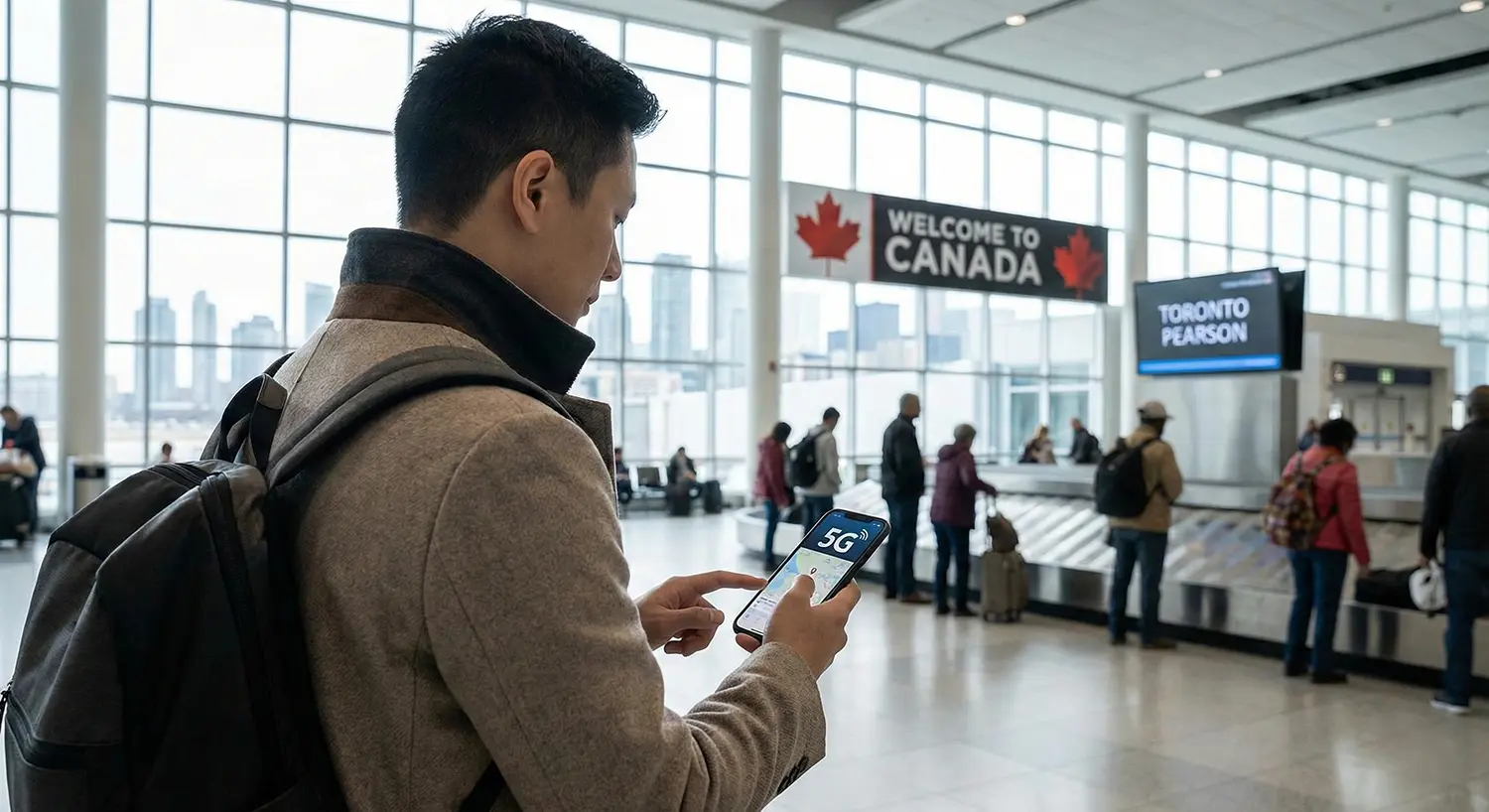

This guide explains all practical ways to get internet in Canada, including airport SIM cards, local prepaid SIMs, eSIM solutions, and pocket WiFi devices. Each option is broken down with realistic pricing, availability, and pros and cons, so you can decide what works best for your travel style.
Internet Options for Travelers in Canada: Quick Overview
Travelers coming to Canada generally have four main ways to stay connected. Each option fits a different travel style, budget, and length of stay, so understanding the basics upfront helps you make the right choice.
-
Airport SIM Cards
Physical SIM cards sold at major Canadian airports. Convenient for immediate connectivity after landing, but usually limited in plan choice and pricing flexibility. -
Local Prepaid SIM Cards
SIM cards purchased from carrier stores, malls, or supermarkets in the city. Better plan variety and sometimes lower prices, but require time and in-person setup. -
eSIM Solutions
Digital SIMs activated via QR code or direct install on compatible devices. No physical SIM swap needed, fast activation, and ideal for short to medium trips. -
Pocket WiFi Devices
Portable WiFi routers that provide internet access to multiple devices. Best suited for families or groups, but involve daily charging and rental costs.
The best option depends on how long you’re staying, how much data you need, and whether your phone supports eSIM technology. Below, we break down each option in detail, starting with airport SIM cards.
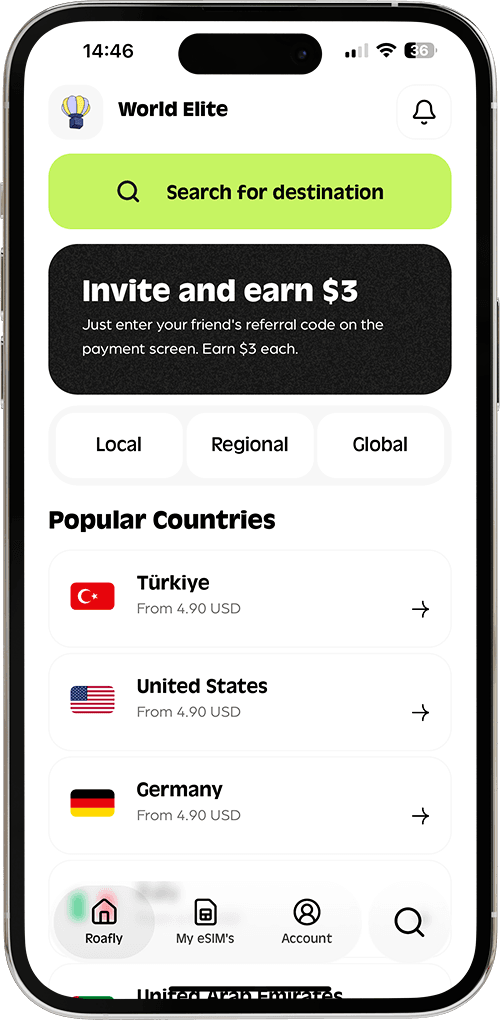
Need data in Canada? Get an eSIM!
Choose the perfect data plan for your trip

Manage your eSIM in the app
Install, top up and track data.
Airport SIM Cards in Canada: Buying Data Right After Landing
Many travelers prefer to get connected immediately after arrival, and Canadian airports do offer SIM card sales inside terminals. This option is convenient, especially if you arrive late or don’t want to search for a store in the city.
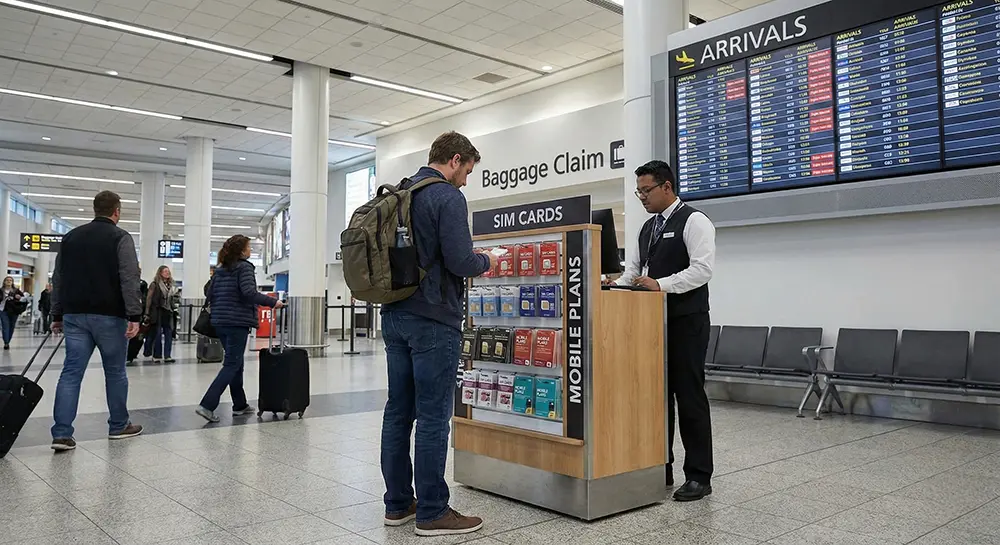
Where to Buy SIM Cards at Canadian Airports
SIM cards are typically sold at:
-
Telecom kiosks operated by major carriers
-
Electronics stores inside the terminal
-
Convenience stores in arrival halls
At large airports like Toronto Pearson (YYZ), Vancouver International (YVR), Montréal–Trudeau (YUL), and Calgary (YYC), you will usually find Rogers or Bell-branded kiosks, sometimes alongside third-party resellers.
Airport SIM Card Prices and What to Expect
Airport SIM cards in Canada follow the same pricing structure as city stores, but with less flexibility and fewer promotions.
Typical costs include:
-
SIM card: CAD 10–15
-
Basic data plans (5–10 GB): CAD 20–30
-
Medium plans (15–30 GB): CAD 30–45
-
High-data plans (50+ GB): CAD 50–65
Most plans include unlimited domestic calls and texts within Canada.
While prices are not dramatically higher at airports, the main downside is limited choice. Budget sub-brands are rarely available, and staff usually promote higher-tier plans.
Pros and Cons of Airport SIM Cards
Pros
-
Immediate connectivity after landing
-
No need to wait until reaching the city
-
Staff assistance available
Cons
-
Limited plan selection
-
No budget carrier deals
-
Physical SIM swap required
Airport SIM cards are best for travelers who want instant access and personal assistance, but they are not the most cost-efficient option.
Local Prepaid SIM Cards in Canada
For travelers staying longer or looking for better plan flexibility, buying a local prepaid SIM card in the city is often a smarter choice.
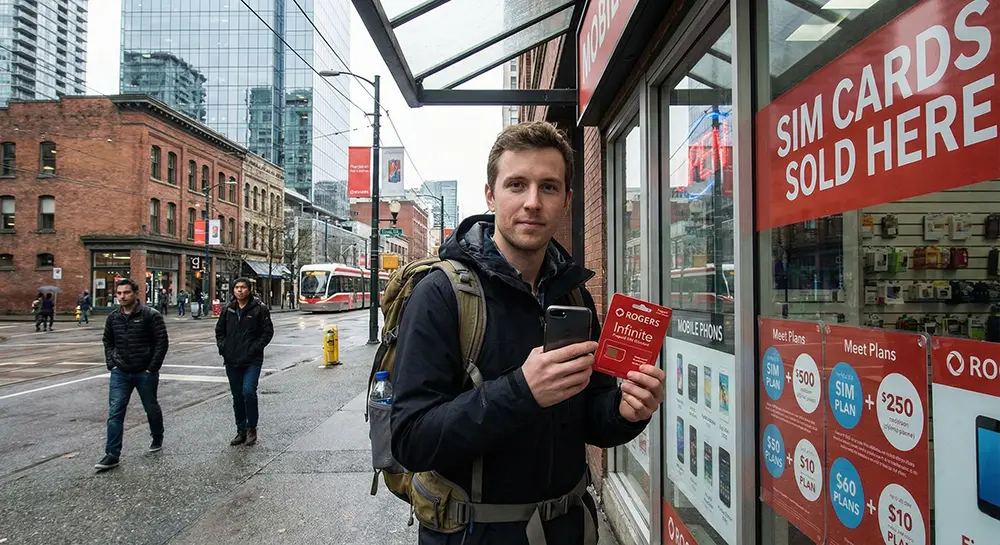
Where to Buy Local SIM Cards
Local SIM cards are widely available at:
-
Mobile carrier stores
-
Shopping malls
-
Electronics retailers
-
Supermarkets such as Walmart
-
Convenience stores
Buying outside the airport usually gives you more plan options and occasional discounts.
Major Networks and Coverage
Canada’s mobile infrastructure is strong, especially in urban areas. Local SIM cards offer:
-
Excellent 4G and 5G coverage in cities
-
Reliable service along highways
-
Reduced signal in very remote regions
For most travelers visiting cities like Toronto, Vancouver, Montreal, or Calgary, coverage is rarely an issue.
Typical Local SIM Prices
Local prepaid SIM pricing is similar to airport pricing, but with more entry-level plans:
-
SIM card: CAD 10–15
-
Entry plans (5–10 GB): CAD 10–30
-
Mid-range plans (20 GB): around CAD 29
-
Large bundles (50–100 GB): CAD 40–65
Canada is considered of the more expensive countries for mobile data, so travelers should realistically estimate how much data they need.
Downsides of Local SIM Cards
-
Requires store visits
-
Physical SIM installation
-
Data plans are expensive compared to many countries
-
Activation may take time
For short trips, many travelers find local SIM cards unnecessarily complicated.
eSIM in Canada: Digital, Fast, and Travel-Friendly
If your phone supports eSIM, this is of the most practical ways to stay connected in Canada. An eSIM lets you activate mobile data digitally without visiting a store or handling a physical SIM card.
Why eSIM Is Popular with Travelers
-
No physical SIM required
-
Instant activation via QR code or direct install
-
No contracts or paperwork
-
Can be installed before departure
-
Works alongside your home SIM
eSIMs are especially useful for travelers arriving late, visiting multiple countries, or staying for a short to medium duration.
Need data in Canada? Get an eSIM!
Choose the perfect data plan for your trip
Manage your eSIM in the app
Install, top up and track data.
Roafly eSIM for Canada: Simple Setup and Clear Pricing
For travelers looking for an easy eSIM solution in Canada, Roafly offers straightforward data-only plans designed specifically for international use.
Roafly Canada eSIM Packages
| Data | Validity | Price (USD) |
|---|---|---|
| 1 GB | 7 Days | $4.90 |
| 3 GB | 30 Days | $9.90 |
| 5 GB | 30 Days | $12.90 |
| 10 GB | 30 Days | $19.90 |
| 20 GB | 30 Days | $29.90 |
| 50 GB | 30 Days | $69.90 |
hese plans connect to Rogers Wireless, providing strong nationwide coverage in urban and suburban areas.
Key Features of Roafly eSIM
-
Works across Canada
-
Data-only plans (ideal for messaging apps, navigation, email)
-
Mobile hotspot supported
-
No ID verification required
-
Validity starts when the eSIM connects to a supported network
Installation Options
Roafly supports three installation methods:
-
iOS Direct Install
-
QR code installation
-
Manual setup
You can install the eSIM before traveling and activate it as soon as you land using airport WiFi.
For travelers comparing different eSIM solutions, you can also explore our detailed guide on the best eSIM for Canada, which explains use cases and plan selection in more depth.
Pocket WiFi in Canada: Shared Connectivity Option
Pocket WiFi devices provide a portable internet hotspot that multiple devices can connect to. This option is usually rented rather than purchased.
How Pocket WiFi Works
-
Pick up a device at the airport or receive it by delivery
-
Charge it daily
-
Connect phones, tablets, and laptops via WiFi
Typical Pocket WiFi Costs
-
Daily rental: CAD 8–15
-
Weekly rental: CAD 50–80
-
Security deposit often required
Pros and Cons of Pocket WiFi
Pros
-
Works with multiple devices
-
No SIM installation
-
Good for families or groups
Cons
-
Extra device to carry
-
Needs daily charging
-
Can be expensive for solo travelers
Pocket WiFi makes sense mainly for groups traveling together, not solo visitors.
Other Internet Options in Canada
International Roaming
Roaming with your home provider is generally the most expensive option. Daily fees often range from USD 10–15 per day, which quickly adds up.
Public WiFi
Free WiFi is widely available at:
-
Cafes and coffee chains
-
Libraries
-
Shopping malls
-
Hotels
However, public WiFi is unreliable for constant navigation and should not be your primary internet source.
Mobile Networks and Coverage in Canada: What Travelers Should Know
Before choosing a SIM card or eSIM in Canada, it’s important to understand how the local mobile network landscape works. Canada has strong infrastructure in cities, but coverage can vary significantly you leave urban areas.
Major Mobile Operators in Canada
Canada’s mobile market is dominated by three nationwide operators:
-
Rogers
Offers extensive national coverage and is especially strong in major cities and populated regions. Many international eSIMs connect to the Rogers network. -
Bell
Known for reliable coverage across urban and suburban areas, with solid performance in eastern Canada. -
Telus
Strong coverage in western Canada and competitive 5G performance in large metropolitan areas.
In addition to these main networks, there are several budget and flanker brands that operate on the same infrastructure, offering prepaid plans at slightly lower prices.
Network Coverage: Cities vs. Remote Areas
-
Urban areas
Cities like Toronto, Vancouver, Montreal, Calgary, and Ottawa have excellent 4G and 5G coverage with fast and stable speeds. -
Highways and intercity travel
Coverage remains reliable along major highways and between large cities, especially on the Rogers, Bell, and Telus networks. -
Remote and rural regions
In national parks, mountain regions, and sparsely populated areas, signal strength can drop to 3G or disappear entirely. This is normal in Canada due to geography and distance.
For travelers sticking to cities and popular tourist routes, coverage issues are rare. However, road trips through remote areas may experience occasional dead zones regardless of provider.
Why Network Choice Matters for Travelers
Because all major operators share similar nationwide infrastructure, choosing a SIM or eSIM that connects to a top-tier Canadian network is crucial. This ensures:
-
Better speeds in cities
-
More stable connections while traveling
-
Fewer coverage gaps outside urban areas
This is also why many travelers prefer eSIM solutions that automatically connect to established Canadian networks without manual configuration.
Which Internet Option Is Best for Canada?
-
Short trips: eSIM
-
Late arrivals: eSIM or airport SIM
-
Long stays: Local prepaid SIM
-
Group travel: Pocket WiFi
-
Budget-conscious travelers: eSIM with fixed data
Canada’s mobile data market is expensive, but choosing the right option can significantly reduce costs while keeping you connected.
Check the latest Canada eSIM packages and stay connected from the moment you land.