Download the App and manage your eSIMs easily
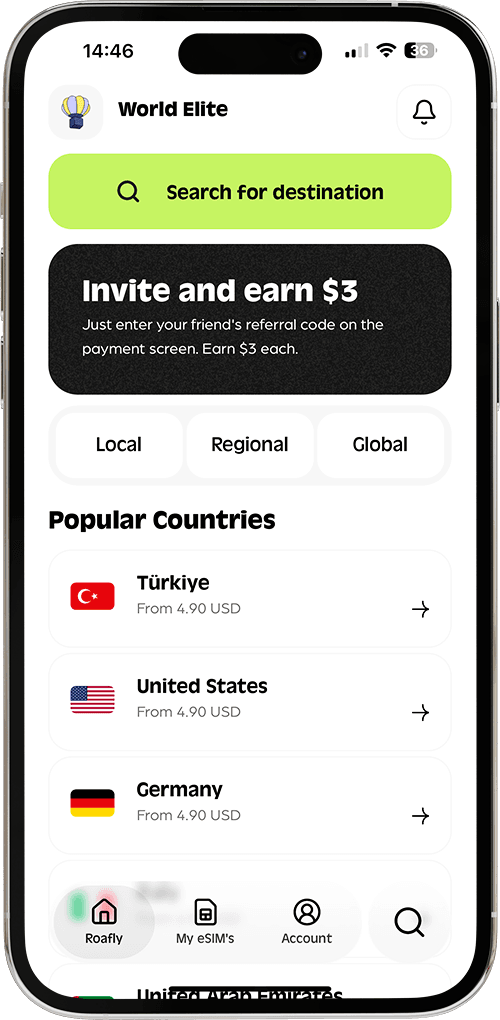
Create your order quickly
See your eSIM details
Track your remaining data
Download the App and manage your eSIMs easily
Create your order quickly
See your eSIM details
Track your remaining data
Your passport, immigration status and arrival route determine whether you need a visitor visa, an electronic travel authorization (eTA), or neither to visit Canada. The biggest planning mistake is assuming that permission to fly also covers a road trip or cruise.

Sophie Callahan
Updated Oct 21, 2026
10 min read

Save 15% on your Roafly eSIM
Stay connected on your next trip. Use the code below at checkout.
View All DestinationsJump to section
👇Save 15% on your Roafly eSIM
Stay connected on your next trip. Use the code below at checkout.
View All Destinations
Manage your eSIM in the app
Install, top up and track data.
Under the rules checked on October 21, 2026, some visitors can fly to Canada with an eTA but need a visitor visa for an initial land or sea arrival. US permanent residence creates a separate exemption, while a US tourist visa only helps certain passport holders qualify for an eTA.
Recent travel or residence connected to the Democratic Republic of the Congo, Uganda or South Sudan can also affect entry. The temporary measures are explained below.
Start with your citizenship and any immigration status that changes your requirements. Living in a country is not the same as holding its passport, and a US visa is not equivalent to a US green card.
| Your situation | Flying to Canada | Entering by land or sea |
|---|---|---|
| US citizen | No visitor visa or eTA | No visitor visa or eTA |
| US lawful permanent resident | No visitor visa or eTA; carry the required identity and status documents | No visitor visa or eTA; document requirements depend on the route |
| Visa-exempt passport, such as British citizen, German, French, Australian or Japanese | Generally an eTA and valid passport | Generally a valid passport without an eTA |
| Passport eligible for conditional eTA access, such as Mexican, Brazilian, Argentine, Costa Rican, Filipino, Moroccan, Indonesian or Malaysian | eTA possible if you meet the additional conditions | Visitor visa normally required |
| Visa-required passport, such as Turkish, Indian, Chinese, South African or Egyptian, without an applicable exemption | Visitor visa | Visitor visa |
These are representative examples for ordinary passports. Use the official Canada entry requirements by citizenship and travel method to find your full category, including special travel documents.
Canadian citizens and permanent residents use different documents. Most dual Canadian citizens need a Canadian passport to fly to Canada. Canadian permanent residents generally need a valid PR card or permanent resident travel document when returning by commercial transport.
The government eTA fee is CAD $7. An approved eTA is linked electronically to your passport and normally remains valid for up to five years, or until that passport expires, whichever comes first. Replacing your passport means applying for a new eTA.
Apply through the official Canadian eTA application page. You will need your passport, an email address and an accepted payment card. Each family member needs a separate application, including children.
Most applications are approved within minutes, but some require supporting documents and take longer. Get approval before committing to your flight, and compare the passport number in the approval email with the passport you will use.
Citizens of the conditional-access countries in the table must meet all three requirements:
Have held a Canadian visitor visa within the previous 10 years, or hold a valid US nonimmigrant visa when applying.
Be traveling for a temporary stay.
Fly to, or transit through, a Canadian airport using an eligible passport.
Indonesia and Malaysia joined this conditional route on May 26, 2026. Their inclusion does not create unrestricted visa-free entry.
Holding a US visa does not make every nationality eligible. Your passport must belong to the qualifying group. If you already have a valid Canadian visitor visa, you can use it to fly without obtaining an additional eTA.
Canada’s visitor visa, also called a temporary resident visa, is normally placed in your passport. Completing an online application does not turn it into an eTA or a visa issued on arrival.
The individual processing fee is CAD $100. If biometrics are required and you are not exempt from the fee, the individual biometrics charge is CAD $85. These government fees were checked on October 21, 2026.
Applications are generally submitted online through IRCC. Your personalized checklist and local visa-office instructions determine which documents to provide. After receiving a biometrics instruction letter, arrange the required appointment promptly.
Processing times vary by application country and circumstances. Allow time for document requests, biometrics and passport submission rather than relying on a fixed number of days.
If your online application is approved, you receive instructions for submitting your passport. The approval message alone is not enough to travel: the visa must first be placed in your passport.
Your route matters most when you qualify for an eTA through a passport that would otherwise require a visa.
Someone with a visa-exempt passport can generally drive from the United States into Canada without an eTA. Someone using the conditional eTA route normally needs a visitor visa for that initial land crossing. The same distinction applies to arrivals by bus, train or boat.
Cruise passengers should review every Canadian stop before booking. Visa-required passengers generally need a Canadian visitor visa even if they intend to remain aboard the ship.
There is a narrow exception for certain visitors already admitted to Canada who visit only the US or Saint-Pierre-et-Miquelon and return directly during their authorized stay. A cruise entering international waters is not treated as the same simple side trip.
One additional exception affects sea travel from Saint-Pierre-et-Miquelon: eTA-required travelers generally need an eTA to board a non-cruise vessel from there.
When flying, US lawful permanent residents need a valid passport or accepted equivalent travel document, plus a valid green card or other accepted proof of US permanent residence.
For direct land or water entry from the US or Saint-Pierre-et-Miquelon, Canada’s current entry guidance allows accepted proof of US permanent residence without a passport. Carrying your passport remains a practical choice for the wider journey, and transport operators may have their own document requirements.
Keep your passport valid for the whole intended visit. If you need to renew it, do that before applying for an eTA so the authorization is linked to the passport you will actually carry.
Visitor visa applicants should also follow IRCC’s application guidance, which says the passport should have at least six months’ validity from the planned travel date. This application guidance should not be confused with a universal requirement for every visitor to have six months remaining after leaving Canada.
At the border, be ready to explain your trip and how you will pay for it. Useful supporting documents include:
Your itinerary and accommodation details.
Return or onward travel arrangements.
Evidence that you can cover the cost of your stay.
Your host’s contact details and invitation letter, if applicable.
Relevant evidence of commitments that will take you home.
There is no single published spending amount that fits every ordinary tourist. The funds needed depend on your visit’s length and whether you are paying for accommodation or staying with someone.
Save essential bookings and addresses offline before departure. Keep your passport and supporting documents in your hand luggage so you can reach them during arrival checks.
Valid travel documents do not guarantee admission. The border officer must be satisfied that you meet the requirements and will leave at the end of your authorized stay. Criminal or immigration-related issues, as well as health, security or financial grounds, can affect admissibility.
Children need their own appropriate travel documents and must meet the entry requirements for their circumstances.
If a child travels with one parent, carry the child’s passport, a copy of the birth certificate and an authorization letter from the non-traveling parent where applicable. Custody arrangements, guardianship, adoption or a parent’s death may require different supporting documents.
Children traveling alone or with another adult should carry permission from their parents or legal guardian, along with contact details for the responsible adults. English or French is preferable for authorization letters.
Most visitors are admitted for up to six months, but the border officer can authorize a shorter or longer period. Follow any departure date written in your passport or shown on a visitor record.
If no different period is recorded, the usual limit is six months from entry, subject to earlier document expiry. Current IRCC arrival guidance also includes biometrics expiry, where applicable, alongside passport expiry.
The validity of your travel document and your permitted stay are separate. A five-year eTA does not permit a five-year visit, and a long-validity visitor visa does not let you remain continuously until the visa expires.
Apply for a visitor record before your authorized status expires. IRCC recommends applying at least 30 days before the end of your permitted stay.
The visitor record establishes a new authorized stay if approved. It is not a replacement visa and does not, by itself, guarantee that you can leave Canada and return.
Remaining inside the airport does not automatically remove Canada’s document requirements.
Your transit route depends on your passport, any relevant exemption and the length and purpose of the stop:
eTA-required travelers: normally need an eTA to connect through a Canadian airport.
Visa-required travelers without a valid visitor visa or eTA eligibility: generally need a transit visa for an international connection lasting 48 hours or less.
A stop longer than 48 hours, or a visit to Canada during the stop: generally requires a visitor visa for visa-required travelers.
US citizens and lawful permanent residents: can transit without a visa or eTA, using the appropriate identity and status documents.
Limited Transit Without a Visa and China Transit arrangements exist, but they have specific conditions. Do not assume that holding a ticket to the United States or remaining airside is enough to qualify.
If you intend to leave the airport for sightseeing, assess the trip as a visit rather than relying solely on transit eligibility.
ArriveCAN’s Advance Declaration is optional for eligible arrivals at participating Canadian international airports. It lets you submit customs and immigration declaration information up to 72 hours before arrival.
It is separate from your visa or eTA. Submitting a declaration neither grants permission to board nor replaces the immigration documents required for your passport.
Using Advance Declaration can reduce the information you need to enter at the airport. You still complete the arrival process and confirm your declaration at the kiosk or with the border officer.
As of October 21, 2026, Canada has temporary Ebola-related measures scheduled to remain in place until November 27, 2026. They concern particular residence and travel histories, rather than applying equally to every visitor.
Two separate issues matter:
Immigration-document suspension: IRCC has suspended certain documents for foreign nationals who listed the Democratic Republic of the Congo, South Sudan or Uganda as their last country of residence when applying. Citizenship alone does not fully describe who is affected.
Recent travel: foreign nationals who have been in the Democratic Republic of the Congo within the preceding 21 days are generally prohibited from entering or transiting through Canada, subject to exemptions. Recent presence in Uganda or South Sudan can trigger a 21-day quarantine for people otherwise permitted to enter.
Transit through an affected country can count. Canadian citizens and permanent residents have different entry treatment, although quarantine requirements may still apply.
If any of these circumstances match your itinerary, review the current Canadian border measures and exemptions before traveling. An existing visa or eTA should not be treated as proof that these temporary restrictions do not affect you.
