


The useful precaution is to slow down when an encounter turns into a transaction: establish what you are buying, who receives the money and the amount you are authorizing. Broader questions about regional risks and the overall trip belong in our Türkiye safety guide.
Taxi Fares: Check the Meter, Route and Final Charge
Istanbul taxi overcharging can involve an inflated fare, an unnecessarily long route or an incorrect amount entered into a booking app. Booking through an app gives you a trip record, but the final charge still needs your attention.
Treat the journey as three separate decisions:
| Moment | What to establish |
|---|---|
| Before departure | The destination, how the fare will be calculated and how you will pay. |
| During the journey | Whether the route broadly makes sense and, for a metered trip, what the meter shows. |
| Before completing payment | The terminal's amount and currency, or the final fare entered in the app. Compare these with the fare being charged. |
Traffic and legitimate tolls can explain a higher total. Ask about a discrepancy calmly; do not turn a route disagreement into a confrontation inside the vehicle.
Some travelers describe noticing a different amount or currency after a rushed payment. These accounts reinforce a practical point: checking the route covers part of the transaction. Read the payment screen before tapping and retain the receipt or app record.
Compare transport options in Türkiye before an airport journey so you know whether a taxi, public transport or a prearranged transfer suits your arrival. Having an alternative makes it easier to decline an unclear offer.
Arrange access to maps and booking apps before landing. Our guide to mobile internet options in Türkiye covers the connection choices; save your accommodation address and an offline map as well.
The Friendly Invitation That Ends With a Bar Bill
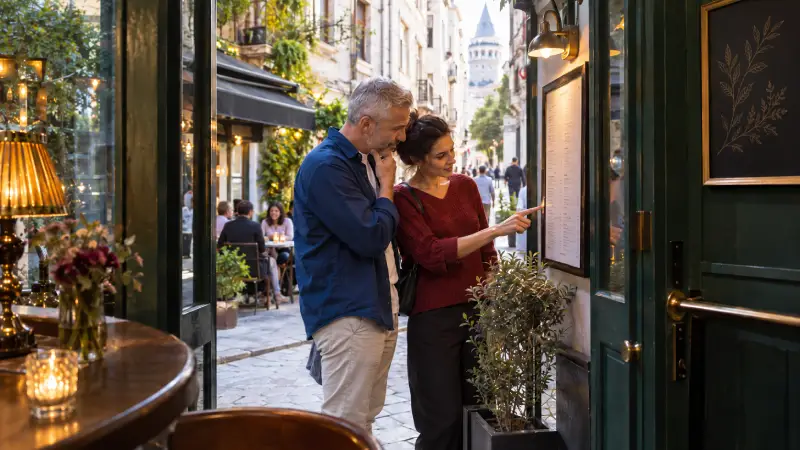
The Istanbul bar-invitation scam starts with someone striking up a conversation and steering you to a particular venue. Drinks are followed by an unexpectedly large bill, with pressure or intimidation to make you pay.
Watch the transition from conversation to an arrangement you did not choose: the other person controls the destination, orders are unclear, and prices remain undisclosed. Decide where to go out in Türkiye before the evening and meet new acquaintances somewhere you have chosen yourself.
Decline further orders if the arrangement feels wrong. If a bill dispute becomes threatening, prioritize reaching a safe public place and obtaining help. Do not put yourself at risk to collect evidence or argue over the amount.
Drink Spiking Requires a Different Response
Drink spiking to facilitate theft is a separate risk from an inflated bill. Keep drinks attended and be cautious about drinks offered by people you have just met. If you suspect spiking or become suddenly unwell, seek urgent medical help and tell a trusted companion or staff member what happened.
The Dropped-Brush Shoeshine Trick
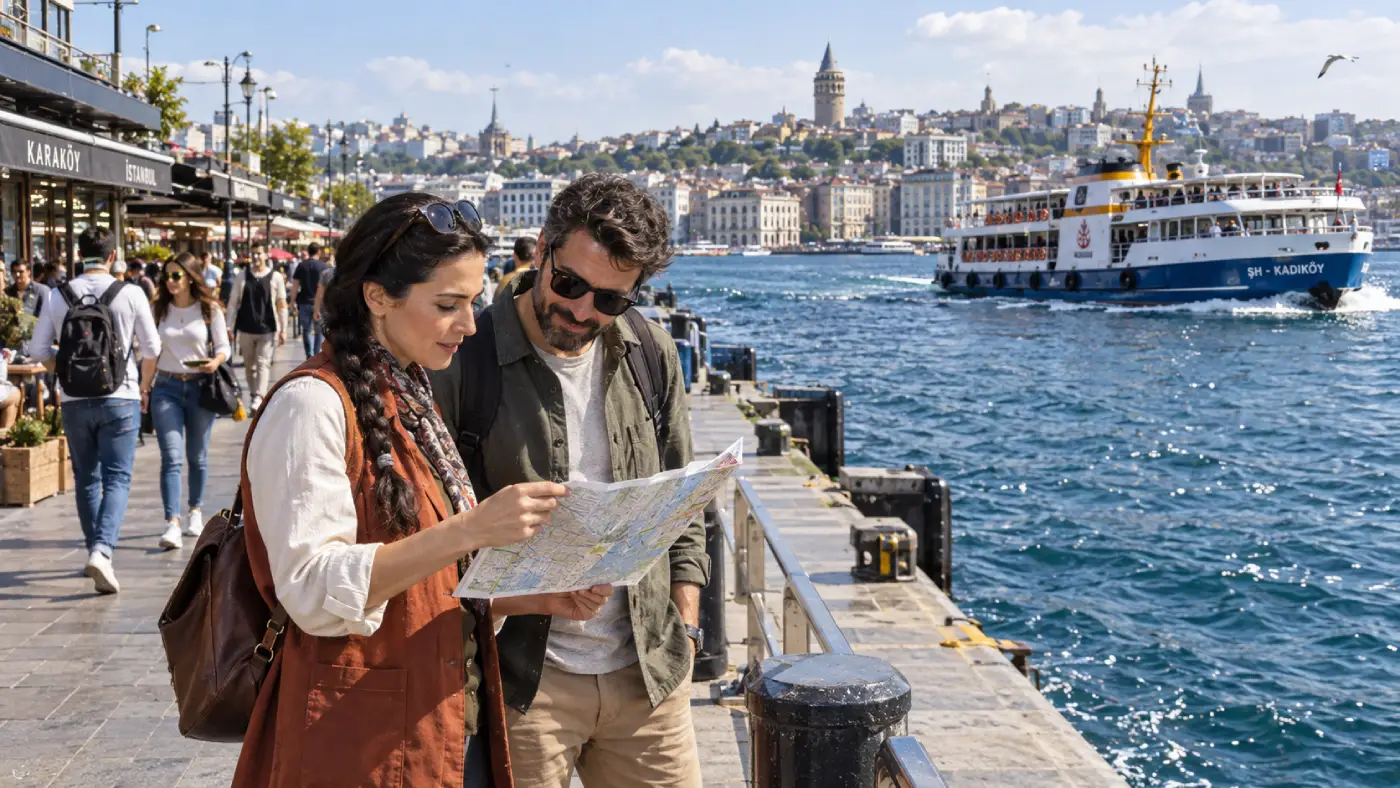
The dropped-brush trick has been documented in Istanbul's Karaköy district: a shoeshiner deliberately drops a brush where a passerby will notice. Returning it leads to an apparent thank-you shoeshine, followed by a demand for payment.
Returning someone's property does not require accepting a service. Decline the shine before it starts unless you actually want and have agreed on the price. If payment is demanded after an unsolicited service, keep the exchange brief and avoid escalating the situation.
Restaurant Bills: Ordered Items and Service Charges
Read the menu before ordering and ask whether anything placed on the table is complimentary or chargeable. Bread, starters or other food can create a dispute when the customer and restaurant have different understandings of what was ordered.
Since 30 January 2026, restaurants, cafés and similar food-and-drink businesses in Türkiye cannot impose compulsory service, table, kuver or comparable additional charges. Voluntary tips remain possible under the restaurant pricing rules. Food and drinks you order are separate purchases; this rule does not make them free.
Request an itemized bill before paying. Match it against your order and raise a specific disputed item, such as an unrequested dish or compulsory service charge. Keep the receipt and, when safe, a photograph of the menu. This gives you something concrete to refer to if the issue remains unresolved.
Fake Hotel, Villa and Travel Bookings
Copied hotel photographs and familiar agency names can make an impersonation site look convincing. The deception concerns who is taking your payment: the accommodation may be real while the seller has no connection to it.
Before sending a deposit, compare the property name, website address, contact details and payment beneficiary. Contact the hotel or agency through details found independently of the advertisement or message that brought you there. Ask them to confirm the offer and payment instructions.
Agency bookings need an additional identity check. Follow TÜRSAB's verification guidance, paying attention to these details:
-
The verification destination: copied logos and QR codes can lead to imitation verification pages. Inspect the address and make sure the verification is on TÜRSAB's actual domain,
tursab.org.tr. -
The recipient of the payment: compare the account beneficiary with the agency you have verified. Resolve a mismatch before transferring money.
This agency check serves a different purpose from confirming a direct hotel booking. When booking directly, establish the property's own contact and payment details independently.
Keep a downloaded copy of the confirmed reservation and the property's contact details. If you plan to use a Roafly Türkiye eSIM for mobile data, arrange it before departure so you can access booking messages away from Wi-Fi.
Carpet Shopping and Promises to Ship Your Purchase
Carpet purchases become harder to resolve when the item is shipped after you leave. Reported problems include purchases that do not arrive or goods that differ from what the buyer expected.
Before paying, get a written description of the specific carpet, the agreed total, shipping arrangements and return terms. Photograph the item and retain the seller's contact details with the receipt. These records should connect your payment to the carpet you selected.
If the sale depends on a verbal promise that the seller will not put in writing, pause the purchase. Bargaining can settle a price, but it cannot establish the truth of a claim about material, age or origin.
Card and ATM Fraud: Check the Amount and Currency
Card and ATM fraud can involve stolen payment details as well as an incorrect transaction amount. Use ATMs where you can take time to inspect the machine and shield your PIN. Loose attachments or unusual alterations around the card slot or keypad are reasons to use another machine.
Decline unsolicited help with the transaction, keep your card in sight when possible and review account activity during the trip. If a card is retained or a withdrawal behaves unexpectedly, contact your bank through its own app or the contact details you already have.
At a payment terminal, read both the number and the currency before authorizing the charge. If currency conversion is offered, review the displayed terms before accepting. A conversion offer or disclosed ATM fee belongs in your cost decision; a transaction you did not authorize needs prompt attention from your bank.
Fake e-Visa Websites
Visa impersonation sites can take payment while failing to supply a valid travel document. An official-looking design, a paid search placement or the presence of Türkiye's flag does not establish government ownership.
First establish whether you need a visa and which application route applies through the Türkiye entry requirements guide. If you are eligible for an e-Visa, use the official Turkish e-Visa website and inspect the address before entering passport or payment details.
Distinguish impersonation from a clearly disclosed third-party application service. A separate service fee does not itself prove fraud, but you should know who is handling the application, what they charge and what they will deliver before paying.
Expensive Doesn't Always Mean a Scam
Clearly priced meals, disclosed cash-machine fees and souvenir prices you accepted can be poor value without involving deception. The stronger warning signs are a substituted amount, a hidden charge, a false seller identity or pressure to pay for something you never agreed to buy.
Describe the problem precisely when asking for help. “The terminal charged a different amount” or “this account impersonated my hotel” gives a bank, platform or police officer a clearer starting point than a general complaint that something cost too much. Billing mistakes and prohibited charges also need correction, without assuming every dispute has the same cause.
What to Do If You Are Scammed in Türkiye
Call 112 for immediate danger or an urgent medical emergency. It is Türkiye's unified emergency number. Use ordinary police, business or payment-provider channels for a routine dispute that does not involve an emergency.
Once you are somewhere safe:
-
Preserve what you already have. Keep receipts, booking messages, the website address, payment records and the time and location. Save a taxi's trip record or registration if it is safely available; do not follow anyone to obtain it.
-
Contact your bank promptly for suspected card misuse. Use the bank's official app or a known telephone number, explain whether the issue is an unauthorized transaction, incorrect amount or disputed purchase, and ask about protecting the card and the applicable dispute process.
-
Report through the original service. Open the transport or booking platform yourself and use its support channel. Include the relevant booking or journey reference and supporting records.
-
Report suspected fraud to police. Keep any report reference and copies of documents you receive. In Istanbul, the tourist police contact listed in official travel advice is +90 212 527 4503.
Refunds and recovery depend on the circumstances and the relevant provider's process. Clear records help explain the incident, but collecting them should never take priority over getting out of a threatening situation.