Download the App and manage your eSIMs easily
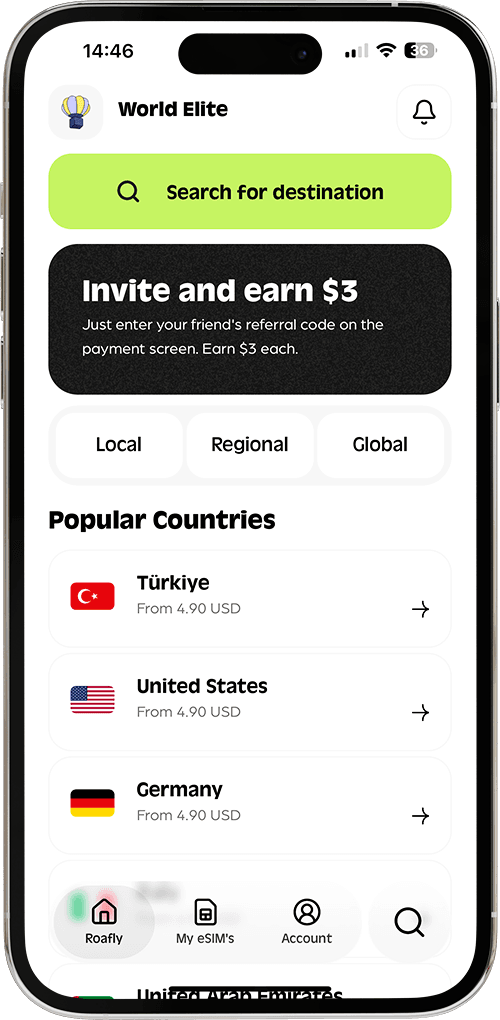
Create your order quickly
See your eSIM details
Track your remaining data
Download the App and manage your eSIMs easily
Create your order quickly
See your eSIM details
Track your remaining data
Carry your original passport in Russia, make sure your accommodation handles registration, and take restrictions on political expression and photography seriously.

Sophie Callahan
Updated Oct 5, 2026
11 min read
Save 15% on your Roafly eSIM
Stay connected on your next trip. Use the code below at checkout.
View All DestinationsJump to section
👇Save 15% on your Roafly eSIM
Stay connected on your next trip. Use the code below at checkout.
View All Destinations
Manage your eSIM in the app
Install, top up and track data.
Alcohol is restricted to adults, smoking and nicotine vaping are prohibited in many everyday places, and even a small drone can require registration. Regional restrictions and venue policies also matter, particularly for nightlife, outdoor smoking and drone flights.
| Topic | Current status | What visitors need to know | Safest action |
|---|---|---|---|
| Passport and registration | Identity checks and accommodation registration apply | A phone photo does not replace your original passport for police checks | Carry your passport and confirm registration with your host |
| Public statements and online content | Significant legal restrictions | Social posts and public comments can fall within Russian law | Avoid political demonstrations and restricted content |
| LGBT+ expression | Laws restrict “propaganda” and activities or symbols associated with the banned movement | These restrictions can affect foreign visitors | Assess the implications for public expression before traveling |
| Photography and drones | Security, airspace and local restrictions apply | Drone registration and flight permission are separate | Avoid sensitive sites; establish permission before flying |
| Alcohol and venue access | Alcohol purchase and consumption are restricted to people aged 18 and over | Public drinking restrictions and venue admission rules also apply | Drink in lawful premises and check the venue’s admission policy |
| Smoking and nicotine vaping | Prohibited in specified indoor and outdoor places | Transport entrances, beaches and playgrounds are among the restricted locations | Use a lawful designated area |
| Cannabis and controlled drugs | Recreational cannabis is illegal | Personal use is not an exemption from possession rules | Avoid recreational drugs and verify medication ingredients |
| Russian SIM cards | Foreign-customer identification requirements apply | Buying a local line involves more than showing a passport | Prepare for the required registration and biometric steps |
Rules checked on 5 October 2026. Laws, local restrictions and penalties can change; verify the linked official guidance before travel.
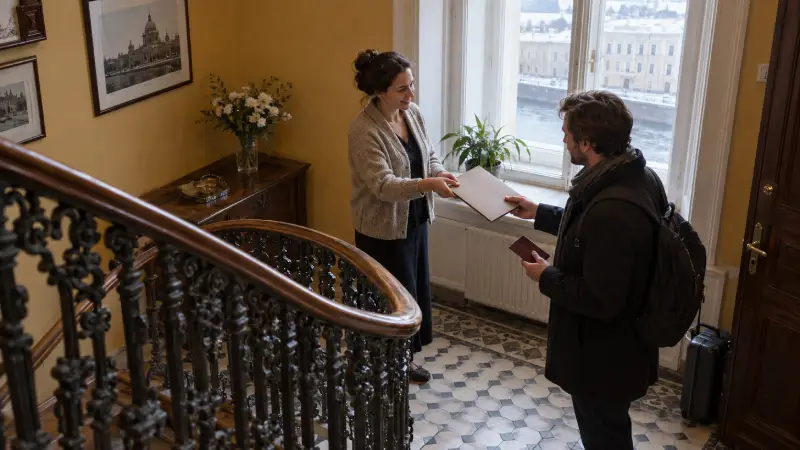
Keep your original passport with you when going out. Police may conduct identity checks, and a photocopy or phone image is not an accepted substitute in that situation. Keep backup copies separately in case the original is lost, together with your migration card and accommodation registration details where applicable.
Russia’s migration registration procedure generally requires notification of arrival at your place of stay within seven working days. Hotels handle registration through their staff. At check-in, hand over the required documents and ask for confirmation that the registration has been completed.
Do not apply the seven-working-day rule as a blanket exemption for short hotel stays. Hotel procedures differ from the arrangements for staying in private accommodation. With an apartment or private host, settle who will submit the notification before you arrive; a booking confirmation alone is not proof of migration registration.
Keep track of registration when changing accommodation, and retain the documents your hosts provide. Visa validity, permitted stay and admission documents are covered separately in the Russia visa and entry requirements.
Russian restrictions on public expression can apply to visitors as well as residents. Public statements classified as discrediting the Russian armed forces can lead to legal proceedings. Social media posts, publicly accessible comments and videos can fall within these rules.
Avoid joining political demonstrations during a visit. Even a small gathering or a one-person protest can have legal consequences. Posting footage of military activity or security incidents also raises issues beyond ordinary holiday photography.
Since 1 September 2025, Russian law has imposed administrative liability for deliberately searching for and accessing known extremist materials. The provision covers material on the federal list and material meeting the relevant statutory definition. It concerns knowing, intentional conduct; describing it as a ban on every internet search would be inaccurate.
Technical access and lawful use are separate questions. A foreign SIM, travel eSIM or VPN does not exempt someone in Russia from content rules. Plan internet access in Russia before departure and save essential addresses, bookings and contacts offline, since reaching a particular service may be unreliable.
Consensual same-sex relationships between adults are not themselves illegal. However, legislation restricting “LGBT propaganda” and the Supreme Court’s designation of the so-called “international LGBT movement” as extremist create substantial restrictions on public expression.
Rainbow symbols and public expressions of support can expose foreign visitors to enforcement. Consider these restrictions before travel, including the implications for what you display or publish.
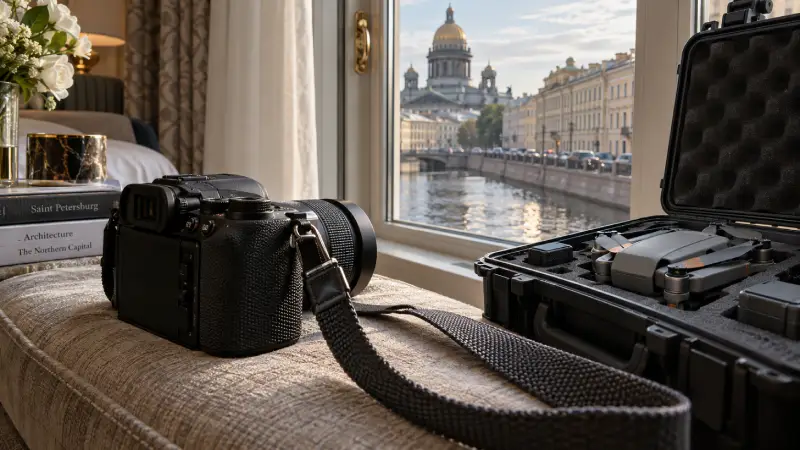
Photography can be prohibited at military, security and official sites, including where no clear sign is displayed. Keep cameras away from checkpoints and airport security operations, and follow staff instructions.
Inside museums and religious buildings, look for the photography conditions at the entrance. Admission to a building does not settle whether flash, tripods, filming or photography during worship is permitted. Asking before taking out equipment is easier than resolving a disagreement afterward.
Russia’s registration framework covers civilian drones with a maximum take-off weight from 150 grams to 30 kilograms. That includes many models marketed internationally as “under 250 g.” Ordinary foreign tourists should not assume that a short visit creates a registration exemption.
Registration identifies the aircraft; flight authorisation governs its operation. You must also account for airspace restrictions, regional bans and the location you intend to film. Moscow’s rules on drone launches make casual tourist flying particularly unsuitable without the necessary authorisation.
We would leave a drone at home unless the trip specifically requires it and the permissions have been resolved in advance. Buying a lightweight model or obtaining a registration number is insufficient preparation for choosing a launch site after arrival.
Obtain the required permission before entering restricted military or border areas, including on organised excursions.
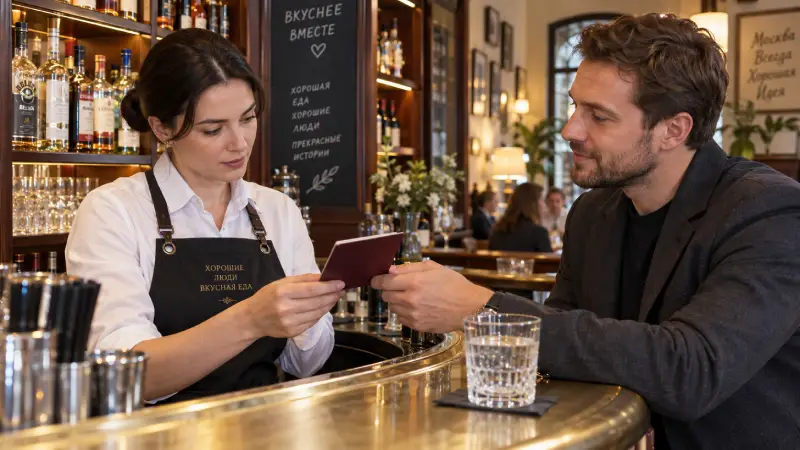
The minimum age for buying and consuming alcohol is 18. The restriction covers beer and wine as well as spirits. Parental permission does not create an exception allowing a minor to drink.
Carry your original passport when you expect an age check. Do not rely on a phone image being accepted for an alcohol purchase or venue admission.
Alcohol eligibility and permission to enter a venue are different questions. Restaurants serving meals, alcohol-focused bars, nightclubs and particular events may be subject to different conditions. Regional child-protection rules and nighttime restrictions can also affect admission.
Moscow Oblast—the region surrounding Moscow, which is a separate jurisdiction from Moscow city—has restrictions on minors entering specified alcohol-focused venues at any time, alongside rules on unaccompanied nighttime presence in public places. Accompanying a child does not override every restricted-venue rule.
Before taking children or teenagers to an evening venue, ask about their ages, the time of attendance and whether a parent or legal guardian must accompany them. With adult clubgoers, check the advertised admission age and identification policy: being old enough to buy alcohol does not promise admission to a particular event.
Public drinking restrictions cover places such as parks, playgrounds, public transport and communal areas of residential buildings. Buying a beer in a shop does not make a nearby bench an appropriate place to drink it.
Drink at premises lawfully serving alcohol, within their permitted service area. Restaurant service is treated differently from drinking a shop-bought bottle in a public place. Retail sales hours can also vary by region, so late restaurant service should not be taken as evidence that nearby shops can sell takeaway alcohol at the same time.
Smoking, nicotine vaping and heated-tobacco use are restricted in many of the places visitors use every day. Vaping is not an indoor exception to the rules below.
The federal law identifies prohibited locations rather than banning smoking on every ordinary street. Outdoor use still depends on the location, regional rules and any applicable property restrictions.
The national restrictions include:
Areas within 15 metres of entrances to railway stations, bus stations, airports, sea and river ports, and metro stations.
Children’s playgrounds and beach areas.
Relevant education, healthcare, cultural and sports premises and grounds.
Suburban railway passenger platforms and petrol stations.
Parks, pedestrian areas and ordinary bus stops may also have local or site-specific restrictions. Standing outside or seeing an ashtray is not enough to establish permission. Use a clearly designated smoking area that is lawful for that location, away from queues and other people.
Smoking and nicotine use are prohibited inside food-service premises, including restaurant and bar interiors. Open-sided terraces require care too: regulator guidance treats features such as a roof, decking or fencing as relevant to whether a dining area counts as premises covered by the restriction.
Do not assume that an outdoor table is a smoking table. Ask where the establishment’s permitted smoking area is, and leave the dining area to use it. Staff permission cannot override a statutory prohibition.
The indoor restrictions cover hotel accommodation, including guest rooms. A balcony should not be treated as a designated smoking area without establishing the applicable property and legal conditions.
Airports may provide specially equipped, enclosed smoking rooms after security or for transit passengers under a statutory exception. Use those facilities where available; ordinary terminal areas remain covered by the ban.
Recreational cannabis is illegal in Russia. Keeping it for personal use does not remove liability for unlawful possession.
Do not assume that a CBD oil, gummy or vape liquid is acceptable because it is sold legally at home. Its ingredients and classification under Russian rules matter. Obtain confirmation for the exact product before traveling rather than relying on the label “CBD” or “THC-free.”
With prescribed medicine, check the active ingredient and retain the prescription and supporting documents. Questions about bringing it across the border, translations and declarations belong to Russia’s rules for bringing medicines.
Foreign visitors buying a Russian mobile line generally need a SNILS number, a verified Gosuslugi account and biometric identification, alongside their identity document. The handset’s IMEI is also part of the registration process. These requirements make a local SIM purchase more involved than a quick passport check at a shop counter.
Allow for the steps involved in local SIM registration in Russia if you need a Russian mobile number. Accommodation registration and mobile-customer identification are separate procedures.
If maps and contact with your accommodation are the main needs, Roafly’s Russia eSIM provides mobile data without a Russian phone number. It therefore does not supply a local number for SMS verification. Keep offline copies of essential trip information whichever connection you select.
Dress expectations are particularly relevant at religious sites. Covered shoulders and knees are a useful starting point; Orthodox churches commonly expect women to cover their hair and men to remove hats. Individual churches, monasteries and mosques may have their own visitor requirements, sometimes with coverings available at the entrance.
Treat these expectations as religious-site customs or admission conditions, rather than a nationwide dress code. Regional traditions also vary, including in the North Caucasus, where more conservative clothing may be appropriate outside religious buildings too.
Keep your voice low during worship, silence your phone and ask before photographing a service or its participants. Give military memorials and places of remembrance the same quiet attention: avoid climbing on monuments or using them as props for playful photographs. These are practical courtesies, distinct from the legal restrictions discussed above.
Carry your original passport and retain your accommodation registration documents.
Establish the rules for any restricted-area excursion or planned drone flight in advance.
Check age and identification requirements before booking an evening venue.
Use lawful places for drinking and designated areas for smoking or vaping.
Compare the best eSIM options for Russia before departure, paying attention to activation conditions as well as the data allowance.
Save essential addresses and contacts offline, and follow the rules of the specific venue or region you are visiting.
