Download the App and manage your eSIMs easily
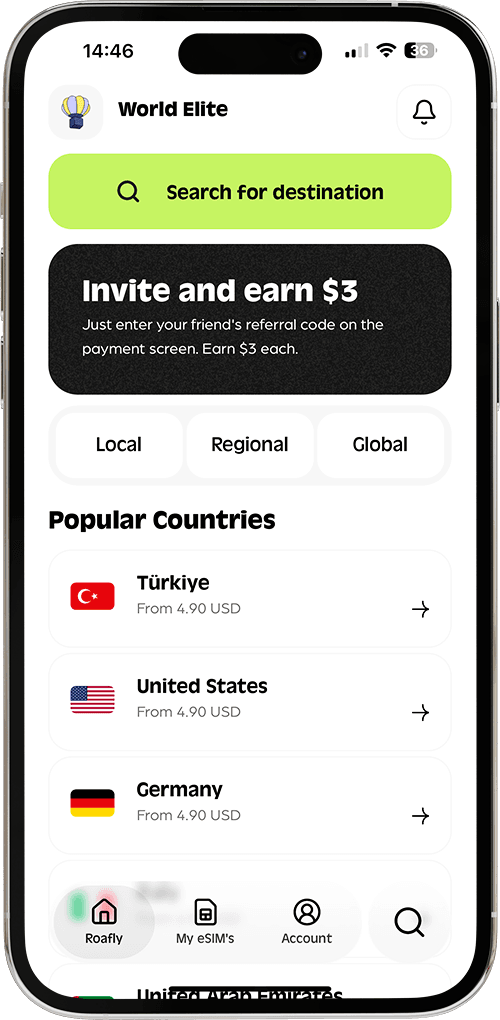
Create your order quickly
See your eSIM details
Track your remaining data
Download the App and manage your eSIMs easily
Create your order quickly
See your eSIM details
Track your remaining data
Russia has three main entry routes for short tourist visits: visa-free admission for eligible passport holders, an advance eVisa for listed nationalities, and a regular visa issued through a consulate. The right choice depends on your passport, trip length and border crossing. Rules checked on 5 October 2026 also distinguish the ruID entry declaration from your visa and the registration handled after arrival.

Lena Hartley
Updated Oct 5, 2026
10 min read
Save 15% on your Roafly eSIM
Stay connected on your next trip. Use the code below at checkout.
View All DestinationsJump to section
👇Save 15% on your Roafly eSIM
Stay connected on your next trip. Use the code below at checkout.
View All Destinations
Manage your eSIM in the app
Install, top up and track data.
Start with your passport category, then match the permission to your actual itinerary. An approved Russian eVisa, for example, currently cannot be used to enter Russia directly from Belarus.
The examples below cover ordinary passports used for tourism. Diplomatic passports, residence documents and other special circumstances can follow different rules.
| Tourist entry route | Representative passport examples | Stay and main conditions |
|---|---|---|
| Visa-free entry | China, Thailand and Serbia | Up to 30 days for these examples. Serbia's exemption applies to ordinary biometric passports. China's ordinary-passport exemption currently runs through 31 December 2027. |
| Unified eVisa | Germany, France, India, Türkiye, Indonesia and Mexico | Single entry, with up to 30 days in Russia within the visa's 120-day validity. Both arrival and departure must use an approved crossing. |
| Regular visa arranged before travel | United States, United Kingdom, Canada and Australia | These ordinary-passport holders are outside the unified eVisa list. The visa issued determines the permitted dates, entries and stay. |
These are examples, not a complete nationality list. Use Russia's passport-by-passport entry rules to identify your category before paying for an application.
Visa-free visitors still need to meet the conditions of their exemption and complete applicable arrival procedures. The 30-day examples above are not a universal Russian allowance, and repeat visits can be subject to cumulative limits. Living in a visa-free country does not, by itself, give another country's passport the same exemption.
Russian citizens, including those with another nationality, must use the appropriate valid Russian travel documents to enter and leave Russia. Applying for an eVisa with a second passport is not a substitute for resolving an expired Russian travel document with a consulate.
The unified eVisa suits an eligible visitor planning one short tourist trip through approved entry and exit points. Applications go through the official Russian eVisa portal.
Its two time limits serve different purposes:
120 days from issue: the period during which the visa is valid.
Up to 30 days from entry: the maximum permitted stay, which must also finish before the visa expires.
Arrival and departure dates both count toward the stay. Landing late at night still uses that calendar day; the allowance is not measured as 30 complete blocks of 24 hours.
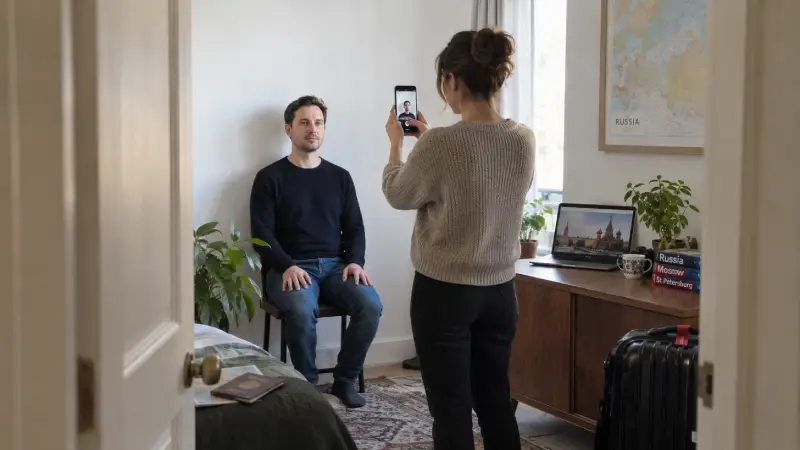
Your passport must be machine-readable, issued by your country of nationality and valid for at least six months from the application date. It also needs room for border stamps. Prepare a clear image of the passport details and a recent portrait photograph meeting the portal's requirements.
Submit the application between 86 and four days before your intended entry. Processing normally takes up to four calendar days, with the submission day excluded in the official FAQ. Corrections restart the processing period, so leave more time than the minimum window.
You do not need an invitation letter or hotel-booking confirmation for the eVisa application. You still provide the name, address and telephone number of the accommodation where you intend to stay.
Pay the amount shown through the official application process and follow the status in your account. The fee is non-refundable, including after a refusal. Children need individual eVisas; those under six are exempt from the consular fee, which should not be confused with a promise that every payment-related charge is waived.
After approval, examine the issued notification against your passport. Errors in an issued eVisa require a new application. Download the PDF and keep a printed or offline copy for boarding and passport control.
The approved eVisa list includes Moscow Sheremetyevo, Domodedovo and Vnukovo airports, as well as St Petersburg's Pulkovo. Other air, road, rail and sea crossings are included, but permission is specific to the checkpoint.
Your exit crossing matters just as much as your arrival crossing. Inclusion on the approved list also does not establish that a particular flight, train or land crossing is operating on your travel date.
Use the consular route if your passport is outside the eVisa list or your trip needs a different permitted stay or number of entries. Arrange this before travelling; do not build an itinerary around obtaining a tourist visa at the airport.
Apply through the Russian consulate responsible for your place of residence and follow its document requirements. Completing the ordinary visa application online is only one step in that process, rather than an electronic permission to travel.
The general consular passport requirement is at least two blank visa pages and, normally, validity extending six months beyond the visa's expiry. This is a different calculation from the eVisa's six months from application.
Tourist support can include confirmation from a registered Russian tour operator. Eligible nationalities may instead use the prescribed confirmation from a qualifying classified hotel or accommodation provider. Do not assume that an ordinary booking email satisfies that requirement.
Fees, processing times and available visa conditions depend on the application. Check the issued visa's dates and entry count before finalising any side trip that would require you to return to Russia.
ruID is a pre-arrival reporting and digital-profile system associated with visa-free entry. It is separate from an eVisa application, and the pilot has been extended through 31 December 2027.
The published procedure calls for submitting an entry declaration at least 72 hours before arrival. A four-hour window exists for specified urgent circumstances, such as emergency treatment or the serious illness or death of a close relative; it is not a general last-minute travel option.
Official instructions are not fully aligned. Government guidance published in July 2026 uses mandatory language about the declaration. However, the Russian digital ministry's published clarification of the pilot, issued in June 2025, says that a missing declaration or QR code alone is not grounds for refusing entry. That earlier clarification should not be presented as an unconditional waiver covering every later rule or travel purpose.
Our advice for visa-free tourists is to complete the declaration ahead of time where applicable and retain the submission details. If the app fails or your airline gives different instructions, resolve the requirement with the airline and the Russian consulate handling your nationality before departure.
Belarusian citizens and children under six are among the stated exceptions. Separate rules affect work, study and professional driving, so advice aimed at those groups should not be copied directly into a tourist itinerary.
Your visa or exemption establishes the relevant entry route. ruID deals with advance information, while accommodation registration records where you stay after arrival. Completing one does not complete the others.
Keep the documents needed for your route together, with key details available without an internet connection:
Passport and entry permission: carry the passport connected to your issued visa and the eVisa notification where applicable. Visa-free visitors should meet the document conditions attached to their exemption.
Medical insurance: eVisa visitors need cover valid in Russia for their entire stay, except where a reciprocal exemption applies. Make sure the policy actually covers Russia and your travel dates.
Accommodation details: save the property's name, address and contact number, plus the booking or tourist-support documents relevant to your visa route.
Travel itinerary: keep onward bookings and any destination visa needed for a connection accessible. These help establish your intended route without treating one ticket rule as universal for every passport.
The eVisa form's treatment of insurance information should not be confused with the requirement to hold valid cover. An application being accepted without a policy number does not remove the underlying insurance condition.
Plan internet access on arrival in Russia before flying, but keep your visa, hotel address and first transfer details offline. Border checks are a poor moment to discover that a document exists only in an email attachment you have not downloaded.
Visa-free airport transit is generally available for a connection within 24 hours when you remain in the international transit area and hold the onward ticket and destination visa, if required.
The useful question is whether your connection keeps you airside throughout. Collecting checked luggage, changing airports, entering the city or taking a domestic flight can require you to pass immigration. Obtain the appropriate entry permission for that itinerary before departure.
Standalone transit is not one of the listed purposes for the unified eVisa. Where a transit visa is required, use the consular procedure rather than selecting an inaccurate purpose in an eVisa application.
Russia and Belarus have recognised qualifying conventional visas under their mutual-recognition agreement since 11 January 2025. The arrangement has an important electronic-visa limitation.
Belarus's foreign ministry currently states that Russia does not admit travellers using Belarusian eVisas, or Russian eVisas when entering directly from Belarus, while technical issues remain unresolved. A Russian eVisa therefore is not a suitable basis for a direct Belarus-to-Russia journey under the current rules.
Visa-free permission for Belarus also does not automatically establish permission to enter Russia. Match both countries' requirements to your passport and documents, then use a permitted route across their shared border.
Keep any migration card issued at the border throughout your stay and hand it back when required on departure. Check its personal details and travel purpose before leaving passport control, and store it with your passport.
Registration at your accommodation is a separate process. The general notification deadline is seven working days after arrival at a place of stay, although nationality-specific agreements can create exceptions. Hotels handle registration as part of the check-in process; give reception the necessary documents and ask for confirmation that it has been completed.
Private accommodation needs more attention. Agree with the host who will submit the arrival notification and which deadline applies, especially if you change addresses during the trip. Submitting ruID before travel does not replace registration at the place where you actually stay.
Once admitted, you may want mobile data for hotel messages and onward transport. You can arrange a Russia eSIM for a compatible phone before travelling, while keeping the first day's essential information available offline.
Set your departure against both the permitted stay and your visa's expiry. For an eVisa, whichever limit comes first controls the latest departure. Buying another ticket or submitting another application does not extend the permission you already hold.
EVisas can be extended only in limited circumstances, such as emergency medical treatment, force majeure or a natural disaster preventing departure. These cases are handled by the Russian interior authorities; an extra sightseeing day is not a basis for extension.
If illness or disruption threatens your lawful departure date, contact the territorial interior authorities promptly and keep the relevant evidence. Resolve the situation before the permission expires where possible, rather than relying on an explanation at the airport.
Before you fly, make five practical checks:
Passport: your nationality, passport type and validity match the route you selected.
Permission: the visa is issued, the details are correct, and the dates and entry count cover your itinerary.
Borders: arrival, connections and departure work with your permission, including any Belarus segment.
Arrival arrangements: applicable ruID steps, insurance, accommodation registration and offline documents are organised.
Connectivity: compare Russia eSIM options and activation before choosing your mobile-data setup, with essential documents already saved on your phone.
