Download the App and manage your eSIMs easily
Create your order quickly
See your eSIM details
Track your remaining data
Download the App and manage your eSIMs easily
Create your order quickly
See your eSIM details
Track your remaining data
Russia’s customs rules depend on how you enter and what you carry. Cash above US$10,000 equivalent needs declaring, while certain medicines require medical documents and a notarized Russian translation.

Lena Hartley
Updated Oct 5, 2026
9 min read
Save 15% on your Roafly eSIM
Stay connected on your next trip. Use the code below at checkout.
View All DestinationsJump to section
👇Save 15% on your Roafly eSIM
Stay connected on your next trip. Use the code below at checkout.
View All Destinations
Manage your eSIM in the app
Install, top up and track data.
Before packing, separate purchases and gifts from the used belongings you will take home, then check the restrictions affecting your food, alcohol and tobacco.
| Item | Current rule | Best action |
|---|---|---|
| Purchases and gifts | Air: €10,000 and 50 kg; other arrivals: €500 and 25 kg | Check both value and weight |
| Cash and traveler’s checks | Declare a combined total above US$10,000 equivalent | Add all currencies together |
| Controlled medicines | Ingredient-specific documents and declaration requirements | Check every active ingredient |
| Animal products | Up to 5 kg under the conditional personal-use exemption | Keep factory packaging |
| Plant products | Up to 5 kg under the certificate exemption, with exclusions | Check product and origin |
| Alcohol | 3 liters duty-free per person aged 18 or over | Include beer in the total |
| Tobacco | 200 cigarettes or one of the listed alternatives | Count sticks and other products too |
These allowances concern entry into the Eurasian Economic Union’s customs territory from outside it. Russia shares that territory with Armenia, Belarus, Kazakhstan and Kyrgyzstan. If your itinerary passes through another member, establish where your baggage will clear customs.
Rules checked on 5 October 2026. Requirements can change; verify the linked official guidance before travel.
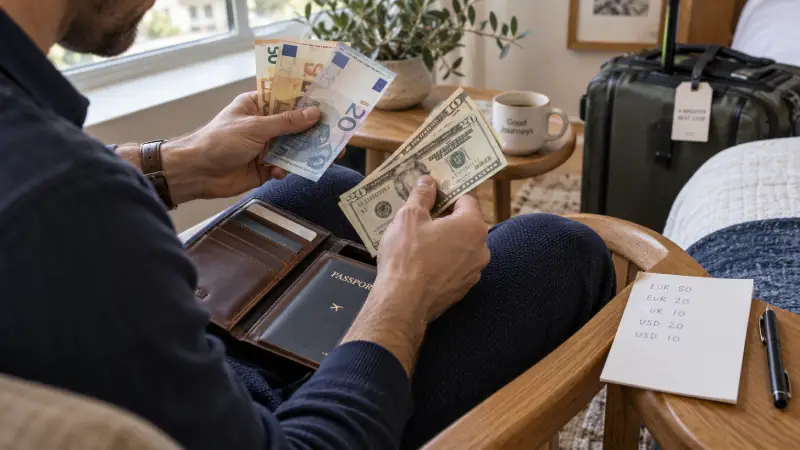
You must declare cash and traveler’s checks when their combined value exceeds US$10,000 equivalent per person. Add together every currency you carry, including Russian rubles, using the exchange rates applicable on the declaration date.
Declare the whole amount, rather than only the portion above the threshold. Exactly US$10,000 equivalent does not trigger this declaration requirement, although you can declare a smaller amount voluntarily. Bank-account balances are outside the cash calculation.
Other monetary instruments, such as bank checks and bearer securities, require declaration regardless of their value. Amounts above US$100,000 equivalent also require documents establishing the origin of the funds.
The Russian customs guidance on allowances and cash declarations sets out these separate requirements. Keep your completed declaration and any customs endorsement with your travel documents.
Declaring money on arrival does not authorize you to take the same amount out again. Russia separately restricts the export of foreign cash and foreign-currency monetary instruments exceeding US$10,000 equivalent.
Plan your return journey before carrying a large cash reserve into the country. Departure-country and transit-country currency restrictions also need to be considered separately.

Ordinary medicines for your own use can generally enter without a special import permit when they contain no controlled narcotic, psychotropic, potent or toxic ingredients. Bring quantities consistent with your treatment and trip, and keep labeled packaging so the contents are easy to identify.
The distinction depends on the active ingredient, not simply whether the medicine is available over the counter where you live.
Medicines containing controlled narcotic or psychotropic substances need an ingredient-specific check before travel. Where personal medical import is permitted, prepare:
Medical documents identifying the prescribed medicine and quantity.
The required original or certified documents, with a notarized Russian translation if they are in another language.
A passenger customs declaration for presentation at customs.
Listed potent or toxic ingredients also trigger documentation requirements. There is an exception for qualifying medicines registered in Russia or under EAEU rules and available without prescription in Russia.
The official rules for carrying medicines across the border explain these distinctions. A foreign prescription alone should not be treated as permission for every controlled substance.
Leave cannabis, THC and CBD products at home, including oils, edibles and vape cartridges. Products sold legally in your home country can still create serious problems at the Russian border.
The general personal-goods allowance is considerably higher when entering by air:
By air: up to €10,000 in value and 50 kg.
By other transport or on foot: up to €500 in value and 25 kg.
Both conditions apply. Staying below the value threshold does not remove the weight limit, and traveling with a light suitcase does not remove the value limit. These are customs allowances, separate from the baggage allowance included in your airline ticket.
Purchases and gifts must be for personal, family or household use. Customs considers the nature and quantity of the goods and how frequently you cross the border when deciding whether they qualify as personal goods.
Keep receipts for valuable purchases. General baggage above the allowance is subject to duty calculated at 30% of the excess value, with a minimum of €4 per kilogram of excess weight. Alcohol has its own quantity limits and duty treatment.
Foreign visitors can temporarily bring specified used personal belongings for their stay without duty, regardless of their value or weight, within the permitted quantities.
The list includes up to two mobile phones and one each of a portable computer, tablet and games console. Used clothing, personal items and specified camera equipment are also covered within the applicable conditions.
This matters particularly at a land border: your usual laptop should not automatically be treated like a newly purchased laptop you intend to give someone in Russia. Keep the purpose of each item clear, especially if carrying several similar devices.
Before departure, compare eSIM options for Russia if you plan to use mobile data on your phone. Provider availability and activation conditions are separate from the customs treatment of the device itself.
Russia has separate personal-use rules for animal products and plant products. Factory packaging helps establish what you are carrying, but country-specific health restrictions can still prevent entry.

The simplified exemption allows up to 5 kg of finished animal products in factory packaging per person, without an import permit or veterinary certificate, provided the producing country and the country of export meet the relevant animal-health conditions.
Fresh meat, homemade dairy products and food without factory packaging do not qualify for that simplified exemption. For an ordinary holiday, leaving those items behind is usually more practical than arranging veterinary documentation.
Temporary restrictions linked to animal disease can override the general exemption. The product’s origin matters as well as where you bought it.
The phytosanitary-certificate exemption generally covers up to 5 kg of qualifying plant products in passenger baggage.
It does not cover seeds, planting material or potatoes. Those categories require a phytosanitary certificate regardless of quantity. Higher quantities of products subject to phytosanitary control also require the relevant certificate, and temporary origin restrictions remain applicable.
The official food and plant import guidance explains the difference between the small-quantity exemptions and the additional restrictions. Check unusual food gifts and anything intended for planting before adding them to your suitcase.
Passengers aged 18 or over may bring 3 liters of alcoholic drinks duty-free. The allowance combines qualifying drinks above 0.5% alcohol by volume, including beer.
You may bring more than 3 liters, up to a maximum of 5 liters under the passenger allowance, by declaring the alcohol and paying €10 for each liter above the duty-free amount. Carrying 4 liters therefore means declaring it and paying €10 on the extra liter.
More than 5 liters falls outside the permitted personal-use quantity. Buying alcohol in a duty-free shop does not increase Russia’s arrival allowance.
The duty-free tobacco allowance for someone aged 18 or over is:
200 cigarettes.
Or 50 cigars or cigarillos.
Or 200 heated-tobacco sticks.
Or 250 grams of tobacco.
Or an assortment of the listed products weighing no more than 250 grams in total.
Use the appropriate alternative or mixed-product limit. The allowance does not mean you can bring a full quantity of every category together.
Check nicotine vapes and liquids directly with Russian customs before packing them. The cigarette, cigar and heated-tobacco allowances above should not be applied to disposable vapes, refill bottles or nicotine pouches.
Give customs the exact product type, ingredients, number of devices and total liquid volume when asking about your intended quantity. This avoids relying on an unverified general vape allowance.
Airline battery rules and cabin-liquid restrictions are separate from customs permission. Rules governing smoking or vaping after arrival are also a different question from bringing the product across the border.
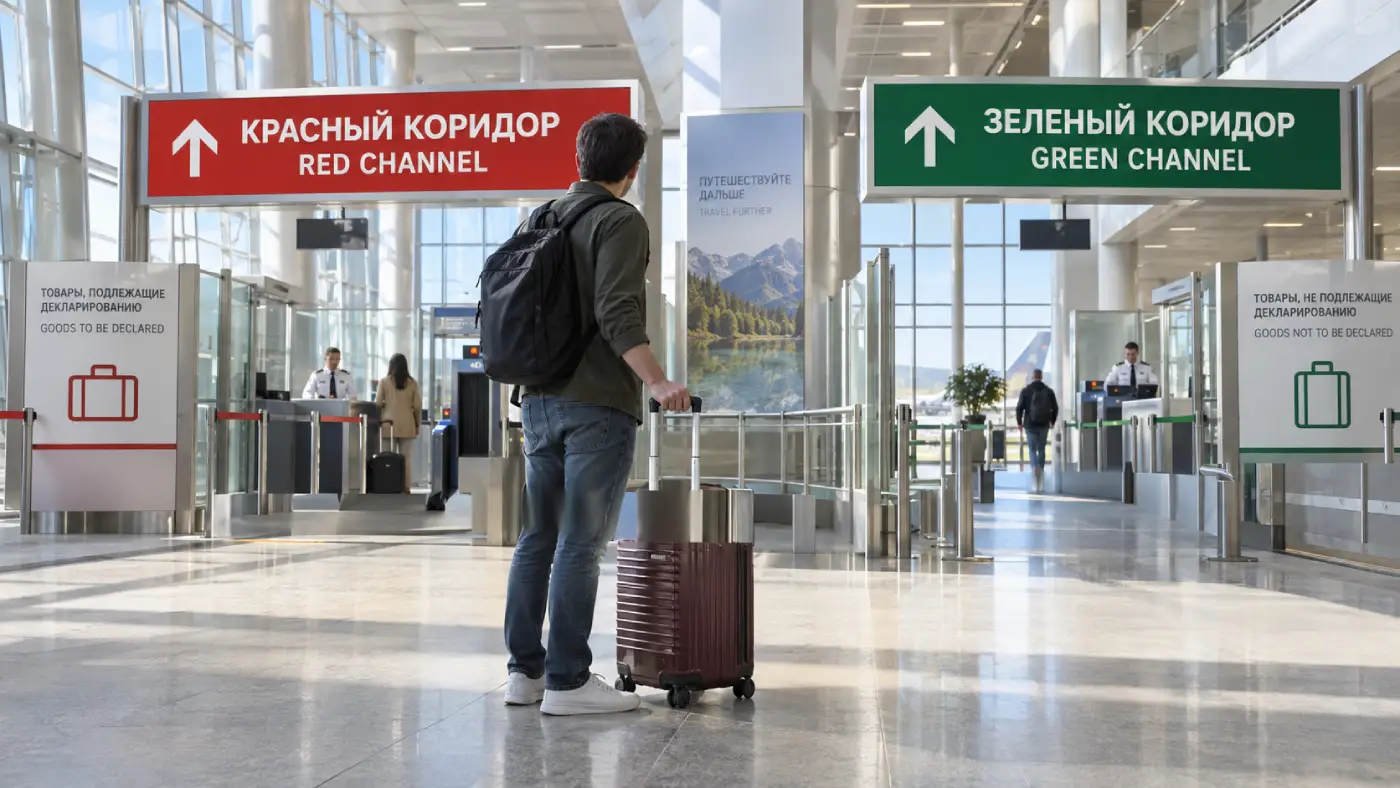
Where a dual-channel system operates, use the red channel for goods requiring a declaration. The green channel is for passengers carrying nothing that requires customs declaration; you can still be selected for inspection there.
Cash above the declaration threshold, goods exceeding the relevant allowance and medicines subject to declaration are common reasons to use the red channel. Certain other items, including weapons, cultural objects and protected wildlife products, require separate attention and potentially supporting permissions.
If you are uncertain about something in your baggage, speak to customs before passing through the green channel.
The passenger customs declaration can be prepared in advance or completed at the border. Keep your passport, receipts, medical documents and any required permits accessible. Retain the customs-endorsed copy when one is issued, particularly for money or goods you may need to account for later.
Passport control and customs deal with different requirements. Handle your Russia visa and entry requirements separately from the declaration of money and baggage.
Save essential documents on your phone and carry paper copies of anything customs needs to inspect. Plan your internet access in Russia before departure, including an offline backup for your arrival. Access to mobile data may be interrupted or subject to arrival restrictions.
Before closing your suitcase:
Review purchases and gifts. Keep receipts and assess their value and weight against your method of arrival.
Total your cash. Include every currency and traveler’s check, then prepare the declaration and supporting documents where required.
Check medicines by ingredient. Arrange medical evidence and translations for the preparations that need them.
Review food and nicotine products. Check origin restrictions, keep relevant packaging and resolve any product-specific questions.
Prepare for the onward journey. If arranging mobile data, review the Russia eSIM options before departure and download your hotel address and transfer details.
Keep declaration documents accessible. Decide which customs channel fits what you are actually carrying before entering it.
