Download the App and manage your eSIMs easily
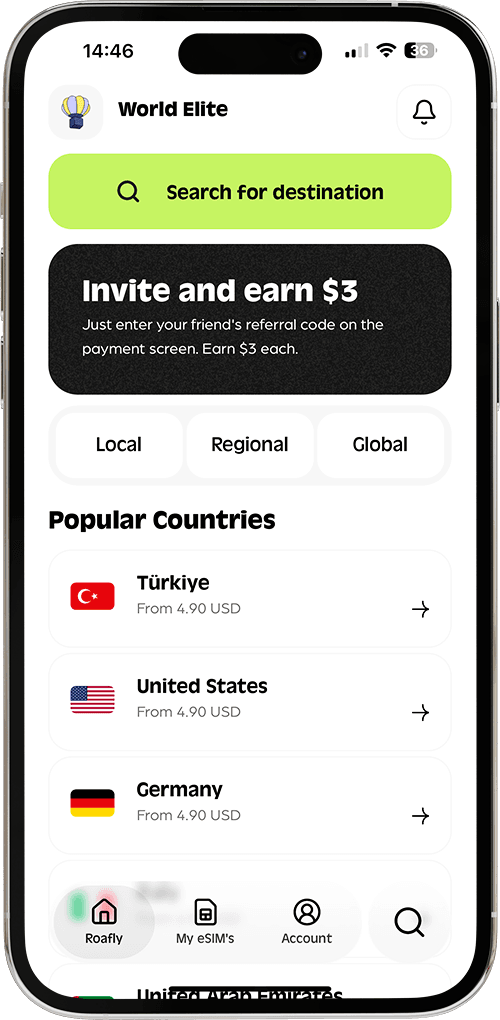
Create your order quickly
See your eSIM details
Track your remaining data
Download the App and manage your eSIMs easily
Create your order quickly
See your eSIM details
Track your remaining data
Kenya’s visa-free system still requires advance paperwork for many visitors. Under the rules checked on 13 November 2026, your passport determines whether you need an electronic travel authorisation, or eTA, before departure. Mandatory inbound health insurance is a separate requirement with its own exemptions.

Lena Hartley
Updated Nov 13, 2026
8 min read

Save 15% on your Roafly eSIM
Stay connected on your next trip. Use the code below at checkout.
View All DestinationsJump to section
👇Save 15% on your Roafly eSIM
Stay connected on your next trip. Use the code below at checkout.
View All Destinations
Manage your eSIM in the app
Install, top up and track data.
Start with those two checks before preparing your documents. The eTA’s validity, your insurance period and the time immigration allows you to stay are three different things.
Most visitors whose nationality is outside Kenya’s exemption groups need an approved eTA before travelling. This is an electronic permission to travel, rather than the former tourist visa application.
The examples below apply to ordinary passports and short tourist visits. They are not the complete nationality lists.
| Passport group | Examples | eTA requirement |
|---|---|---|
| Nationalities requiring advance authorisation | United States, United Kingdom, Canada, Australia, Germany, France, India, Türkiye | Obtain an approved eTA before departure |
| Nationalities exempt for visits of up to 90 days | South Africa, Malaysia, Singapore, Ghana, Mauritius | No eTA within the stated exemption period |
| Nationalities exempt for visits of up to 60 days | Egypt, Morocco, Nigeria, Algeria, Tunisia | No eTA within the stated exemption period |
| Listed East African partner-state nationals, exempt for visits of up to 180 days | Uganda, Tanzania, Rwanda, Burundi, Democratic Republic of the Congo, South Sudan | No eTA within the stated exemption period |
Use the official eTA application and exemption guidance to match your nationality and passport category. Kenya residents, holders of certain valid permits and re-entry passes, and some official passport holders have separate provisions.
Citizenship matters here. Flying from Tanzania or living in South Africa does not give a British passport holder the exemption available to those countries’ citizens. Likewise, an exemption for diplomatic or special passports should not be applied to an ordinary passport from the same country.
Allow at least two weeks before departure. Normal processing is usually three working days, but an application can take longer if further checks are needed. The standard single-entry eTA starts at US$30; mandatory insurance is a separate cost.
Prepare these items before starting:
Your passport, valid for at least six months after your planned arrival, with at least one blank page.
Selfie or passport-style photograph.
Your email address and telephone number.
Arrival and departure itinerary details.
Accommodation booking confirmations.
Payment card or another accepted payment method.
If you are staying with family or friends, prepare an invitation and the host’s identification or relevant residence document. Use the travel details and passport you will actually present on the journey.
Review the passport number, name and dates carefully before submission. Payment confirmation only shows that you have paid; travel requires the approval itself. Once approved, save the eTA PDF and keep a printed or offline copy available for departure and arrival checks.
The standard eTA permits one entry and is valid for travel within 90 days of issue. Immigration determines your permitted stay when you arrive, so the authorisation’s expiry date is not your departure deadline.
Since 5 October 2026, non-Kenyan visitors entering for stays of less than 12 months generally need the prescribed inbound travel health insurance, unless they fall within an exempt category. This requirement applies even when the trip was booked before that date.
Being exempt from eTA does not automatically exempt you from insurance. Someone travelling on an ordinary South African, Malaysian or Nigerian passport may avoid the eTA application while still needing the mandatory policy.
The principal insurance exemptions include Kenyan citizens, holders of valid Kenyan residence status, citizens of East African Community partner states, qualifying official passport holders and passengers who remain in transit without entering Kenya. Other exemptions apply to specified categories such as qualifying crew and people seeking asylum.
If you need an eTA, the application process directs you to buy the insurance. If you are exempt from eTA but still need cover, use the official eCitizen inbound insurance service separately.
The portal lists the premium as up to US$44 per person. Each person needs an individual policy, including children who are subject to the requirement. The policy provides up to 90 days of cover and can cover multiple entries during its validity.
Existing insurance from your home country is not accepted as a substitute for this prescribed policy. You can retain it for the additional protection you need, but carry the Kenyan policy certificate for the entry check. Its validity does not extend your immigration permission.
Your passport must remain valid for at least six months after arrival. Kenya’s eTA instructions specify at least one blank page, while UK government advice for British citizens specifies two. Preparing with two blank pages avoids that discrepancy; British passport holders should follow the two-page requirement in their travel guidance.
Keep the documents for your arrival together:
| Document | What to have ready |
|---|---|
| Passport | The passport used for your authorisation, where required |
| Approved eTA | The approval PDF, unless you qualify for exemption |
| Inbound insurance | Your individual policy certificate, unless exempt |
| Accommodation | Booking confirmations or your host’s address and contact details |
| Departure arrangements | Your return or onward itinerary and booking details |
| Health documentation | Yellow fever certification when required for your route |
Download these before leaving home. Immigration documents should remain accessible even when your phone has no connection.
After entry, mobile data can help you contact your host, locate a pickup point or retrieve a changed booking. Compare the internet options in Kenya when deciding between local service, travel eSIM, Wi-Fi and roaming. On an unlocked, eSIM-compatible phone, Roafly’s Kenya eSIM provides prepaid data for maps, messaging and online bookings.
Pack with Kenya’s customs rules in mind too. Immigration permission and the rules for bringing goods into the country are separate checks.
Yellow fever certification depends on your travel route. Kenya requires a valid certificate from travellers arriving from countries where yellow fever is endemic, subject to the applicable exemptions. It is not a blanket requirement based simply on holding a foreign passport.
Use the official health entry requirements when preparing your documents. Give your travel clinic the full itinerary, including stopovers and overland travel, so the certificate requirement can be assessed for the journey you are taking.
November 2026 health screening: Kenya has been conducting additional arrival checks during the regional Ebola response. Complete any requested health declarations accurately, including details of recent travel. WHO’s 11 November update confirmed that Kenya remained open for tourism after its last patient was discharged, with surveillance continuing. That development did not mean all health measures had ended.
Connecting flights through Kenya can qualify for an eTA exemption when you remain within the airport’s transit arrangements and do not enter the country. Leaving for a Nairobi hotel, a city visit or another activity requires you to meet the entry rules for your passport.
Self-transfer bookings deserve particular attention. If collecting baggage or checking in again requires passing immigration, prepare for entry into Kenya. Ask the airline whether your actual connection can be completed airside, rather than assuming that every itinerary labelled “transit” qualifies.
Arriving overland does not change the nationality-based eTA rules. Someone crossing from Tanzania or Uganda still needs the authorisation applicable to their passport unless exempt. Arrange it before the journey rather than treating the border as an alternative application point.
Regional itineraries also require a separate look at the route itself. Consult safety advice for your Kenya itinerary before choosing a border crossing or onward journey; permission to enter and the suitability of a particular route are different decisions.
Read the immigration endorsement or visitor’s pass issued when you enter. It sets the period you have been allowed to stay. Do not calculate your departure deadline from the eTA’s 90-day travel window or the expiry of your insurance.
If your plans change, apply for a visitor’s pass extension through Kenya’s Foreign Nationals Services system, eFNS, before your permission expires. Prepare your valid passport and existing visitor’s pass, follow the application instructions and complete any required presentation at an immigration office. Submitting an application should not be treated as approval for an extra period.
Your visitor’s pass governs how long you can remain. Familiarise yourself with the local laws for visitors as well, so your preparation covers the rules that apply during the trip.
Children and infants who are not covered by an exemption need their own approved eTA. Parents can apply on their behalf, and the group application option helps organise travellers together. One adult’s approval does not cover the whole family.
Yes, if you are subject to the insurance requirement. Holding an eTA issued before 5 October 2026 does not remove the insurance condition for entry after that date. Obtain the prescribed cover separately through eCitizen and carry both documents.
No. The standard Kenya eTA authorises travel to Kenya. Prepare the entry documents required by each country on a regional itinerary, and establish what authorisation you need for any return to Kenya before booking around it.
