

'/%3e%3c/defs%3e%3cpath fill='%23fff' d='M-120-80h240V80h-240z'/%3e%3cpath d='M-120-80h240v48h-240z'/%3e%3cpath fill='%23060' d='M-120 32h240v48h-240z'/%3e%3cg id='b'%3e%3cuse xlink:href='%23a' stroke='%23000'/%3e%3cuse xlink:href='%23a' fill='%23fff'/%3e%3c/g%3e%3cuse xlink:href='%23b' transform='scale(-1 1)'/%3e%3cpath fill='%23b00' d='M-120-24v48h101c3 8 13 24 19 24s16-16 19-24h101v-48H19C16-32 6-48 0-48s-16 16-19 24z'/%3e%3cpath id='c' d='M19 24c3-8 5-16 5-24s-2-16-5-24c-3 8-5 16-5 24s2 16 5 24'/%3e%3cuse xlink:href='%23c' transform='scale(-1 1)'/%3e%3cg fill='%23fff'%3e%3cellipse rx='4' ry='6'/%3e%3cpath id='d' d='M1 5.85s4 8 4 21-4 21-4 21z'/%3e%3cuse xlink:href='%23d' transform='scale(-1)'/%3e%3cuse xlink:href='%23d' transform='scale(-1 1)'/%3e%3cuse xlink:href='%23d' transform='scale(1 -1)'/%3e%3c/g%3e%3c/svg%3e)
When traveling to East Africa's most iconic safari destination, ignorance of the law is never an excuse. Kenya enforces some of the strictest environmental and cultural laws in the world, and local authorities actively target both locals and foreigners who break them. You are fully subject to their judicial system the moment you land.
The $40,000 Baggage Mistake: The Plastic Ban
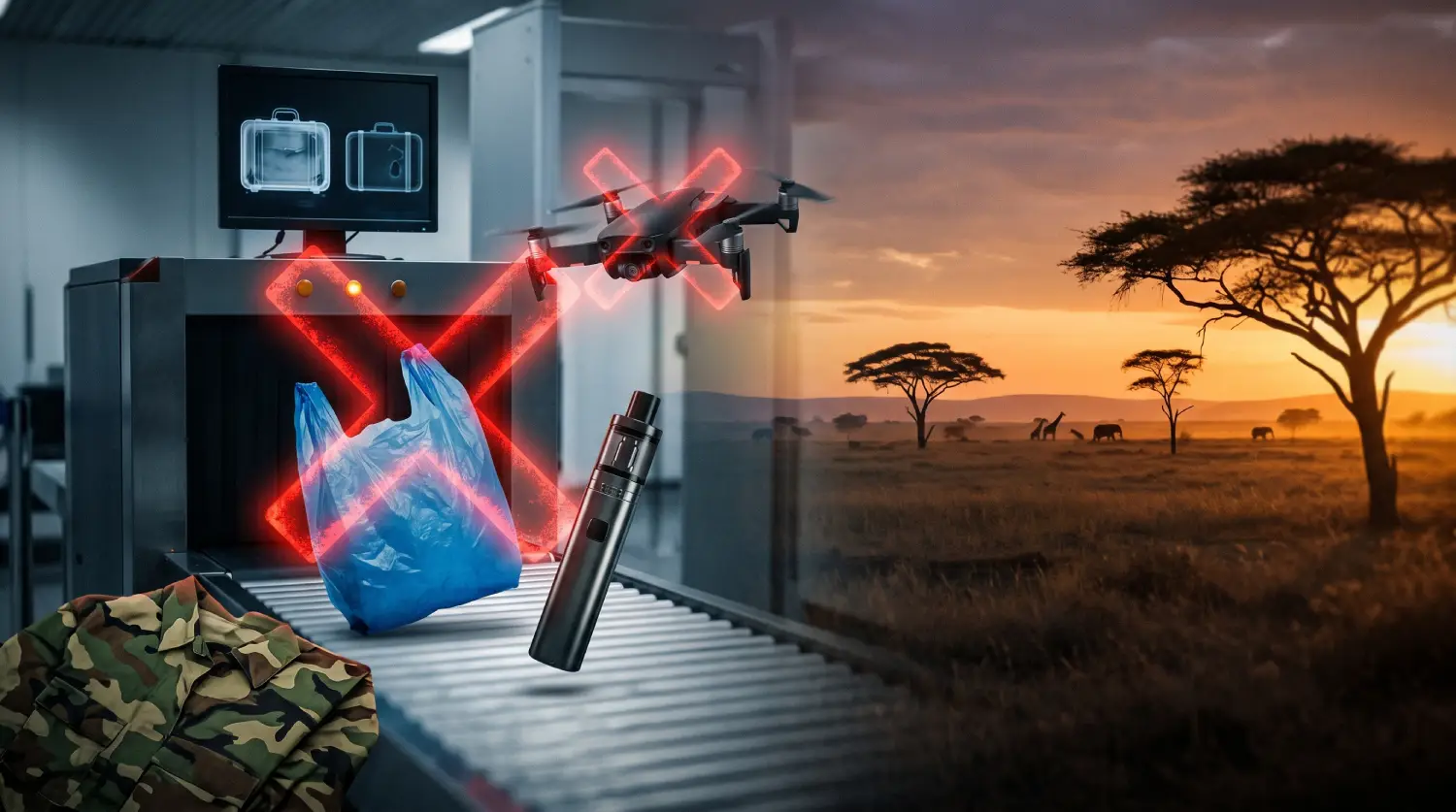
Kenya’s anti-plastic laws are aggressively enforced and world-famous for their severity. Bringing a commercial single-use plastic carrier bag into the country can result in a fine of up to $40,000 or four years in prison. This includes those duty-free bags you picked up during a layover.
Even if you make it past the airport, entering protected areas requires absolute compliance with the 2020 Single-Use Plastic Ban. If you are heading on safari, you are strictly forbidden from bringing plastic water bottles, disposable plates, plastic straws, or sweet wrappers into any National Park. For a detailed breakdown of what you can and cannot bring through the terminal, review our guide on Kenya Airport Customs Rules: Allowances & Plastic Ban.
To stay out of trouble, always pack reusable canvas totes and stainless steel water bottles. Safari operators will provide purified water refills at your camps, so there is absolutely no need to risk carrying a disposable PET bottle.
The 2026 Nicotine Crackdown: Vapes & E-Cigarettes
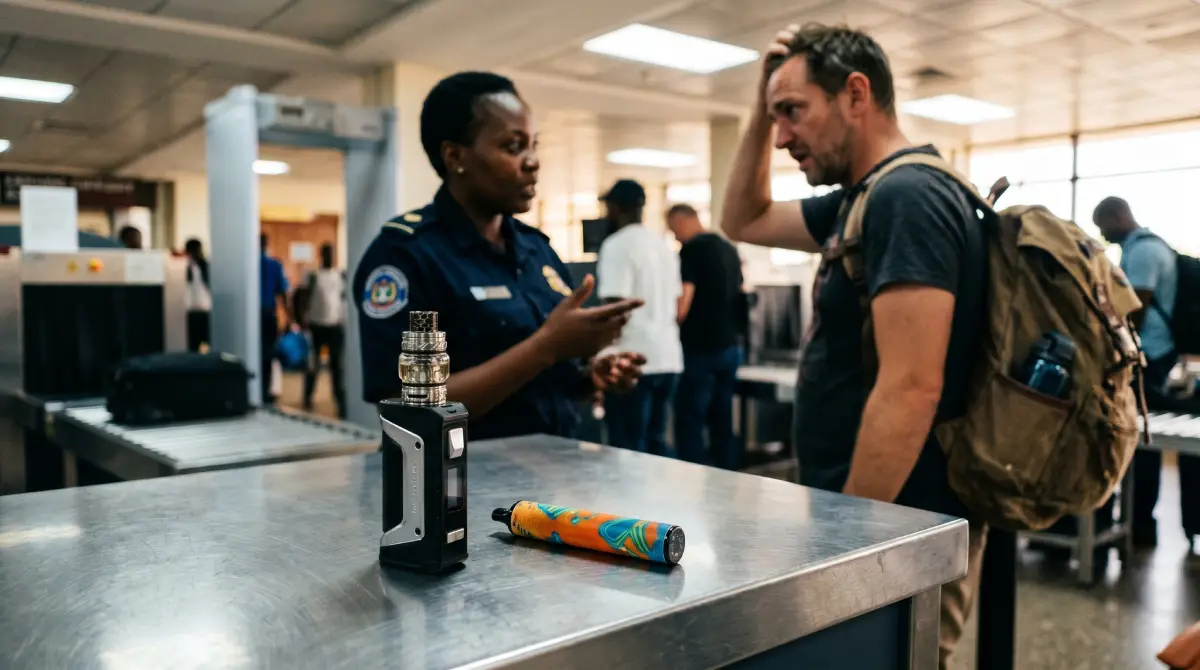
If you are a vaper, you need to leave your devices at home before boarding your flight. Following a sweeping decree by the Health Ministry in late 2025, Kenya has banned the import of all nicotine products, effectively criminalizing the entry of vapes, e-cigarettes, and smokeless tobacco for 2026.
Customs officials at Jomo Kenyatta International Airport are highly vigilant and will confiscate these items immediately. Do not attempt to hide them in your checked luggage, as all bags are strictly x-rayed upon arrival. Trying to smuggle a vape pen can result in heavy on-the-spot fines and aggressive interrogations by border police
While traditional smoking is still allowed in severely restricted, designated smoking zones, smoking in public spaces like streets, markets, and hotel lobbies is completely illegal. Violating public smoking bans carries a penalty of up to 50,000 KES (approx. $350) or six months in jail.
Pills & Pints: Narcotics, Meds, and Public Drinking
Kenya has zero tolerance for illegal narcotics, and even carrying certain prescription medications can trigger a legal nightmare. Over-the-counter medicines containing codeine or certain ADHD medications are heavily restricted. You must carry all medication in its original, clearly labeled packaging alongside a doctor's prescription written in English.
When it comes to alcohol, drinking in public outside of licensed bars or restaurants is strictly prohibited. You cannot crack open a beer on the beach, walk down the street with an open container, or drink in a moving vehicle. Doing so will lead to swift arrest and a mandatory court appearance.
If you are unsure about the legality of a specific prescription, always consult the official Kenya High Commission website or your local embassy before your departure.
Safari Rules, Drones & Camouflage Clothing
Many tourists assume the African savanna is a free-for-all, but the Kenya Wildlife Service (KWS) enforces strict regulations to protect the ecosystem. It is illegal to harass, feed, or shout at wildlife, and your safari driver can be stripped of their license if you force them to drive off-road. Do not attempt to buy or take home any animal products; purchasing ivory, rhino horn, or even certain animal hides will result in international trafficking charges.
If you plan to capture your safari from the sky, leave the gear at home. Flying a drone in Kenya is illegal for tourists without express, pre-approved authorization from the Kenya Civil Aviation Authority (KCAA) and the Ministry of Defense. Confiscation is guaranteed at the airport if you arrive without this paperwork, and attempting to fly in a National Park carries heavy jail time.
Additionally, do not pack any military-style fashion for your trip. Wearing camouflage clothing is illegal for civilians in Kenya, as it is strictly reserved for the military and wildlife rangers. If you are caught wearing camo pants or jackets, police will force you to remove them and you may face a hefty fine.
Photography Traps & Cultural Taboos
Taking a harmless vacation photo can quickly escalate into a national security issue if you aren't paying attention. It is highly illegal to photograph government buildings, military installations, airports, and police stations. If an official or a guard asks you to delete a photo, do so immediately and politely without arguing.
Culturally, Kenya is deeply conservative, and this reflects heavily in their laws regarding the LGBTQ+ community. Same-sex sexual activity is illegal and carries a penalty of up to 14 years in prison. While foreign tourists are rarely prosecuted, LGBTQ+ travelers must exercise extreme discretion, avoid public displays of affection, and prioritize their physical safety at all times.
For a broader understanding of street safety and avoiding local hustles, make sure to read Is Kenya Safe for Tourists? Scams, Safaris & Warnings. Always ask for permission before photographing locals, especially in rural Maasai or Samburu villages, as doing so without consent is considered an aggressive invasion of privacy.
Stay Connected to Stay Safe
Having immediate, reliable internet access in Kenya isn't just about posting safari photos; it is a critical safety tool. If you encounter a corrupt official, get lost in the busy streets of Nairobi, or need to verify a medication rule on the fly, you need to be. A Kenya eSIM allows you to bypass the chaotic SIM card kiosks at the airport and instantly connect to a secure network the moment you land.
Need data in Kenya? Get an eSIM!
Choose the perfect data plan for your trip

Manage your eSIM in the app
Install, top up and track data.
Using a digital data plan keeps you safe from physical SIM swapping scams and ensures you can always order a secure Uber instead of risking unverified street taxis. If you need help choosing the right data package, explore our review of the Best eSIM for Kenya.
For travelers deciding between physical SIMs, digital options, or portable routers for deep bush safaris, we have broken down all your choices in How to Get Internet in Kenya.
Summary Checklist (Don't Be That Tourist)
-
Leave the plastic bags behind: Packing your shoes in a grocery bag can trigger a massive $40,000 fine at customs.
-
Ditch the vapes: Importing e-cigarettes and all nicotine products is strictly banned as of 2026.
-
Keep meds in original bottles: Always carry an English prescription for any pharmaceutical you bring.
-
No camouflage clothing: Wearing military-style camo prints is illegal for civilians.
-
Leave the drone at home: Flying a drone without KCAA clearance will result in confiscation and fines.
-
Watch where you point your camera: Never photograph airports, police officers, or government buildings.
-
No public drinking: consume alcohol in licensed establishments or private property.
-
Respect the conservative culture: Public displays of affection, particularly for LGBTQ+ travelers, carry severe legal risks.