

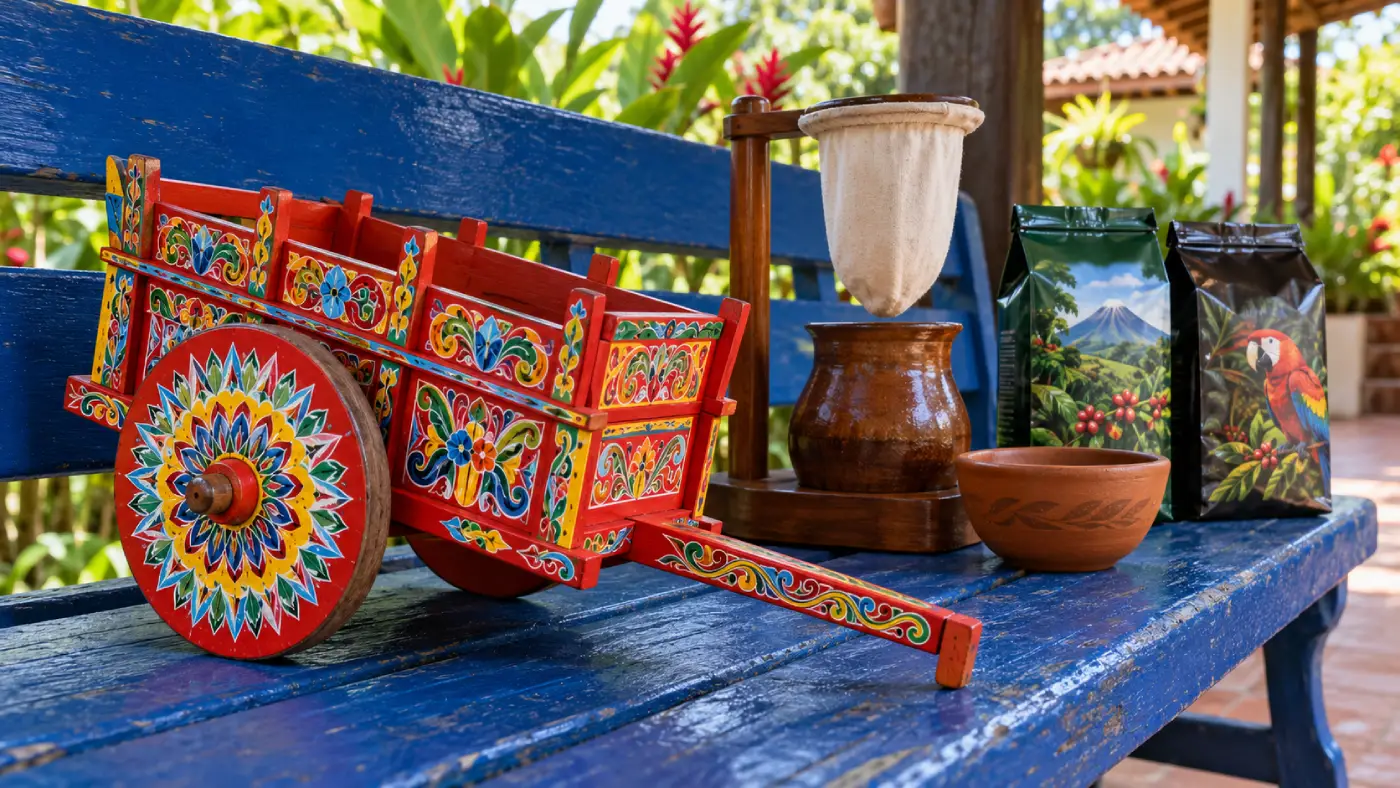

Costa Rica’s most useful souvenirs include coffee, chocolate and a chorreador you can keep using at home. Its distinctive craft purchases take more planning: Sarchí’s painted woodwork, Guaitil pottery and Boruca masks come from different parts of the country.
Start with your baggage allowance and the places already on your itinerary. Packaged food makes sense for several small gifts; a handmade piece deserves time to learn who made it and room to protect it on the journey home.
Best Souvenirs to Buy in Costa Rica
| Souvenir | Who it suits | What matters before buying |
|---|---|---|
| Costa Rican coffee | Coffee drinkers and gifts for several people | Origin, roast, bag size and whether the recipient needs beans or ground coffee |
| Costa Rican-made chocolate | Small gifts with little packing space | Ingredients, packaging and keeping it away from heat |
| Salsa Lizano | Someone who enjoyed the food during their trip | Bottle size and how liquids fit into the return journey |
| A chorreador | Someone who enjoys making filter coffee | A stable stand, a suitable cloth filter and a size that fits their mug |
| Sarchí painted woodwork | A colourful keepsake or useful household item | Maker, finish, dimensions and fragile projecting parts |
| A Boruca mask | Someone looking for a distinctive artwork | The artist’s name, community and how the piece will be protected |
| Guaitil or San Vicente pottery | A decorative piece from Guanacaste | Cracks, packing and whether it is intended for display or food use |
Coffee and a chorreador you will use
Buy coffee to match the person receiving it. Ground coffee is the practical choice for someone without a grinder; whole beans suit someone who already grinds coffee at home. Read the origin and roast information instead of choosing solely by the picture on the bag.
Several smaller bags can be easier to divide into gifts than large bag.
The chorreador adds a specifically Costa Rican coffee-making tradition to the gift: hot water passes through ground coffee held in a cloth filter suspended over a cup or pot. Folding models take up less luggage space than a large fixed stand. Before paying, make sure the stand fits the intended cup and establish whether the filter is included.
Chocolate and Salsa Lizano
Costa Rican-made chocolate, including Sibú, gives you a compact gift with a choice of flavours. Pick a bar the recipient will enjoy, paying attention to milk, nuts and other ingredients.
Lizano is worth considering if you have enjoyed it with meals during your stay. Taste it before committing to bottles for everyone. Our guide to Costa Rican food and drinks can help you connect edible purchases with the dishes you have been trying.
Painted wood, Boruca masks and Chorotega pottery
Sarchí is closely associated with brightly painted oxcarts, including miniature versions, as well as decorative wooden objects. Small painted household items can be easier to use and pack than a model with delicate wheels or handles.
Boruca masks offer a different kind of purchase: a carved and painted artwork connected to an Indigenous community and its traditions. The design’s meaning is part of the purchase, so leave time to discuss it with the maker or seller. Contemporary pieces can carry that cultural connection.
Guaitil and nearby San Vicente are known for pottery made through Chorotega traditions. Inspect the rim, base and any handles before the piece is wrapped. If you want to serve food in it, ask the maker whether that particular finish is suitable; a decorative bowl can look much like a functional.
How Much Do Costa Rica Souvenirs Cost?
These examples give you a starting point for everyday gifts and coffee accessory. All prices are in Costa Rican colones, shown with the ₡ symbol.
| Product | Size or model | Example price | Seller |
|---|---|---|---|
| Café 1820 ground coffee | 500 g | ₡4,100 | Walmart Costa Rica |
| Salsa Lizano criolla | 700 ml | ₡2,660 | Walmart Costa Rica |
| Sibú milk-and-chai chocolate | 50 g | ₡2,450 | Walmart Costa Rica |
| Folding wooden chorreador | Café Britt model | ₡12,500 | Café Britt Costa Rica |
Online prices checked on 1 October 2026. These are specific product listings; branch prices, availability and airport prices may differ.
Using those examples, one bag of coffee plus chocolate bar costs ₡6,550. Adding the 700 ml Lizano bottle brings the total to ₡9,210, with a larger liquid item to plan for.
Handmade masks, pottery and painted woodwork need a different comparison. Ask for the price of the exact piece, including any protective packaging or shipping you want. Size, materials and the work involved make a single nationwide “souvenir price” unhelpful.
Keep transport in the calculation, too. A long taxi journey can outweigh a small saving on coffee or sauce. Buying those gifts along your existing route usually makes more sense than travelling across town for a lower shelf price.
Where to Shop Along Your Costa Rica Route
San José: two different markets
Mercado Central is on Calle 6 between Avenida Central and Avenida 1. It is a useful stop to combine market browsing with time in the city centre.
Mercado Municipal de Artesanías is a separate market on Avenida 6. Save the full name and location when planning a craft-shopping visit, since it is easy to confuse the two markets when searching quickly.
Allow enough time to compare a few stalls and ask about the origin of a piece. Plan a daytime visit, and verify opening times if you are relying on a Sunday stop or a narrow gap between transfers.
Sarchí: painted woodwork
Sarchí makes sense when painted woodwork is part of the experience you want. Browse Sarchí’s local makers, including Artesanías Chaverri and Sarchisueños, for crafts and household pieces decorated in the local oxcart-painting style.
Bring the dimensions of the space where you intend to display the piece, along with a realistic idea of what fits in your luggage. Larger furniture purchases need a separate shipping plan.
Guanacaste: Guaitil and San Vicente
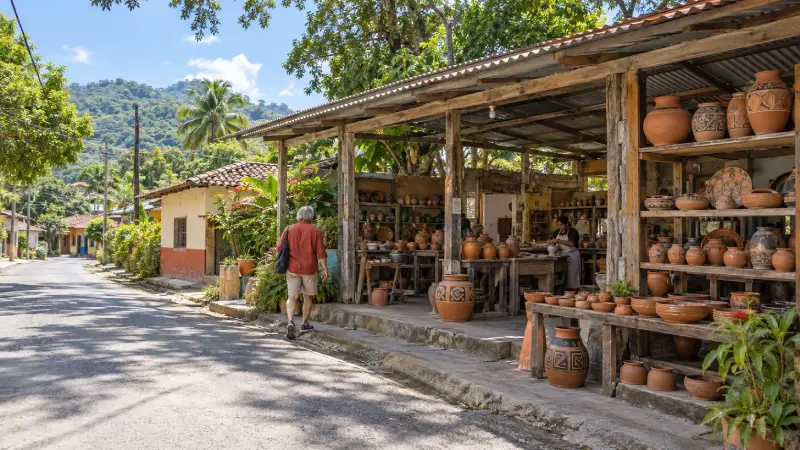
Guaitil and San Vicente are worthwhile stops for an interest in pottery. Seeing the work where it is made gives you a chance to discuss its materials, decoration and intended use directly with a maker.
Fit the visit around the Guanacaste part of your trip. Before adding a dedicated excursion, compare the practical options for getting around Costa Rica, including whether your existing transport arrangement allows stops.
Monteverde: CASEM
CASEM is a local artisan cooperative with a shop in Monteverde. Its range includes bags, clothing, wall hangings, ceramics and woodwork.
Textile pieces are especially useful if your suitcase is already crowded or you want to avoid another fragile object. Look at the stitching, closures and intended use just as you would with an everyday purchase at home.
Southern Costa Rica: Boruca
Boruca is the most direct place to explore the community’s mask-making and weaving traditions. Treat the journey as a cultural visit, with time to meet makers and understand their work.
Arrange demonstrations ahead of time, and ask your host about the current access route before setting off. Shopping for a small gift alone is a weak reason to add a substantial detour to a busy itinerary.
Save shop locations before leaving your accommodation. Costa Rica eSIM can provide mobile data for directions and messaging makers between stops on a compatible, unlocked phone; download an offline map for the route as well.
How to Choose Locally Made Crafts
Ask three straightforward questions: Who made this? Where was it made? What is it made from? An artist’s name, a workshop location and a clear explanation of the materials are more useful than a generic “authentic souvenir” label.
Keep the conversation specific to the piece in front of you:
-
Request the maker’s details, especially for a Boruca mask or a more expensive artwork.
-
Examine the base, seams, edges and moving parts before it is wrapped.
-
Get a receipt that identifies the item and seller.
-
Agree on protective packing before paying for something fragile.
Costa Rican imagery alone tells you little about where an object was produced. Similarly, an uneven finish is not proof of handcraft. If local production is the reason you are paying more, make the maker’s identity part of the buying decision.
Supermarket, Souvenir Shop or Airport?
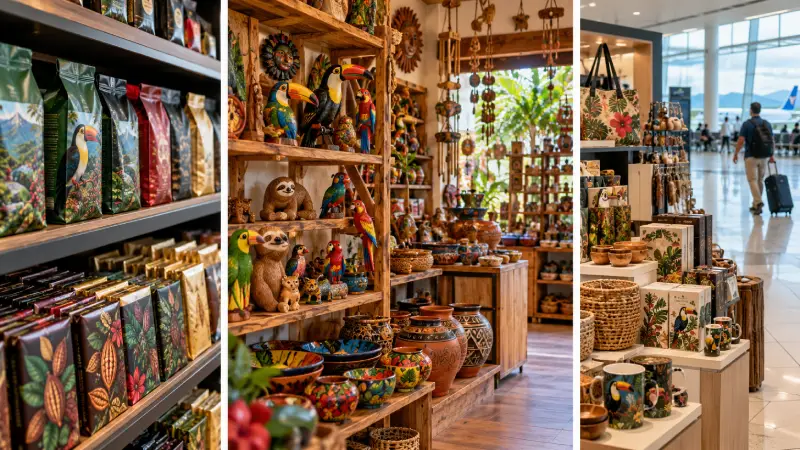
Supermarkets are useful for comparing packaged gifts. Coffee, chocolate and sauce have identifiable brands and sizes, so you can compare the same item across shops. Look at the quantity as well as the price: a larger coffee bag and a smaller gift presentation answer different needs.
Craft shops and workshops suit purchases where the maker matters. Use the opportunity to discuss a piece, inspect it and arrange packing. Ask for a lower-cost or smaller alternative if the item you like is beyond your budget, and respect a seller’s fixed price.
Airport shops can solve a last-minute gap. At SJO, Casa Tica is after security and sells Costa Rican crafts, sweets, sauces and local liquor. That can be useful if you missed a gift earlier, although there is no reason to assume every airport item has the same price premium.
Leave enough time to reach your gate and keep any connection in mind when buying liquids. The San José Airport guide helps you plan the terminal part of your departure.
Before shopping, decide how you will pay and confirm which currency the quoted price uses. Our guide to paying with cash or cards in Costa Rica covers that decision in more detail.
Mobile data also lets you compare the exact product size and contact a workshop while you are out. You can compare Costa Rica eSIM options before choosing a plan for your trip.
Bringing Your Souvenirs Home
Match purchases to your baggage
Coffee and solid chocolate are compact choices when travelling with a small bag. Larger sauce bottles need more planning: SJO’s security rules for liquids allow containers of up to 100 ml through the standard checkpoint, packed in transparent resealable bag with a maximum capacity of litre.
Pack a 700 ml Lizano bottle bought in town in checked baggage, subject to your airline’s rules and destination requirements. Seal it inside a leak-resistant bag and cushion it. Purchases made after security still need to comply with any later screening during your journey.
Wrap ceramics individually and protect projecting parts on masks or miniature oxcarts. Keep chocolate out of direct sun and parked-car heat. Leave space for purchases when using your Costa Rica packing list, especially if your return baggage allowance is tight.
Keep food packaging and check the destination rules
Keep edible gifts in their original packaging and retain receipts. The rules for bringing food, plants or natural materials home depend on the country you are entering.
US-bound travellers can use the official food and agricultural product guidance to check their purchases. Agricultural and wildlife products must be declared on entry to the United States; permission depends on the item and applicable conditions.
Other destinations have their own requirements. Check those before buying fresh foods, seeds, plants or objects made from animal materials.
Leave beach finds where they belong
Leave shells and other natural beach materials in place. Costa Rica’s airport authorities warn against collecting shells and have removed them from departing passengers.
Buy a crafted reminder of the coast instead. The same respect for the place you visited applies when following Costa Rica’s wildlife and park rules.