

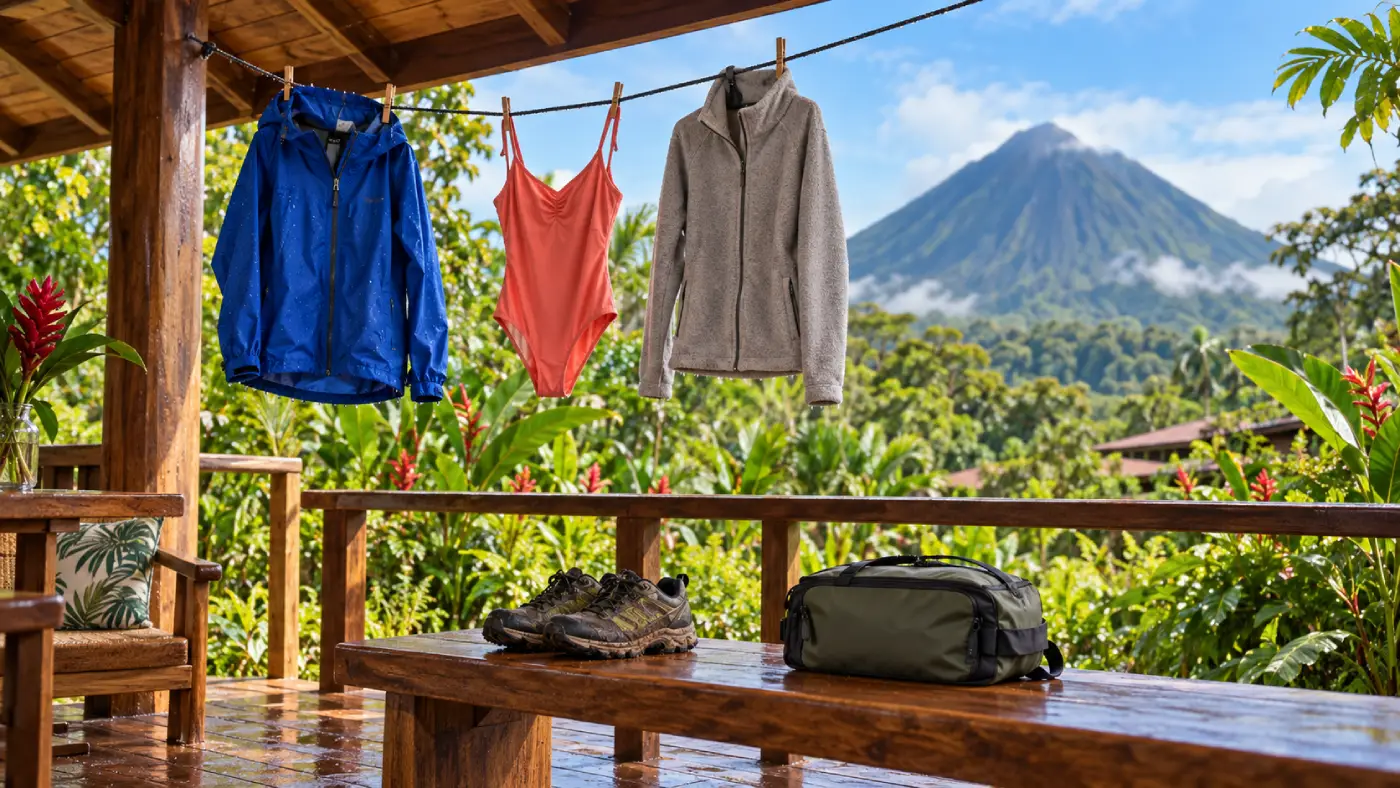

Start with quick-drying clothing, comfortable shoes with grip, swimwear, a hooded rain jacket and a light warm layer. Then adjust for your route. This list suits a typical 7–14-day trip combining beaches and nature; a coastal stay needs fewer layers, while longer hikes and domestic flights change the equipment and luggage decisions.
Pack for Your Route and Season
Your itinerary matters as much as the month. Costa Rica’s Pacific and Caribbean coasts have different rainfall patterns, and mountain stops add cooler conditions.
| Part of your trip | What earns space in your bag | Practical adjustment |
|---|---|---|
| Guanacaste and Pacific beaches | Light clothing, swimwear, sun hat and sandals | Keep a rain layer available if your itinerary includes inland excursions. |
| La Fortuna and Arenal | Quick-drying tops and trousers, grippy shoes, rain jacket and swimwear | Separate wet swimming clothes from the dry clothes you need afterward. |
| Monteverde | Light fleece or sweater, long trousers, closed shoes and a hooded waterproof jacket | Make the warm layer accessible during transfers and early starts. |
| Caribbean coast and Tortuguero | Rain protection, breathable clothing and a dry pouch for electronics | Allow for showers even during the region’s relatively drier periods. |
| Longer or remote hikes | Equipment matched to the specific trail and overnight arrangements | Get the trip’s equipment list before buying boots or packing camping gear. |
The Pacific generally has its driest stretch around December–March, with April and November acting as transition months. Rain is more prominent from May–October. The Caribbean has no clearly defined dry season, although coastal areas often have relatively drier periods in February–March and September–October.
Use Costa Rica’s regional weather to refine your route and clothing choices. Monteverde still deserves a rain jacket and an extra layer even when the beach portion falls in the Pacific dry season.
Build most outfits around fabrics that dry readily. Keep heavier denim to a minimum if you will be hiking or moving accommodation frequently. On a two-week trip, planning a laundry stop can save more space than squeezing in another week of clothes.
Choose Shoes for the Activities You Have Booked
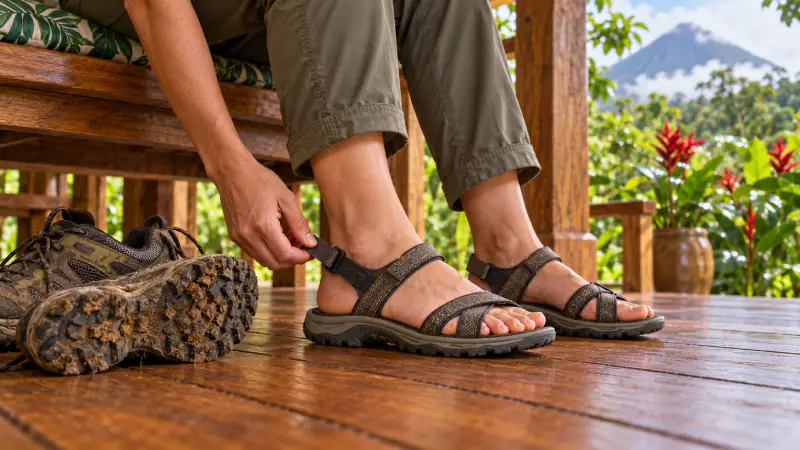
Comfortable closed shoes with reliable grip are the best starting point for a mixed beach-and-nature itinerary. Light hiking shoes or suitable trail shoes can cover ordinary forest walks and much of your day-to-day sightseeing.
Add sandals for beaches, accommodation and casual evenings. Secure water shoes or sandals may earn their place for a booked water activity, but the operator’s footwear requirements should decide which pair you bring.
The distinction is useful:
-
Forest walks and hanging bridges: closed shoes with tread, already worn in.
-
Ziplining: secure closed shoes; trousers or leggings can be more comfortable under a harness.
-
Rafting or other water activities: footwear that stays securely attached and meets the operator’s instructions.
-
Longer, rougher hikes: footwear suited to the actual terrain, load and conditions.
Heavy boots make sense when the hike calls for them. Buying them solely because Costa Rica has rainforest can add bulk without solving your trip’s main footwear needs.
Think about what happens after shoes get wet, too. A second usable pair lets you leave damp footwear to dry while you eat or travel.
Build a Daypack for Rain, Sun and Wildlife Walks
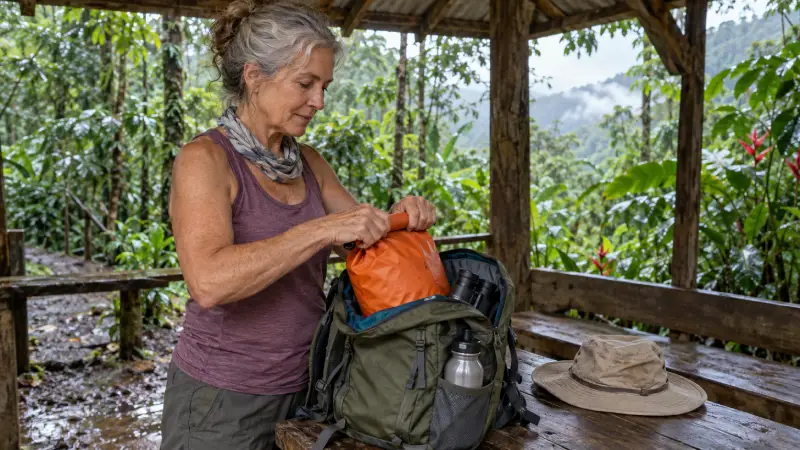
Keep the items you need during an excursion together, so you can leave your main luggage at your accommodation.
-
Hooded rain jacket: useful on forest walks and in Monteverde.
-
Water bottle: fill with safe drinking water before leaving.
-
Sun protection: sunscreen, sunglasses and a hat for exposed trails, beaches and boat trips.
-
Insect repellent: use it according to the label; lightweight long sleeves and trousers provide additional coverage.
-
Dry pouch or bag liner: protect your phone, documents and spare clothing from rain or splashes.
-
Small personal first-aid kit: include supplies appropriate to your activities and your own needs.
-
Optional binoculars: worthwhile if wildlife observation is a major part of the trip.
Monteverde has a specific reason to favour a rain jacket: umbrellas are not allowed at the Monteverde Cloud Forest Preserve under its visitor rules. That restriction applies to the named preserve; it is not a nationwide umbrella ban.
The bag you use for a forest walk may need to stay behind during another activity. Selvatura, for example, does not allow backpacks during its canopy tour. Keep the excursion’s instructions with your booking so you know what to bring to the meeting point and what can go on the activity itself.
Treat drone equipment as a separate decision. Some reserves and attractions prohibit its use; review Costa Rica’s park and drone rules before allocating luggage space to it.
Prepare Your Phone, Charger and Power Bank
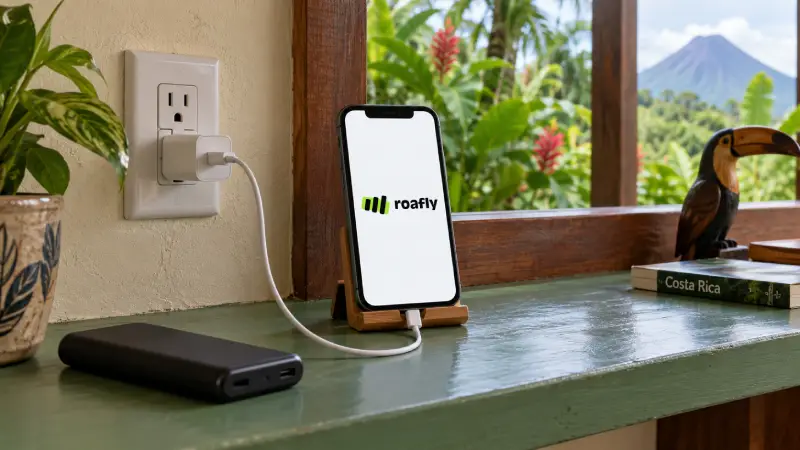
Costa Rica uses Type A and Type B sockets, with 120 V electricity at 60 Hz. Bring an adapter if your plug shape requires, and read the input label on each device or charger.
Chargers labelled “100–240 V, 50/60 Hz” support the local supply range. Plug adapters change the connection shape; they do not convert voltage. Compare your appliance labels with Costa Rica’s plugs and voltage before packing a hairdryer or styling tool.
Keep the power bank in your cabin bag
Pack a clearly labelled power bank of 100 Wh or less for the simplest starting point, then apply your airline’s rules. Protect it from damage and short circuits, and remove it if your cabin bag is taken for checking.
The ICAO power bank rules, effective from 27 March 2026, limit passengers to two power banks and prohibit recharging the banks during flight. They also recommend against using them to charge devices. Airlines can impose additional restrictions.
Use the Wh rating, rather than assuming universal mAh limit. Larger-capacity units require a separate airline check.
Download the useful things before departure
Save booking confirmations, accommodation addresses and offline maps while you have a reliable connection. Review the useful Costa Rica travel apps before flying so you have time to install them and complete any setup.
Compare internet options in Costa Rica before deciding whether to carry a separate Wi-Fi device. If you prefer an eSIM, the best eSIMs for Costa Rica comparison helps you choose a provider and data allowance.
On an unlocked, eSIM-compatible phone, you can install a Roafly Costa Rica eSIM before departure. Keep your offline maps and saved documents available as well, particularly for time away from a mobile signal.
Keep Documents, Medicines and Your Wallet Accessible
Your passport, required entry documents, essential medicines and payment cards belong in the bag that stays with you. Save copies of important documents separately from the originals and keep accommodation and-travel details accessible offline.
Review the Costa Rica entry documents relevant to your passport and journey before assembling that folder.
Carry personal medicines in labelled packaging with the prescription or a doctor’s letter where applicable. Controlled medicines can involve additional documentation and restrictions; do not assume permission in your home country settles the question abroad. Before packing medicines or food, review Costa Rica’s customs rules.
Prepare a compact wallet with cash and cards for Costa Rica, and keep a backup payment method separately if you have.
Match Your Bag to the Smallest Flight on Your Trip
Your international airline’s cabin allowance may be much larger than the allowance on a Costa Rican domestic flight. Start with the strictest part of your booked journey before choosing your suitcase.
Under SANSA’s baggage conditions, checked on 30 September 2026, the free personal item can measure up to 30 × 50 × 20 cm and weigh up to 4.5 kg. Checked baggage allowance depends on the fare purchased.
That makes a substantial difference if you normally travel with a full-size cabin roller plus another bag. Weigh the packed luggage against your actual domestic ticket, including any camera equipment and shoes.
Boat transfers and frequent accommodation changes are easier with luggage you can lift and manage yourself. Keep rain protection, medicines and electronics accessible instead of burying them at the bottom.
What to Buy Locally and What to Leave at Home
Basic toiletries can usually be replenished in tourist towns. Bring enough for your arrival and first activities, especially if you travel straight to a lodge, but avoid carrying large bottles for the entire trip when smaller supplies will do.
Bring products you specifically depend on, including suitable sun protection, your usual repellent and personal medicines. This avoids making your first excursion dependent on finding a particular product or brand.
Leave space by trimming:
-
Multiple pairs of heavy jeans or shoes serving the same purpose.
-
Bulky towels when your accommodation supplies what you need.
-
Specialist outdoor equipment unrelated to a booked activity.
-
Large hair appliances that are unnecessary or incompatible with the local supply.
-
Extra outfits added without considering laundry during the trip.
Before closing the bag, look through your itinerary more. Every bulky item should have a clear use on a particular day; your rain layer, comfortable shoes and dry storage should be easy to reach throughout the journey.