

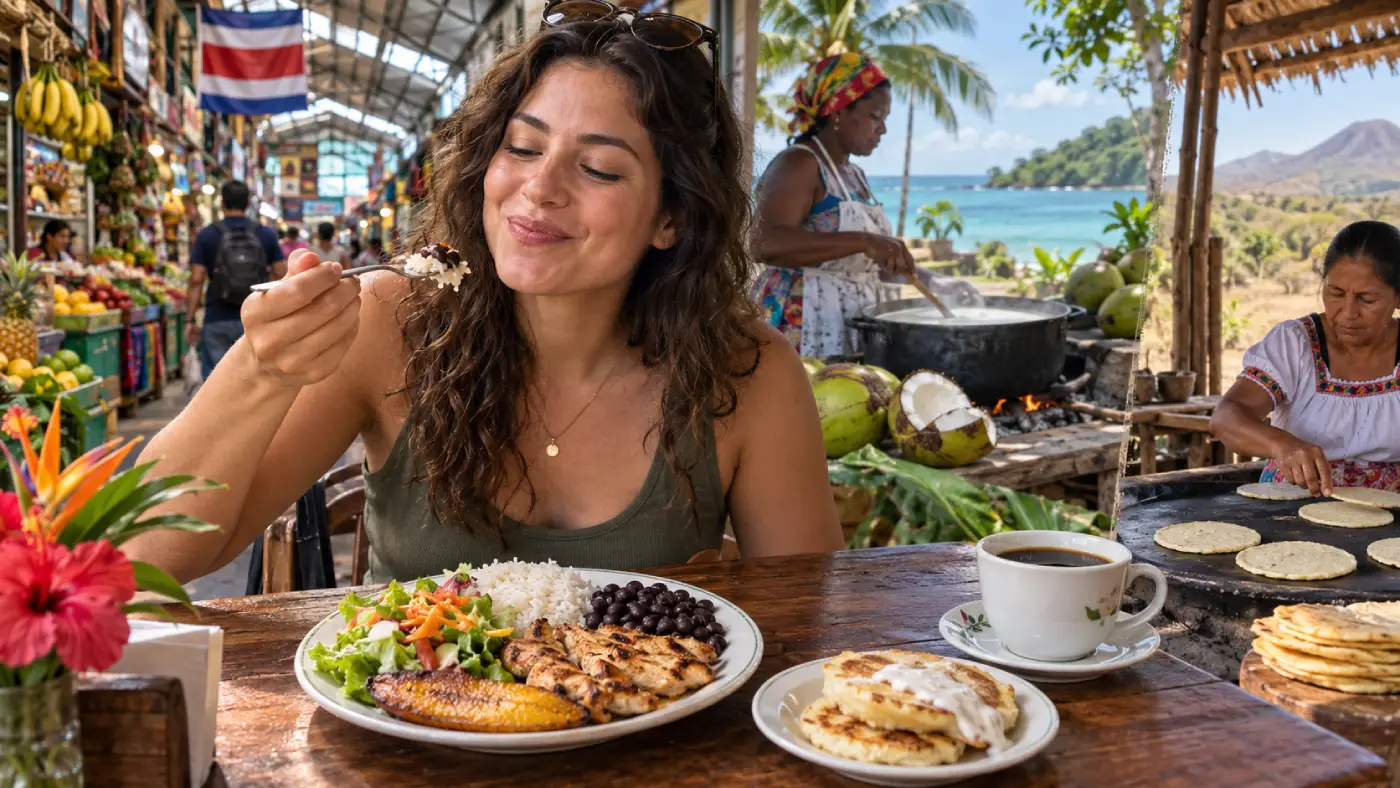

Start with a soda, the small local restaurant that makes everyday Costa Rican cooking easy to explore. Then leave room for regional dishes, a market snack and something beyond your usual coffee order. Knowing a few menu terms helps you find variety without planning every meal around restaurant recommendations.
What to order first
These Costa Rican dishes give you useful starting points for breakfast, lunch and the gap between meals. Accompaniments vary, so check what comes with your order.
| Dish | What it usually contains | How it fits your day |
|---|---|---|
| Gallo pinto | Rice and beans cooked together with seasonings; eggs, natilla or other sides may accompany it | Breakfast before heading out |
| Casado | Rice and beans served alongside a protein, salad and a changing selection of sides | Lunch or dinner when you want a complete plate |
| Olla de carne | Beef soup or stew with substantial pieces of vegetables and roots, such as cassava and potato | Ask whether it is available that day |
| Arroz con pollo | Rice mixed with chicken and vegetables, sometimes accompanied by salad and fries | Another filling main meal |
| Chifrijo | Beans, rice, fried pork and pico de gallo, with accompaniments that vary | Bar food or a casual meal; check the portion size |
| Patacones | Flattened, twice-fried green plantains, often served with dips | A side or something to share |
| Chorreadas | Corn pancakes, often served with natilla, a sour cream | Breakfast or a coffee break |
The most useful casado question is what comes on the plate. kitchen might include a vegetable picadillo; another might add pasta, egg or cheese. Ask about the available proteins and sides before deciding whether you need an extra dish.
Picadillo means a finely chopped preparation, often based on vegetables. Its ingredients can include meat, so the name alone does not tell you whether it suits a vegetarian meal.
Eating at sodas and San José’s Mercado Central
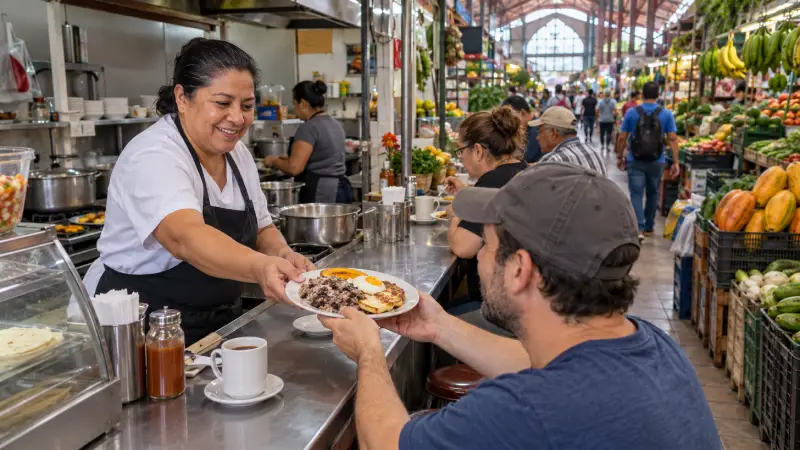
Sodas are casual places to explore Costa Rican home-style meals. Some have a long printed menu; others work with a shorter selection of prepared dishes. Read the options, ask what is ready and compare the full meal price.
Look for casados, plato del día or especial del día. The latter two indicate a daily dish or special. Check whether the price includes a drink: a meal with a refresco natural can be a different proposition from a plate with every extra charged separately.
San José’s Mercado Central brings food stalls and small eateries into stop. At Soda Tala, the Tala Pinto pairs gallo pinto with your choice of accompaniments, including egg, fried cheese and other additions.
Visit with enough flexibility to look around before ordering. Individual stalls may keep their own schedules, so check a particular business directly if your visit depends on it.
Save a few food stops on your map before leaving your accommodation. If you use live directions and menu translation between Wi-Fi stops, arranging mobile data for Costa Rica can help with both.
Let the region change your order
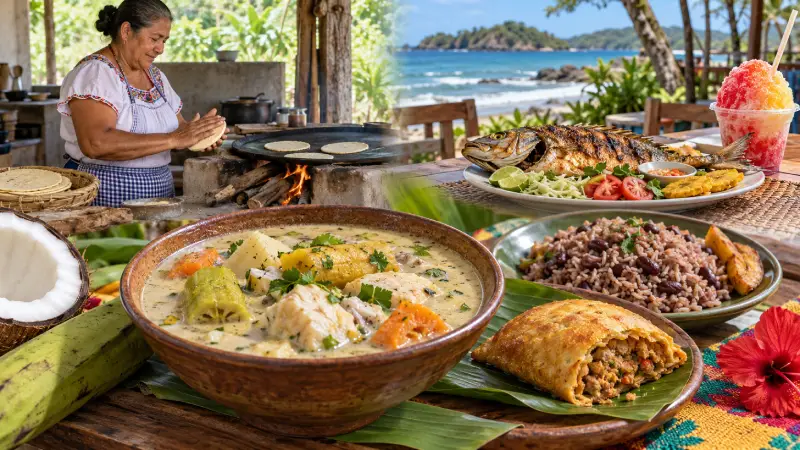
Everyday staples appear across Costa Rica, while regional cooking gives you reasons to look further down the menu. These are useful places to explore particular traditions; dishes can also travel well beyond their home region.
Caribbean coast: coconut milk, rondón and patí
Around Limón, Cahuita and Puerto Viejo de Talamanca, look for rice and beans made with coconut milk. Chicken or fish may accompany the rice, and seasonings vary between kitchens.
Rondón is another dish to ask about: a coconut-based soup with fish or shellfish, green plantain, roots and chilies. Patí offers a smaller bite, with seasoned meat inside a pastry.
Ask about heat if you are sensitive to chili. A mild casado elsewhere in the country does not tell you how a particular Caribbean kitchen seasons its food.
Guanacaste: make room for corn preparations
In Guanacaste, seek out handmade corn tortillas and regional preparations such as rosquillas and arroz de maíz. Look for the traditional corn-and-chicken preparation of arroz de maíz; despite its name, it contains no rice.
Even familiar dishes such as gallo pinto have regional variations. There is no need to judge every plate against fixed recipe.
Ask what the kitchen makes from corn that day. That question can lead to a more interesting order than choosing the same breakfast throughout your trip.
Pacific coast: seafood and a Puntarenas sweet stop
Along the Pacific, look for fish dishes and sopa de mariscos, or seafood soup. Ask which fish is being served, whether it comes whole or as a fillet, and how it is cooked. Those details make the menu easier to compare.
In Puntarenas, a Churchill is a distinctive sweet stop: an elaborate shaved-ice dessert with syrup, milk-based additions and often ice cream. Versions and toppings differ, so check the combination before ordering.
If food stops are influencing your route, use Costa Rica’s main areas and towns to compare bases and decide which regional meals fit naturally into your trip.
Coffee, fruit drinks and something sweet
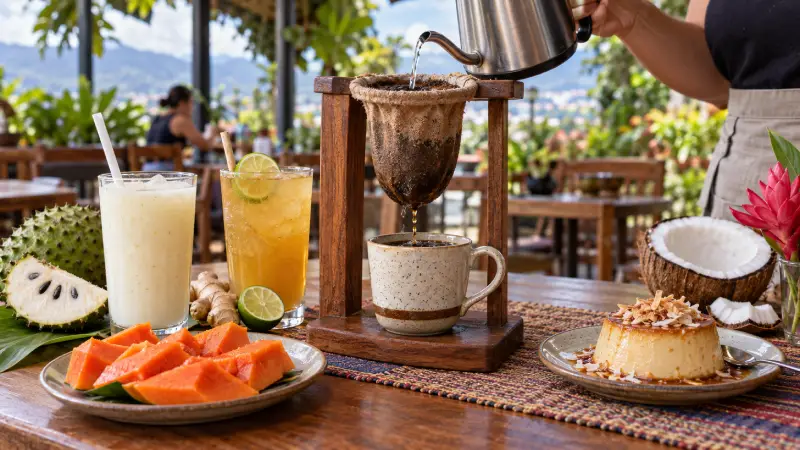
Costa Rican coffee is worth giving its own break. Look for café chorreado, brewed by pouring hot water through coffee held in a cloth filter. Café negro means black coffee; café con leche comes with milk. Ask which preparation the café offers if you want to try the brewing method itself.
Refrescos naturales and batidos give you a way to explore fruit flavors such as guanábana, papaya or blackberry. Menus may offer a water or milk base. Ask “¿En agua o en leche?” and specify your preference; “sin azúcar añadida” requests no added sugar, though an already prepared drink may not be adjustable.
On the Caribbean coast, agua de sapo combines ginger, lime and unrefined cane sugar. Despite the name, which translates literally as “toad water,” it is a drink made from those ingredients.
Dessert availability depends on the kitchen. Tres leches appears on La Casa del Campo’s menu, while Nanku offers coconut flan. Check the dessert selection before adding another large dish if you want room for something sweet.
Menu prices and the final bill
Compare prices by location, restaurant format and what is included. A restaurant meal in La Fortuna and a quick soda lunch are different spending decisions.
The examples below were checked on September 5, 2026. They are displayed prices at the named restaurants, rather than national averages.
| Restaurant and setting | Menu item | Listed price |
|---|---|---|
| Nanku, a restaurant and bar in La Fortuna | Casado típico | ₡7,800 |
| Soda Lorena, a soda in Ciudad Quesada | Casado with chicken in sauce | ₡3,600 |
| La Casa del Campo, a bar-restaurant in Llano Grande, Cartago | Small chifrijo | ₡4,400 |
| La Casa del Campo, Llano Grande | Refresco natural, 500 ml | ₡2,200 |
The menus at Nanku and Soda Lorena state that taxes are included. La Casa del Campo’s menu specifically states that its prices include the 10% service charge. Ask for the final payable total if a menu’s wording is unclear.
Online menus can help you shortlist a soda, but confirm the current price before ordering.
Table service and an extra tip are separate. Costa Rica’s restaurant service rules provide for a mandatory 10% charge where waiters provide table service. An additional tip is voluntary. Check the bill before adding more.
Before paying, confirm whether the amount is in colones or US dollars. If you want to pay in dollars, ask which exchange rate the business will use and how it will return your change.
Food is part of the trip total. The Costa Rica trip budget guide puts dining alongside accommodation, transport and activities.
Ordering with dietary needs
Vegetarian meals can start with a modified casado, but confirm the individual components. Removing the meat serving does not establish what went into the beans, rice or picadillo.
Vegan orders need a further check for eggs, cheese, natilla and other animal ingredients. Similarly, a corn-based dish is not automatically suitable for someone avoiding gluten: recipes, sauces and preparation methods vary.
These phrases help make the conversation specific:
-
“¿Qué incluye el casado?” — What does the casado include?
-
“¿Lleva caldo de pollo o de carne?” — Does it contain chicken or meat stock?
-
“¿Lo pueden preparar sin carne, pescado, huevo ni lácteos?” — Can you prepare it without meat, fish, eggs or dairy?
-
“¿Lleva trigo, cebada o centeno?” — Does it contain wheat, barley or rye?
-
“¿Pueden usar utensilios y una sartén limpios?” — Can you use clean utensils and a clean pan?
Explain an allergy explicitly and name the ingredient; requesting its removal is not the same as discussing cross-contact. A written Spanish allergy card can support the conversation, but the kitchen still needs to confirm whether it can meet your requirements.
Once those details are clear, ask what the cook recommends from the dishes you can eat. That leaves space for the day’s preparation, a regional specialty or a side you might otherwise overlook.