

'%3e%3cpath id='a' fill='%23FF0' d='M0 0v6h4' transform='rotate(18)'/%3e%3cuse xlink:href='%23a' transform='scale(-1 1)'/%3e%3c/g%3e%3cg id='c' transform='rotate(72)'%3e%3cuse xlink:href='%23b'/%3e%3cuse xlink:href='%23b' transform='rotate(72)'/%3e%3c/g%3e%3cuse xlink:href='%23c' transform='scale(-1 1)'/%3e%3c/svg%3e)
-
Best Overall for First-Timers: March to May and September to November offer the most balanced weather across the entire country.
-
Best for Budget Travelers: May to October is considered the rainy season in many areas, meaning significantly lower prices on flights and accommodation.
-
Best to Avoid Crowds: May, June, and September are ideal because you will miss the peak winter tourists and massive domestic holiday crowds.
Vietnam by Season: What You Really Get
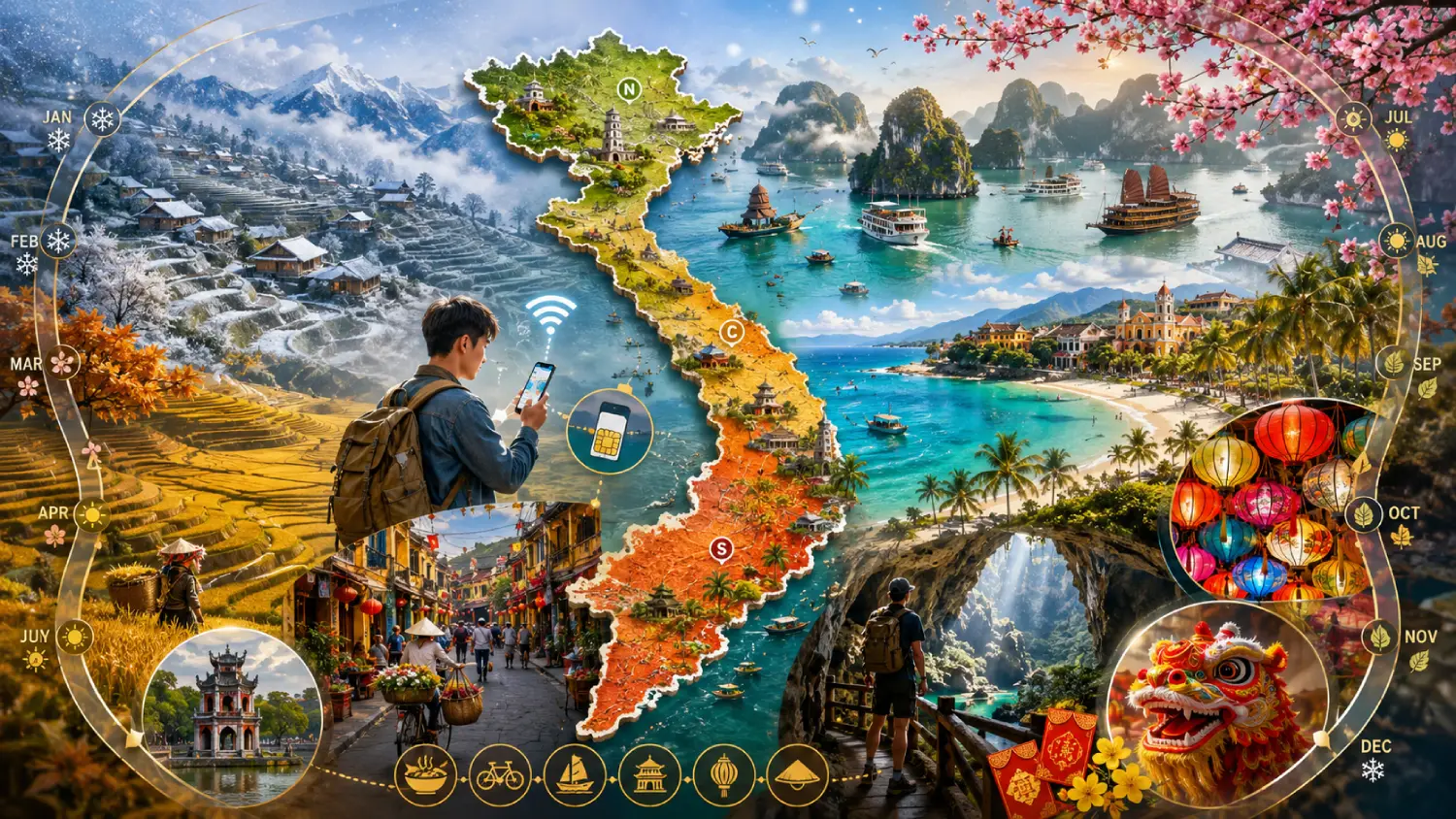
Vietnam’s long, narrow shape means there is no single "dry season" or "wet season" that applies everywhere simultaneously. You will almost always find good weather somewhere in the country if you know where to look. To truly understand what you are walking into, check our seasonal breakdown below.
If you are comparing destinations for this year and want to see how this weather compares to neighboring countries, read our comprehensive guide on Thailand vs. Vietnam: Which is Better? (Cost, Food & Vibe).
| Season (Months) | Typical Conditions | Crowds | Costs | Best For |
| Spring (Feb - Apr) | Mild, dry, blooming flowers in the North; hot in the South. | High | Premium | Cross-country itineraries, Ha Long Bay cruising, and cultural tours. |
| Summer (May - Aug) | Hot, highly humid, heavy downpours (afternoon showers). | Moderate | Lower | Central coast beaches (Da Nang, Hoi An) and strict budget travel. |
| Autumn (Sep - Nov) | Cooling down in the North; heavy rain and typhoon risk in Central. | Moderate | Moderate | Trekking in Sapa, exploring Hanoi, and Mekong Delta boat trips. |
| Winter (Dec - Jan) | Cold in the northern mountains; perfect, dry heat in the South. | Peak | Highest | Southern beaches (Phu Quoc), Ho Chi Minh City, and escaping winter. |
Regional Differences (Microclimates & Geography)
Vietnam stretches over 1,600 kilometers from north to south, creating three entirely distinct climate zones. You can easily experience winter coats in the north and swimsuits in the south on the exact same day. Packing for a cross-country trip requires layers and preparation.
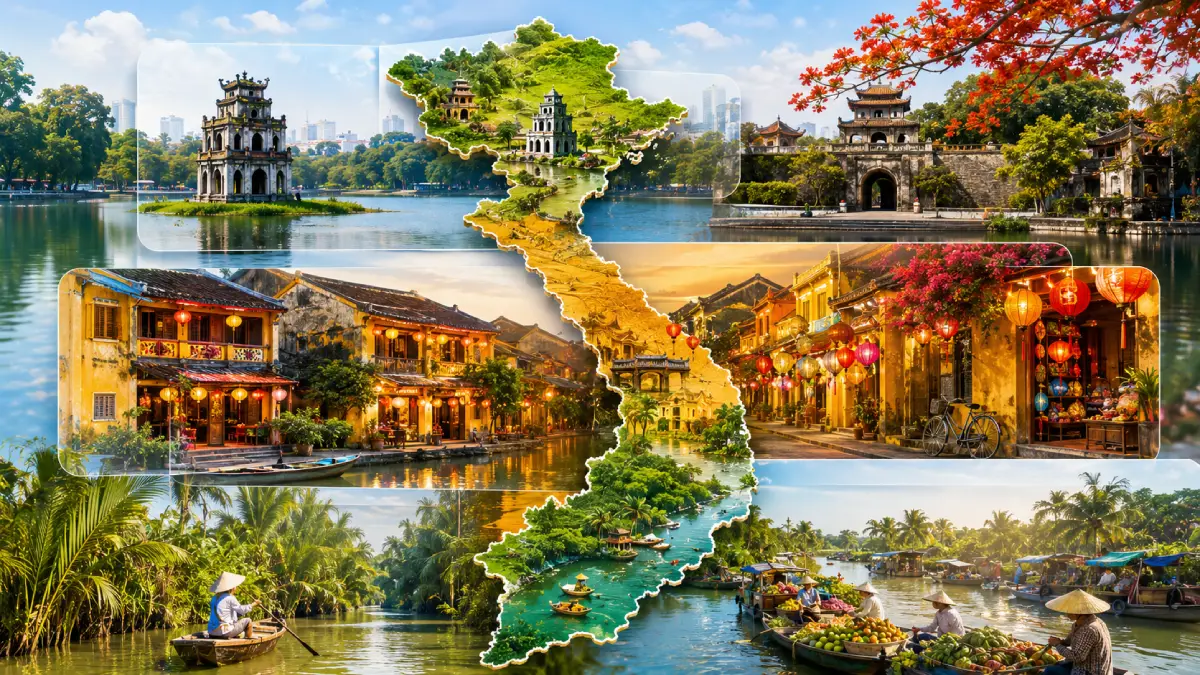
Northern Vietnam (Hanoi, Sapa, Ha Long Bay)
The North experiences four distinct seasons, including a genuine winter that surprises many travelers. From December to February, temperatures in Hanoi drop to 15C (59F), and Sapa frequently sees frost or even snow. Packing warm clothing is essential if you are hiking during these months.
The absolute best time to visit the North is during the crisp, dry autumn (October to November) or the blooming spring (March to April). Summer (May to August) brings intense heat, high humidity, and heavy rainfall. These summer storms can sometimes cause cruise cancellations in Ha Long Bay.
Central Vietnam (Hue, Da Nang, Hoi An)
Central Vietnam has a uniquely shifted weather pattern compared to the rest of the country. Here, the dry, sunny beach season runs from January all the way through August, making it a perfect summer destination. The temperatures peak in June and July, offering perfect conditions for swimming and water sports.
However, from September to November, the region gets slammed with heavy monsoons. Cities like Hoi An frequently experience street flooding during these autumn months. If you travel here in October, expect significant rain and possible travel disruptions.
Southern Vietnam (Ho Chi Minh City, Mekong Delta, Phu Quoc)
The South is purely tropical, with consistent year-round warmth hovering between 25C and 34C. The weather is split neatly into two distinct seasons: dry (December to April) and wet (May to November). The dry season is prime time for island hopping and exploring the intricate waterways of the Mekong Delta.
Even during the wet season, the rain usually falls in short, heavy afternoon bursts, leaving the rest of the day clear. You can still easily travel the south in July or August if you plan your outdoor activities for the morning. The lush green landscapes during the rainy season are also incredibly photogenic.
Month-by-Month Cheat Sheet
-
January: Excellent in the South, freezing in the far North. Expect high prices and peak international crowds as people flee the Western winter.
-
February: A fantastic time for multi-region trips, but be hyper-aware of the Tet holiday, which causes mass closures and price spikes.
-
March: Arguably the best overall month for a cross-country trip. The North warms up, the Center is sunny, and the South is perfectly dry.
-
April: The last great month before the rains begin in earnest. The entire country enjoys clear skies, making it ideal for photography and outdoor activities.
-
May: The transition month where crowds thin out and prices drop. The Central coast beaches become the main attraction as the North and South get humid.
-
June: Hot, sticky, and wet in Hanoi and Ho Chi Minh City. Head straight to Da Nang, Hue, or Nha Trang for perfect beach weather.
-
July: Peak domestic travel season for locals. Beaches will be incredibly crowded with local families, so book ahead if visiting the Central coast.
-
August: Similar to July, but the transition to autumn begins late in the month. It is your last chance for reliable Central coast sunshine before typhoon season.
-
September: A brilliant shoulder month for avoiding crowds. The autumn colors begin in the North, and the rice terraces in Sapa turn a stunning golden yellow.
-
October: Central Vietnam enters peak typhoon and flood season; avoid Hoi An and Hue. Instead, enjoy the cool, romantic autumn vibe in Hanoi.
-
November: The international high season kicks off again. The South returns to dry, sunny glory, while the North is perfectly crisp for trekking.
-
December: Peak prices and heavy crowds return to the South. Central Vietnam is still quite wet, while the northern mountains are bitterly cold at night.
Best Time to Visit by Traveler Type
For Beaches & Swimming
If you want pristine sand and clear water, your timing dictates your destination. For Phu Quoc and the southern islands, go between December and April to enjoy crystal-clear waters. The dry season ensures calm seas, perfect for snorkeling and diving.
If your vacation falls between May and August, you must head to the Central coast to avoid the daily monsoons. Destinations like Da Nang, Nha Trang, and Quy Nhon offer brilliant sunshine during the summer months. Always double-check water safety flags, as rip currents can occur.
For Sightseeing & Culture
Urban exploration and temple hopping require comfortable walking weather. March, April, October, and November are the sweet spots for city travel. The humidity is manageable, and you won't be drenched in sweat while navigating the motorbike-filled streets.
To make the most of your cultural excursions without falling prey to common pitfalls, review our guide: Is Vietnam Safe for Tourists? Fake E-Visas, Traffic Chaos & Scams. Walking through Hanoi's Old Quarter or Ho Chi Minh City's District 1 is vastly more enjoyable when it isn't pouring rain.
For Budget Travelers
To stretch your dollars to the absolute maximum, travel during the rainy season from May to October. Four-star hotels often slash their rates by up to 40% compared to December. You will experience rain, but it rarely ruins an entire day if you remain flexible.
Budget travel also means utilizing local buses and street food stalls, which operate year-round. Make sure you understand local regulations to avoid unexpected fines by reading Vietnam Tourist Bans & Laws: Things Not To Do & Illegal Items. Savings can quickly vanish if you are forced to pay a penalty for an accidental infraction.
For Wildlife & Nature
Trekking in Sapa or exploring the massive caves of Phong Nha requires highly specific weather conditions. For the iconic golden rice terraces in the north, late September to early October is an absolute non-negotiable window. Missing this two-week window means seeing brown, harvested fields instead of golden waves.
To avoid slippery trails, mudslides, and leeches in the jungle, stick strictly to the dry seasons of your chosen region. Cave explorations in Phong Nha are often halted during the autumn floods, so spring is the safest bet for spelunking.
Festivals & Special Dates to Plan Around (2026)
Tet (Lunar New Year): February 14 - 22, 2026
Tet is the most important holiday in Vietnam, and the 2026 official holiday stretches for roughly nine days. While it is a beautiful cultural event, it is notoriously difficult for tourists to navigate. Millions of locals travel home, meaning flights, trains, and buses sell out months in advance.
Furthermore, many restaurants, museums, and boutique shops close entirely for the first few days of the festival. If you travel during Tet, expect premium prices and limited services. The best strategy is to stay put in major city and enjoy the localized celebrations rather than attempting cross-country transit.
Reunification Day & Labor Day: April 30 - May 1
These back-to-back public holidays create a massive four-day weekend for locals. Domestic tourism explodes during this specific window every single year. Popular spots like Ha Long Bay, Da Nang, and Da Lat become overwhelmingly crowded, and hotel rates effectively double.
Try to hunker down in a major city rather than traveling on these dates. Train stations and airports will be chaotic, so it is the perfect time to just relax at a cafe.
Mid-Autumn Festival: Late September 2026
Known locally as Tet Trung Thu, this is a spectacular time to visit, especially in heritage cities like Hoi An and Hanoi. The streets are strung with thousands of colorful lanterns, and traditional lion dances echo through the alleyways.
Unlike Tet, this festival does not cause massive closures or transport nightmares. It is a perfectly vibrant time for travelers to experience Vietnamese culture at its most visually stunning. Photographers will find this to be the most rewarding time of the year.
A Quick Note on Staying Connected
Landing in a chaotic airport without internet access is a rookie mistake that will immediately cause stress. You need immediate connectivity to hail a Grab taxi, translate menus, and navigate the labyrinthine streets on Google Maps. Relying on public Wi-Fi is both frustrating and highly insecure.
Need data in Vietnam? Get an eSIM!
Choose the perfect data plan for your trip

Manage your eSIM in the app
Install, top up and track data.
Before you pack your bags, make sure to read Vietnam Airport Customs Rules: Vaping, Alcohol, and Cash Limits so you clear customs without a hitch. through, having data ready is your next priority. To understand your options, check out How to Get Internet in Vietnam.
The absolute easiest setup is downloading a digital profile before you even board your flight. A Vietnam eSIM activates the moment your plane touches down, meaning you skip the airport kiosk lines completely. For a full breakdown of the best networks this year, read Best eSIM for Vietnam.
FAQ: Best Time to Visit Vietnam
What is the cheapest month to visit Vietnam?
May and September are generally the cheapest months to book a trip. These shoulder seasons fall just outside the major international winter rush and the domestic summer peak. Hotels and airlines frequently offer excellent promotions during these windows.
When is monsoon and typhoon season?
In the tropical South, the daily monsoon rains fall from May to November. In Central Vietnam, the heavy rains and dangerous typhoons hit between September and November. Always monitor local weather warnings if traveling to the coast during autumn.
Is it worth visiting Vietnam in winter (December/January)?
Absolutely, if you stick primarily to the South (Ho Chi Minh City, Phu Quoc) where the weather is a perfect 30C and dry. However, if you plan to visit Sapa in the far north, be prepared for freezing overnight temperatures and heavy, damp fog.
When is the best time for a cruise in Ha Long Bay?
March to May and September to November are the absolute best windows for cruising. The skies are generally clear, allowing for those iconic, misty limestone photos, and the water is calm. Summer brings the risk of sudden storms that can cancel sailings entirely.
When do the rice terraces in Sapa turn yellow?
The rice turns a stunning golden yellow just before the harvest, which typically happens between mid-September and early October. This is a very short and highly anticipated window. Book your accommodation well in advance if you want to witness this.
Can I swim in Central Vietnam in December?
It is highly discouraged. December in cities like Hoi An and Da Nang is often overcast, rainy, and the ocean can be rough and chilly. Save the beach days for the southern islands like Phu Quoc or Con Dao during this time of year.
How early should I book for the Tet holiday?
If you plan to be in Vietnam during February 2026, you should book your domestic flights and hotels at least three to four months in advance. Transport sells out incredibly fast as millions of citizens return to their home provinces.
Is the heat unbearable in the summer?
Summer (June to August) can be intensely hot and humid, especially in cities like Hanoi and Ho Chi Minh City where concrete traps the heat. If you struggle with humidity, plan your sightseeing for early morning or late afternoon, and prioritize air-conditioned accommodations.