

'%3e%3cpath id='a' fill='%23FF0' d='M0 0v6h4' transform='rotate(18)'/%3e%3cuse xlink:href='%23a' transform='scale(-1 1)'/%3e%3c/g%3e%3cg id='c' transform='rotate(72)'%3e%3cuse xlink:href='%23b'/%3e%3cuse xlink:href='%23b' transform='rotate(72)'/%3e%3c/g%3e%3cuse xlink:href='%23c' transform='scale(-1 1)'/%3e%3c/svg%3e)
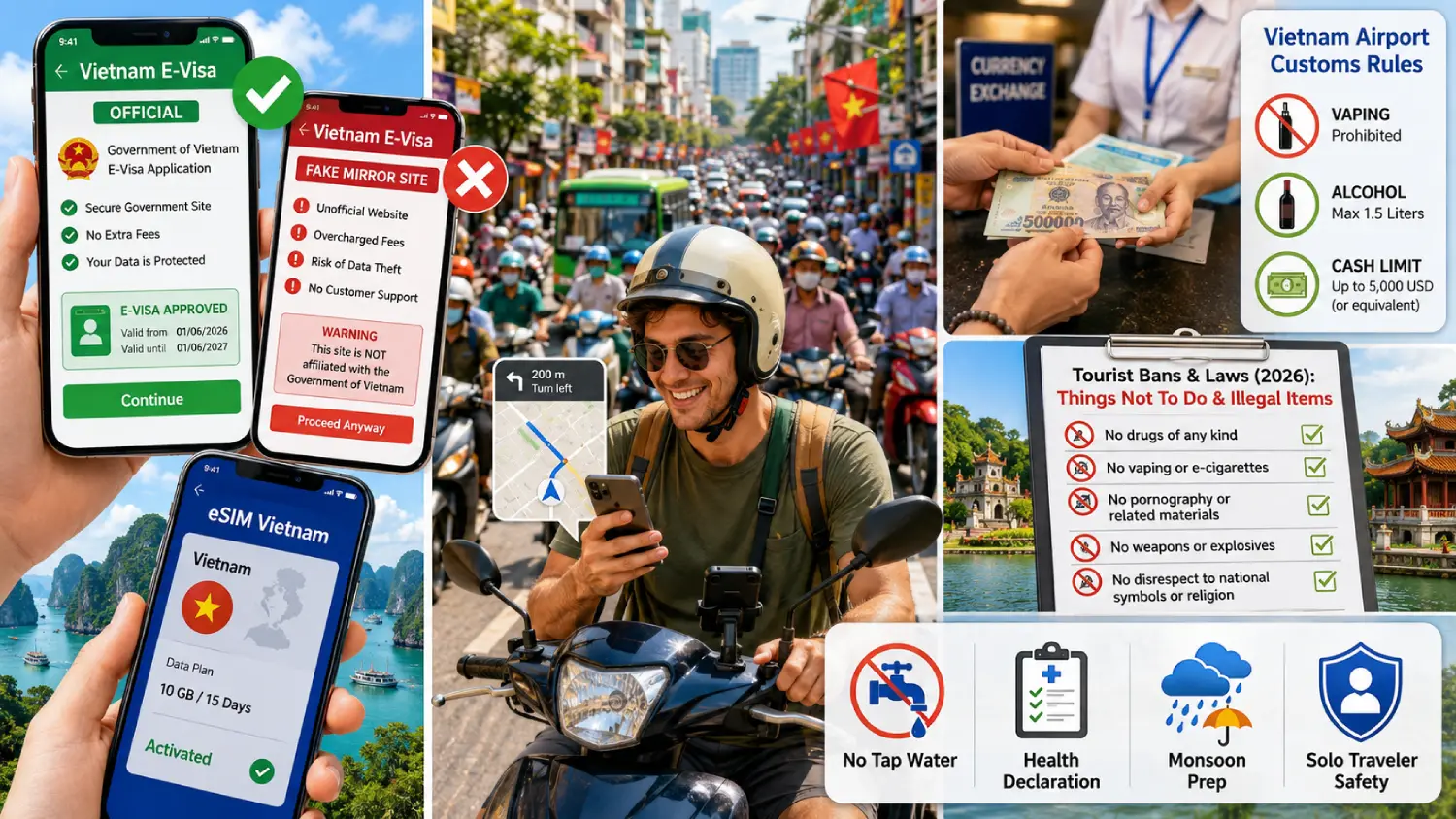
The short answer is yes, Vietnam is exceptionally safe regarding violent crime. However, the dangers here have shifted drastically from petty street theft to highly organized digital deception and chaotic road conditions.
The 2026 Reality on the Streets
Violent crime against tourists is incredibly rare in Vietnam. The country operates under strict laws, and the heavy police presence in major tourist hubs ensures that severe criminal activities are kept to a minimum. You do not need to worry about cartels, gang violence, or armed robberies while exploring the cities.
However, the real threats in 2026 are digital and opportunistic. We are seeing a massive spike in highly sophisticated scams targeting tourists before they even arrive. If you want to understand the legal landscape better, read our guide on Vietnam Tourist Bans & Laws.
Always remember that police in Vietnam are strict but often do not speak English well. If you find yourself in trouble, you will need a translator or help from your hotel staff to file a report. Keep your interactions with authorities respectful, formal, and calm.
Safe Zones vs. Areas to Be Cautious
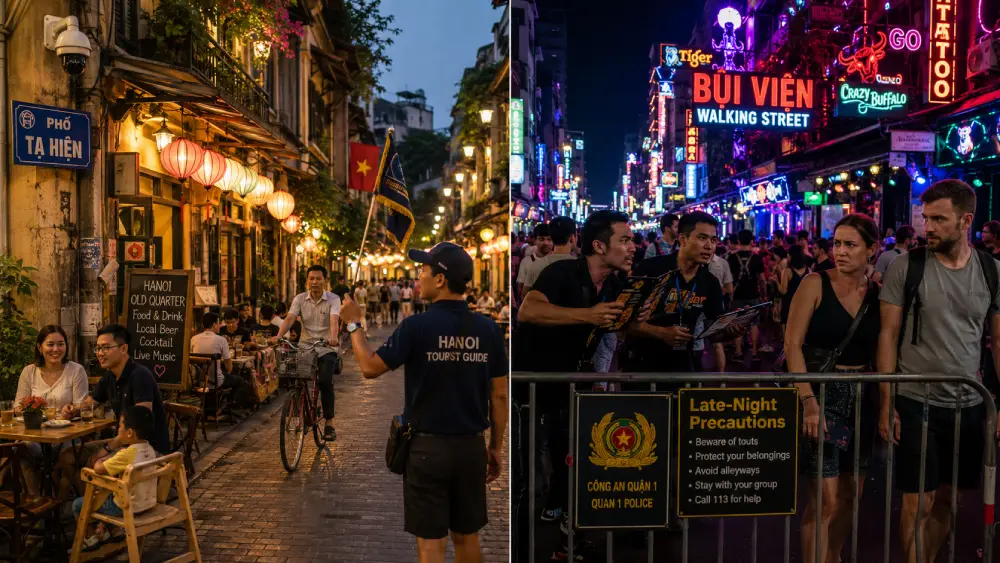
Vietnam does not have violent "no-go zones" like some Western cities, but situational awareness is key. In Hanoi, the Old Quarter is heavily patrolled and safe, but it is notoriously crowded and prone to pickpockets. Ho Chi Minh City (Saigon), particularly District 1, is the epicenter of tourist activity but also the hotspot for drive-by phone snatchings.
For a more relaxed experience, areas like Da Nang, Hoi An, and the expat-heavy Thao Dien (District 2) in Saigon offer extremely high safety levels. These zones feature well-lit streets, secure accommodations, and a community-focused atmosphere. If you are comparing regional safety across Southeast Asia, check out Thailand vs. Vietnam.
You should exercise heightened caution near late-night bars on Bui Vien Street in Saigon. This area is infamous for aggressive touts, overpriced drinks, and opportunistic thieves waiting for intoxicated tourists. Stick to well-reviewed establishments and avoid walking down unlit alleys alone.
Navigating the Chaos: Traffic & Transport
Traffic in Vietnam is the single most dangerous physical threat to tourists. The sheer volume of motorbikes and the fluid interpretation of traffic laws result in thousands of accidents annually. Never assume a green light means a safe crossing; you must maintain a steady, predictable pace when walking through traffic.
Using ride-hailing apps like Grab or Gojek is infinitely safer than flagging down a random taxi on the street. These apps provide a digital trail, upfront pricing, and vetted drivers to prevent overcharging. Always check the license plate before getting into a car or a motorbike taxi to avoid impersonators.
Renting a motorbike is a rite of passage for many, but it is highly dangerous if you are inexperienced. The "Motorbike Rental Damage Scam" is also rampant, where shops blame you for pre-existing scratches and demand exorbitant fees. If you choose to ride, wear a helmet, drive defensively, and inspect the bike thoroughly before signing anything.
The 2026 Tourist Scam Playbook
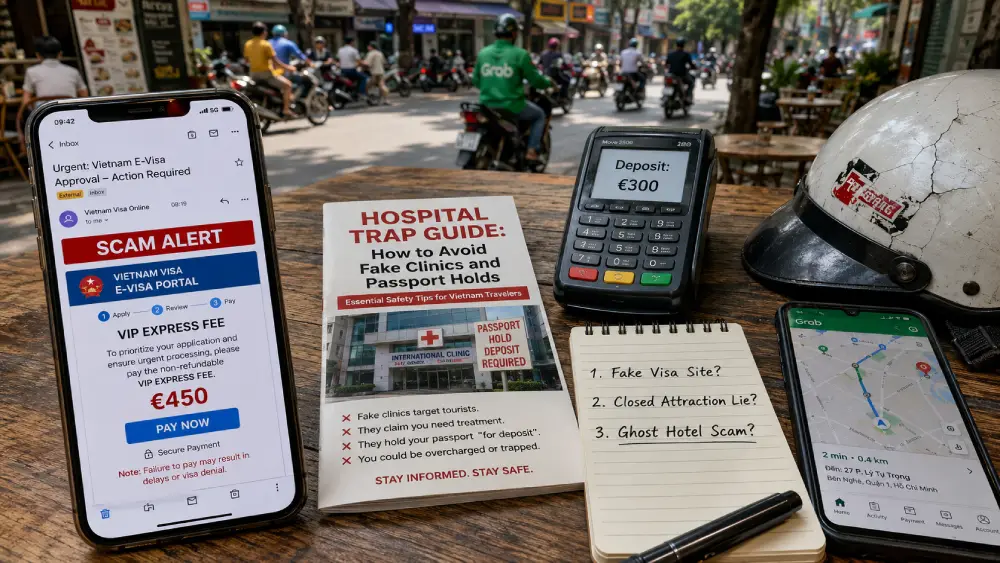
Scams in Vietnam have evolved far beyond the classic street hustle. In 2026, the real danger happens on your phone and through sophisticated social engineering. Here are the most prominent scams targeting travelers right now:
-
The Fake E-Visa Mirror Site: Scammers have built flawless replicas of the official Vietnam e-visa portal that dominate search engine results. They will overcharge you massively for "VIP processing" or steal your identity entirely.
-
The Ghost Boutique Hotel Scam: Sophisticated fraudsters use AI-generated images to list luxury villas on legitimate booking platforms. They convince you to pay a deposit directly via bank transfer, to leave you stranded at a construction site upon arrival.
-
The Closed Attraction Re-Route: Well-dressed locals will approach you near major landmarks, claiming the site is closed for a "private party." They will then herd you into a high-pressure sales environment or a rigged card game.
-
The Private Hospital Trap: Scam clinics pay kickbacks to drivers who bring you in for minor ailments. They will hold your passport and perform unnecessary, expensive scans that your insurance will refuse to cover.
Before you arrive, ensure you understand exactly what you can legally bring into the country by reading about Vietnam Airport Customs Rules.
Solo Travel & Women’s Safety
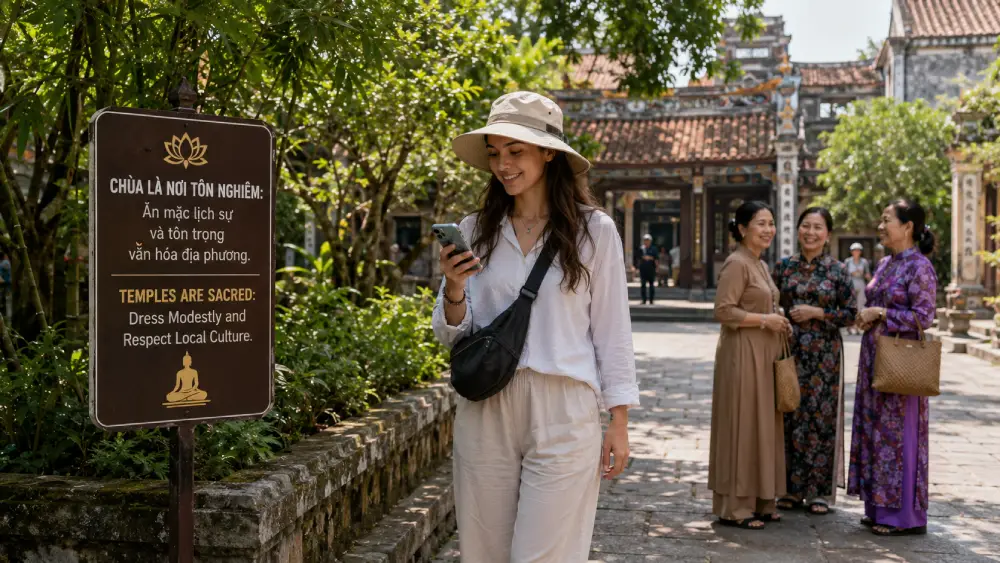
Vietnam is generally a fantastic destination for solo female travelers. The local culture is relatively conservative, and violent crime against women is exceptionally low. You can walk through most neighborhoods during the day without experiencing aggressive catcalling or harassment.
However, nightlife requires standard precautions. Never leave your drink unattended in busy tourist bars, especially on walking streets like Bui Vien or Ta Hien. Opportunistic drink spiking, while rare, does happen to isolated tourists.
When visiting temples, pagodas, or rural areas, dress modestly by covering your shoulders and knees. This is a sign of respect and helps you blend in better with the locals. Always use trusted ride-hailing apps rather than walking alone late at night.
Tap Water, Health Declarations & Nature
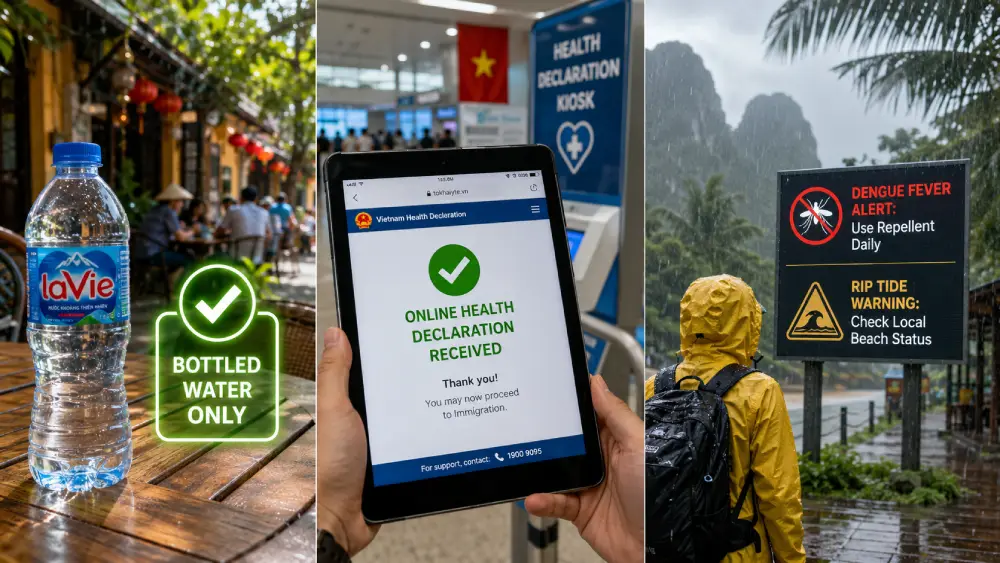
Do not drink the tap water anywhere in Vietnam. The infrastructure is not equipped to provide potable water, and consuming it will almost certainly lead to severe stomach illness. Stick strictly to bottled water, and try to avoid ice in drinks from street vendors unless you are sure it comes from a filtered source.
As of July 2026, Vietnam enforces a mandatory health declaration for all travelers entering the country. You must complete this electronic or paper form within seven days prior to travel to avoid massive delays at busy immigration checkpoints. Ensure you fill this out correctly before your flight lands.
Nature poses its own risks, particularly during the monsoon season. Flooding is common in major cities, and rip tides on beaches like Nha Trang can be deadly. Dengue fever is an threat, so apply DEET-based mosquito repellent daily, especially during dawn and dusk.
The Ultimate Safety Tool: Staying Connected
Having a reliable internet connection is your greatest safety net in Vietnam. Whether you need to translate an emergency medical request, order a verified Grab car away from a sketchy area, or verify the location of your hotel, offline vulnerability is a massive risk. Public Wi-Fi networks in cafes are heavily targeted by hackers trying to intercept your banking data.
Need data in Vietnam? Get an eSIM!
Choose the perfect data plan for your trip

Manage your eSIM in the app
Install, top up and track data.
Installing a Vietnam eSIM before you land ensures you have instant, secure internet access the moment your plane touches the tarmac. This allows you to bypass the chaotic SIM card kiosks at the airport and immediately navigate your way safely to your accommodation. If you are unsure where to start, read our Best eSIM for Vietnam and our guide on How to Get Internet in Vietnam.
Official Travel Advisories (2026 Update)
Governments consistently rank Vietnam as a low-risk destination, provided you stay alert. Here is the current consensus from major travel authorities:
-
United States (State Department): Advises travelers to exercise normal precautions. They highlight the risk of opportunistic street crime in major cities and caution against unexploded ordnance in remote rural areas.
-
United Kingdom (FCDO): Warns about the severe dangers of road travel and emphasizes that foreigners are frequently involved in fatal motorbike accidents. They also highlight the strict penalties for drug offenses.
-
Canada: Recommends taking normal security precautions. They specifically warn about petty crime, such as bag snatching, and strongly advise against handing over your passport as collateral for motorbike rentals.
The Verdict: Is Vietnam Safe?
Yes, Vietnam is overwhelmingly safe for tourists who prepare properly and keep their wits about them. The primary threats are traffic accidents and sophisticated digital scams, rather than violent crime. By understanding the modern tricks and respecting local laws, you can experience the incredible culture and landscapes without incident.
-
Secure your digital life: Book everything through verified platforms and never send direct bank transfers for accommodations.
-
Fear the traffic, not the people: Cross streets slowly, predictably, and never rent a motorbike without proper experience and insurance.
-
Stay connected securely: Always use a mobile data connection instead of public Wi-Fi to protect your banking information.
-
Hold your bags tight: Wear cross-body bags to prevent drive-by snatchings in major cities like Ho Chi Minh City.
-
Verify your visa portal: use the official government website to apply for your e-visa to avoid sophisticated mirror-site scams.
Note: Travel safety situations can change rapidly. This information is accurate as of June 2026. Always exercise street smarts and consult official advisories before your trip.