Download the App and manage your eSIMs easily
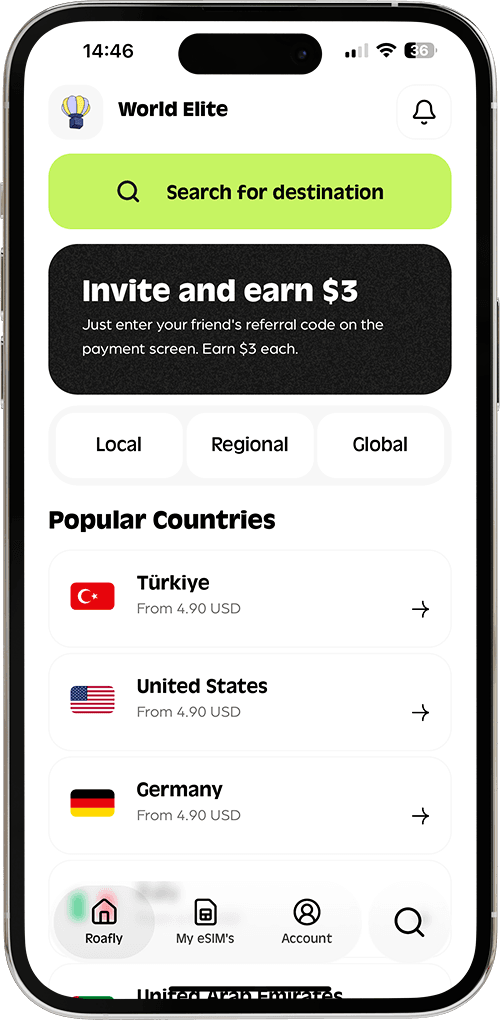
Create your order quickly
See your eSIM details
Track your remaining data
Download the App and manage your eSIMs easily
Create your order quickly
See your eSIM details
Track your remaining data
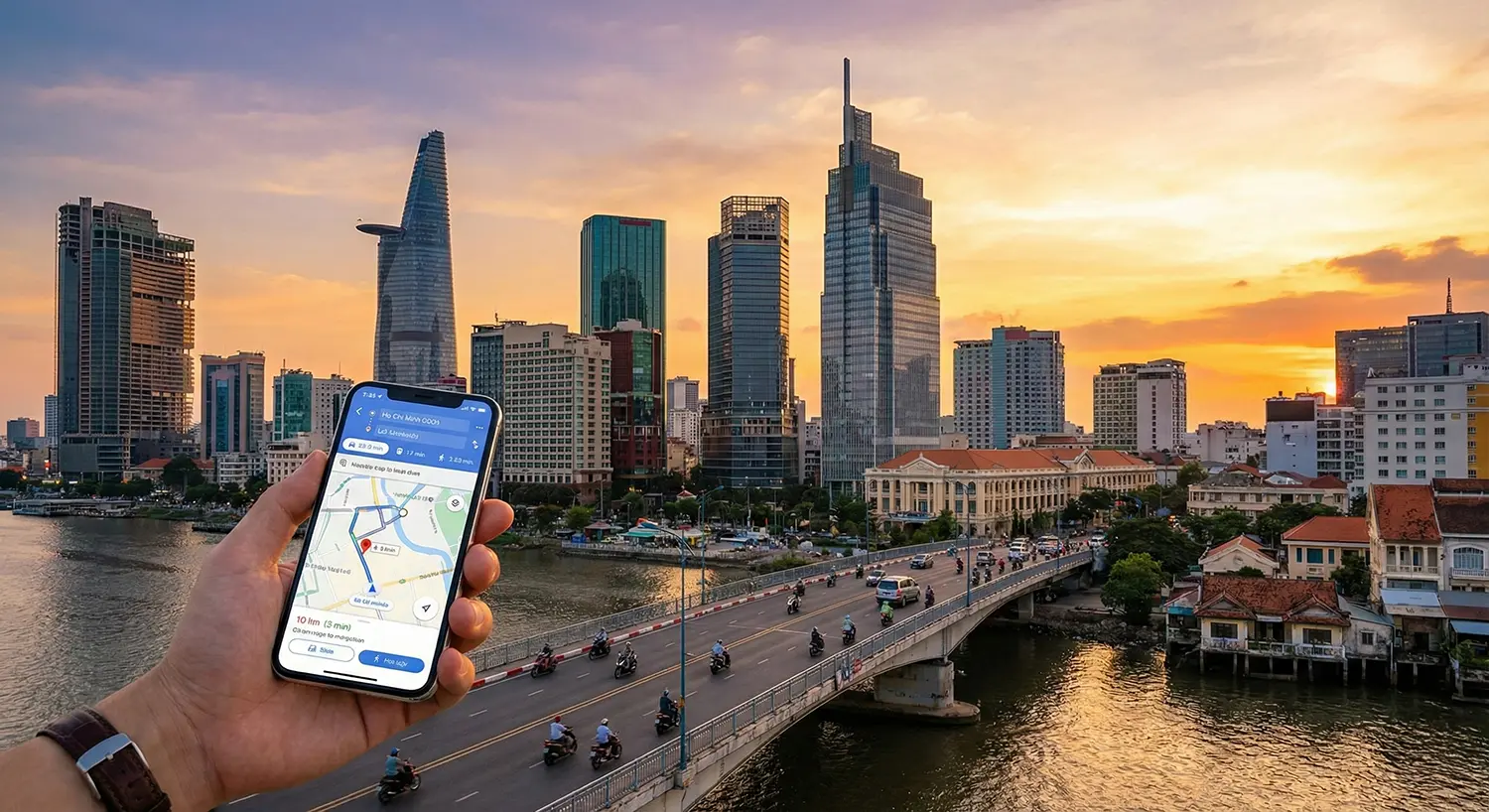
Staying connected in Vietnam is no longer a luxury. It is a practical necessity for navigation, ride-hailing apps like Grab, translations, mobile payments, and travel planning. Whether you land in Ho Chi Minh City, explore Hanoi’s Old Quarter, or head into rural areas, having reliable mobile internet makes travel smoother and safer.
Viettel Mobile, MobiFone, Vinaphone
Instant delivery
From 4.50 USD

Ethan Brooks
Updated Dec 14, 2025
8 min read
Jump to section
👇Best for most trips
Viettel Mobile, MobiFone, Vinaphone

Vietnam
10 GB · 30 days
Enough for maps, bookings and everyday travel.
Hotspot supported
$16.00
From 4.50 USD
This guide explains all realistic ways to get internet in Vietnam, using verified pricing data and traveler-tested options. You will learn the differences between airport SIM cards, local shop SIMs, eSIMs, and alternative solutions—so you can choose what fits your trip best.
Vietnam has one of Southeast Asia’s strongest mobile infrastructures. Coverage is generally excellent in cities and improving steadily in rural areas.
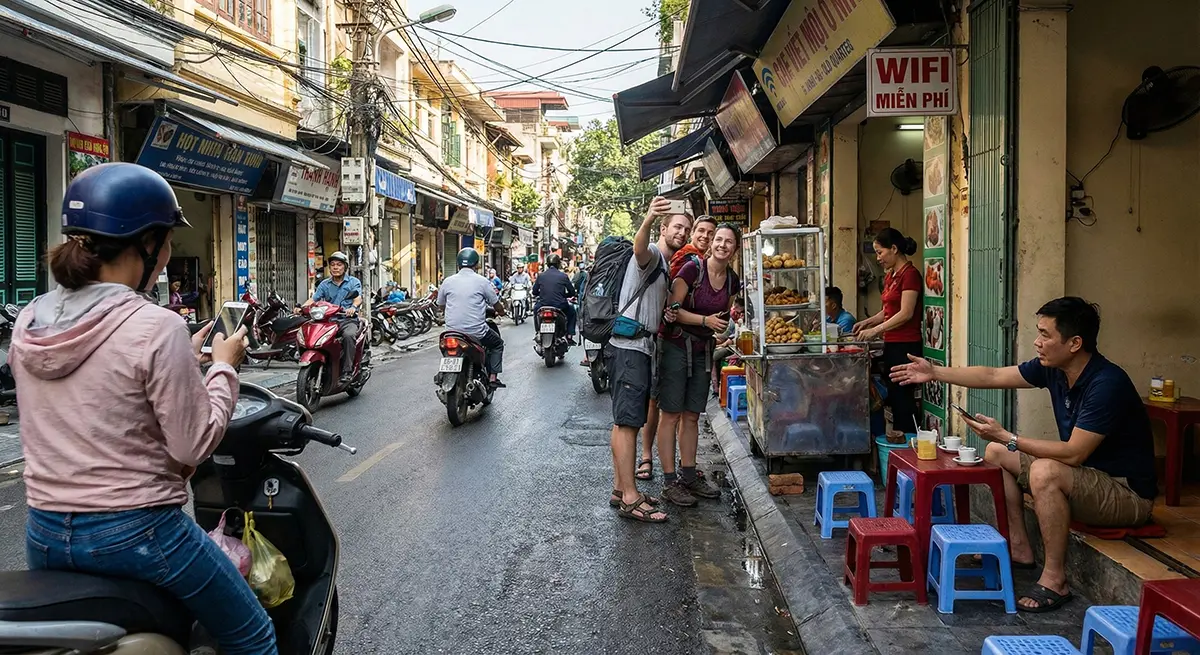
The three major mobile operators are:
Viettel – Best nationwide coverage, including rural and mountainous regions
Vinaphone – Strong urban performance and competitive pricing
Mobifone – Good in major cities, weaker in remote areas
Smaller networks such as Vietnamobile exist but are not recommended for tourists due to inconsistent coverage.
As of 2026:
4G is widely available nationwide
5G is active in major cities like Hanoi, Ho Chi Minh City, and Da Nang
Average mobile speeds range from 20–150 Mbps
All physical SIM cards must be registered with a passport. Unregistered SIMs are commonly deactivated within days. eSIMs, by contrast, do not require identity verification.
Buying a SIM card at the airport is the fastest way to get online immediately after landing.

SIM kiosks are located in arrival halls at:
Tan Son Nhat Airport (Ho Chi Minh City)
Noi Bai Airport (Hanoi)
Da Nang International Airport
Airport SIMs are priced for convenience and are usually 50–100% more expensive than city options.
$10–12 USD for tourist SIM packages
Often advertised as “unlimited data” but throttled after ~600MB per day
Pros
Instant connectivity for Grab or maps
No need to search for a store
Staff usually speaks English
Cons
Higher prices
Limited plan flexibility
Some plans are poorly registered, risking deactivation
Local shops offer significantly better value if you can wait until reaching your hotel or city center.
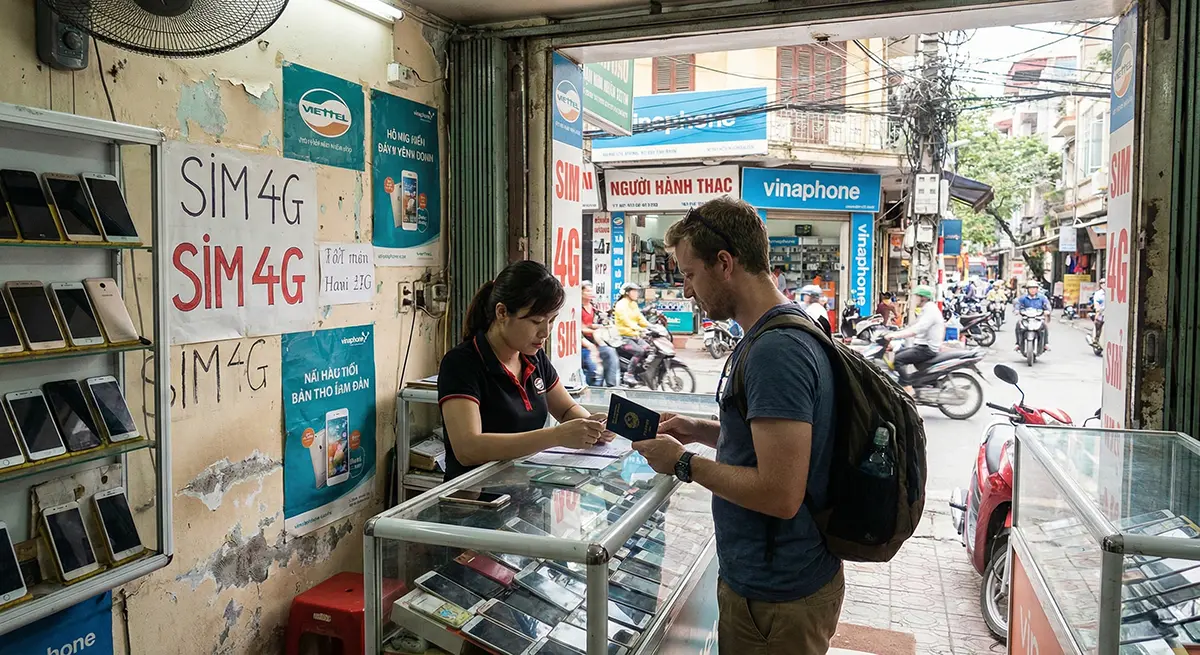
Official Viettel, Vinaphone, or Mobifone stores
Mobile phone shops in tourist districts
Shopping malls and main streets
Registration takes about 10 minutes and requires your passport.
Basic SIM: 50,000 VND (~$2 USD)
Tourist data plans: $5–15 USD, depending on data and duration
Pros
Much cheaper than airport kiosks
Proper passport registration
More plan choices
Cons
Requires time and location search
Possible language barriers in small shops
| Operator | Airport Kiosk Price (Example) | Local Shop Price (Example) | Key Differences |
|---|---|---|---|
| Viettel | ~$10 USD – 10 days unlimited (throttled) | ~$5 USD – 2GB/day for 30 days | Best coverage; locals offer best value |
| Vinaphone | ~$8–10 USD – 15–30 days | ~$9 USD – 2GB/day + calls | Good urban speeds |
| Mobifone | ~$8–10 USD – 14 days unlimited | ~$8 USD – unlimited 4G (14 days) | Urban-focused |
For travelers who want zero physical setup, eSIMs are the easiest option.
An eSIM installs digitally, activates on arrival, and connects automatically to local networks—often Viettel for best coverage.
Roafly is a London-based global eSIM provider covering over 200 countries. Vietnam eSIMs connect to MobiFone and Vietnamobile, offering strong urban and tourist-area coverage.
Available Vietnam eSIM plans:
1GB / 7 Days – $4.90
2GB / 15 Days – $6.90
3GB / 30 Days – $9.90
5GB / 30 Days – $14.90
10GB / 30 Days – $22.90
20GB / 30 Days – $39.90
50GB / 30 Days – $89.90
No passport registration
No physical SIM swap
Instant activation after landing
Works with hotspot sharing
Ideal for short stays or multi-country trips
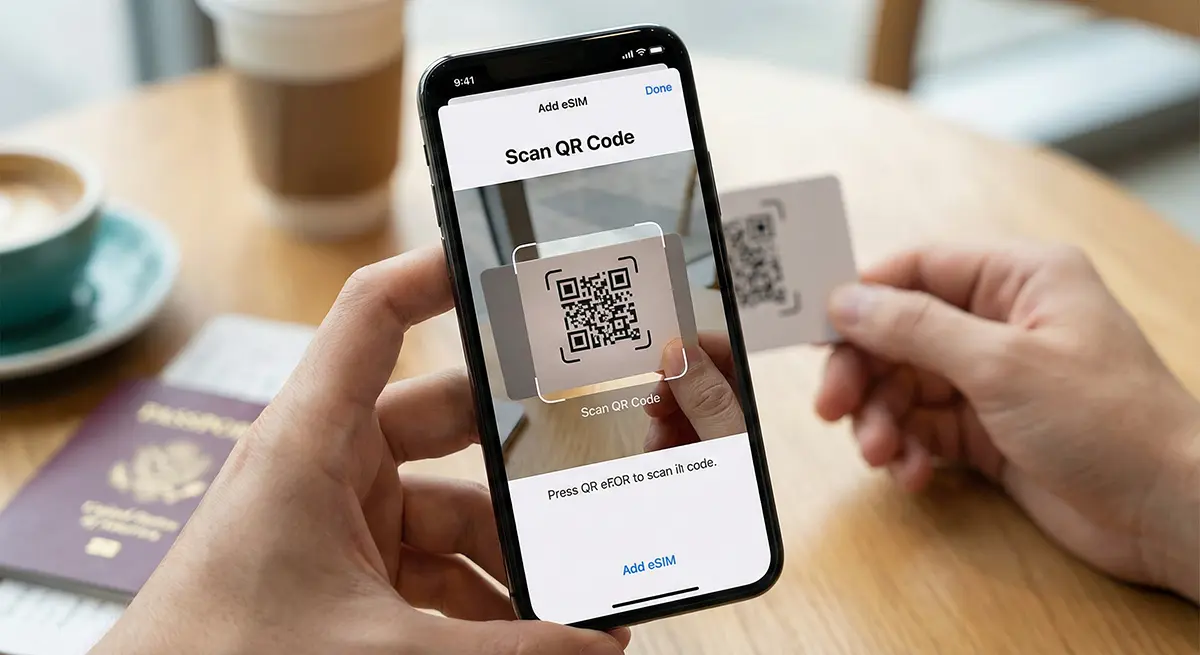
Roafly supports iOS Direct Install, QR code, and manual setup methods.
| Feature | Roafly eSIM | Airport SIM | Local SIM |
|---|---|---|---|
| Setup Time | 2–3 minutes | Immediate | 10–15 minutes |
| Passport Required | No | Yes | Yes |
| Price Transparency | Fixed USD | Variable | Variable |
| Physical Swap | No | Yes | Yes |
| Best For | Convenience | Immediate use |
Long stays |
Best for most trips
Viettel Mobile, MobiFone, Vinaphone
Vietnam
10 GB · 30 days
Enough for maps, bookings and everyday travel.
Hotspot supported
$16.00
From 4.50 USD
Cost: ~$5 USD per day
Supports multiple devices
Requires charging and return
Best for families or groups but less convenient for solo travelers.
Available in hotels, cafes, malls
Unreliable speeds outside cities
Security risks on public networks
Use free WiFi only as a supplement.
Light use (maps, messaging): 1–3GB/week
Moderate use (social media, browsing): 5–10GB/month
Heavy use (streaming, remote work): 20GB+
For trip planning, you may find guides like best eSIM for Thailand or how to get mobile internet in Japan useful when comparing regional data needs.
Always confirm SIM registration
Avoid “unlimited” plans without fair-use details
Use Google Maps offline downloads
Monitor data usage in phone settings
Choose Viettel-backed networks for rural travel
An eSIM is not just a “techy” alternative anymore. In Vietnam, it solves many of the common problems travelers face with physical SIM cards, especially for short or fast-paced trips.
Short-term travelers (3–7 days) benefit the most from eSIMs. Airport SIM prices are high, and local shop SIMs require time and passport registration. An eSIM activates automatically once you land, giving instant access to maps, Grab, and messaging apps without waiting in line.
Digital nomads and remote workers often combine an eSIM with hotel WiFi. An eSIM works as a reliable backup connection for video calls, hotspot sharing, and travel days when WiFi is unstable.
Multi-country Southeast Asia travelers also prefer eSIMs. If Vietnam is part of a longer itinerary including Thailand, Cambodia, or Malaysia, switching physical SIM cards becomes inconvenient. eSIMs eliminate this friction.
Business travelers value speed and predictability. No local paperwork, no language barriers, and fixed USD pricing make eSIMs a practical choice for short business trips to Hanoi or Ho Chi Minh City.
Understanding real-world data usage helps avoid overspending or running out of data mid-trip.
Google Maps & Grab: ~5–10 MB per trip
Social media (Instagram, Facebook): ~150–300 MB per hour
Video calls (Zoom, WhatsApp): ~500–700 MB per hour
Streaming (YouTube, Netflix): 1–3 GB per hour (HD)
Typical traveler profiles:
Light users (maps, messaging): 1–2 GB per week
Moderate users (social media, browsing): 5–10 GB per month
Heavy users (remote work, streaming): 20 GB+ per month
For most tourists staying 7–14 days, 3GB to 5GB is usually sufficient if combined with hotel WiFi. Travelers who rely heavily on mobile data outside accommodations should consider higher plans.
Mobile performance in Vietnam varies slightly depending on location.
Hanoi & Ho Chi Minh City
All three major operators provide fast and stable 4G/5G speeds. eSIMs and local SIMs perform equally well for everyday use.
Da Nang & Central Vietnam
Coverage is strong along the coast and tourist areas. Speeds remain consistent, making it ideal for digital nomads.
Islands (Phu Quoc, Con Dao)
Coverage exists but may fluctuate. Expect slower speeds in remote beaches or national parks. Download offline maps in advance.
Rural & Mountain Areas
Northern highlands and parts of the Mekong Delta may experience weaker signals. Networks with broader infrastructure perform more reliably here.
If your trip includes off-the-beaten-path destinations, stable coverage becomes more important than price alone.
Many connectivity issues come from avoidable mistakes.
Buying “unlimited” plans without checking throttling
Most unlimited plans slow down significantly after daily limits.
Using unregistered SIM cards
SIMs not properly registered with a passport are often deactivated within days.
Overpaying at airport kiosks
Convenience comes at a premium, especially during peak seasons.
Forgetting phone compatibility
Some older phones are carrier-locked or do not support local bands.
Relying only on public WiFi
Free WiFi is common but unreliable for navigation, rides, or secure logins.
Avoiding these mistakes saves money and prevents connectivity disruptions.
If you value speed and convenience, an eSIM is the simplest way to stay connected in Vietnam. If you are staying longer and want maximum data value, local SIM cards from Viettel offer unbeatable pricing. Airport SIMs remain useful for late-night arrivals or short stopovers.
Check the latest Vietnam eSIM packages before your trip to stay connected from the moment you land.
Yes. Most eSIMs and local SIMs support hotspot usage.
No. Messaging and Google services work normally.
Yes, once connected to a supported local network.
You can top up or switch to WiFi. Roafly allows instant add-ons.
Choose the perfect data plan for your trip

Manage your eSIM in the app
Install, top up and track data.
