

'%3e%3cpath id='a' fill='%23FF0' d='M0 0v6h4' transform='rotate(18)'/%3e%3cuse xlink:href='%23a' transform='scale(-1 1)'/%3e%3c/g%3e%3cg id='c' transform='rotate(72)'%3e%3cuse xlink:href='%23b'/%3e%3cuse xlink:href='%23b' transform='rotate(72)'/%3e%3c/g%3e%3cuse xlink:href='%23c' transform='scale(-1 1)'/%3e%3c/svg%3e)
Ignorance of the law is never an excuse. When you cross the border into Vietnam, you are entirely subject to their legal system, which is unforgiving toward foreign tourists who fail to do their research. Reading this guide thoroughly could save you thousands of dollars in fines or keep you out of a local detention center.
The 1968 IDP Trap: Why Your Scooter Rental is Illegal
Scooter rentals are everywhere, but renting without the correct paperwork is a massive legal trap for foreigners. Vietnam strictly recognizes the 1968 Vienna Convention International Driving Permit (IDP). If your IDP was issued under the 1949 Convention, it is legally worthless here.
This catches out thousands of riders every year, especially those from the United States, Australia, Canada, and the UK. If you are from these nations, you cannot legally drive a motorcycle in Vietnam without going through a complex local license conversion. Even if a rental shop happily hands you the keys, the traffic police will not show mercy.
Police frequently set up checkpoints on popular tourist routes, such as the famous Ha Giang Loop and the Hai Van Pass. Getting caught without a valid 1968 IDP results in fines ranging from 1 to 2 million VND and the immediate impounding of your rented vehicle. You will be left stranded on the side of the mountain.
Driving illegally also triggers a massive financial risk regarding your health coverage. If you crash without a recognized license, your travel and medical insurance policies are completely voided. You will be paying out of pocket for expensive emergency medical evacuations and hospital stays.
Furthermore, strict helmet laws apply to both drivers and passengers across the country. You must wear a properly fastened, quality-certified helmet, or face an immediate 400,000 to 600,000 VND fine. For more comparisons on local scooter cultures and transportation, read our breakdown on Thailand vs. Vietnam: Which is Better in 2026? (Cost, Food & Vibe).
Total Vape Ban: E-Cigarettes Are Now Illegal in 2026
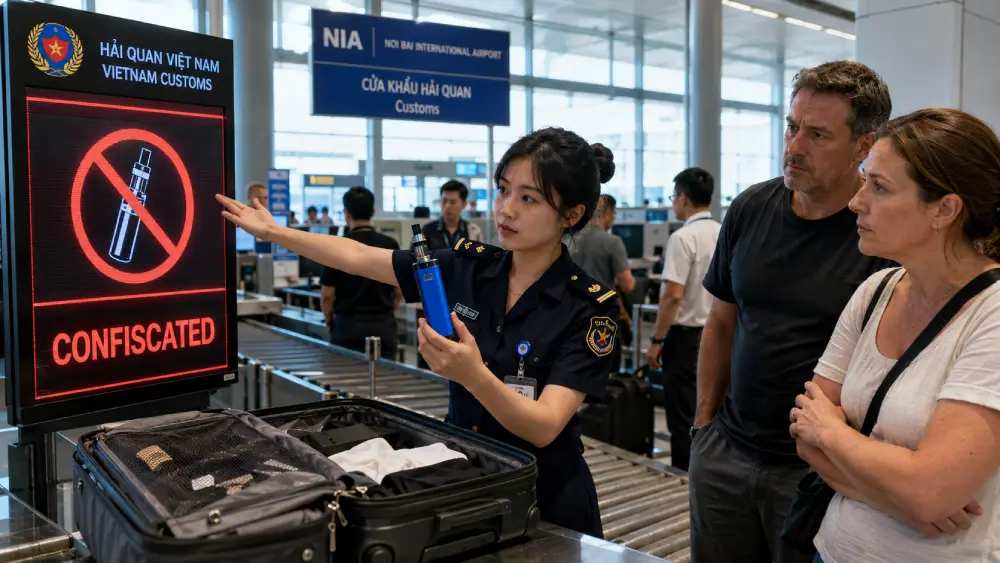
As of early 2026, Vietnam has implemented a sweeping ban on all e-cigarettes and heated tobacco products. Driven by the Ministry of Health to combat youth usage, the newly amended Investment Law strictly outlaws their sale, import, and possession. Vaping is no longer in a legal gray area; it is formally prohibited.
Do not pack your vape pen, Juul, or any e-liquids in your luggage. Customs officers are actively searching for these items at the airport, and they will be permanently confiscated upon arrival. Bringing them into the country can trigger immediate delays and intensive luggage searches.
If you are caught vaping on the streets or in public venues, you will face an administrative fine of 3 to 5 million VND ($114–$190). Authorities are cracking down heavily in major tourist hubs like Ho Chi Minh City and Hanoi. Make sure you fully understand the Vietnam Airport Customs Rules: Vaping, Alcohol, and Cash Limits before you pack your bags.
Regular combustible cigarettes remain legal, but their usage is heavily restricted to designated smoking zones. Smoking in indoor public spaces, hospitals, and public transport is completely forbidden. Dropping a cigarette butt on the street or the beach will also result in a severe environmental littering fine.
Drone Confiscation: The "No Fly" Ministry Permit
Bringing a drone into Vietnam without doing your homework is a guaranteed way to lose your expensive equipment. Every single drone flight, regardless of whether it is a tiny sub-250g toy or a professional rig, requires an official permit. You must obtain this written authorization directly from the Ministry of National Defence.
There are no automatic exemptions for tourists or recreational flyers. You must submit a detailed application well prior to your trip, listing your exact flight coordinates, drone specifications, and planned dates. If you arrive at customs without this paperwork, officers can temporarily hold your drone until you leave the country.
Flying without a permit carries devastating financial penalties, with fines reaching up to 30 million VND ($1,200). Your drone will be permanently confiscated, and you may face a ban from continuing your journey. As of July 2026, amended civil aviation laws impose even stricter penalties for flying anywhere near an airport.
Even with a permit, there are highly sensitive "no-fly" zones you must strictly avoid. These include military installations, border regions, government buildings, and prominent landmarks like Ba Dinh Square in Hanoi. Always cross-reference your flight plans with the Vietnam Government Portal to ensure you are not entering restricted national airspace.
Zero-Tolerance Alcohol & Drunk Driving Laws
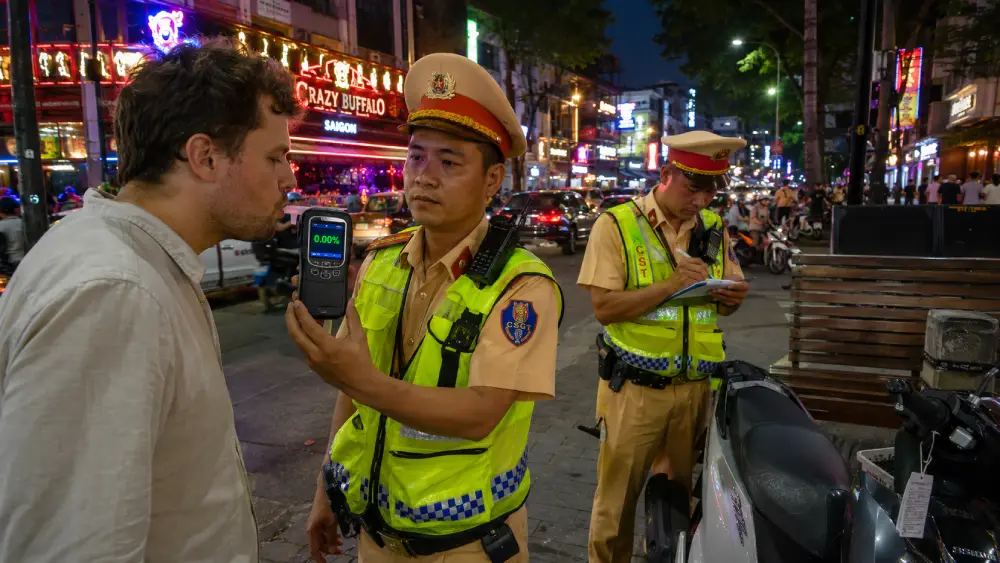
Vietnam takes drunk driving incredibly seriously, operating under an absolute zero-tolerance policy. The legal Blood Alcohol Concentration (BAC) limit for driving any motor vehicle, including a scooter, is exactly 0.00%. Even a single sip of beer makes it illegal for you to operate a vehicle.
Police frequently set up breathalyzer checkpoints late at night in busy areas of Da Nang, Hanoi, and Ho Chi Minh City. If you blow anything above zero, your scooter will be impounded for a minimum of seven days. You will also face a staggering fine of up to 8 million VND, and your license will be suspended.
While public drinking is generally tolerated, being visibly intoxicated and causing a public disturbance is not. Drunk and disorderly conduct can result in rapid police intervention and heavy administrative fines. Always use a ride-hailing app like Grab to get back to your hotel safely after a night out.
The Pharmacy Danger: Prescriptions and Narcotics
Vietnam enforces some of the most draconian drug laws in the world, and there is zero leniency for foreigners. Possessing, using, or trafficking recreational drugs—including marijuana and CBD products—can result in decades in prison or the death penalty. Do not let anyone convince you that the rules are relaxed in backpacker areas.
Even legitimate prescription medications can get you into massive legal trouble if undocumented. Drugs that contain psychotropic substances, such as common ADHD medications (like Adderall) or strong painkillers, are heavily restricted. You cannot simply walk through customs with an unlabelled bottle of pills.
To bring these medications legally, you must carry a formalized letter from your doctor detailing your diagnosis and the necessity of the drug. Vietnam restricts the import of these specific medications to a maximum 10-day supply. Always keep medications in their clearly labeled, original pharmacy bottles to avoid lengthy interrogations.
Strict Censorship, Photography & Social Media Laws
Taking photographs of anything related to the military or national security is a severe criminal offense. Never point your camera or phone at military bases, border checkpoints, or uniformed military personnel. If caught, your device will be seized, and you will be detained for questioning.
You must also be incredibly careful about what you post while connected to Vietnamese networks. The government enforces strict cyber security laws that actively monitor social media platforms. Tourists are not exempt from these digital regulations.
Posting content that criticizes the Vietnamese government, mocks political leaders, or disrespects the national flag is highly illegal. Offenses related to "anti-state propaganda" can lead to immediate deportation, massive fines, or prolonged imprisonment. Keep your travel vlogs and Instagram stories focused purely on tourism, food, and culture.
Weird Rules & Cultural Taboos You Must Respect
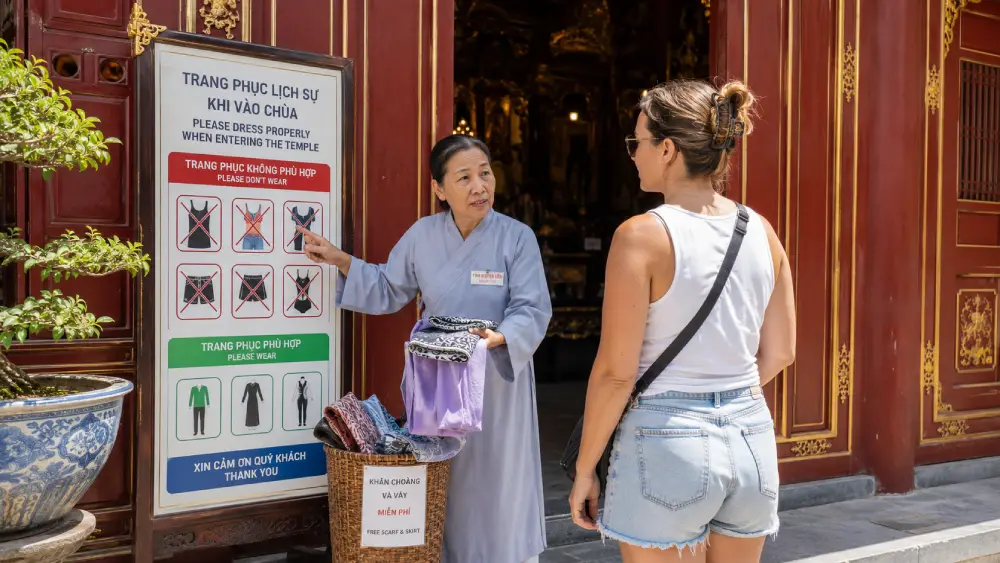
Beyond legal codes, violating Vietnam's deep-rooted cultural taboos can cause extreme offense and public confrontation. When visiting Buddhist temples or pagodas, strict dress codes are actively enforced. You must cover your shoulders and knees; tank tops and short shorts will result in you being denied entry.
In Vietnamese culture, the head is considered the most sacred part of the body, while the feet are the lowest and dirtiest. Never touch someone on the head, even if you are affectionately patting a child. Furthermore, never point the soles of your feet toward another person or a religious altar when sitting down.
Public displays of affection (PDA) are heavily frowned upon in traditional Vietnamese society. While holding hands is acceptable, aggressive kissing or groping in public is considered highly disrespectful. Maintaining a calm demeanor is crucial; losing your temper or shouting in public causes a loss of "face" and will make local authorities less willing to help you.
Stay Connected to Stay Safe
Having a fast, reliable internet connection is your ultimate safety net when navigating strict foreign laws. You need data to instantly translate street signs, check restricted drone maps, and order safe transportation late at night. Getting lost or misunderstanding a police officer due to a lack of connectivity can escalate a minor issue into a disaster.
Need data in Vietnam? Get an eSIM!
Choose the perfect data plan for your trip

Manage your eSIM in the app
Install, top up and track data.
To ensure you are secure the exact second your plane touches the tarmac, we highly recommend downloading a Vietnam eSIM. It completely eliminates the need to hand over your passport to questionable airport kiosks or rely on unsecure public Wi-Fi. With an eSIM, you have instant access to emergency numbers and embassy contacts.
Before you travel, take a moment to understand exactly how the local telecom networks operate. You can read our comprehensive breakdown on How to Get Internet in Vietnam. If you want to compare data packages and find the best value for your trip, check out our guide on the Best eSIM for Vietnam.
Summary Checklist (Don't Be That Tourist)
-
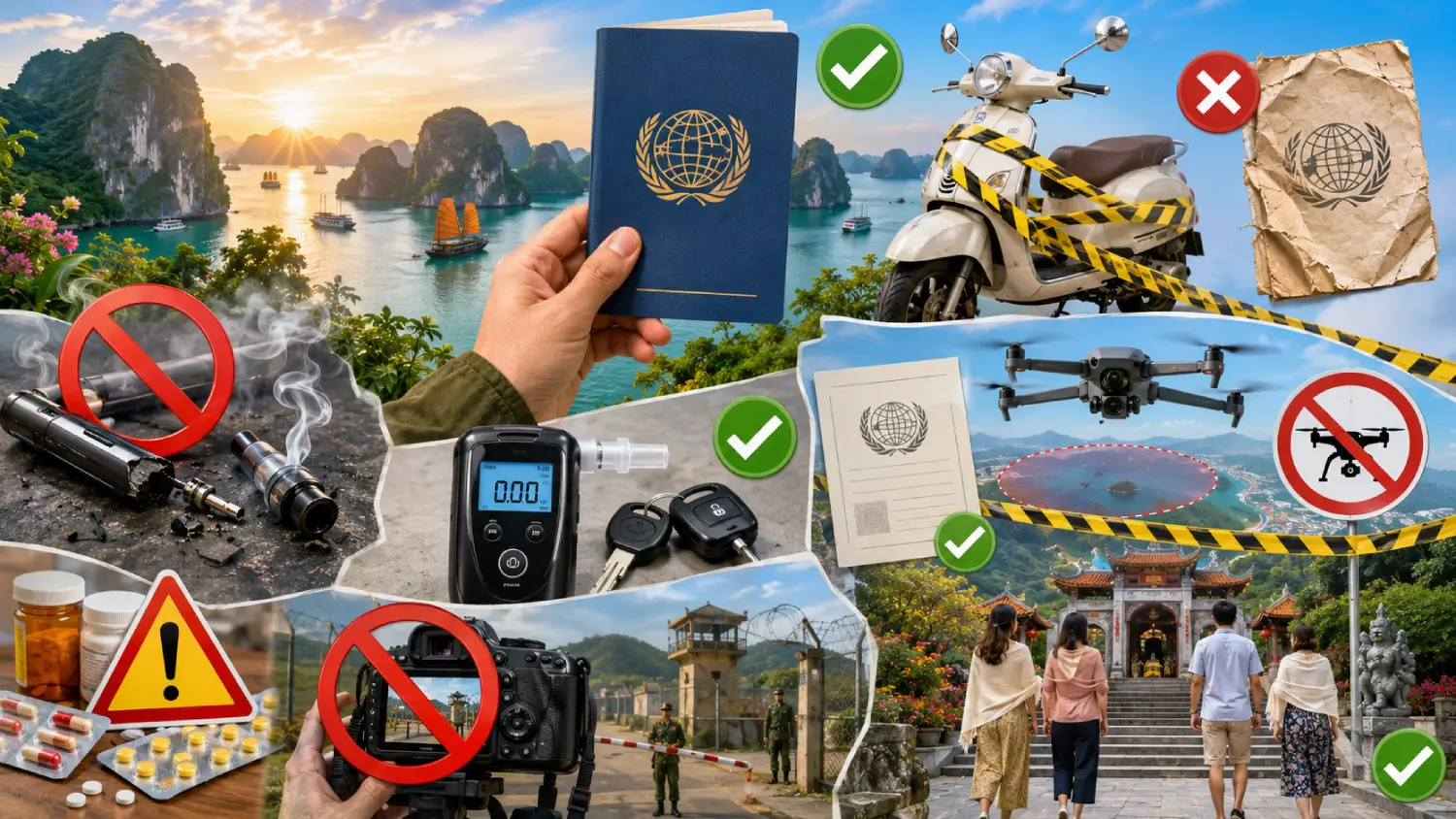
Leave the vape behind: All e-cigarettes are banned in 2026; bringing guarantees customs confiscation and a potential 5 million VND fine.
-
Check your IDP year: the 1968 International Driving Permit is legal; riding with a 1949 permit voids your insurance and leads to bike impoundment.
-
Never fly a drone blindly: Every drone flight requires a Ministry of Defence permit; flying near airports triggers massive fines and confiscation.
-
Stay at 0.00% BAC: Vietnam has a zero-tolerance drunk driving law; a single beer will result in losing your scooter and an 8 million VND fine.
-
Translate your prescriptions: Carry official doctor letters for strong medications and limit psychotropic drugs to a 10-day supply.
-
Cover up at temples: Always wear clothing that covers your shoulders and knees to avoid offending locals and being denied entry.
-
Watch your camera lens: Never photograph military sites, border crossings, or government security buildings.
Note: Travel laws and fines can change. This information is accurate as of June 2026. Always consult official local authorities before your trip.