

'/%3e%3cuse xlink:href='%23a' transform='rotate(45 400 250)'/%3e%3cuse xlink:href='%23a' transform='rotate(67.5 400 250)'/%3e%3cpath id='b' fill='%2385340a' d='M404.31 274.41c.453 9.054 5.587 13.063 4.579 21.314 2.213-6.525-3.124-11.583-2.82-21.22m-7.649-23.757 19.487 42.577-16.329-43.887'/%3e%3cuse xlink:href='%23b' transform='rotate(22.5 400 250)'/%3e%3cuse xlink:href='%23b' transform='rotate(45 400 250)'/%3e%3cuse xlink:href='%23b' transform='rotate(67.5 400 250)'/%3e%3c/g%3e%3cuse xlink:href='%23c' transform='rotate(90 400 250)'/%3e%3cuse xlink:href='%23c' transform='rotate(180 400 250)'/%3e%3cuse xlink:href='%23c' transform='rotate(270 400 250)'/%3e%3ccircle cx='400' cy='250' r='27.778' fill='%23f6b40e' stroke='%2385340a' stroke-width='1.5'/%3e%3cpath id='h' fill='%23843511' d='M409.47 244.06c-1.897 0-3.713.822-4.781 2.531 2.136 1.923 6.856 2.132 10.062-.219a7.333 7.333 0 0 0-5.281-2.312zm-.031.438c1.846-.034 3.571.814 3.812 1.656-2.136 2.35-5.55 2.146-7.687.437.935-1.495 2.439-2.067 3.875-2.094z'/%3e%3cuse xlink:href='%23d' transform='matrix(-1 0 0 1 800.25 0)'/%3e%3cuse xlink:href='%23e' transform='matrix(-1 0 0 1 800.25 0)'/%3e%3cuse xlink:href='%23f' transform='translate(18.862)'/%3e%3cuse xlink:href='%23g' transform='matrix(-1 0 0 1 800.25 0)'/%3e%3cpath fill='%2385340a' d='M395.75 253.84c-.913.167-1.563.977-1.563 1.906 0 1.062.878 1.906 1.938 1.906a1.89 1.89 0 0 0 1.563-.812c.739.556 1.764.615 2.312.625.084.002.193 0 .25 0 .548-.01 1.573-.069 2.313-.625.36.516.935.812 1.562.812 1.06 0 1.938-.844 1.938-1.906 0-.929-.65-1.74-1.563-1.906.513.18.844.676.844 1.219a1.28 1.28 0 0 1-1.281 1.281c-.68 0-1.242-.54-1.282-1.219-.208.417-1.034 1.655-2.656 1.719-1.622-.064-2.447-1.302-2.656-1.719-.04.679-.6 1.219-1.281 1.219a1.28 1.28 0 0 1-1.281-1.281c0-.542.33-1.038.843-1.219zm2.09 5.69c-2.138 0-2.983 1.937-4.906 3.219 1.068-.427 1.91-1.27 3.406-2.125 1.496-.855 2.772.187 3.625.187h.031c.853 0 2.13-1.041 3.625-.187 1.497.856 2.369 1.698 3.438 2.125-1.924-1.282-2.8-3.219-4.938-3.219-.426 0-1.271.23-2.125.656h-.031c-.853-.426-1.698-.656-2.125-.656z'/%3e%3cpath fill='%2385340a' d='M397.12 262.06c-.844.037-1.96.207-3.563.688 3.848-.855 4.697.437 6.407.437h.03c1.71 0 2.56-1.292 6.407-.438-4.274-1.282-5.124-.437-6.406-.437h-.031c-.802 0-1.437-.312-2.844-.25z'/%3e%3cpath fill='%2385340a' d='M393.75 262.72c-.248.003-.519.005-.813.031 4.488.428 2.331 3 7.032 3h.03c4.702 0 2.575-2.572 7.063-3-4.7-.426-3.214 2.344-7.062 2.344h-.031c-3.608 0-2.496-2.421-6.22-2.375zm10.1 6.94a3.848 3.848 0 0 0-3.846-3.846 3.848 3.848 0 0 0-3.847 3.846 3.955 3.955 0 0 1 3.847-3.04 3.952 3.952 0 0 1 3.846 3.04z'/%3e%3cpath id='e' fill='%2385340a' d='M382.73 244.02c4.915-4.273 11.11-4.915 14.53-1.709.837 1.121 1.373 2.32 1.593 3.57.43 2.433-.33 5.062-2.236 7.756.215-.001.643.212.856.427 1.697-3.244 2.297-6.577 1.74-9.746a13.815 13.815 0 0 0-.67-2.436c-4.7-3.845-11.11-4.272-15.81 2.138z'/%3e%3cpath id='d' fill='%2385340a' d='M390.42 242.74c2.777 0 3.419.642 4.7 1.71 1.284 1.068 1.924.854 2.137 1.068.213.215 0 .854-.426.64s-1.284-.64-2.564-1.708c-1.283-1.07-2.563-1.069-3.846-1.069-3.846 0-5.983 3.205-6.41 2.991-.426-.214 2.137-3.632 6.41-3.632z'/%3e%3cuse xlink:href='%23h' transform='translate(-19.181)'/%3e%3ccircle id='f' cx='390.54' cy='246.15' r='1.923' fill='%2385340a'/%3e%3cpath id='g' fill='%2385340a' d='M385.29 247.44c3.633 2.778 7.265 2.564 9.402 1.282 2.136-1.282 2.136-1.709 1.71-1.709-.427 0-.853.427-2.564 1.281-1.71.856-4.273.856-8.546-.854z'/%3e%3c/svg%3e)
If you need the quick answers for your 2026 planning, here is the ultimate cheat sheet. Argentina is a massive country, but you can optimize your trip based on these core timing windows.
-
Best Overall Time (First-Timers): November and April. These shoulder-season months offer the best balance of pleasant weather across almost all regions.
-
Best Time for Patagonia: December to February. This is the peak summer season, offering the longest daylight hours and fully accessible hiking trails.
-
Best Time for Budget Travelers: May and September. You will avoid the peak summer tourist pricing and the local winter holiday spikes.
-
Months to Avoid for Crowds: January (peak international and domestic summer travel) and July (local winter school holidays).
Argentina by Season: What You Really Get
Because Argentina is in the Southern Hemisphere, the seasons are completely flipped for North American and European travelers. Understanding this reversal is the first step to planning a successful itinerary. The massive shift in latitude means that a "summer" day in the north feels entirely different than a "summer" day in the extreme south. Here is exactly what you can expect across the country during each distinct season.
| Season (Months) | Typical Conditions | Crowds | Costs | Best For |
| Summer (Dec – Feb) | Hot and humid in the north, warm and windy in the south. | Peak | Highest | Patagonia hiking, Tierra del Fuego, escaping northern hemisphere winters. |
| Autumn (Mar – May) | Cooling temperatures, spectacular foliage in the south, dry air. | Moderate | Moderate | Mendoza wine tasting, Buenos Aires city walks, Lake District photography. |
| Winter (Jun – Aug) | Mild in the north, cold in the center, heavy snow in the deep south. | High (July) | Varies | Andean skiing, northern desert road trips, Buenos Aires Tango Festival. |
| Spring (Sep – Nov) | Blooming flowers, warming temperatures, decreasing rainfall. | Low to Moderate | Moderate | Iguazú Falls, wildlife spotting in Valdés Peninsula, general touring. |
Regional Differences (Microclimates & Geography)
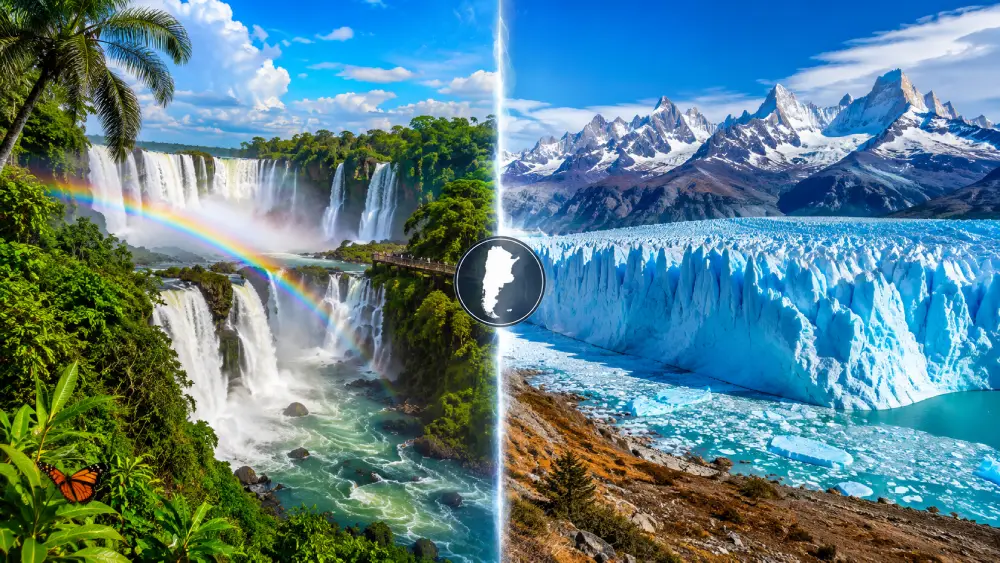
Argentina spans over 4,000 kilometers from top to bottom. You cannot apply general weather forecast to the entire country. The best time to visit completely depends on which distinct microclimate you plan to explore during your trip.
Buenos Aires & The Pampas (The Center)
The capital city has a humid, subtropical climate that experiences four distinct seasons. Summers (December to February) are notoriously hot and sticky, causing many locals to flee the city for the coast. If you visit in January, expect intense heat waves and quieter urban streets.
The absolute best times to explore Buenos Aires are during the transition seasons of spring (September to November) and autumn (March to May). During these windows, you get crisp, sunny days perfect for café hopping and walking tours in San Telmo. Winters (June to August) are generally mild but can feel damp, requiring a good jacket for evening outings.
Patagonia & Tierra del Fuego (The Deep South)
Down at the bottom of the world, the rules change drastically. Summer (December to February) is the undisputed champion for visiting Patagonia, offering up to 18 hours of daylight. This is the reliable window for trekking in El Chaltén or taking an Antarctica cruise from Ushuaia.
Even in peak summer, Patagonian weather is wildly unpredictable, and fierce westerly winds can arrive out of nowhere. Outside of summer, the shoulder months of November and March offer beautiful scenery but much colder nights. From May to September, many lodges close, trails ice over, and the region essentially shuts down for standard tourism.
Iguazú Falls & The Subtropical North
The northeast region containing Iguazú Falls is hot and incredibly humid all year round. The wettest months are typically December through February, which means the falls will be roaring at maximum capacity. However, heavy rains during this time can wash out lower walking trails and make the humidity oppressive.
For a more comfortable experience, target the drier, cooler months from April to September. The temperatures are much more manageable for hiking the dense jungle trails. If you are packing for a multi-region trip that includes both the northern jungles and the southern glaciers, packing layers is absolutely mandatory.
Mendoza & The Andean West
Mendoza enjoys a glorious, dry Mediterranean climate at the foothills of the Andes. The region boasts over 300 days of sunshine a year, making it a reliable destination in almost any month. Summers are hot and perfect for lounging by vineyard pools, while winters offer dramatic snow-capped mountain backdrops.
The undisputed peak time to visit is late February through April. This perfectly aligns with the grape harvest, turning the vineyards stunning shades of gold and red. If you plan to bring bottles of world-class wine home from your tastings, make sure to read our Argentina Airport Customs Rules guide to avoid border issues.
Month-by-Month Cheat Sheet
If you have specific dates in mind for 2026, here is exactly what the country looks like month by month.
-
January: The absolute peak of summer. Buenos Aires is sweltering and mostly abandoned by locals, while Patagonia is operating at peak capacity with premium pricing.
-
February: Still hot and busy, but the energy shifts as Carnival celebrations kick off across the north. Mendoza begins preparing for the massive grape harvest.
-
March: A spectacular transition month. Autumn brings golden foliage to the Patagonian Lake District, and Mendoza celebrates its legendary Vendimia wine festival.
-
April: Arguably of the best months to be in Argentina. The weather is universally pleasant, crowds thin out, and Iguazú Falls enjoys clear, comfortable days.
-
May: A quiet, budget-friendly shoulder month. The south begins to freeze over, but the northern deserts (Salta and Jujuy) offer perfect, dry road trip conditions.
-
June: Winter officially arrives in the south. The Andes open their ski resorts, and football fever will completely take over the country for the 2026 FIFA World Cup.
-
July: A surprisingly busy month as locals take their mid-winter school holidays. Ski resorts like Bariloche are packed, and domestic flight prices temporarily spike.
-
August: The ideal month for urban culture. Buenos Aires hosts the spectacular International Tango Festival, and the northern provinces remain beautifully dry and sunny.
-
September: Spring begins to thaw the country. It is an excellent time for wildlife lovers to head to the Valdés Peninsula for peak whale watching.
-
October: The southern hiking trails of Patagonia slowly begin to reopen. The weather across the country is mild, making it a great time for multi-stop itineraries.
-
November: The undisputed champion of the Argentine travel calendar. You get pre-summer warmth, blooming jacaranda trees in Buenos Aires, and fully accessible Patagonian trails before the crowds arrive.
-
December: Summer returns with a vengeance. Prices skyrocket toward the holidays, and you must book southern lodges and domestic flights months in advance.
Best Time to Visit by Traveler Type
Your personal travel style matters just as much as the weather forecast. Here is how to precisely time your 2026 trip based on your primary goals.
For Hiking & Patagonia
If your dream is to hike on the Perito Moreno Glacier or conquer the Fitz Roy trek, you must go between December and February. The trails are clear of deep snow, and the extended daylight allows for massive trekking days. Just be prepared to book your accommodation up to six months in advance to secure a spot.
For Wine Lovers & Mendoza
Oenophiles should circle March on their calendars. This is harvest season, meaning the vineyards are bustling with activity, and you can participate in grape stomping and local festivals. The weather is crisp and clear, providing the perfect climate for cycling between different bodegas.
For Budget Travelers
To stretch your travel budget as far as possible, target the shoulder months of May, September, and October. You will miss the premium pricing of the summer rush and the winter ski spikes. Hostels, domestic flights, and tour operators often offer reduced rates to secure bookings during these quieter windows.
For Sightseeing & Culture
If you care more about architecture, museums, and food than extreme outdoor sports, aim for April or November. The cities are vibrating with local life, the weather requires a light jacket, and outdoor cafes are completely open. When navigating busy cultural hubs, always stay sharp; brush up on local safety by reading our Is Argentina Safe for Tourists? Pickpockets, Economic Protests & Scams guide.
Festivals & Special Dates to Plan Around (2026)
Argentina is a passionate, event-driven culture. Certain dates in 2026 will completely alter the atmosphere, pricing, and hotel availability across the country.
The 2026 FIFA World Cup (June 11 – July 19)
Argentina won the 2022 World Cup, and football is practically a religion here. During the 2026 tournament, the entire country will come to a complete standstill whenever the national team plays. Bars in Buenos Aires will be overflowing, streets will turn into massive parties, and the energy will be absolutely electric.
If you are visiting in June or July, you must embrace the football chaos. Just be aware that during massive street celebrations, certain local ordinances might be enforced; check out our Argentina Tourist Bans & Laws guide to stay on the right side of the law.
Fiesta Nacional de la Vendimia (Late February / Early March)
Mendoza’s national grape harvest festival is of the most important wine events on the planet. The city explodes with parades, concerts, and endless wine-tasting events. Hotels in the Mendoza region book out months in advance for this specific week.
Buenos Aires Tango Festival (August)
Every August, the capital transforms into a massive dance floor for the world's premier tango competition. Free concerts, street performances, and local dance halls are packed with international talent. It is the absolute best time to experience the soul of Buenos Aires.
A Quick Note on Staying Connected
Argentina is massive, and navigating it requires constant connectivity. Whether you are checking live flight statuses for a domestic hop, translating a menu in Salta, or calling an Uber in Buenos Aires, landing with immediate internet access is crucial. Relying on public Wi-Fi is a recipe for frustration, especially in rural areas or busy transport hubs.
Need data in Argentina? Get an eSIM!
Choose the perfect data plan for your trip
The easiest and most efficient setup for 2026 is downloading a digital SIM before you even board your flight. You can skip the chaotic kiosk lines at Ezeiza Airport and connect the second you land. For a deep dive into local networks versus roaming, read our How to Get Internet in Argentina guide.
Grabbing an Argentina eSIM is the smartest move for modern travelers. You can easily compare the best data packages and activation steps in our Best eSIM for Argentina breakdown.
FAQ: Best Time to Visit Argentina
What is the cheapest month to visit Argentina?
May and September are generally the cheapest months. These shoulder-season windows avoid the peak summer tourist influx and the local winter ski holidays, resulting in lower hotel rates and cheaper domestic flights.
When is the rainy season in Argentina?
The northern regions, including Iguazú Falls, experience their heaviest rains during the summer months of December through February. In contrast, Patagonia remains relatively dry but experiences severe winds during these same summer months.
Is it worth visiting Argentina in the winter (June to August)?
Yes, if you enjoy skiing or city culture. The Andes offer excellent winter sports, and Buenos Aires is vibrant with events like the annual Tango Festival. However, southern Patagonia essentially shuts down, making it a bad time for glacier hiking.
When is the best time to visit Patagonia?
The optimal window is from December to February. This period provides the warmest temperatures, the longest daylight hours for hiking, and fully accessible roads and trails in the deep south.
How far in advance should I book for a summer trip?
If you plan to visit Patagonia or Iguazú between December and February, you should book flights and accommodations at least four to six months in advance. Availability disappears rapidly, and last-minute prices are notoriously high.
When is the grape harvest in Mendoza?
The harvest takes place between late February and April, peaking with the Vendimia festival in March. This is the most scenic and active time to visit the wine country.
Does Argentina get hurricanes?
No, Argentina is not affected by hurricanes. The primary severe weather concerns are heavy summer thunderstorms in the north and sudden, extreme windstorms in Patagonia.
When is the best time to see whales in Argentina?
The best time for whale watching off the Valdés Peninsula is between September and November. During this spring window, Southern Right Whales gather in large numbers to mate and give birth near the coast.
