

'/%3e%3cuse xlink:href='%23a' transform='rotate(45 400 250)'/%3e%3cuse xlink:href='%23a' transform='rotate(67.5 400 250)'/%3e%3cpath id='b' fill='%2385340a' d='M404.31 274.41c.453 9.054 5.587 13.063 4.579 21.314 2.213-6.525-3.124-11.583-2.82-21.22m-7.649-23.757 19.487 42.577-16.329-43.887'/%3e%3cuse xlink:href='%23b' transform='rotate(22.5 400 250)'/%3e%3cuse xlink:href='%23b' transform='rotate(45 400 250)'/%3e%3cuse xlink:href='%23b' transform='rotate(67.5 400 250)'/%3e%3c/g%3e%3cuse xlink:href='%23c' transform='rotate(90 400 250)'/%3e%3cuse xlink:href='%23c' transform='rotate(180 400 250)'/%3e%3cuse xlink:href='%23c' transform='rotate(270 400 250)'/%3e%3ccircle cx='400' cy='250' r='27.778' fill='%23f6b40e' stroke='%2385340a' stroke-width='1.5'/%3e%3cpath id='h' fill='%23843511' d='M409.47 244.06c-1.897 0-3.713.822-4.781 2.531 2.136 1.923 6.856 2.132 10.062-.219a7.333 7.333 0 0 0-5.281-2.312zm-.031.438c1.846-.034 3.571.814 3.812 1.656-2.136 2.35-5.55 2.146-7.687.437.935-1.495 2.439-2.067 3.875-2.094z'/%3e%3cuse xlink:href='%23d' transform='matrix(-1 0 0 1 800.25 0)'/%3e%3cuse xlink:href='%23e' transform='matrix(-1 0 0 1 800.25 0)'/%3e%3cuse xlink:href='%23f' transform='translate(18.862)'/%3e%3cuse xlink:href='%23g' transform='matrix(-1 0 0 1 800.25 0)'/%3e%3cpath fill='%2385340a' d='M395.75 253.84c-.913.167-1.563.977-1.563 1.906 0 1.062.878 1.906 1.938 1.906a1.89 1.89 0 0 0 1.563-.812c.739.556 1.764.615 2.312.625.084.002.193 0 .25 0 .548-.01 1.573-.069 2.313-.625.36.516.935.812 1.562.812 1.06 0 1.938-.844 1.938-1.906 0-.929-.65-1.74-1.563-1.906.513.18.844.676.844 1.219a1.28 1.28 0 0 1-1.281 1.281c-.68 0-1.242-.54-1.282-1.219-.208.417-1.034 1.655-2.656 1.719-1.622-.064-2.447-1.302-2.656-1.719-.04.679-.6 1.219-1.281 1.219a1.28 1.28 0 0 1-1.281-1.281c0-.542.33-1.038.843-1.219zm2.09 5.69c-2.138 0-2.983 1.937-4.906 3.219 1.068-.427 1.91-1.27 3.406-2.125 1.496-.855 2.772.187 3.625.187h.031c.853 0 2.13-1.041 3.625-.187 1.497.856 2.369 1.698 3.438 2.125-1.924-1.282-2.8-3.219-4.938-3.219-.426 0-1.271.23-2.125.656h-.031c-.853-.426-1.698-.656-2.125-.656z'/%3e%3cpath fill='%2385340a' d='M397.12 262.06c-.844.037-1.96.207-3.563.688 3.848-.855 4.697.437 6.407.437h.03c1.71 0 2.56-1.292 6.407-.438-4.274-1.282-5.124-.437-6.406-.437h-.031c-.802 0-1.437-.312-2.844-.25z'/%3e%3cpath fill='%2385340a' d='M393.75 262.72c-.248.003-.519.005-.813.031 4.488.428 2.331 3 7.032 3h.03c4.702 0 2.575-2.572 7.063-3-4.7-.426-3.214 2.344-7.062 2.344h-.031c-3.608 0-2.496-2.421-6.22-2.375zm10.1 6.94a3.848 3.848 0 0 0-3.846-3.846 3.848 3.848 0 0 0-3.847 3.846 3.955 3.955 0 0 1 3.847-3.04 3.952 3.952 0 0 1 3.846 3.04z'/%3e%3cpath id='e' fill='%2385340a' d='M382.73 244.02c4.915-4.273 11.11-4.915 14.53-1.709.837 1.121 1.373 2.32 1.593 3.57.43 2.433-.33 5.062-2.236 7.756.215-.001.643.212.856.427 1.697-3.244 2.297-6.577 1.74-9.746a13.815 13.815 0 0 0-.67-2.436c-4.7-3.845-11.11-4.272-15.81 2.138z'/%3e%3cpath id='d' fill='%2385340a' d='M390.42 242.74c2.777 0 3.419.642 4.7 1.71 1.284 1.068 1.924.854 2.137 1.068.213.215 0 .854-.426.64s-1.284-.64-2.564-1.708c-1.283-1.07-2.563-1.069-3.846-1.069-3.846 0-5.983 3.205-6.41 2.991-.426-.214 2.137-3.632 6.41-3.632z'/%3e%3cuse xlink:href='%23h' transform='translate(-19.181)'/%3e%3ccircle id='f' cx='390.54' cy='246.15' r='1.923' fill='%2385340a'/%3e%3cpath id='g' fill='%2385340a' d='M385.29 247.44c3.633 2.778 7.265 2.564 9.402 1.282 2.136-1.282 2.136-1.709 1.71-1.709-.427 0-.853.427-2.564 1.281-1.71.856-4.273.856-8.546-.854z'/%3e%3c/svg%3e)
Stepping off the plane in Buenos Aires feels like entering a vibrant new world, but the legal landscape is strictly enforced. Ignorance of the law will not save you from severe fines or deportation. Local police routinely target foreign drivers, and airport customs agents actively scan for undeclared items.
The Ruta 40 Trap: Zero-Tolerance Driving & Checkpoints
Renting a car is the best way to explore Patagonia, but Argentina's driving laws are fiercely strict. In 2023, the government passed the Ley de Alcohol Cero, which enforces a 0.00% blood alcohol content (BAC) limit nationwide. You cannot have even a single sip of wine or beer before getting behind the wheel.
Police checkpoints are ubiquitous along major tourist routes, particularly on Ruta 40 and near Mendoza's wine regions. If you are caught with any trace of alcohol in your system, authorities will immediately impound your vehicle. You will also face massive financial penalties and a suspension of your driving privileges in the country.
Beyond alcohol, there are peculiar traffic laws that regularly catch tourists off guard. Your vehicle's low-beam headlights must be turned on 24 hours a day when driving on national highways. For official updates and exact penalty amounts, you can verify regulations through the Argentine National Road Safety Agency.
-
International Driving Permit (IDP): Always carry your IDP alongside your home country's driver's license.
-
Mandatory Equipment: Your rental car must have two warning triangles, a fire extinguisher, and a rigid tow bar.
-
Speed Limits: Limits are strictly enforced by hidden speed cameras, especially in the Buenos Aires province.
-
Seatbelts: Every passenger must wear a seatbelt, and children must be in approved car seats.
The Blue Dollar, Cash Limits, and Street Exchanges
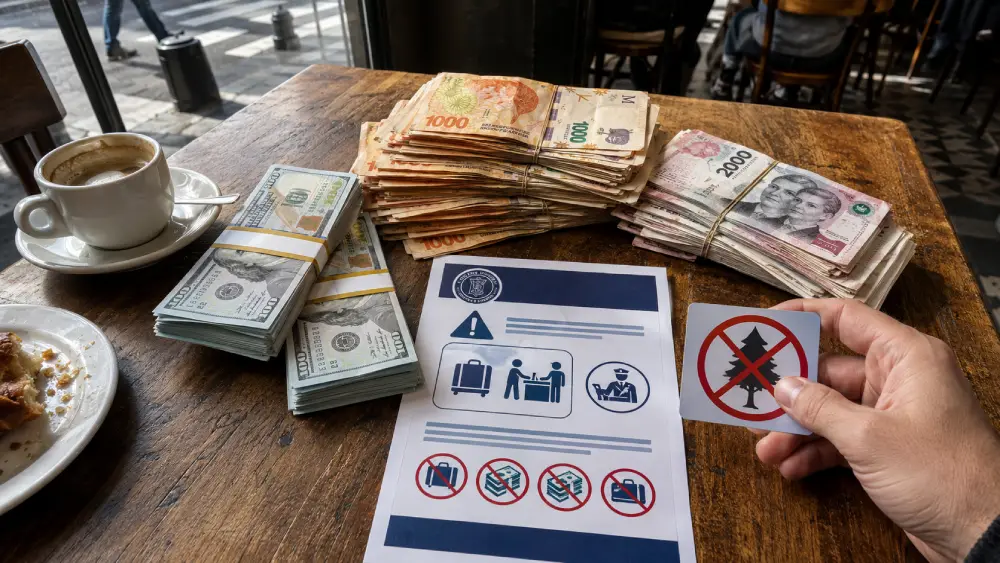
Argentina's economic situation involves a complex dual-currency system, and navigating it legally is critical. Bringing foreign currency is highly encouraged, but you must adhere to strict international declaration laws. Any traveler carrying more than $10,000 USD in cash must declare it upon entry.
Failing to declare excess cash will result in immediate seizure of the funds at the airport. For a comprehensive breakdown of what you can legally bring into the country, you should review our guide on Argentina Airport Customs Rules. It is always better to declare than to face smuggling charges.
While walking down Calle Florida in Buenos Aires, you will hear illegal street money changers, known as "arbolitos," shouting "Cambio!". Exchanging cash on the black market (the Blue Dollar rate) exposes you to counterfeit bills. Instead, use foreign credit cards, which now legally process transactions at the favorable "MEP" exchange rate automatically.
-
Crisp Bills: If you bring cash, ensure your USD bills are brand new, unblemished, and printed after 2013.
-
Official Exchanges: use Western Union or official exchange houses (Casas de Cambio) to avoid counterfeit scams.
-
Exit Taxes: Be prepared to pay local taxes in Argentine Pesos, as some businesses cannot legally accept foreign currency.
Prescription Meds: The ANMAT Border Check
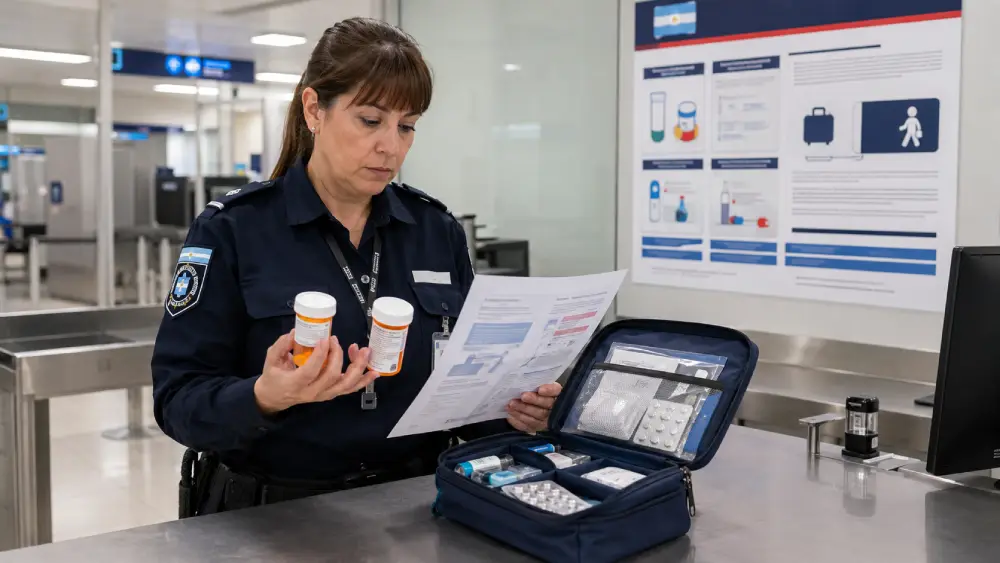
Traveling with prescription medications requires careful preparation to avoid confiscation by Argentine customs. The national health regulatory agency, ANMAT, strictly controls the importation of pharmaceuticals, particularly psychotropic drugs. Medications commonly prescribed abroad, such as strong ADHD stimulants or heavy painkillers, are highly restricted.
If you must travel with controlled substances, you must bring the medication in its original, clearly labeled packaging. You are also required to carry a signed, officially translated letter from your doctor detailing your medical necessity. Carrying restricted medications loose in a pill organizer is illegal and will lead to confiscation.
Recreational narcotics of any kind are strictly prohibited under Argentine law. The local police maintain a zero-tolerance policy for drugs, and being caught in possession will result in immediate arrest. Do not risk your freedom by purchasing illegal substances from local street vendors.
-
Quantity Limits: bring enough medication for the exact duration of your stay.
-
Over-the-Counter Differences: Some medications available over-the-counter in your home country may require a prescription in Argentina.
-
Medical Insurance: Ensure your travel insurance covers emergency health services, as free public healthcare for tourists is being phased out in some provinces.
Environmental Crimes: Patagonia's Strict Fire Bans
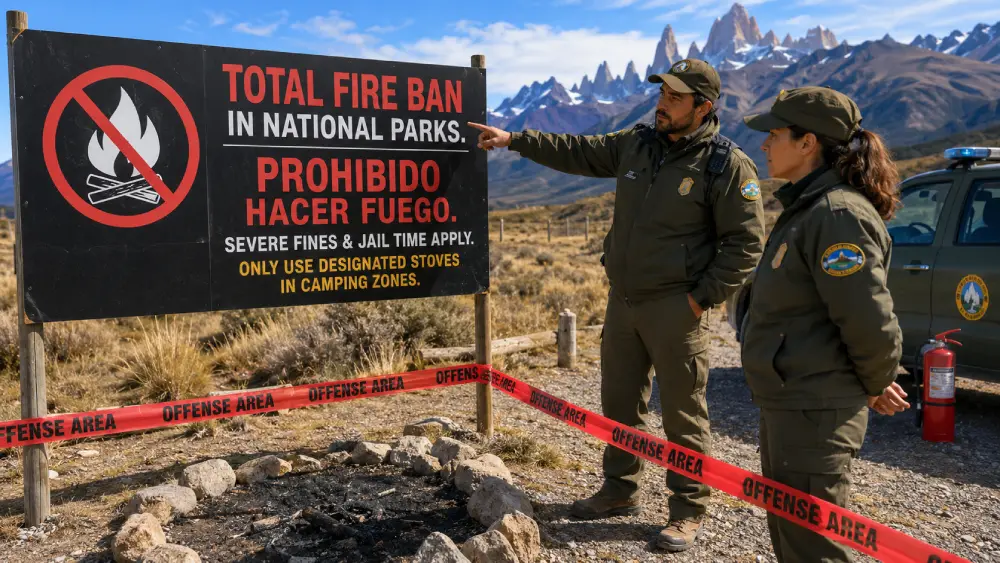
Argentina's natural landscapes are heavily protected, and environmental crimes are punished with absolute severity. In recent years, devastating wildfires have ravaged parts of Patagonia, leading to incredibly strict fire regulations. Starting a campfire outside of explicitly designated zones is a serious criminal offense.
If you are caught lighting an unauthorized fire, using a camp stove illegally, or tossing a cigarette butt in a National Park, you will be arrested. Fines for fire-related infractions can exceed millions of pesos, and perpetrators often face jail time and permanent bans from the parks. Park rangers actively patrol the hiking trails to enforce these rules.
Furthermore, removing any natural artifacts from the environment is strictly prohibited. You cannot take rocks, fossils, shells, or native flora from the beaches, deserts, or mountains. Customs agents scan luggage specifically for illegally harvested organic materials upon departure.
-
Leave No Trace: You must pack out all of your trash, including biodegradable items like fruit peels.
-
Wildlife Harassment: Feeding, touching, or disturbing local wildlife, such as penguins in Ushuaia or guanacos in Patagonia, carries heavy fines.
-
Trail Discipline: Hiking off-trail in protected reserves is illegal and damages fragile ecosystems.
Cultural Taboos: The Mate Etiquette & The Malvinas

Argentine culture is incredibly warm, but there are strict cultural faux pas that will instantly offend locals. The most sensitive topic of conversation is the 1982 war over the southern archipelago. Never refer to the islands by their English name (the Falkland Islands); always call them "Las Islas Malvinas."
Sharing yerba mate is a sacred cultural ritual with unspoken rules that foreigners frequently break. When handed the gourd, never stir the metal straw (the bombilla), as this insults the person who prepared it. say "gracias" (thank you) when you are completely finished drinking and do not want the gourd passed to you again.
Punctuality in social situations is also viewed very differently in Argentina. Arriving exactly on time for a dinner party or social gathering is actually considered rude and overly eager. You are generally expected to arrive 30 to 45 minutes later than the stated time.
-
The Kiss Greeting: Argentines greet everyone—including strangers—with a single kiss on the right cheek.
-
Dinner Timing: Restaurants rarely open for dinner before 8:00 PM, and locals typically dine around 10:00 PM.
-
Tipping Culture: Tipping 10% in restaurants is standard and expected, but you usually must leave it in cash.
Unregistered Drones: The ANAC Confiscation Risk
Capturing aerial footage of the Andes mountains sounds incredible, but Argentina heavily regulates drone usage. According to the National Civil Aviation Administration, all drones weighing more than 250 grams must be officially registered before you fly. This applies equally to foreign tourists and local residents.
Operating an unregistered drone is a fast track to permanent confiscation and steep administrative fines. The registration process requires submitting your passport details and the drone's serial number via the official digital portal. You must clearly mark your drone with your assigned registration number before launching it.
Even with registration, strict no-fly zones exist across the country. Drones are strictly prohibited in all National Parks, including Los Glaciares and Iguazú Falls, without a hard-to-obtain commercial permit. Park rangers will seize your equipment immediately if you are caught flying near the waterfalls or glaciers.
-
Altitude Limits: You cannot fly higher than 122 meters (400 feet) above ground level.
-
Airport Proximity: Keep your drone at least 5 kilometers (3 miles) away from all airports and heliports.
-
Crowds and Cities: Flying over densely populated areas, public events, or large crowds is completely illegal.
-
Daylight: Recreational flights are legally permitted during daylight hours in clear weather conditions.
Stay Connected to Stay Safe
Having reliable internet access in Argentina is not just about posting vacation photos; it is a critical safety tool. You need data to translate complex local laws, navigate confusing mountain roads, and hail safe rideshare vehicles late at night. Without a stable connection, you are vulnerable to taxi scams and easily lost in massive cities like Buenos Aires.
Need data in Argentina? Get an eSIM!
Choose the perfect data plan for your trip

Manage your eSIM in the app
Install, top up and track data.
Purchasing a digital eSIM before your trip ensures you bypass the confusing airport kiosks and connect to local networks the moment you land. If you want to dive deep into all your connectivity options, review our comparison on How to Get Internet in Argentina. For a quicker decision, you can jump straight to the Best eSIM for Argentina.
To instantly secure your data plan, you can purchase an Argentina eSIM right now. This allows you to lock in high-speed data without handing over your physical passport to a local shop.
Summary Checklist (Don't Be That Tourist)
To ensure your Argentine adventure remains memorable for all the right reasons, keep these strict rules in mind:
-
Zero Alcohol Driving: Never drink and drive; the BAC limit is strictly 0.00% nationwide.
-
Register Your Drone: Register all drones over 250g with ANAC and never fly them in National Parks.
-
Declare Your Cash: Always declare amounts exceeding $10,000 USD to avoid airport confiscation.
-
Respect the Fire Bans: Never light a fire or smoke outside designated zones in Patagonia to avoid jail time.
-
Watch Your Words: Always refer to the contested southern islands as "Las Islas Malvinas."
-
Headlights On: Keep your vehicle's low-beam headlights on 24/7 when navigating national highways.
Note: Travel laws and fines can change. This information is accurate as of July 2026. Always consult official local authorities before your trip.