

'/%3e%3c/defs%3e%3cpath fill='%23012169' d='M0 0h10080v5040H0z'/%3e%3cpath stroke='%23fff' stroke-width='.6' d='m0 0 6 3m0-3L0 3' clip-path='url(%23b)' transform='scale(840)'/%3e%3cpath stroke='%23e4002b' stroke-width='.4' d='m0 0 6 3m0-3L0 3' clip-path='url(%23c)' transform='scale(840)'/%3e%3cpath stroke='%23fff' stroke-width='840' d='M2520 0v2520M0 1260h5040'/%3e%3cpath stroke='%23e4002b' stroke-width='504' d='M2520 0v2520M0 1260h5040'/%3e%3cg fill='%23fff'%3e%3cuse xlink:href='%23d' x='2520' y='3780'/%3e%3cuse xlink:href='%23a' x='7560' y='4200'/%3e%3cuse xlink:href='%23a' x='6300' y='2205'/%3e%3cuse xlink:href='%23a' x='7560' y='840'/%3e%3cuse xlink:href='%23a' x='8680' y='1869'/%3e%3cuse xlink:href='%23e' x='8064' y='2730'/%3e%3c/g%3e%3c/svg%3e)
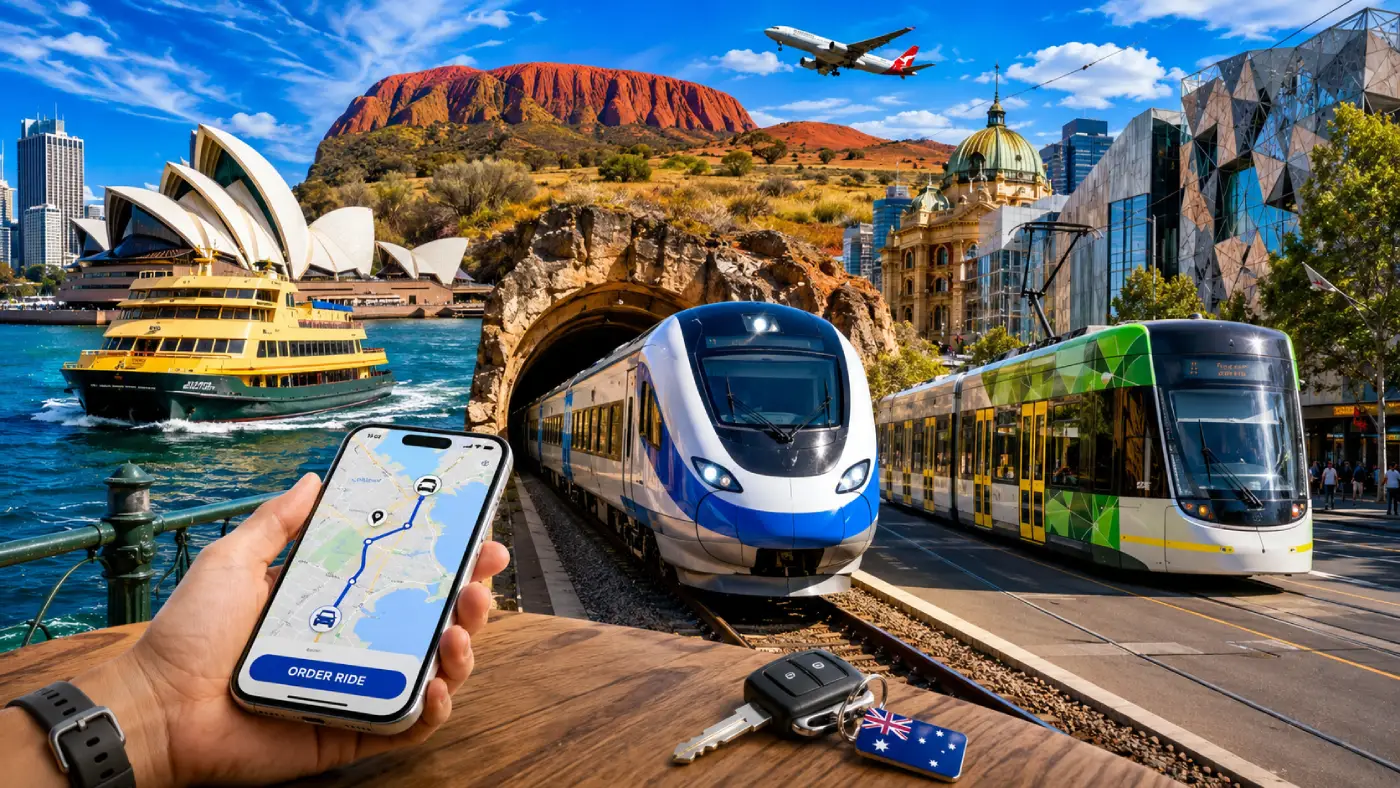
Australia’s transport infrastructure in July 2026 is highly modernized and increasingly cashless. The major cities like Sydney, Melbourne, and Brisbane offer world-class public networks integrating trains, buses, trams, and ferries. However, the sheer scale of the country often shocks first-time visitors who underestimate travel times.
Forget the idea of hopping on a quick train to see the whole country in a week. Domestic flights are often your practical option for interstate travel, while driving between remote destinations requires specific survival preparations. Before planning your movement, it is wise to consult our Best Time to Visit Australia guide, as seasonal floods or intense heat can drastically impact road safety and train schedules.
Within the urban centers, you will find an incredibly smooth, tech-forward experience. Contactless payments are now the absolute standard across almost all state networks, and dominant ride-share apps make last-mile connectivity incredibly easy.
The Basics: Understanding the Network
Australia does not have a single, unified public transport system. Each state operates its own independent transit network with unique branding, rules, and payment gateways. You cannot use a Sydney transit card in Melbourne, nor a Brisbane app in Perth.
Sydney & New South Wales (NSW): Transport for NSW runs a massive web of double-decker trains, buses, light rail, and iconic green-and-yellow ferries. The rail network heavily revolves around Central Station, feeding out into the expansive suburbs. The ferries are not just tourist attractions; they are a vital, traffic-free commuter lifeline across Sydney Harbour.
Melbourne & Victoria: Melbourne is famous for possessing the largest urban tram network in the world. Trams dominate the central grid, and there is a highly popular Free Tram Zone in the Central Business District (CBD) where you do not need to pay at all. Suburban trains (Metro Trains) handle the longer commutes, funneling into the underground City Loop.
Brisbane & Queensland: The Translink system covers Brisbane, the Gold Coast, and the Sunshine Coast. This network heavily utilizes dedicated busways—roads built exclusively for high-speed commuter buses to bypass regular traffic. The Airtrain smoothly connects Brisbane Airport directly to the Gold Coast, making regional arrival incredibly streamlined.
Perth & Western Australia: Transperth operates a highly efficient, clean, and fast commuter rail system stretching along the coast. It is widely considered of the most reliable networks in the country. If you are venturing outside Perth, be aware that regional distances in Western Australia are extreme.
Payment & Tickets: Mobile Apps vs. Physical Cards
The era of buying paper transit tickets in Australia is completely dead in 2026. The entire country has aggressively transitioned to digital and contactless payment solutions. However, the exact method depends entirely on which state you are visiting.
-
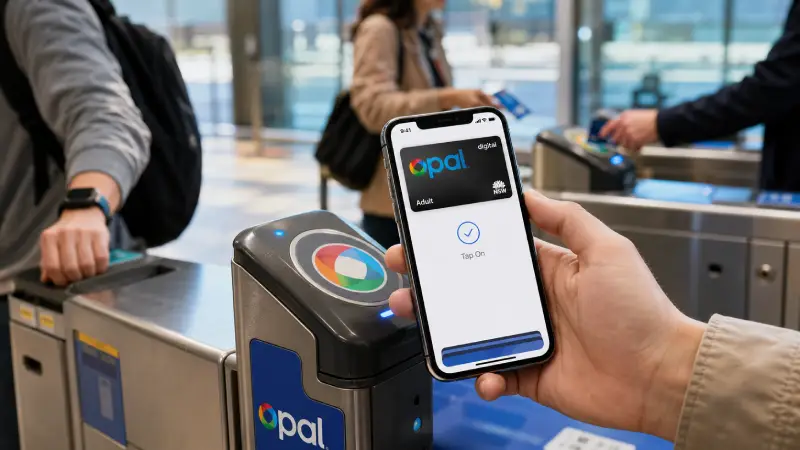
Sydney (Opal Network): Sydney is the pioneer of open-loop contactless transit. You do not need a physical Opal card. You can simply tap your Visa, Mastercard, American Express, or Apple/Google Wallet directly on the terminal. The system automatically calculates daily and weekly fare caps, meaning you will never overpay.
-
Melbourne (Myki Network): Historically reliant on the physical Myki smartcard, Victoria has initiated a massive technology upgrade in 2026. Tap-and-go contactless payments using credit and debit cards are finally rolling out across Melbourne’s buses, trams, and trains. If you board a vehicle that has not yet been upgraded, you can instantly provision a digital Mobile Myki via Google Wallet on Android.
-
Brisbane (Smart Ticketing): Queensland’s Translink system has also rolled out Smart Ticketing. You can now use contactless bank cards or smart devices across the entire South East Queensland train, tram, and ferry network.
-
Perth (SmartRider): Perth is upgrading its systems, but picking up a physical SmartRider card remains the most reliable option for visitors. These can be purchased at airport kiosks, train stations, and designated convenience stores.
Warning on Fare Evasion: Do not attempt to ride without tapping on. Transit officers frequently patrol trains and trams in plain clothes across all states. The fines for fare evasion are brutal, often exceeding $250 AUD, and ignorance of the local app is never accepted as an excuse. Ensure your phone has plenty of battery to prove you tapped on via your digital wallet.
Airport Transfers: Getting to the City Safely
Navigating from the tarmac to your hotel is generally straightforward, but costs vary wildly depending on the city. Always follow official airport signage to designated transport zones and actively ignore anyone offering unofficial rides inside the terminal.
-
Sydney Airport (SYD): The fastest route is the Airport Link train, which takes just 13 minutes to reach Central Station. However, the private station access fee brings the-way ticket to over $20 AUD. If you are traveling in a group of three or more, ordering an Uber from the designated rideshare pickup zone is often cheaper than buying individual train tickets.
-
Melbourne Airport (MEL): Melbourne still lacks a direct train line in 2026. The iconic red SkyBus is the absolute workhorse here, departing every 10-15 minutes and delivering you directly to Southern Cross Station in about 30 minutes. The-way fare is approximately $24 AUD, though rideshare apps are also widely available at dedicated pickup lanes.
-
Brisbane Airport (BNE): The Brisbane Airtrain offers a seamless, elevated rail connection directly into the CBD in 20 minutes. You can simply tap your credit card at the airport station gates. It is highly efficient, though rideshares offer competitive pricing for groups with heavy luggage.
-
Perth Airport (PER): The modern Airport Line train connects the terminals directly to the CBD for the standard zone fare, which is less than $5 AUD. This makes Perth of the cheapest and easiest Australian cities for rapid airport transfers.
For deep insights on staying safe right from the arrivals hall and avoiding standard tourist pitfalls, review our Is Australia Safe for Tourists? Crime, Scams & Tips guide before you land.
Shifting Cities: Inter-City Trains, Shuttles & Domestic Flights
Do not look at a map of Australia and assume you can easily take a quick afternoon train from Sydney to Brisbane. The distance is roughly 900 kilometers (560 miles), and the train journey takes over 14 hours.
Domestic Flights (The Standard Choice)
For 90% of tourists, domestic aviation is the logical way to move between major state capitals. The Sydney-to-Melbourne route is of the busiest air corridors in the entire world.
-
Qantas & Virgin Australia: These are the premium full-service carriers operating across the continent. They offer free baggage allowances, Wi-Fi, and lounge access, making them highly reliable for strict itineraries.
-
Jetstar: This is the dominant budget airline. Fares can be incredibly cheap, but they aggressively charge for carry-on weight limits, checked luggage, and even water. Always pre-purchase your baggage allowance, as airport desk fees are exorbitant.
Inter-City & Regional Trains
Australia does not have a high-speed bullet train network. Interstate trains are geared toward scenic journeys rather than rapid mass transit.
-
The NSW TrainLink XPT: Connects Sydney to Melbourne and Brisbane. It is incredibly slow but offers cheap sleeper cabins and a relaxed way to see the countryside if you have time to kill.
-
Luxury Rail Journeys: The legendary Ghan (Adelaide to Darwin) and Indian Pacific (Sydney to Perth) are luxury hotel-on-wheels experiences. They require booking months in advance and cost thousands of dollars, functioning as a multi-day holiday rather than basic transport.
Long-Distance Coaches
Greyhound Australia remains the backbone of budget backpacker travel. Their modern coaches feature USB charging, reclining seats, and Wi-Fi. The "Whimits" passes allow unlimited hop-on-hop-off travel across their massive network, making it perfect for exploring the East Coast at your own pace.
Taxis, Ride-Sharing & Local Driving Laws
Depending on your itinerary, renting a vehicle or relying on apps will form the core of your daily movement. The ride-share ecosystem is heavily regulated, ensuring a generally safe and transparent experience for tourists.
The Ride-Sharing Ecosystem
-
Uber & DiDi: These two apps absolutely dominate the Australian market in 2026. Uber offers the largest fleet and the fastest pickup times, while DiDi frequently runs aggressive discount campaigns making it the cheaper option.
-
Ola Exited: Note that Ola ceased operations in Australia, so do not bother downloading it.
-
Pricing Reality: Surge pricing hits hard during Friday nights, major sporting events, and sudden torrential rain. Always check both Uber and DiDi to compare the current fare before confirming your booking.
Traditional Taxis
Standard taxis (such as 13cabs) are still widely available and heavily regulated across all states. They utilize strictly enforced meters, and drivers must accept card payments by law. It is completely normal for passengers traveling alone to sit in the front passenger seat, reflecting Australia's egalitarian culture.
Driving & Rental Laws
If you plan to rent a car or campervan to explore the Great Ocean Road or the Outback, you must be prepared for strict enforcement of local road laws.
-
Drive on the Left: Australia drives on the left side of the road. If you are used to right-side driving, take your first few days slowly and stay hyper-aware at roundabouts.
-
Licensing Requirements: You can generally drive on your valid foreign license for up to three months, provided it is printed in English. If it is not, an International Driving Permit (IDP) is legally required.
-
Speed Cameras: Australia utilizes hidden mobile speed cameras, fixed point-to-point cameras, and red-light cameras. Fines are massive, and rental car companies will forward the bill directly to your credit card with an added administrative fee.
-
Wildlife Hazards: Never drive outside city limits between dusk and dawn. Kangaroos are incredibly active during these hours, and hitting at highway speeds will total your rental car and potentially cause fatal accidents.
For a comprehensive breakdown of road rules, cultural norms, and strict border protocols, it is critical to read our Australia Tourist Bans & Laws guide.
Transit Etiquette & Unwritten Rules
Australians value a laid-back culture, but they are fiercely protective of transit etiquette. Breaking these unwritten social rules will quickly mark you as a disruptive tourist.
-
Escalator Rules: You must stand on the left and walk on the right. Blocking the right side of a busy station escalator during peak hour will result in vocal frustration from locals.
-
Thank the Driver: When exiting a local bus via the front or rear doors, it is customary to call out a quick "Thank you!" to the driver. This small gesture of respect is deeply embedded in Australian culture.
-
Quiet Carriages: Many inter-city and suburban trains designate the first and last carriages as "Quiet Carriages." You must mute your phone, use headphones, and refrain from loud conversations.
-
Backpack Etiquette: On crowded trams and trains, always remove your backpack and place it between your feet. Wearing a bulky bag on your back takes up the space of a full person and easily hits seated passengers in the face.
Navigation Apps & The Best Route Tools
Do not try to navigate an Australian city using outdated paper maps or sheer intuition. The transport networks are heavily integrated with real-time tracking data, making digital navigation flawless if you have the right tools.
-
Google Maps: This is the undisputed king for general routing across all Australian cities. It perfectly tracks train delays, tram routes, and walking paths.
-
TripView (Sydney): If you are spending significant time in Sydney, download TripView. It offers superior, offline-capable timetable tracking for trains and ferries, updating instantly with platform changes.
-
PTV App (Melbourne): Public Transport Victoria's official app is essential for navigating Melbourne’s massive tram grid and checking for unexpected network disruptions.
-
Waze: For tourists renting a car, Waze is highly recommended. It relies on community reports to warn you about hidden police vehicles, speed cameras, and sudden road hazards.
Staying Connected: Your Ultimate Navigation Tool
Relying on public Wi-Fi in Australia is a guaranteed way to get stranded. Station Wi-Fi is incredibly spotty, and you need continuous data to track incoming Uber rides, reload digital transit wallets, and translate live service announcements.
Need data in Australia? Get an eSIM!
Choose the perfect data plan for your trip
To understand the difference between picking up a physical SIM at Sydney Airport versus downloading a digital profile, check our How to Get Internet in Australia breakdown. Having internet the exact second the plane touches the tarmac means you can immediately order a ride-share while waiting at the baggage carousel.
If you want the absolute best coverage across Australia’s vast and isolated cellular towers, dive into our Best eSIM for Australia review. We highly recommend equipping an Australia eSIM before you even board your flight, ensuring seamless connectivity from the cities to the deep Outback.
Summary Checklist: Transport Tips
-
Tap-and-Go is King: Bring a Visa, Mastercard, or Apple/Google Wallet. Almost all major networks like Sydney's Opal and Melbourne's expanding Myki system accept direct contactless taps.
-
Fly the Distances: Book domestic flights via Jetstar or Virgin Australia for interstate travel; trains take days, not hours.
-
Download Uber and DiDi: These two apps dominate the ride-share market; always compare prices between them during surge hours.
-
Stand on the Left: Always stand on the left side of escalators in transit stations to allow commuters to walk on the right.
-
Avoid Night Driving: Never drive on regional or country roads between dusk and dawn to avoid devastating collisions with kangaroos.
-
Beware Speed Cameras: Australia strictly enforces speed limits down to the exact kilometer; use Waze to monitor your speed in rental cars.
