


Because of its sheer scale, "the best time to visit Australia" is a trick question.
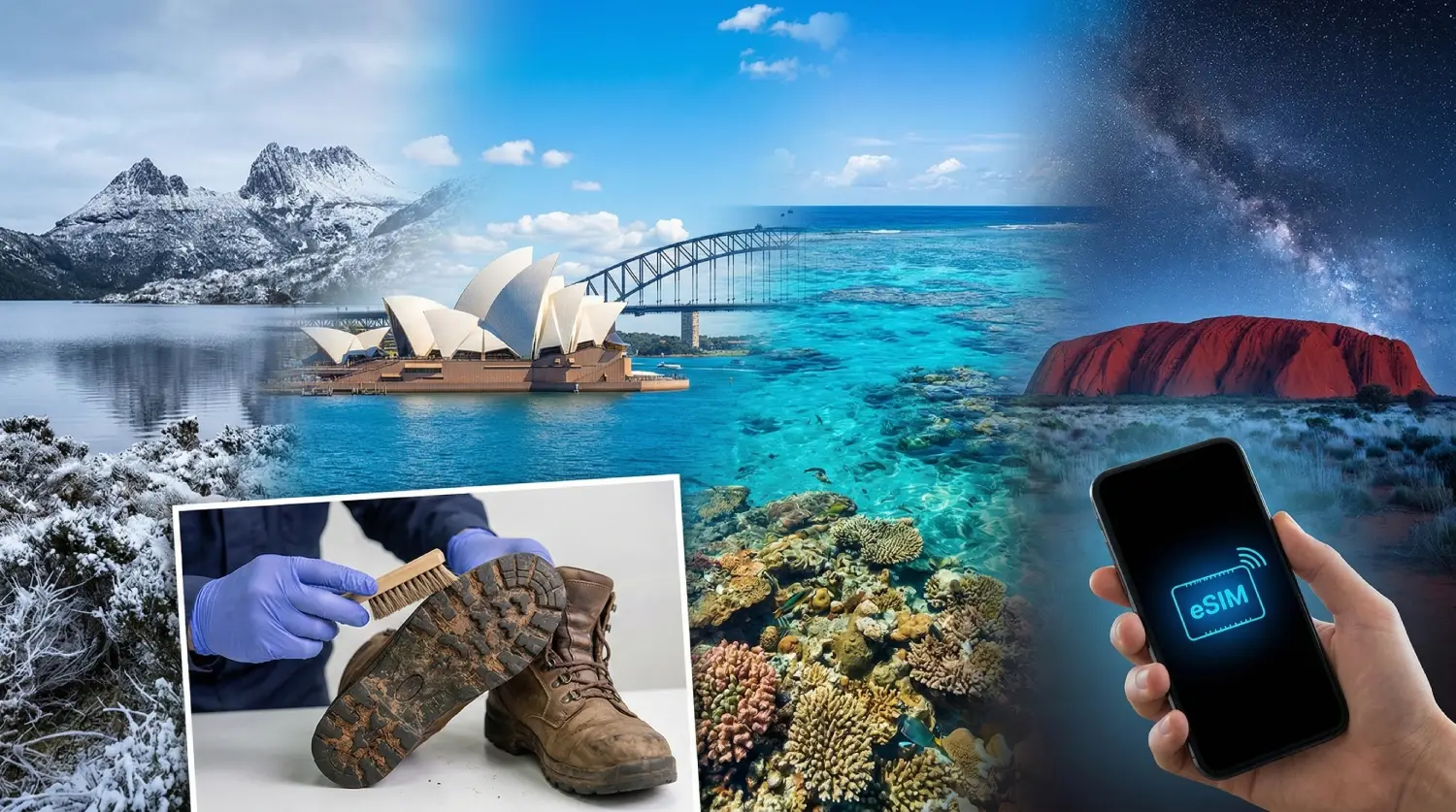
If you are looking for sun-soaked beaches in Sydney, trekking through the red dust of Uluru, or snorkeling the vibrant corals of the Great Barrier Reef, you have to navigate three different climate zones: tropical, subtropical, and temperate. Picking the wrong month can mean the difference between a perfect surf session and being trapped inside during a tropical cyclone or a Southern Highlands snowstorm.
In this comprehensive guide, we will break down Australia’s seasons, analyze the regional sweet spots for 2026, and show you how to navigate the strict laws and connectivity challenges of the "Land Down Under."
1. The Great Seasonal Flip: Winter is Summer
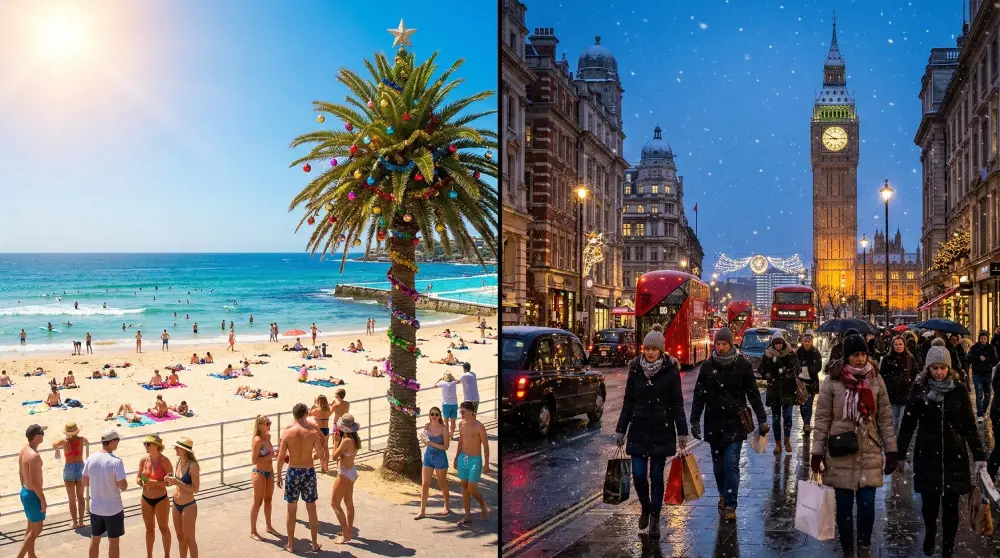
If you are traveling from the Northern Hemisphere, your first mental hurdle is the inverted seasons. Australia is the crown jewel of the Southern Hemisphere, meaning when the US and Europe are shivering in December, Australians are firing up the "barbie" on the beach for Christmas.
-
Summer: December, January, February
-
Autumn (Fall): March, April, May
-
Winter: June, July, August
-
Spring: September, October, November
The Most Common Mistake: Many tourists book a trip to the entire country in January (Summer), thinking it’s the best time for everything. While it is perfect for the southern cities (Sydney, Melbourne, Adelaide), it is actually the peak of the monsoon and cyclone season in the north (Cairns, Darwin). You could find yourself in a tropical downpour for seven days straight.
2. Regional Breakdown: When to Go Where?
To plan your 2026 itinerary, you must treat Australia as four distinct destinations.

The South (Sydney, Melbourne, Adelaide, Perth)
This region has a classic temperate climate. Think of it like California or the Mediterranean.
-
Best Time: September to November (Spring) and March to May (Autumn).
-
Why: These "shoulder seasons" offer the most comfortable temperatures (20°C - 25°C). You avoid the sweltering 40°C+ heatwaves of January and the chilly, gray rains of July.
-
Sydney Specifics: December and January are iconic for the Sydney New Year’s Eve fireworks, but be prepared for high humidity and skyrocketing hotel prices.
The Tropical North (Cairns, Great Barrier Reef, Darwin)
This is a two-season region: The Wet and The Dry.
-
Best Time: May to October (The Dry Season).
-
Why: This is the absolute sweet spot for the Great Barrier Reef. The sky is clear, the humidity is low, and the water visibility for snorkeling is at its peak.
-
The "Stinger" Warning: If you visit between November and May (The Wet Season), the waters are infested with deadly box jellyfish and Irukandji stingers. Swimming in the ocean without a full-body "stinger suit" is forbidden in many areas during this time.
The Red Centre (Uluru, Alice Springs)
The heart of the Australian outback is a desert environment with extreme temperature swings.
-
Best Time: May to September.
-
Why: During the Australian winter, the desert days are a pleasant 20°C (68°F), perfect for hiking around the base of Uluru.
-
The Warning: In the summer (December – February), temperatures in the outback regularly exceed 45°C (113°F). It is dangerously hot, and the "outback flies" are so relentless they can ruin your experience.
Tasmania
The southernmost point of Australia feels more like New Zealand or Scotland.
-
Best Time: December to March.
-
Why: This is the part of Australia where you actually want to visit during the height of summer. The weather is cool and crisp, perfect for the world-class hiking in Cradle Mountain.
3. Month-by-Month Cheat Sheet for 2026
-
January: Peak summer. Great for Sydney beaches, but dangerously hot in the Outback and rainy in the North.
-
February: Very hot and humid. Best for the southern coast and Tasmania.
-
March: The "Golden Month." Autumn begins, crowds thin out, and the weather is perfect nationwide.
-
April: Excellent for road trips. Ideal for seeing the whale sharks in Western Australia (Ningaloo Reef).
-
May: The dry season begins in the North. Great time for the Great Barrier Reef and Uluru.
-
June: Winter begins. Great for the Outback, but cold in Melbourne and Sydney.
-
July: Peak winter. The best time for the North (Darwin/Cairns) as it stays warm (30°C).
-
August: Prime time for wildlife spotting in the North. Snow season is active in the Australian Alps.
-
September: Spring kicks off. Wildflowers bloom in Western Australia. (Highly Recommended).
-
October: Perfect balance. The humidity hasn't hit the North yet, and the South is warming up.
-
November: Transition to summer. Great for seeing the Reef before the stinger season fully kicks in.
-
December: Iconic but chaotic. Major festivals, cricket matches, and Christmas on the beach.
4. Biosecurity and The "Border Trap"
Australia is an island continent with a unique and fragile ecosystem. They take their border security more seriously than almost any other country in the world.
Many tourists arrive at Sydney or Brisbane airport with snacks from the plane or "souvenirs" like wooden carvings or dried flowers, to be met with a $2,500+ AUD instant fine or even visa cancellation.
The Rule: If you are unsure, declare it. Whether it’s a muddy pair of hiking boots or a ham sandwich, the biosecurity officers will inspect it. To avoid a nightmare start to your trip, make sure you study our guide on Australia Airport Customs Rules before you pack your bags.
5. Connectivity: Why You Can’t Roam in the Outback
Australia is vast, and outside of the major metropolitan areas, it is incredibly empty. If you are planning a road trip along the Great Ocean Road or driving into the Red Centre, your connection is your lifeline.
Relying on your home country's roaming plan is a mistake. Most US and European carriers charge astronomical daily fees, and their "partner networks" in Australia often have terrible coverage in rural areas.
You need local data to:
-
Navigate with Google Maps (Offline maps won't give you live bushfire or flood alerts).
-
Book campsites and national park entries on the go.
-
Use the Beachsafe app to check for sharks or jellyfish at your location.
The Solution: You need a connection that locks Australia’s biggest networks (like Telstra or Optus) the moment you land.
-
For a deep dive into the different options at the airport versus local shops, check out: How to Get Internet in Australia
-
To see the best value data plans and coverage maps so you don't get stranded without a signal in the bush, see our comparison: Best eSIM for Australia
The Smart Move: Don't waste your first day in a Telstra shop in downtown Sydney. Download a travel eSIM before you board your flight. You’ll have 5G data active the second your plane touches the tarmac, allowing you to call an Uber or check your hotel directions instantly.
👉 Secure your connection now: Australia eSIM
Final Verdict: When is the Absolute Best Time?
If you want the "Ultimate Australia" experience (Sydney + Reef + Uluru) in single trip without hitting extreme weather in any of them, your windows are:
-
September to November (Spring)
-
March to May (Autumn)
These months offer the best balance of moderate temperatures, low rainfall, and manageable tourist numbers.
Pack your sunscreen (the Aussie sun is brutal), double-check your luggage for any prohibited food items, download your eSIM, and get ready for the adventure of a lifetime. G'day, mate!