Download the App and manage your eSIMs easily
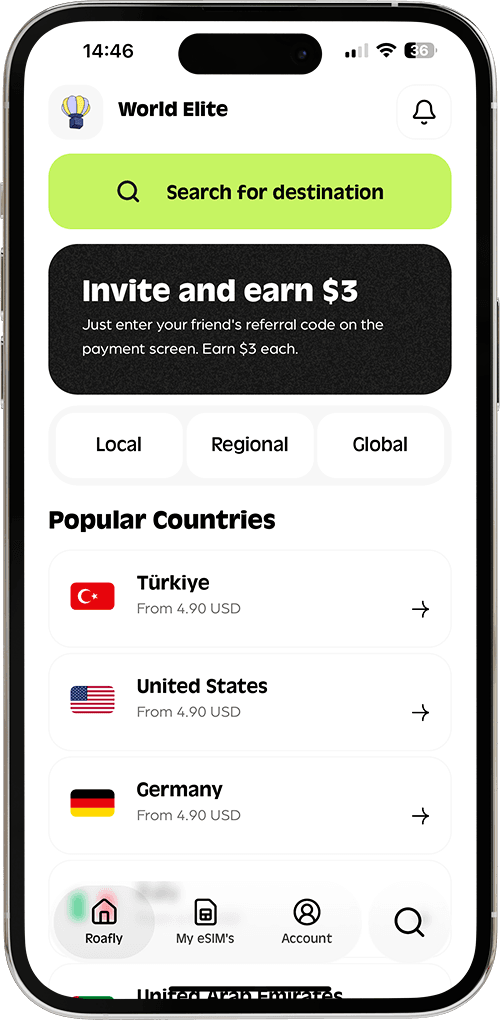
Create your order quickly
See your eSIM details
Track your remaining data
Download the App and manage your eSIMs easily
Create your order quickly
See your eSIM details
Track your remaining data
Landing in Australia feels different. Maybe it’s the humidity in Cairns, the bustling harbor in Sydney, or just the realization that you are physically very far from home. But whether you are here to surf in the Gold Coast, road trip through the Great Ocean Road, or explore the Red Centre, one rule applies: Australia is massive.
Optus
Instant delivery
From 3.90 USD

Lena Hartley
Updated Jan 10, 2026
8 min read
Jump to section
👇Best for most trips
Optus

Australia
10 GB · 30 days
Enough for maps, bookings and everyday travel.
Hotspot supported
$16.00
From 3.90 USD
In a country this big, losing your GPS connection isn't just annoying—it can be dangerous. Unlike Europe where you hop between cities in an hour, here you hop between vast empty spaces.
So, how do you stay connected? Should you queue up at Sydney Airport for a tourist SIM, hunt for a supermarket in the city, or sort it out digitally before you even pack your bags?
We’ve tested the networks, compared the "Tourist Trap" prices at the arrivals hall against local options, and found the ultimate connectivity hack for 2026. Here is your complete guide to getting internet in Australia.
Choose the perfect data plan for your trip
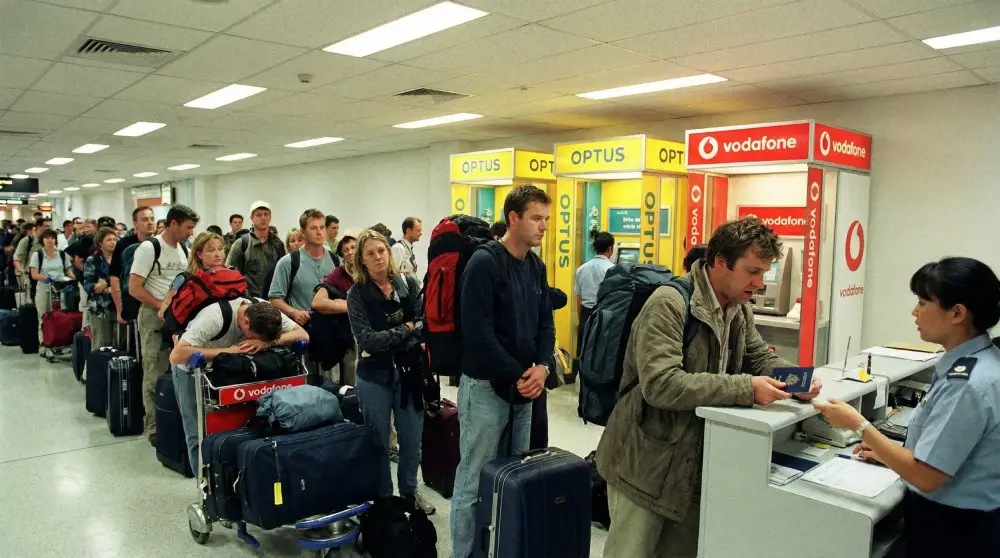
When you land at major hubs like Sydney (SYD), Melbourne (MEL), or Brisbane (BNE), you will immediately see kiosks for the "Big Three": Telstra, Optus, and Vodafone.
It seems easy. You walk up, hand over your passport, and get a card. But there is a catch: The "Airport Surcharge".
Australian carriers know you are desperate for connection the moment you land. Therefore, the plans sold at arrivals are often "Tourist Packs" with inflated prices compared to what you’d find in a supermarket 5km away.
Telstra: Generally the most expensive but has the best rural coverage. Expect to pay around $35 - $45 AUD (approx. $23 - $30 USD) for a starter pack with 30GB-40GB of data.
Optus: The middle ground. Their airport tourist plans usually start around $30 AUD (approx. $20 USD).
Vodafone: Often the cheapest, sometimes offering promos like $25 AUD, but their rural coverage is historically weaker than Telstra.
The Hidden Hassle: Aside from the price, there is the Registration Law. In Australia, every prepaid SIM must be registered with a valid ID (Passport) and a local address (your hotel). At the airport, this means standing in a queue while a staff member scans your passport, types in your details, and activates the SIM. After a 14-hour flight, waiting 30 minutes in a line just to send a WhatsApp message is the last thing you want to do.
If you have the patience to skip the airport kiosks and head into the city offline, you can save some money. You can buy SIM cards at ubiquitous stores like Coles, Woolworths, 7-Eleven, or Australia Post.

Here, you can find MVNOs (Mobile Virtual Network Operators) like Boost Mobile (uses Telstra network), Amaysim (uses Optus), or Lebara (uses Vodafone).
The Price: You can find starter SIMs for as low as $2 AUD, but these have no credit. You then have to "Recharge" (top up) with a plan, usually costing $30 AUD for a decent monthly data allowance.
The "Opening Hours" Trap: Unlike many Asian countries where shops are open late, Australian retail often closes early (around 5:00 PM or 6:00 PM on weekdays, even earlier on weekends). If you land in the evening, you might be stuck without internet until the next morning.
The Catch: You have to activate it yourself. This involves finding Wi-Fi (ironic, right?), downloading their app, scanning your passport, recording a video of your face for verification (sometimes), and waiting for the system to approve you. This process can take anywhere from 15 minutes to 4 hours.
Here is the secret that most first-time visitors don't know: You don't have to choose between Telstra, Optus, or Vodafone.

In the past, you had to gamble. "If I buy Vodafone, will I have a signal at Uluru?" or "If I buy Telstra, am I paying too much for Sydney?"
Roafly solves this dilemma by partnering with ALL THREE major networks: Optus, Vodafone, and Telstra.
This is a game-changer. When you install a Roafly eSIM:
Smart Switching: Your phone automatically connects to the strongest signal. If you are in the Outback and Vodafone drops out, Roafly switches you to Telstra. You get the best of all worlds.
No Passport Queue: You don't need to scan your ID at a kiosk. You buy it online, install it via QR code (or direct link), and it works the second you land.
Instant Connection: The validity period starts only when the SIM connects to a supported network. You can buy it a month before your trip and it stays ready.
Compared to the $30 USD you might drop at the airport for a single-network card, Roafly’s Australia eSIM plans are extremely competitive, especially for shorter trips or moderate users.
Based on current data:
Light Traveler (1 Week): 1GB for $3.90 (7 Days). Perfect if you just need Maps and WhatsApp.
The Weekender: 2GB for $5.50 (15 Days).
The Standard: 3GB for $7.50 or 5GB for $9.90 (30 Days).
The Explorer (Best Value): 10GB for $16.00 (30 Days). This is cheaper than almost any airport tourist package.
The Heavy User: 20GB for $24.00 or a massive 50GB for $49.90 (30 Days).
All plans include Mobile Hotspot, so you can share that strong Telstra signal with your laptop or your travel buddy’s phone.
To understand why Roafly's multi-network approach is superior, you need to understand the Australian telecom landscape.
Reputation: The "King of the Bush".
Best For: Remote road trips, the Northern Territory, Tasmania.
Downside: Most expensive. Prepaid plans directly from Telstra offer less data for the same price.
Reputation: The reliable runner-up.
Best For: Cities, East Coast road trips (Sydney to Cairns).
Downside: Can have "black spots" in very rural areas between towns.
Reputation: The city slicker.
Best For: Sydney, Melbourne, Brisbane centers. Fast speeds in 5G zones.
Downside: Coverage drops off significantly once you leave the main highways.
The Winner? A SIM that locks you into one of these is a risk. An eSIM like Roafly that grants you access to all three is the only way to guarantee a seamless road trip across the continent.
For a deeper dive into how these networks perform in specific regions, check out our guide on the Best eSIM for Australia.
You might still see counters renting "Pocket Wi-Fi" routers at the airport, but in 2026, this option is fading fast.
The Burden: It’s another device to charge and carry. If the battery dies, you lose your map.
The Cost: Rental fees are high—often $10 USD per day. For a 2-week trip, that’s $140 USD! Compared to a $16 eSIM, the math just doesn't make sense anymore.
The Return: You have to remember to return the device at the airport before you fly out. If you forget, the penalty fees are massive.
You might think, "I'll just use free Wi-Fi." This is a dangerous assumption in Australia.
The "Vastness" Problem: Australia is huge. You will spend hours on highways, beaches, or hiking trails where there are no cafes, no hotels, and zero Wi-Fi. Relying on Wi-Fi means you are essentially blind for 80% of your trip.
The NBN Factor: Australia's National Broadband Network (NBN) is famous for being slower than many other developed nations. 4G/5G mobile data is often significantly faster than hotel Wi-Fi.
Security: Public Wi-Fi in city centers (like Melbourne CBD) is often spotty, slow, and insecure.
Verdict: Use hotel Wi-Fi for downloading Netflix movies at night, but do not rely on it for navigation, Uber, or on-the-go searches. It simply isn't enough.
Don't be the tourist stressing out at the arrivals hall while the taxi queue gets longer. Here is the smart way to handle it:
Check Compatibility: Ensure your phone supports eSIM (most iPhones from XR onwards, and modern Samsungs/Pixels do).
Choose Your Plan: Going for 2 weeks? The 10GB plan for $16.00 is usually the sweet spot for maps and social media.
Install: Buy it from the Roafly app or website. You’ll get a QR code. Scan it (or use the Direct Install link on Android).
Land & Activate: When your plane touches the tarmac in Oz, turn on "Data Roaming" for your Roafly eSIM. It will search and lock onto the best network (Telstra, Optus, or Vodafone).
Go: You are online before the seatbelt sign turns off.
Australia is too beautiful to spend time staring at a loading screen or standing in a queue at a Vodafone kiosk. While local SIMs are a viable option if you are staying for 3+ months, for most tourists, the hassle of registration, limited opening hours, and single-network coverage make them outdated.
For the modern traveler, Roafly offers the coverage of Telstra, the speed of Vodafone, and the reliability of Optus, all in one digital package that costs less than an airport lunch.
Heading to New Zealand too? 🇳🇿 Since you are already in the neighborhood, many travelers combine their Aussie trip with a visit to New Zealand. If that’s your plan, you don't need a separate SIM. You can grab our Roafly Oceania Regional eSIM which works seamlessly in both Australia and New Zealand. Alternatively, if you want specific details for Kiwi land, check out our comparison of the Best eSIM for New Zealand.
Safe travels, and enjoy the Land Down Under!
Best for most trips
Optus
Australia
10 GB · 30 days
Enough for maps, bookings and everyday travel.
Hotspot supported
$16.00
From 3.90 USD

Manage your eSIM in the app
Install, top up and track data.
Choose the perfect data plan for your trip
Manage your eSIM in the app
Install, top up and track data.
