

'/%3e%3c/defs%3e%3cpath fill='%23012169' d='M0 0h10080v5040H0z'/%3e%3cpath stroke='%23fff' stroke-width='.6' d='m0 0 6 3m0-3L0 3' clip-path='url(%23b)' transform='scale(840)'/%3e%3cpath stroke='%23e4002b' stroke-width='.4' d='m0 0 6 3m0-3L0 3' clip-path='url(%23c)' transform='scale(840)'/%3e%3cpath stroke='%23fff' stroke-width='840' d='M2520 0v2520M0 1260h5040'/%3e%3cpath stroke='%23e4002b' stroke-width='504' d='M2520 0v2520M0 1260h5040'/%3e%3cg fill='%23fff'%3e%3cuse xlink:href='%23d' x='2520' y='3780'/%3e%3cuse xlink:href='%23a' x='7560' y='4200'/%3e%3cuse xlink:href='%23a' x='6300' y='2205'/%3e%3cuse xlink:href='%23a' x='7560' y='840'/%3e%3cuse xlink:href='%23a' x='8680' y='1869'/%3e%3cuse xlink:href='%23e' x='8064' y='2730'/%3e%3c/g%3e%3c/svg%3e)
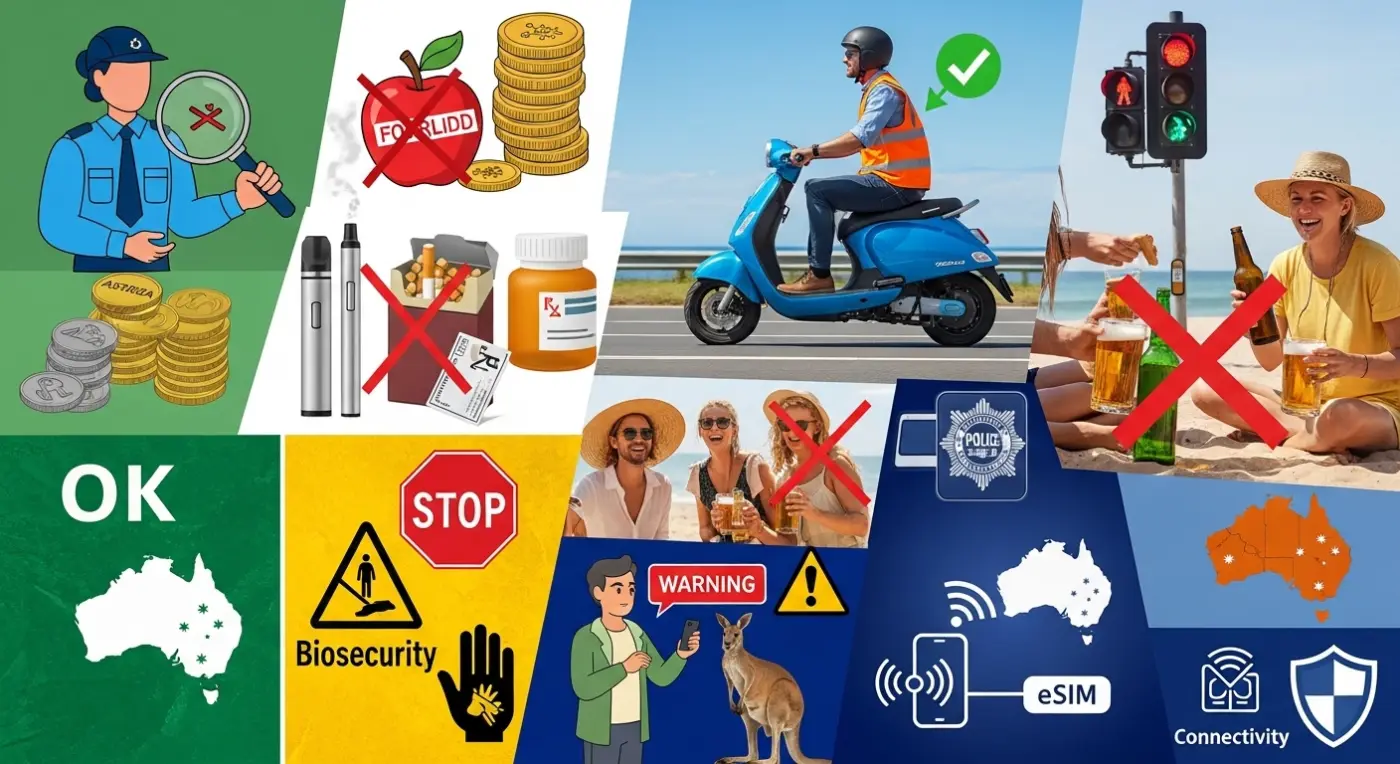
Ignorance is not an excuse down under. While Aussies are famous for their laid-back attitude, their law enforcement is incredibly strict. From unforgiving biosecurity checkpoints at the airport to heavily enforced 2026 vaping bans, police and border agents actively target tourists who don't know the local rules. As you figure out the Best Time to Visit Australia to plan your itinerary, make sure you also learn what could get you fined, arrested, or kicked out of the country entirely.
The "Big Red Line" (The #1 Strict Rule): Biosecurity
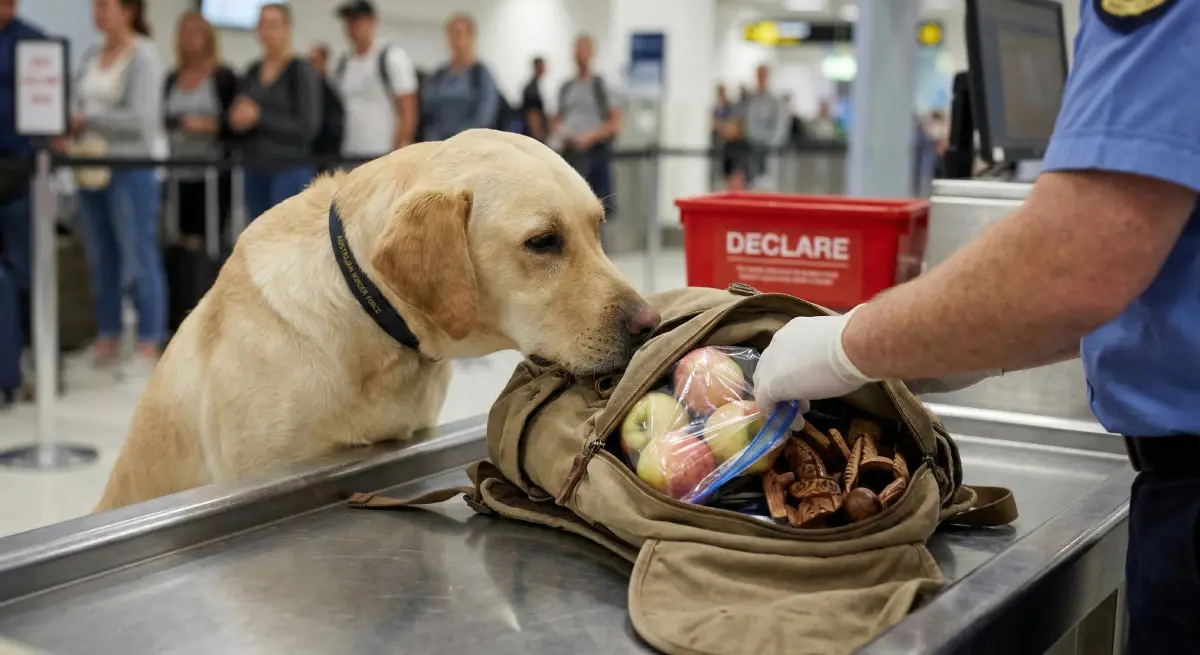
The absolute fastest way to ruin your Australian vacation before it even begins is to violate the country's draconian biosecurity laws. Australia is an island nation terrified of invasive species and agricultural diseases. Bringing in fresh fruit, homemade food, untreated wooden souvenirs, or muddy hiking boots without declaring them is a massive offense.
If you fail to declare a banned item, the Australian Border Force will hit you with an on-the-spot fine starting around $3,000 AUD, and they have the legal authority to cancel your tourist visa immediately and deport you. To ensure you survive the arrival terminal, read our full breakdown on Australia Airport Customs Rules. For official declaration guidelines, always check the Australian Border Force homepage.
Traffic & Scooter Rules (The Tourist Trap)
Driving in Australia is not a free-for-all. Speed cameras are hidden everywhere, and police enforce a "zero tolerance" policy for speeding—even going 3 km/h over the limit will trigger a heavy fine. You must drive on the left, and if your home driver's license is not in English, you must carry an International Driving Permit (IDP).
Renting an e-scooter in cities like Brisbane, Melbourne, or Adelaide is a massive tourist trap if you ignore the rules. Helmets are mandatory by law. Riding an e-scooter on the sidewalk or without a strapped helmet will result in an immediate fine by police patrols. Furthermore, Australia's drink-driving limit is a strict 0.05% BAC, and police regularly set up random breath testing (RBT) checkpoints on busy roads.
Substance Regulations (Vaping, Alcohol & Meds)
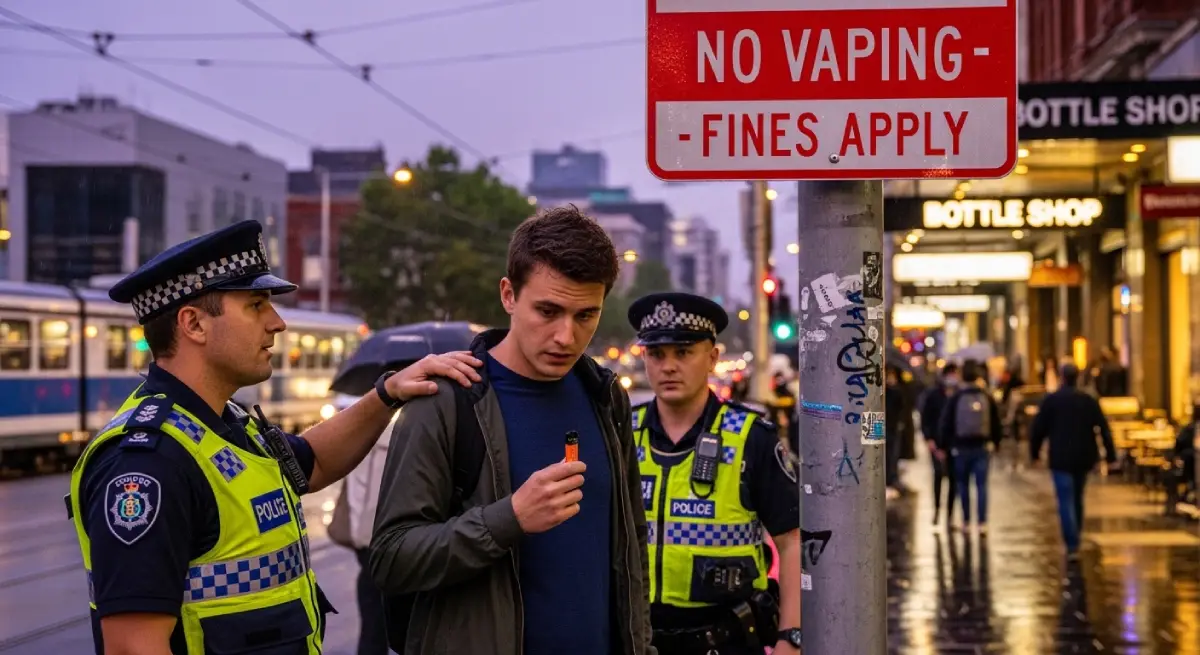
Is Vaping Legal? (No - Strict 2026 Ban)
As of 2024 and heavily enforced through 2026, recreational vaping is banned in Australia. You cannot import vapes (even for personal use) without a valid medical prescription, and selling non-prescription vapes is illegal. Do not pack disposable vapes in your luggage; border authorities will seize them, and you may face aggressive questioning or fines.
Alcohol Restrictions
You cannot just grab a beer and head to the beach. Drinking in public spaces—such as streets, parks, and beaches—is illegal in most Australian states under "Alcohol Free Zone" laws. Fines are issued on the spot. Additionally, bars and pubs adhere strictly to the Responsible Service of Alcohol (RSA). If you appear intoxicated, bartenders are legally required to cut you off and security will bounce you from the venue.
Medicine & Drugs
Never assume your over-the-counter medicine from home is legal here. Codeine, for example, requires a prescription in Australia. Always bring medications in their original packaging alongside a doctor’s note, and declare them at customs. As for illicit drugs, Australia has an uncompromising zero-tolerance policy. Expect to see drug-sniffing police dogs at major train stations, airports, and music festivals.
Weird & Niche Laws (Must Research)
-
Swearing in Public: In states like New South Wales and Queensland, using "offensive language" loudly in public is legally classified as a crime and can result in police issuing a summary fine of several hundred dollars.
-
Jaywalking: Crossing the street when the pedestrian light is red, or not using a crosswalk, is not just frowned upon—police in Sydney and Melbourne actively ticket tourists for jaywalking.
-
Feeding Native Wildlife: Feeding dingos on K'gari (Fraser Island) or offering human food to quokkas in Western Australia carries staggering fines, sometimes exceeding $10,000 AUD. Keep your distance from the wildlife.
Cultural Taboos (Don't Be Rude)
Do not attempt to climb Uluru. It is a deeply sacred site to the Anangu people, and climbing it was permanently and legally banned in 2019. Beyond the laws, local etiquette matters. Tipping is not a cultural norm in Australia; workers are paid a high minimum wage, so while rounding up the bill is appreciated, standard 20% American-style tipping is unnecessary. Finally, always swim between the red and yellow flags at the beach. Surflifesaving rules are practically a religion in Australia; ignoring them puts your life, and the rescuer's life, in danger.
Stay Connected to Stay Safe
Having reliable internet access in Australia is a non-negotiable safety tool. You will need a steady connection to use Google Maps to avoid getting lost in the Outback, translate official biosecurity documents, or quickly check local beach safety alerts.
If you are wondering How to Get Internet in Australia, the smartest and safest option is securing an eSIM before you land. Getting an Australia eSIM helps you avoid overpriced airport kiosks and immediate roaming scams. To find the right data package, compare your options in our guide to the Best eSIM for Australia
Get connected instantly by checking out the Australia eSIM plans below:
Need data in Australia? Get an eSIM!
Choose the perfect data plan for your trip

Manage your eSIM in the app
Install, top up and track data.
Summary Checklist (Don't Be That Tourist)
-
Declare everything at customs: No fresh fruit, meat, or wood unless you want a $3,000 fine.
-
Leave the vapes at home: Recreational vaping and importation is strictly illegal in 2026.
-
Wear a helmet on scooters: E-scooters require helmets by law; police actively fine riders without them.
-
Swim between the flags: Never swim at unpatrolled beaches or outside the red and yellow flags.
-
No public drinking: Consuming alcohol in parks or on beaches will earn you a swift ticket.
-
Don't touch the wildlife: Feeding dingos, quokkas, or kangaroos is harmful and heavily penalized.