Download the App and manage your eSIMs easily
Create your order quickly
See your eSIM details
Track your remaining data
Download the App and manage your eSIMs easily
Create your order quickly
See your eSIM details
Track your remaining data
Panama City suits a short urban break, but a trip built around Caribbean islands, coffee country or Pacific beaches needs a different base. Here’s how to choose where to stay—and when moving hotels earns its place in your itinerary.

Lena Hartley
Updated Sep 6, 2026
11 min read
Save 15% on your Roafly eSIM
Stay connected on your next trip. Use the code below at checkout.
View All DestinationsJump to section
👇Save 15% on your Roafly eSIM
Stay connected on your next trip. Use the code below at checkout.
View All Destinations
Manage your eSIM in the app
Install, top up and track data.
Panama City is the strongest starting point for a first visit focused on the canal, Casco Viejo and restaurants. Stay elsewhere for the parts of Panama that take you onto islands, into the highlands or out to Pacific surf towns. Bocas del Toro, Boquete and Santa Catalina each deserve time based locally; treating them as excursions from the capital puts too much of the trip into transfers.
The useful question is how many places you can enjoy without repeatedly packing up. Pick your main activity first, then check how you will reach the accommodation and what getting around will involve once you arrive.
These six bases cover distinct types of trip. The accommodation’s exact location matters within each one, especially where a town address and an isolated lodge can mean very different daily routines.
| Base | Strongest reason to stay | Accommodation focus | Main trade-off |
|---|---|---|---|
| Panama City | Canal visits, history, dining and a short first stay | City hotels, boutique properties and hostels | A city waterfront does not make this a beach holiday |
| Bocas del Toro | Caribbean islands, boat outings and beach time | Town hotels, island lodges and overwater stays | Access to meals and beaches depends on the island and property |
| Boquete | Coffee farms, hiking and a cooler mountain setting | Central guesthouses, coffee-farm stays and eco-lodges | Countryside accommodation can require transport for everyday outings |
| Riviera Pacifica | A beach resort stay combined with Panama City | Resorts, villas and smaller coastal properties | Road traffic and the resort’s exact location affect convenience |
| Santa Catalina | Coiba boat trips, diving and surfing | Small hotels, hostels and surf-oriented accommodation | Reaching the village takes a substantial overland journey |
| Guna Yala / San Blas | An island stay with Guna hosts and a simpler setting | Cabins, small lodgings and sailing stays | Facilities and transfers need confirming before you book |
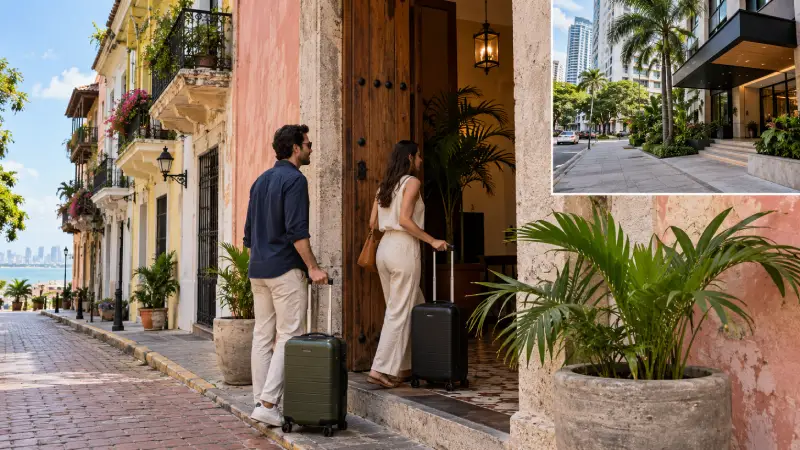
Panama City works well when your plans revolve around urban sightseeing or you have only a few nights. It also makes a useful first or final stop on a longer trip, giving you time between an international flight and travel elsewhere in the country.
Within the city, Casco Viejo and El Cangrejo answer different needs. Casco Viejo, also called Casco Antiguo, puts historic plazas, restaurants and boutique hotels around you. El Cangrejo offers a central urban base with dining and accommodation suited to exploring the wider city. The official city accommodation guide distinguishes these areas and their character.
Pick Casco Viejo if spending evenings in the historic district is central to your trip. Check the individual hotel’s position and recent noise reviews before booking: proximity to evening venues can be welcome or inconvenient depending on your bedtime. In El Cangrejo, check the actual walk to the restaurants and transport you expect to use, rather than relying on a broad “central location” description.
Keep the beach portion of your trip separate from this decision. Sea views and a waterfront promenade are useful city amenities, but they do not provide the same stay as a coastal resort or island lodge.
If you arrive late, prioritize a straightforward transfer and confirmed reception hours. Check which airport your next flight uses before choosing a hotel solely for airport convenience.
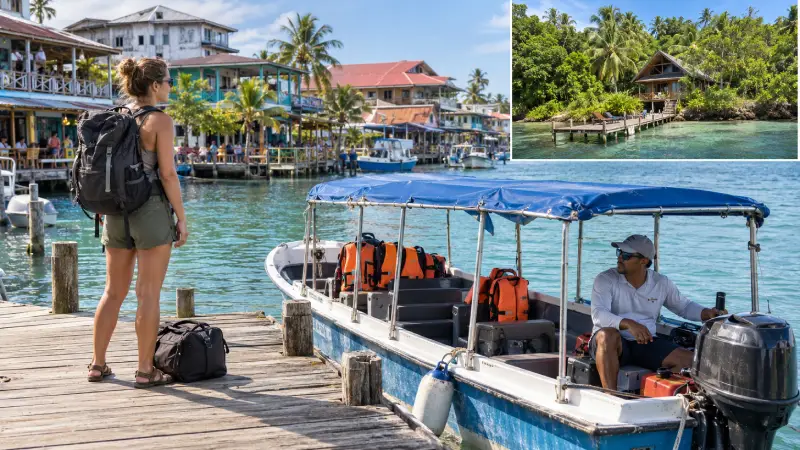
Bocas del Toro suits a trip built around the Caribbean, with beaches, boat outings and island accommodation. The first booking decision is whether you want the services of Bocas Town or a stay that puts more distance between you and the main hub.
Bocas Town on Isla Colón is the practical starting point if you want restaurants, shops and tour departures nearby. Staying there makes it easier to keep plans flexible, though you should still check how you will reach the beaches you want to visit. “On an island” does not automatically mean “on a swimming beach.”
Beyond town, the hotel’s access arrangements become more important. Some properties have their own docks; others need an onward road journey or boat connection. Visit Panamá’s Bocas accommodation guide sets out the contrast between the main hub and stays on the surrounding islands.
Before committing to an outlying lodge, ask how you reach dinner, whether transfers are included and what happens if you return after the property’s usual boat service. Compare the whole stay cost, including meals and transport, rather than just the room rate.
Getting to the archipelago also needs its own travel allowance. The official access information describes flights from Panama City’s Albrook airport to Bocas Town and the mainland route through Almirante, followed by a boat. Build any onward hotel transfer into that journey before deciding whether a short stay is worthwhile.
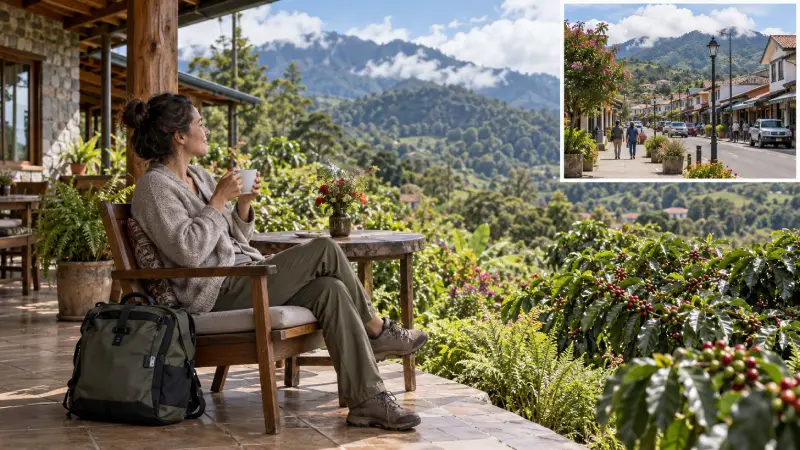
Boquete gives your trip a highland chapter: coffee farms, forest walks and a cooler setting. Its accommodation ranges from central guesthouses to cabins and lodges among coffee-growing landscapes.
Bajo Boquete is the useful reference point for staying near town services. Restaurants and tour operators are concentrated in the town, making it a sensible place to start looking if you do not want to arrange transport for every meal. The official Boquete guide explains the town’s position and the surrounding areas.
Staying on a coffee farm or at an outlying eco-lodge changes the experience. The setting becomes part of what you are paying for, and spending an afternoon at the property can be the point of the visit. Check whether there is an on-site restaurant, which activities begin there and how you get into town.
Look beyond the word “Boquete” in a listing. Confirm the map location, the approach to the property and whether your tour operator collects guests there. Someone planning several excursions may value a central room more than a secluded terrace; someone seeking a slower stay may make the opposite choice.
Boquete also needs a realistic arrival plan. Flying to David still leaves a ground transfer to the town, while travelling overland from Panama City takes a substantial part of a day. Avoid booking a brief stop that leaves little time between arrival and departure.

The Riviera Pacifica is worth considering when you want to combine Panama City with a beach stay reached by road. It offers a different proposition from flying to Bocas or coordinating an island cabin stay in Guna Yala.
The coast contains several accommodation settings. Río Hato is a useful place to focus a resort search, while smaller coastal communities offer other styles of stay. The official Riviera Pacifica accommodation guide distinguishes the resort concentration around Río Hato from the beach communities elsewhere along the coast.
Families and groups should compare what they expect to use at the property: room configuration, pool facilities, meal arrangements and access to the shore. Check the actual inclusions before treating “all-inclusive” as a complete trip budget, particularly for airport transfers and activities.
Location matters if you plan to eat outside the resort or explore between beach days. Confirm whether those outings require a car or arranged rides. A self-contained resort stay and a coastal road trip call for different accommodation choices.
Allow flexibility in the journey from Panama City. Visit Panamá’s regional access guidance specifically notes heavier inland-bound traffic at weekends. Judge the transfer to your exact property, rather than using one travel time for the entire Riviera.
Santa Catalina earns a place in your trip when Coiba National Park or surfing is a priority. The village has accommodation, restaurants, surf schools and excursion operators, allowing you to stay near the activities that brought you to this part of the Pacific coast.
Coiba is reached by boat. The official national park guide identifies Santa Catalina as an access point with lodging and dive centers. Staying locally makes more sense than trying to build the visit around a return journey from Panama City.
Book the accommodation around your actual departure arrangements. Ask the operator where you meet, then check the journey from your room. If surfing leads the itinerary, ask which break or lesson location you will use; a sea-facing property is not automatically beside the activity you have booked.
The main commitment is getting here. Treat the overland journey as a travel day when building your schedule, and leave enough time locally to justify it. Confirm boat-trip conditions and cancellation terms before tying an inflexible hotel booking to one excursion date.
Santa Catalina is a focused choice for a Coiba-and-surf stay. If you mainly want a resort pool, meals on site and beach downtime combined with the capital, compare the Riviera Pacifica first.
Guna Yala, widely known as San Blas, requires a more specific booking conversation than choosing a conventional beach hotel. Accommodation and transport are closely connected, and comfort levels vary between islands and individual lodgings.
The official Guna Yala guide describes options ranging from basic cabins and camping to more comfortable small lodgings and sailing stays. Some basic accommodation has no electricity or running water. Check the exact property’s facilities rather than assuming either resort comforts or uniformly basic conditions across the region.
Before booking, get clear answers about:
Whether the bathroom is private or shared, and how showers work.
Electricity availability, charging and fans or other room facilities.
Included meals, drinking water and any dietary arrangements.
Road and boat transfers, their meeting points and luggage limits.
How changes to weather or transport affect the reservation.
The usual land-and-sea approach described by Visit Panamá runs by four-wheel-drive vehicle to Cartí, followed by a small boat to the chosen island. Coordinate the whole journey with your host or operator; a room confirmation alone does not settle the transfer.
Pick this stay because the island setting and time with Guna hosts appeal to you, with the accommodation details understood in advance. If predictable resort facilities are central to your holiday, look closely at the Pacific resort options before deciding.
Use the number of nights as a limit on moving, then adjust for your arrival time and transport choices. These are planning starting points:
Three or four nights: Focus on one base. Panama City suits an urban visit; a beach-focused trip can prioritize one coastal destination if the flight and transfer times fit.
Seven to nine nights: Start with two bases, such as the city plus a beach region, or the city plus Boquete. Add another only if its travel cost in time is justified.
Ten to fourteen nights: Consider the capital and two contrasting regions, leaving room for the connections between them.
Before paying for accommodation, map each move from hotel door to hotel door. Airport changes, boats and onward lodge transfers matter more than a flight’s airborne time. The guide to getting around Panama helps you compare those connections.
Check Panama’s regional weather patterns against your dates as well. Use the destination and activities to decide how much flexibility you need around beach days, boat outings and mountain walks.
Save the exact property location and arrival instructions. Check recent reviews for the things that affect your stay, such as room noise, access steps, reception hours and the journey to meals. Families or anyone with mobility requirements should confirm room access and transfer boarding arrangements directly with the property.
Review current safety advice for Panama alongside the specific location and your return plans after dark. A neighborhood name or attractive listing photograph cannot answer every question about the routes you will use.
Keep your accommodation’s contact details available during transfers. If your phone supports eSIM, Panama eSIM plans provide a way to arrange mobile data for hotel messages and navigation. Download directions and booking confirmations too, so essential arrival details remain available offline.
Finally, compare the total booking: room, taxes, meals, transfers and cancellation terms. The best-positioned stay is the one that puts your time where you want to spend it, with the daily transport and accommodation arrangements understood before you arrive.
