Download the App and manage your eSIMs easily
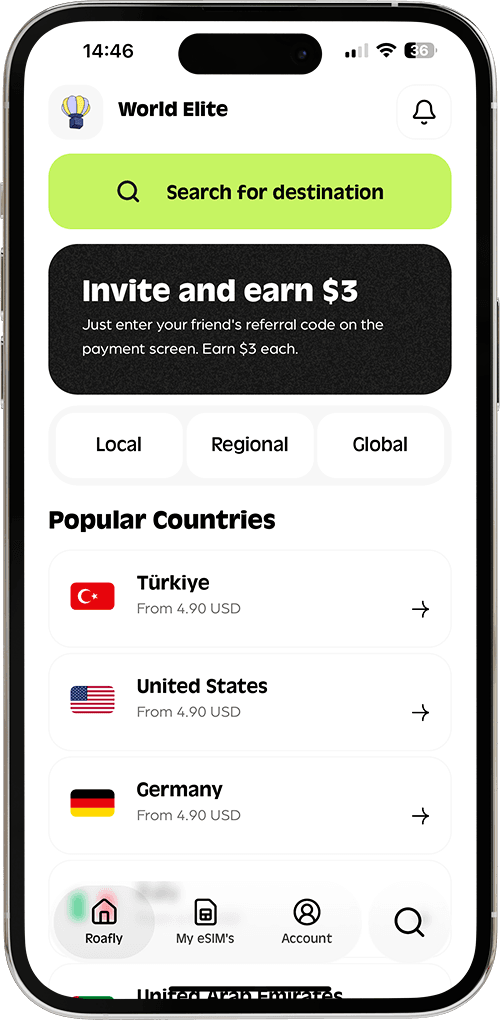
Create your order quickly
See your eSIM details
Track your remaining data
Download the App and manage your eSIMs easily
Create your order quickly
See your eSIM details
Track your remaining data
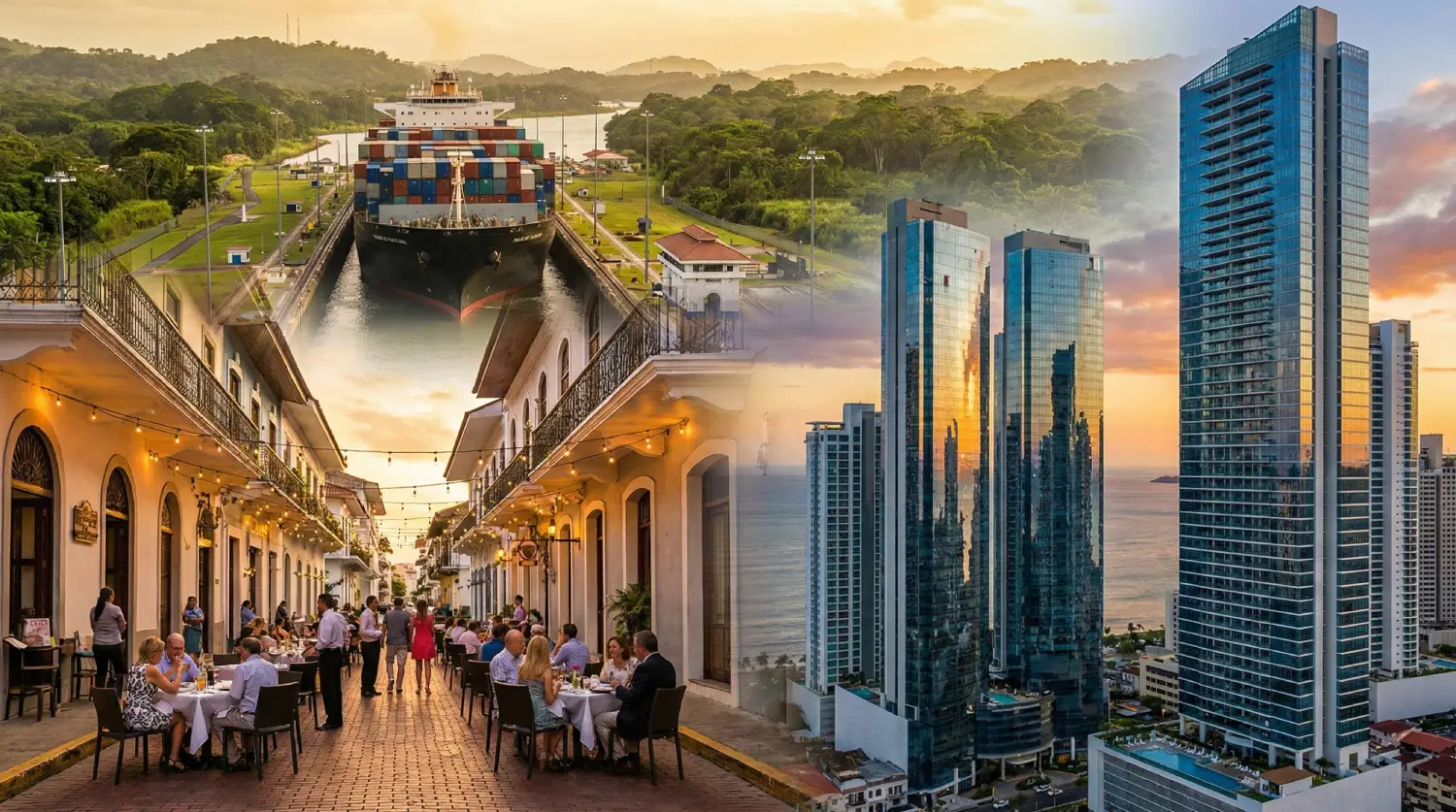
Panama is the "Dubai of Latin America." It’s a land where shimmering skyscrapers rise out of the jungle, and toucans fly over traffic jams. It is arguably the most modern and developed country in Central America.
+Movil
Instant delivery
From 4.90 USD

Ethan Brooks
Updated Feb 10, 2026
7 min read
Jump to section
👇Best for most trips
+Movil

Panama
10 GB · 30 days
Enough for maps, bookings and everyday travel.
Hotspot supported
$24.90
From 4.90 USD
But looking at the crime statistics of the region, travelers often ask: "Is Panama actually safe?"
The answer is a resounding Yes, but with a massive asterisk: Geography.
In Panama, safety is hyper-local. You can be drinking a $15 cocktail on a rooftop in Casco Viejo in total safety, but cross two specific streets, and you are in a "Red Zone" where police don't even like to go.
This guide is your reality check. We strip away the travel brochure gloss and tell you exactly where to go, which neighborhoods to avoid at all costs (looking at you, Colón), and how to navigate the city without looking like a target.
Statistically, Panama is one of the safest countries in Latin America, with violent crime rates far lower than its neighbors. While petty theft exists, tourists are rarely targets of serious danger—provided they understand the local landscape.
Safety here is heavily dependent on location:
Safe Zones: Developed areas like Casco Viejo, Punta Pacifica, and the islands of Bocas del Toro are heavily policed and secure for visitors.
High-Risk Zones: The city of Colón, the remote Darien Gap border, and neighborhoods bordering the tourist center (like El Chorrillo) are known for gang activity and should be avoided.
The Golden Rule: Stay in the "Green Zones," rely on Uber instead of walking at night, and keep a low profile with valuables. Do this, and you will likely have a trouble-free trip.
Compared to its neighbors like El Salvador or Honduras, Panama is incredibly safe. It does not suffer from the same level of gang violence targeting tourists.
Violent Crime: Rare against tourists in tourist zones. Most violence is gang-related and confined to specific "no-go" areas.
Petty Crime: This is your main concern. iPhone snatching, bag slashing, and "distraction" thefts are common in busy areas like Albrook Terminal or Avenida Central.
Political Stability: High. Protests do happen (usually blocking the Pan-American Highway), but they are rarely dangerous to foreigners if you stay away.
⚠️ The Golden Rule: In Panama City, take Uber. Walking between neighborhoods—even safe ones—can inadvertently lead you through a dangerous block.
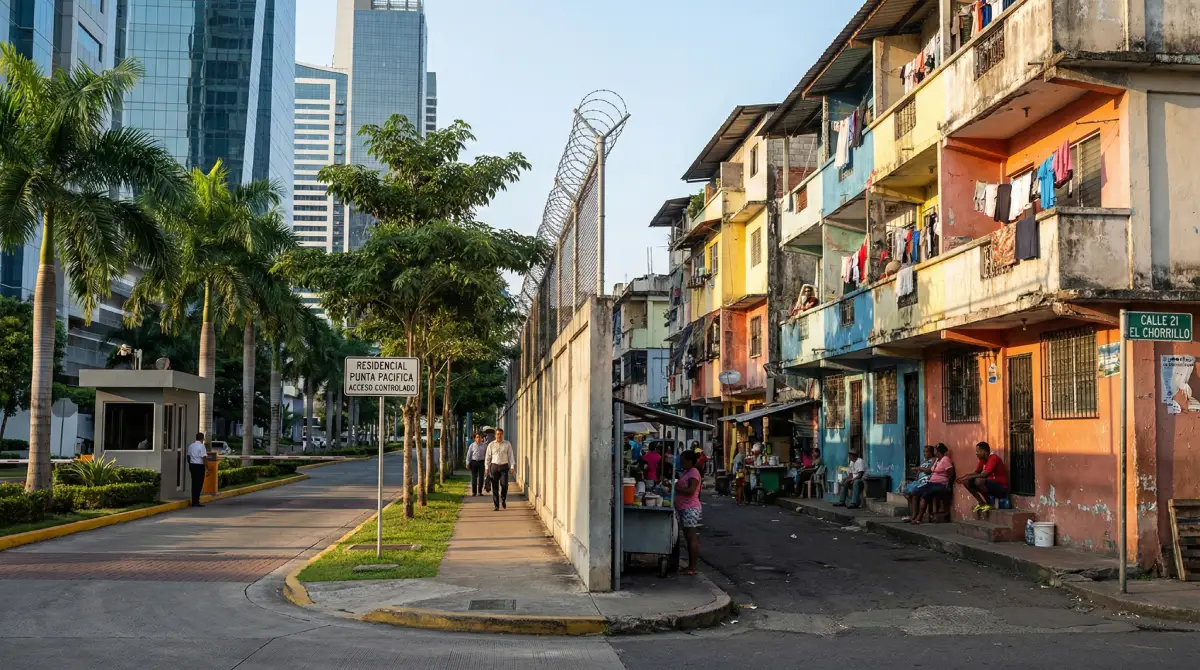
Panama City is a patchwork of safety. Here is the breakdown:
Casco Viejo (San Felipe): The historic district. It is heavily policed (Tourist Police everywhere) and very safe day and night. However, it is surrounded by poorer areas (El Chorrillo). Do not walk out of Casco Viejo at night; take a taxi.
Punta Pacifica / Costa del Este: These are the wealthy, skyscraper districts. Very safe, very modern, but less "cultural."
El Cangrejo: A favorite for expats and tourists. Walkable, full of restaurants, and generally safe.
El Chorrillo: Famous for being the target of the 1989 US invasion. It remains a rough neighborhood. It borders Casco Viejo, so be careful not to wander in by accident.
San Miguelito: A densely populated district with higher crime rates. No reason for tourists to be here.
Curundú: Just avoid it.
The city of Colón (at the Caribbean entrance of the Canal) has a terrible reputation for a reason. High unemployment and gang activity make it dangerous for tourists.
Cruise Passengers: If you dock in Colón 2000, take an organized tour or a taxi directly out of the city. Do not walk into the city center of Colón.
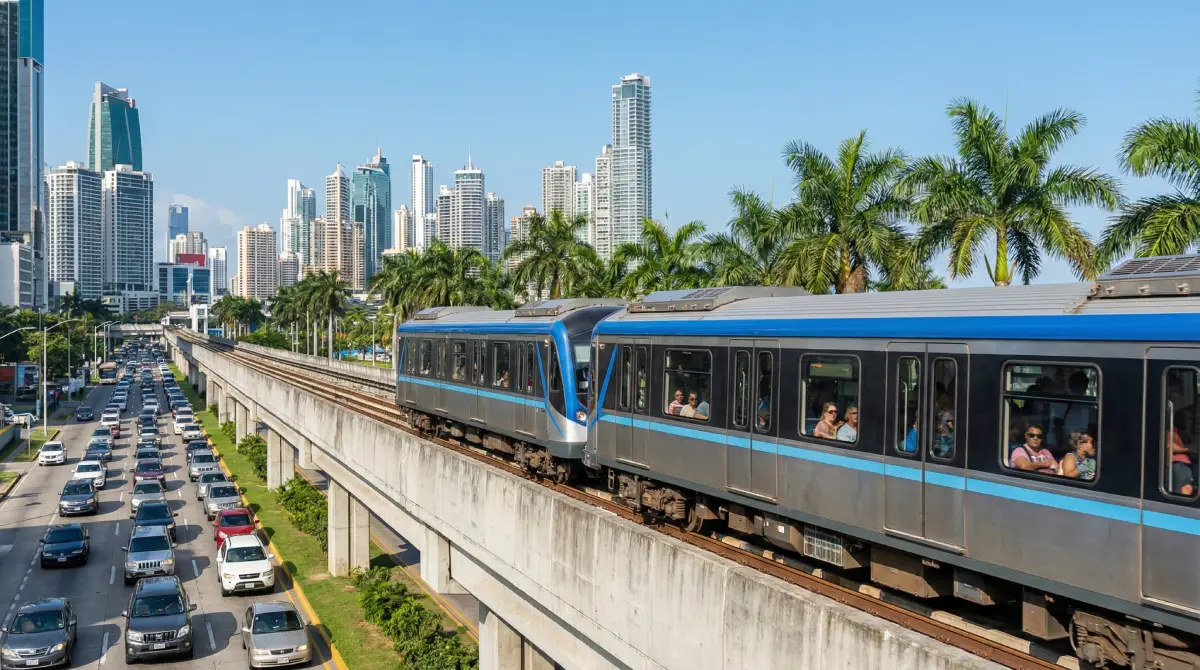
Is public transport safe?
The Metro: Panama City’s Metro is the only one in Central America. It is clean, safe, modern, and cheap. Use it during the day.
Red Devils (Diablos Rojos): These are the painted, retired US school buses. They are cultural icons but drive maniacally and are hotspots for pickpockets. Avoid them unless you want an "adventure."
Taxi Safety: Yellow taxis in Panama do not have meters. You must negotiate the price before getting in.
The Risk: They often overcharge tourists ("Gringo pricing") or stop to pick up other passengers (shared rides are common).
The Solution: Use Uber. It is legal, tracked, safe, and often cheaper than a taxi. You don't need to speak Spanish to set your destination.
📶 Connectivity Tip: You can't call an Uber without data. Public Wi-Fi is unreliable. Ensure you have a connection the moment you land. Read our guide on How to Get Internet in Panama to choose between local SIMs and eSIMs.
You might have seen YouTubers crossing the Darien Gap (the jungle border between Panama and Colombia). Is it safe for tourists? Absolutely NOT.
This is one of the most dangerous places on Earth. It is controlled by cartels and is a migration route with zero infrastructure, venomous snakes, and armed groups.
Tourist Access: There are controlled eco-tours to the edge of the Darien (like La Palma) for birdwatching, which are safe if done with a reputable operator. Do not attempt to cross the border on foot.
Panama’s scams are less about "tricks" and more about "opportunity."
The "Bird Poop" Scam: Someone spills something on you (ketchup, water) and offers to help clean it up. While you are distracted, their accomplice steals your wallet.
The Taxi "Special Price": Drivers at the airport will claim the bus is not running or Uber is illegal to get you into their cab for $50+. (An Uber is usually $15-$20).
Fake Police: Rare, but if plainclothes officers ask to see your wallet to "check for counterfeit money," walk away. Real police never do this.
Panama is tropical. The jungle is real.
Mosquitoes: Dengue fever is present. Use repellent, especially at dawn and dusk. Malaria is rare in Panama City but exists in rural indigenous areas (Guna Yala).
Tap Water: In Panama City, the tap water is generally safe to drink (a rarity in the region!). In Bocas del Toro or the islands, stick to bottled water.
Sun: The UV index here is extreme. You are very close to the equator. Wear sunscreen even on cloudy days.
Panama is one of the safer Latin American countries for women, but "Machismo" culture exists.
Catcalling: You will hear "Mami," "Linda," or hissing noises. It is annoying but usually harmless. Ignore it completely.
Night Safety: In areas like Casco Viejo or Bocas del Toro, stick to the main streets. Do not walk alone on the beach at night.
Drink Spiking: As with any party destination, keep an eye on your drink.
If you get lost in Panama City, you don't want to be wandering around looking for a Wi-Fi cafe, especially near the borders of safe zones.
Having active GPS and the ability to translate Spanish is your best safety tool.
Recommendation: Don't rely on hotel Wi-Fi. Get a Panama eSIM before you travel. It connects you to the top local networks (Tigo or +Móvil) instantly.
Comparison: Not all plans are equal. Check our Best eSIM for Panama guide to see which provider offers the best coverage in the San Blas islands vs. the City.
Drugs: Panama has strict drug laws. Being caught with even a small amount can lead to harsh prison sentences.
Vaping: Panama has heavily restricted vaping. Selling vapes is illegal, and bringing them into the country can be a hassle at customs.
Customs Limits: Before you pack, check our Panama Airport Customs Rules 2026 to know exactly how much alcohol or tobacco you can bring in duty-free.
Is Panama safe? Yes. It offers the best of both worlds: the safety and infrastructure of a modern city, and the wild beauty of untouched islands.
By staying out of Colón, using Uber at night, and keeping your wits about you in crowded areas, your biggest risk will be sunburn or eating too much Ceviche.
Quick Safety Checklist:
Transport: Download Uber. Avoid yellow taxis at night.
Stay: Book in Casco Viejo, El Cangrejo, or Punta Pacifica.
Connect: Activate your Panama eSIM upon landing.
Avoid: The Darien Gap and Colón City center.
Best for most trips
+Movil
Panama
10 GB · 30 days
Enough for maps, bookings and everyday travel.
Hotspot supported
$24.90
From 4.90 USD
Choose the perfect data plan for your trip

Manage your eSIM in the app
Install, top up and track data.
