Download the App and manage your eSIMs easily
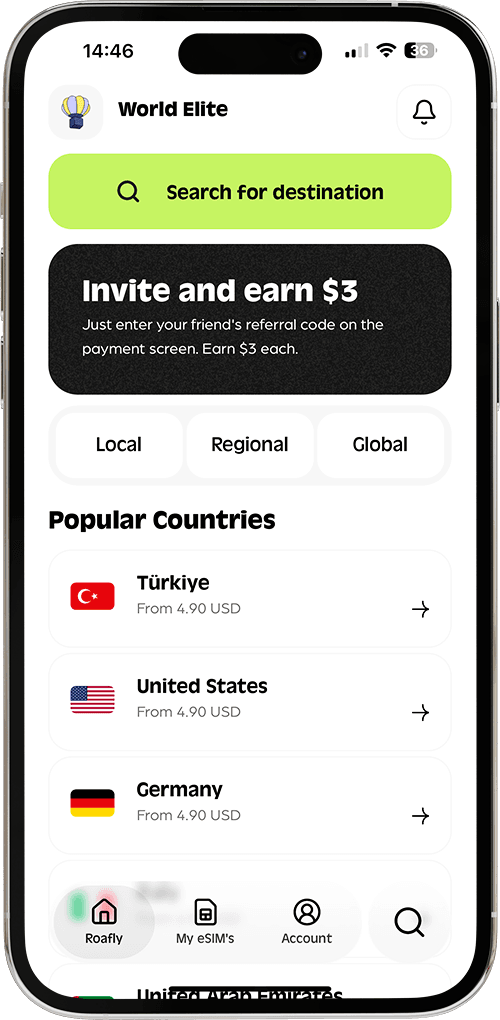
Create your order quickly
See your eSIM details
Track your remaining data
Download the App and manage your eSIMs easily
Create your order quickly
See your eSIM details
Track your remaining data
Your passport, trip length and route determine how you enter Vietnam.

Lena Hartley
Updated Nov 9, 2026
9 min read
Save 15% on your Roafly eSIM
Stay connected on your next trip. Use the code below at checkout.
View All DestinationsJump to section
👇Save 15% on your Roafly eSIM
Stay connected on your next trip. Use the code below at checkout.
View All Destinations
Manage your eSIM in the app
Install, top up and track data.
Some visitors qualify for visa-free entry; others need a visa before departure. E-visas are available to citizens of all countries and territories for visits of up to 90 days, while Phu Quoc has a separate exemption for qualifying island-only trips.
The rules checked on 9 November 2026 also include a pre-arrival information system at major airports. Start with your visa or exemption, then prepare the arrival paperwork: completing an online declaration does not replace permission to enter.
Use the table below for common tourist cases. These are examples for ordinary passports, not a complete nationality list or a guide to diplomatic passports, residence permits or special exemption certificates.
| Ordinary passport examples | Tourist entry route | Maximum stay or main condition |
|---|---|---|
| United Kingdom, Germany, France, Japan, South Korea | Visa exemption | Up to 45 days |
| Netherlands, Belgium, Switzerland, Poland, Czech Republic | Tourism visa exemption | Up to 45 days |
| Singapore, Malaysia, Indonesia, Thailand | Bilateral visa exemption | Up to 30 days |
| Philippines | Bilateral visa exemption | Up to 21 days |
| Brunei | Bilateral visa exemption | Up to 14 days |
| Chile, Panama | Bilateral visa exemption | Up to 90 days |
| United States, Canada, Australia, India, Türkiye | Visa required for an ordinary mainland tourist visit | Apply for an e-visa before travel; up to 90 days if granted |
| Foreign passport holders making a qualifying Phu Quoc-only trip | Island-specific exemption | Up to 30 days, subject to the route and island-stay conditions below |
Match your passport type to the official visa-exemption list, especially if your nationality is not among these examples. Living in a visa-exempt country does not give you that country’s passport exemption.
The two 45-day groups have different policy periods. The first group’s current exemption runs through 14 March 2028; the tourism programme covering the second runs through 14 August 2028. Neither should be described as a blanket exemption for all EU citizens.
Two details matter when comparing older lists:
British National (Overseas) passports do not qualify for the British-citizen exemption.
Belarusian ordinary passports fall under a bilateral arrangement allowing 30 days per visit, with a total limit of 90 days in a calendar year.
If your planned stay exceeds your exemption, arrange the appropriate visa before departure. A 50-day holiday, for example, needs a different plan from a visit covered by a 45-day exemption.
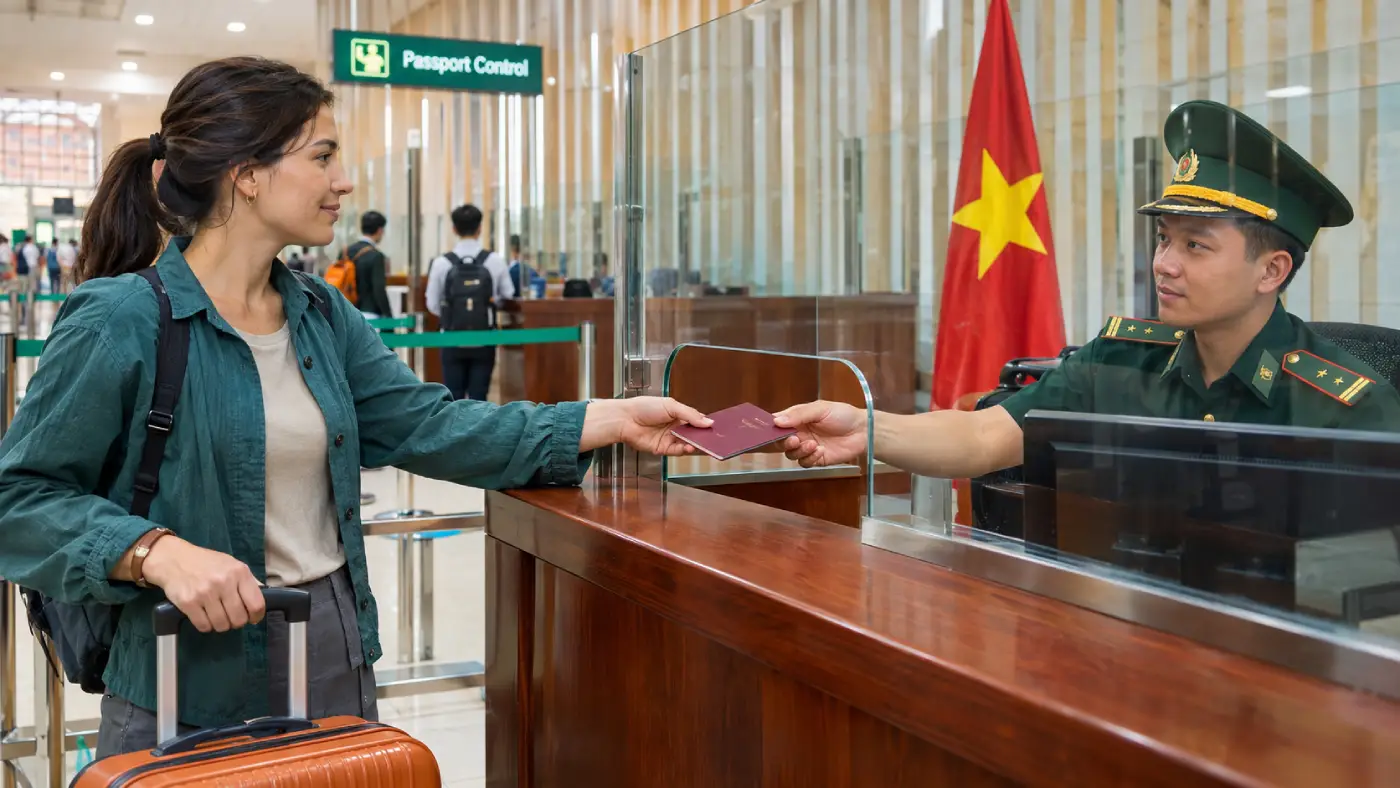
Vietnam’s e-visa is the straightforward advance-application route for independent tourists who need a visa. You must be outside Vietnam when applying, hold a valid passport and meet the entry conditions.
Apply through the official Vietnam e-visa portal. You can submit the application yourself; hiring an intermediary is optional.
The government fees are:
US$25 for a single-entry e-visa
US$50 for a multiple-entry e-visa
Both can be issued for a maximum validity of 90 days. The fee is non-refundable if the application is refused.
Single entry suits a trip where you enter Vietnam once and leave at the end. Multiple entry is useful when your itinerary includes leaving Vietnam and returning during the visa’s validity, such as a side trip to Cambodia. It does not give you a fresh 90 days on every return.
Prepare your images. Have a clear image of your passport’s biodata page and a suitable portrait photo ready.
Enter your details carefully. Match your name, passport number and other identity information to the passport you will carry. Enter your intended dates, accommodation and border details accurately.
Pay and keep the application code. Use it to follow the application and retrieve the result.
Download and print the approved e-visa. Compare every detail with your passport before travelling, including the validity dates and number of entries.
The published processing period is three working days after receipt of the application and fee. We would apply well ahead of that minimum, leaving time for corrections and holidays. A payment receipt or pending application is not an approved visa.
Use the dates printed on the issued e-visa when booking your trip. Arriving later does not move its expiry date.
Vietnam issues visas at border gates in defined circumstances, including certain organised tours and humanitarian cases. This is not a general walk-up option for every tourist who arrives without a visa.
If an organiser offers border collection, establish the approval and collection arrangements before departure. Embassy-issued tourist visas also follow the relevant mission’s application and approval requirements.
Be wary of websites that resemble government portals but add service charges or sell unclear “approval” products. The application route above keeps the official fee visible; our guide to common tourist scams in Vietnam covers other problems you may encounter during the trip.
Foreign passport holders can qualify for up to 30 days without a visa on Phu Quoc, including visitors whose passports normally require a visa for mainland Vietnam.
The exemption covers qualifying arrivals from abroad and certain onward journeys through a Vietnamese international port while remaining within the permitted transit arrangements. It is tied to the island stay.
That makes a direct international flight to Phu Quoc a different entry decision from a holiday combining Ho Chi Minh City and Phu Quoc. Visiting the mainland requires a visa or a separate nationality-based exemption that covers that visit.
If you connect through another Vietnamese airport, confirm the transfer arrangement with your airline before relying on the island exemption. Collecting luggage and checking in again can require passing immigration; a flight ticket to Phu Quoc alone does not establish that your connection qualifies.
If your trip includes Hanoi, Da Nang or Ho Chi Minh City, settle your mainland entry permission before departure rather than trying to adapt an island-only exemption after arrival.
Check that your passport is undamaged and has two blank pages. Plan to travel with at least six months’ validity from arrival; this is a requirement for the 45-day visa exemptions. Use the same passport for your visa application, entry and departure.
Keep these documents accessible in your hand luggage:
Your passport and printed e-visa, if your route requires one.
Your return or onward booking, with travel dates that fit your permitted stay.
Your first accommodation address and booking details.
Offline copies of your visa and essential reservations.
Keeping onward travel and accommodation details ready helps you answer questions about the visit without searching through email at the counter.
If you plan to use mobile data after landing, compare the best eSIM for Vietnam before choosing your allowance and provider. Roafly’s Vietnam eSIM provides a prepaid data option for accessing hotel details, maps and transport bookings on a compatible phone. Keep the documents themselves available offline.
Your entry permission and the goods in your luggage are separate checks. Read Vietnam’s customs rules before packing items that may be restricted or require a declaration.
Vietnam’s digital pre-arrival system collects traveller information for immigration processing. As of the July 2026 rollout guidance, Vietnam encourages foreign arrivals to complete it for major international airports, including:
Noi Bai, Hanoi.
Tan Son Nhat, Ho Chi Minh City.
Da Nang.
Cam Ranh, serving Nha Trang.
Phu Quoc.
Complete the official pre-arrival declaration within the three days before arrival where applicable. You can also complete it on arrival, but doing it beforehand reduces paperwork at the airport.
The declaration supplies arrival information; it does not grant entry or replace an e-visa. Completion is encouraged under that guidance, rather than imposed as a universal requirement at every airport, land crossing and seaport.
Health declarations are separate. The July 2026 health rules did not introduce a routine declaration requirement for every person entering, leaving or transiting Vietnam. Disease-specific measures can be activated when announced by the health authorities.
If you land at SGN and prefer to buy a local SIM after immigration, the guide to SIM cards at Tan Son Nhat Airport explains where to buy one.
International connections that stay airside are different from connections that require you to enter Vietnam. Establish which applies before booking a tight transfer.
Connecting from an international flight to a domestic flight in Hanoi or Ho Chi Minh City requires immigration clearance. Separate tickets, baggage collection or an overnight stop outside the transit area can also change the entry requirement. Ask your airline whether your actual connection allows you to remain airside, including how your luggage is handled.
E-visas can be used at designated airports, land border gates and seaports. Common approved points include Noi Bai, Tan Son Nhat, Da Nang and Phu Quoc airports, plus the Moc Bai land crossing.
Match your route to the border details in your application and issued visa. Before changing a crossing, check the permitted arrangements rather than assuming every border post accepts e-visas.
Cruise passengers should settle their entry arrangements with the cruise operator before sailing, particularly when the itinerary includes several Vietnamese ports. Do not assume that staying on a ship removes the paperwork for a planned shore visit.
Before leaving the immigration counter, check the departure date recorded in your passport against the visa or exemption used for entry. Resolve a discrepancy there, while the entry record can be reviewed.
Plan to leave within the authorised stay. An e-visa application is for a person outside Vietnam; submitting another application is not a way to extend your current permission from inside the country.
If your plans change, contact Vietnam Immigration about the options available for your status before your stay expires. Extensions depend on the applicable route and circumstances. Overstaying can lead to fines and further immigration consequences.
Once admitted, the rules for your activities and possessions still apply throughout the visit. Review the local laws to know before your trip alongside your final itinerary.
